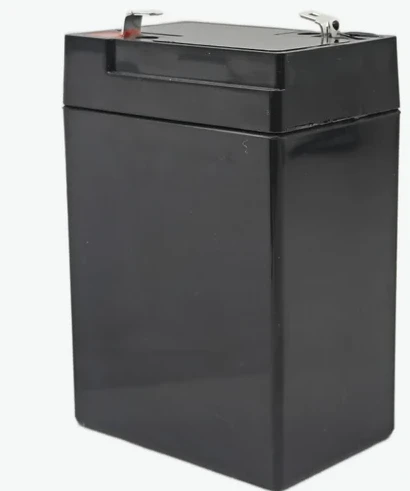
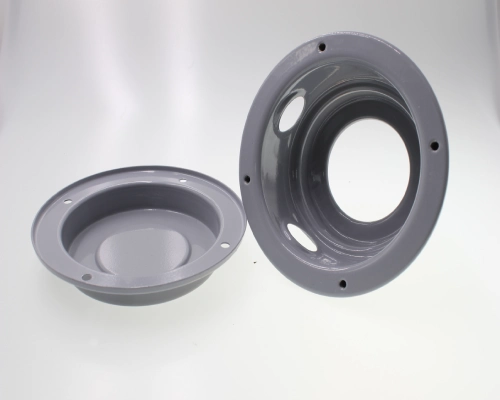
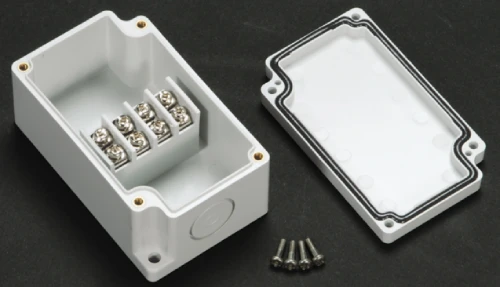
For high-voltage battery housings, the effectiveness of electromagnetic interference (EMI) and radio frequency interference (RFI) shielding is directly related to the system’s functional safety and reliability. Even the slightest shielding leakage can cause sensitive control circuits to malfunction or generate unacceptable interference with external communication devices.
From a sheet metal manufacturing perspective, the core challenge in achieving a complete Faraday cage effect for custom battery housings lies not in material selection, but in eliminating potential structural conductive discontinuities through precise process control.
Improper coating treatment of flange surfaces, ill-conceived fastener layouts, or insufficiently compressed conductive gaskets can all introduce gaps in what would otherwise be a continuous conductive path, creating sources of high-frequency leakage.
This article will delve into these shielding failure modes caused by manufacturing processes, focusing on the entire workflow from prototype validation to mass production, and provide a set of practical engineering solutions to ensure that every battery housing meets its stringent electromagnetic compatibility (EMC) performance specifications.
Understanding the Shielding Integrity of High-Voltage Battery Housings
For high-voltage battery housings, shielding integrity begins with a fundamental premise: their conductive enclosure must form an uninterrupted Faraday cage. Any manufacturing defect that disrupts structural continuity or the conductive path will fundamentally weaken the housing’s ability to attenuate electromagnetic interference, creating potential risks for subsequent EMI/RFI leakage issues.
The Key Role of the Faraday Cage
As a Faraday cage, the shielding effectiveness of a high-voltage battery housing depends on the conductive shell forming a continuous, equipotential enclosure. When electromagnetic waves strike the surface, free electrons on the shell redistribute and generate a counter-inductive field, thereby protecting the internal circuitry.
Theoretically, any electromagnetic wave incident on an ideal conductor would be completely reflected; however, in engineering practice, structural features such as seams, ventilation openings, or fastening points on the housing introduce discontinuities. These discontinuities act as slot antennas; when the slot dimensions approach one-quarter of the interference wavelength, they will radiate or receive electromagnetic energy.
For custom battery housings, harmonics in the MHz to GHz range generated by high-frequency switching devices are particularly sensitive to minute gaps; the integrity of the housing’s conductive structure is the physical foundation for ensuring electromagnetic compatibility (EMC) performance.
Common Failure Modes from the Perspective of Battery Housing Manufacturing
During the sheet metal fabrication of custom battery housings, three types of process deviations are the primary causes of shielding failure.
First, the flange surfaces are not masked during powder coating; after drying, the insulating coating directly blocks the conductive connection between housing components, causing an open circuit in what was originally a continuous conductive path. Second, fastener spacing is designed too widely, exceeding the engineering rule of thumb of 1/20 of the target interference wavelength, resulting in a gap-antenna effect between the cover plate and the housing, which significantly increases high-frequency leakage.
Third, improper selection or compression of the conductive seal (EMI gasket)—metal braided mesh seals must operate within a specific pressure range; insufficient compression results in excessively high contact resistance, while excessive compression may damage the mesh structure.
Precision Manufacturing Strategies for Leak-Free Battery Housings
The key to achieving leak-free battery housings lies in translating shielding design requirements into actionable process specifications that span the entire process, from sheet metal structural design to surface treatment.
This requires establishing clear technical standards for fastener layout, conductive interface treatment, and seal selection to ensure that every production step maintains the conductive continuity of the Faraday cage, thereby fundamentally eliminating the risk of EMI/RFI leakage introduced during the battery housing manufacturing stage.
Optimizing Fastener Spacing and Structural Design of Battery Housings
Fastener spacing is a key structural parameter that determines the shielding effectiveness of custom battery housings. Supro’s engineering experience indicates that the maximum allowable fastener spacing should be less than 1/20 of the target interference wavelength—a guideline derived from slot antenna theory, which states that when the slot size is less than one-twentieth of the wavelength, its radiation efficiency drops sharply.
For high-frequency interference above 1 GHz, this means the spacing must be controlled within 15 mm, which is far smaller than the typical value required for structural strength.
During the design phase, DFM analysis must be used to balance the relationship between flange width, seal compression, and bolt layout. For large battery housings, conductive springs can be added to the flange surface, or continuous laser welding can be used to replace discrete fastening solutions, thereby eliminating leakage paths introduced by discontinuities.
Maintaining Conductive Paths Through Intelligent Manufacturing
Maintaining direct metal-to-metal contact on the flange surface is a core process requirement for preserving the integrity of the conductive path in custom battery housings. Standard powder coatings offer excellent insulating properties but form a barrier layer at the flange joint surface.
In practice, Supro employs two process approaches: First, high-temperature masking tape is applied to the flange surface prior to spraying; this is removed after the coating cures, resulting in a clean, uncoated metal contact area. Second, the flanges of aluminum battery housings undergo SurTec 650 conductive oxidation treatment; the chemical conversion coating generated by this process provides corrosion protection while maintaining electrical conductivity.
The surface roughness of the contact surface should be controlled within Ra 1.6 μm to ensure that the contact resistance after assembly is less than 10 mΩ. Additionally, it is important to note that electrochemical potential differences exist when different metals come into contact; therefore, direct contact between copper alloy seals and aluminum alloy flanges without a transition treatment should be avoided.
Correct Selection and Integration of EMI Sealing Gaskets
EMI gaskets are critical components for compensating for structural tolerances in the battery housing and maintaining electrical continuity. Metal braided mesh gaskets offer excellent electrical conductivity and wear resistance; stable, low contact resistance can be achieved by controlling the compression ratio within the range of 15% to 25%. Conductive rubber, on the other hand, combines environmental sealing with electromagnetic shielding functions and is suitable for battery pack applications with water and dust resistance requirements (e.g., IP67).
When selecting a model, it is necessary to comprehensively consider shielding performance requirements (SE value, typically required to be ≥60 dB @ 1 GHz), the flatness tolerance of the mating flange, and compression deformation characteristics.
During integration design, it is recommended to add an environmental seal ring on the outer side of the EMI gasket to decouple the electromagnetic shielding and environmental sealing functions, thereby avoiding design conflicts that arise when a single sealing component is required to perform both functions simultaneously.
Only 4 steps
online custom metal fabrication parts
Contact our experts team and experience the efficiency and economic benefits of digital metal fabrication services.
Upload Design Files
STL , STEP (.stp), IGES (.igs), (.ZIP), or PDF.
Also be a sample or an idea
Quote & Design Analysis
Instant factory quotes and DfM reports, the most reasonable solution.
Manufacturing Begins
Digital processes can initiate order tasks within 24 hours.
On-Time Delivery
Keeping delivery promises, approved by 3000+ Global Company buyers.
From Design to Delivery: Ensuring the Shielding Effectiveness of Battery Housings
Ensuring shielding effectiveness does not begin on the assembly line, nor does it end with the approval of drawings. It requires establishing a verification and control system that spans the entire product lifecycle.
From shielding performance testing during the prototyping phase to monitoring critical dimensions during mass production, every step must be validated with data to confirm that the battery housing manufacturing process successfully translates the design intent into actual electromagnetic compatibility (EMC) performance, ensuring that every custom battery housing delivered meets its specified shielding metrics.
Prototyping and Validation of Battery Housings
In the development cycle of a custom battery housing, the prototyping phase is the only opportunity to verify the effectiveness of the shielding design. Although simulation tools can predict electromagnetic performance, variables such as manufacturing tolerances, material response, and assembly stresses can only be quantified through physical testing.
It is recommended to conduct shielding effectiveness testing during the prototyping phase, measuring the attenuation characteristics of the battery housing across the 30 MHz to 18 GHz frequency range in accordance with MIL-STD-285 or IEEE 299 standards. If test results indicate leakage at specific frequencies, the location of gaps should be identified through near-field scanning, and this information should be fed back to the manufacturing process for adjustment.
The cost of iteration at this stage is significantly lower than that of changes made after the mold has been locked; three to five rounds of prototype validation are sufficient to minimize the risks associated with the shielding design.
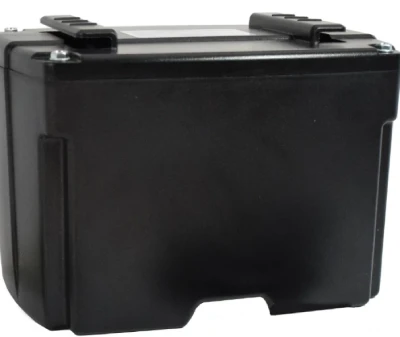
Quality Control in Battery Housing Production
Once mass production begins, the consistency of the battery housing’s EMI/RFI shielding relies on statistical process control. Key control parameters include: flange flatness (recommended ≤0.15 mm/m), fastener torque deviation (within ±5%), and the compressed thickness of the EMI gasket.
A CMM (coordinate measuring machine) is used to perform full-dimension inspection on the first article of each batch to confirm that the positional accuracy of the fasteners meets drawing requirements. In-process control incorporates online impedance testing, using the four-point probe method to measure the contact resistance at the flange mating surfaces, enabling rapid identification of conductive interface anomalies.
Additionally, incoming inspection records for EMI gaskets in each batch must be maintained—the volume resistivity of the conductive filler should fall within ±10% of the nominal value specified in the datasheet to ensure consistency across batches.
Collaborating with an Experienced Battery Housing Manufacturer
The effectiveness of battery housing shielding ultimately depends on the manufacturer’s engineering capabilities and process control standards. An experienced sheet metal partner should participate in DFM reviews as early as the quotation stage to identify potential conflicts between flange structures and coating processes, and to optimize fastener layout to balance strength and shielding requirements.
When design drawings conflict with shielding requirements at the process level, a professional manufacturing team with expertise in electromagnetic compatibility can propose alternative solutions—such as recommending conductive tape reinforcement in areas where bolt spacing cannot be reduced, or using continuous welding as an alternative for critical shielding areas.
Supro commits to signing an NDA to protect intellectual property (IP) as early as the prototyping stage and provides end-to-end traceable quality documentation to ensure that custom battery housings consistently meet EMC specifications from design to delivery.
Conclusion
Addressing EMI/RFI leakage issues in battery housings is, at its core, an engineering practice that deeply integrates electromagnetic theory with manufacturing processes. From optimized fastener spacing and precise treatment of conductive interfaces to rigorous selection of EMI gaskets and process control, every step determines the ultimate integrity of the Faraday cage.
Supro is a professional custom battery housing manufacturer. Leveraging advanced equipment, extensive manufacturing experience, and a dedicated engineering team, we provide flawless custom battery housing services to over 3,000 companies worldwide, along with transparent manufacturer quotes.
We deliver a wide range of products efficiently and on time. From product design and rapid sheet metal prototype fabrication to mass production, we provide professional technical support and exceptional quality. We also offer one-stop manufacturing solutions and highly cost-competitive product supply!
For inquiries regarding technical specifications, customized project solutions, or business collaboration, please contact Supro immediately. Our professional engineering team is always ready to provide you with tailored application solutions.