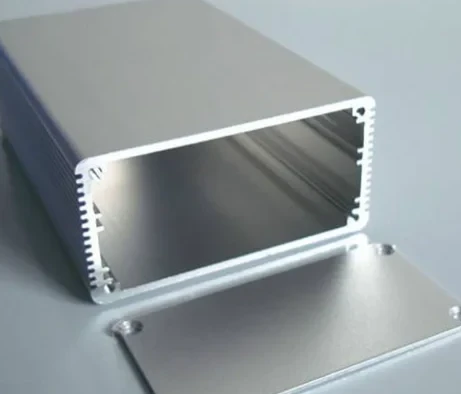
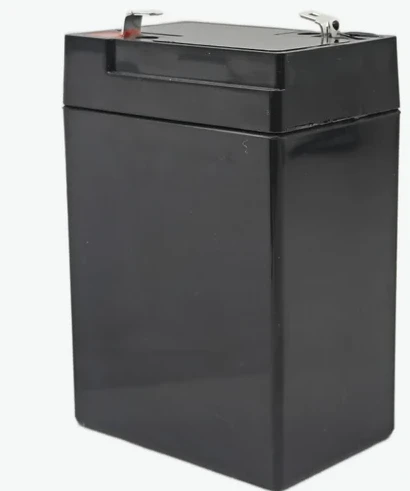


The battery housing serves as the structural backbone and primary protective barrier of an energy storage system, shielding highly sensitive battery components from mechanical shocks, temperature fluctuations, and environmental degradation. Among these threats, corrosion remains one of the most insidious failure mechanisms—it can compromise the housing’s integrity, leading to seal failure and ultimately triggering short circuits or thermal runaway events.
The 1,000-hour neutral salt spray (NSS) test, in accordance with ASTM B117 or ISO 9227, has become the de facto qualification benchmark. Achieving this level of corrosion resistance for custom battery housings requires more than simply selecting a high-quality off-the-shelf coating. It demands a systematic approach that integrates forward-thinking design, rigorous pretreatment, and standardized process control.
This article examines these stages from the perspective of battery housing manufacturing, identifying the sources of corrosion resistance—as well as the causes of failure.
The 1,000-Hour NSS Benchmark Test and Its Significance for Battery Housings
As defined by the ASTM B117 and ISO 9227 standards, the Neutral Salt Spray (NSS) test involves exposing test specimens to a continuous salt spray environment generated by a 5% sodium chloride solution, with the solution’s pH maintained between 6.5 and 7.2 and the test chamber temperature set at 35°C ± 2°C. The salt fog deposition rate is controlled at 1.0–2.0 mL/80 cm² per hour, and the salt fog is distributed uniformly throughout the test area.
It is worth noting that ASTM B117 does not specify pass/fail criteria—the standard is merely an operational guideline for the equipment. Acceptance criteria are defined by the applicable product specifications or customer requirements. For EV battery housings, continuous exposure for 1,000 hours without blistering, peeling, or red rust on the substrate is becoming increasingly common.
The 1,000-hour NSS exposure test is an accelerated test and does not directly correspond to a specific service life. Rather, it serves as a comparative quality indicator—a reliable method for verifying whether the coating system, substrate preparation, and application process collectively provide the expected corrosion protection.
In the context of custom battery housings, achieving 1,000 hours without blistering, rust propagation from scratches, or red rust on the substrate validates the stability of the entire process chain—from design geometry and pretreatment to coating curing—rather than relying solely on the coating material itself.
Coating Design for Battery Housings: Geometry as the First Line of Defense
The geometric shape of a battery housing directly determines the accessibility of the electrophoretic bath and the risk of residue, and it also affects the edge coverage capability of the powder coating—the foundation of the coating’s corrosion protection is established as early as the blueprint stage.
Eliminating Dead Spots and Fluid Stagnation Zones in Battery Housings
The geometric characteristics of custom battery housings directly affect the coverage effectiveness of cathodic electrophoretic coating (E-coat). Although the throw power of electrophoretic paint allows the coating to penetrate gaps of 8–10 mm and reach depths of 1–3 inches, if the structure forms a closed-end dead corner where the liquid cannot flow freely in and out, cleaning solutions and pretreatment chemicals will remain trapped inside.
These residues volatilize when heated during the subsequent curing process, causing the coating to crack (kick-out) or bubble (boil-out); if they do not volatilize, they become a persistent source of corrosion.
The solution lies in designing drainage holes and flow channels to ensure complete displacement and drainage of the electrophoretic bath. The tray and cover plate of the battery housing should be treated separately via electrophoresis, and their structural design should facilitate ventilation and drainage rather than liquid accumulation.
This design principle determines the stability and repeatability of coating quality during the battery housing production stage.
Avoiding the Formation of Crevice Geometries
Crevice structures—such as bolt overlaps, flange interlocks, and back-to-back angle irons—are weak points in the corrosion protection provided by the battery housing coating.
When crevice dimensions are less than 1 mm, pretreatment liquids seep in via capillary action and cannot drain out; the residual acid and alkali wash solutions continue to corrode the substrate inside the crevices. More critically, these gaps create electrically shielded zones during the electrophoretic coating process, preventing effective paint deposition.
Even if the powder topcoat covers the externally visible surfaces, corrosion products inside the gaps will spread laterally along the coating-substrate interface, leading to extensive under-coating delamination and blistering.
For high-voltage battery housings, the sealing interface must remain intact in the vehicle’s overall corrosion environment; corrosion in any gap may compromise the integrity of the seal.
During the design phase of custom battery housings, continuous welds should be prioritized over intermittent welds. For overlapping sections that are unavoidable, sufficient gaps (at least 7–8 mm wide and open at both ends) should be left to ensure free flow of liquids, or sealant should be applied after assembly to eliminate the conditions that induce crevice corrosion.
Pre-treatment of Battery Housings: The Root Cause of Most Defects
The quality of pre-treatment directly determines coating adhesion and corrosion resistance—any deviation in chemical control during the degreasing, surface conditioning, and phosphating/passivation stages is the root cause of subsequent blistering and under-coating corrosion in custom battery housings.
Degreasing and Surface Activation
Drawing oils, rust-preventive oils, and particulate contaminants remaining on the battery housing from stamping, bending, and welding processes will directly hinder the uniform growth of the phosphating/passivation layer if not thoroughly removed.
Alkaline degreasing agents remove oil contaminants through saponification and emulsification; however, the degreasing temperature, concentration, and treatment time must be controlled within the process window—if the temperature is too low, saponification is incomplete; if too high, it may corrode the substrate or produce excessively coarse crystals.
Surface activation (typically using titanium or manganese salt colloids) forms fine nucleation sites on the metal surface, providing uniform nucleation points for the subsequent phosphate conversion coating. If the nucleation density is insufficient, the phosphating film will exhibit coarse and porous crystallization, resulting in a significant decrease in adhesion and corrosion resistance.
Management of Acid and Alkaline Residues
In the battery housing manufacturing process, the rinsing steps between each pretreatment stage are critical control points that determine coating durability. After workpieces undergo degreasing, surface conditioning, and phosphating, if acid pickling solution or alkaline degreasing agents remain in crevices, weld spatter, or bolt holes, these chemicals will be trapped at the interface after the coating cures.
In a salt spray environment, moisture penetrates through the coating and combines with these residues to form a hypertonic solution, causing osmotic blistering—one of the most common failure modes in NSS testing.
Effective countermeasures include:
Optimizing the orientation of the hanging fixtures so that accumulated liquid can drain naturally between tanks;
Extending the final rinse time and monitoring the electrical conductivity of the rinse water (typically required to be below 50 μS/cm);
Setting up a blow-off station before entering the curing oven to remove residual liquid from blind holes using compressed air.
Without proper residue management, even the highest-quality coatings cannot compensate for defects in the underlying layer, making a 1,000-hour NSS test impossible.
Only 4 steps
online custom metal fabrication parts
Contact our experts team and experience the efficiency and economic benefits of digital metal fabrication services.
Upload Design Files
STL , STEP (.stp), IGES (.igs), (.ZIP), or PDF.
Also be a sample or an idea
Quote & Design Analysis
Instant factory quotes and DfM reports, the most reasonable solution.
Manufacturing Begins
Digital processes can initiate order tasks within 24 hours.
On-Time Delivery
Keeping delivery promises, approved by 3000+ Global Company buyers.
Dual-Coat Strategy for Battery Housing: Cathodic Electrocoating + Powder Topcoat
The cathodic electrocoating on the battery housing provides a uniform base coat that penetrates complex geometries and protects edges, while the outdoor-grade powder topcoat forms a dense top-layer barrier—together, they create a dual-protection system.
Cathodic Electrocoating as the Foundation for the Battery Housing
The core advantage of cathodic electrocoating lies in its excellent throwing power, which enables uniform primer coverage of the complex internal cavities, edges, and areas behind weld seams of custom battery housings—something that is difficult to achieve with spray coating methods.
The thickness of the electrophoretic coating typically ranges from 18 to 25 μm. After curing through baking at 170–185°C, it forms a highly cross-linked epoxy resin layer that provides exceptional adhesion and cathodic protection to the substrate.
As the first barrier layer for EV battery housings, the thickness uniformity of the E-coat depends on the stable control of tank solution parameters (solids content, pH, conductivity, voltage)—any fluctuations will be exposed as corrosion initiation points during the subsequent 1,000-hour NSS test.
Outdoor-Grade Powder Topcoat
The powder topcoat serves as the topmost barrier layer on the battery housing. With a typical coating thickness of 60–100 μm—significantly greater than that of the E-coat primer—it provides excellent resistance to mechanical damage and penetration.
Outdoor-grade powders utilize a weather-resistant polyester resin system combined with TGIC or HAA curing agents to form a dense cross-linked network that effectively blocks the penetration of water molecules and chloride ions.
For custom battery housings exposed to salt spray environments, the powder coating must also possess excellent resistance to UV aging to prevent chalking and loss of gloss, which can lead to coating thinning and failure.
The electrostatic powder coating process requires the workpiece to be properly grounded, with powder particle size controlled between 30–50 μm to achieve optimal flow and density. In Supro’s sheet metal fabrication practices, the thickness of the powder topcoat must be strictly monitored—if too thin, barrier performance will be insufficient; if too thick, it may affect assembly dimensions or cause orange peel defects.
Intercoat Compatibility and Curing Procedures
The interlayer adhesion between the E-coat primer and the powder topcoat depends on their curing states and surface tension compatibility. If the E-coat is over-cured, its surface becomes too smooth and lacks reactive functional groups, making it difficult for the powder coating to form mechanical interlocking or chemical bonds, which leads to interlayer delamination. Conversely, if the E-coat is under-cured, volatiles may be released during the powder baking process, causing the topcoat to bubble.
In battery housing manufacturing, the standard practice is as follows: After the E-coat is fully cured at 170°C for 20 minutes, the surface is activated through light sanding or chemical pretreatment, followed by powder coating and topcoat curing at 180–200°C for 10–15 minutes.
For custom battery housings, the total curing time and temperature window for the two-coat system must be matched to the heat capacity of the substrate—thick-walled parts require a longer hold time to ensure the metal temperature reaches the curing requirements, rather than simply monitoring the oven temperature. Curing procedure validation should be based on actual measurements of mass-produced parts using an oven profile recorder, rather than relying on theoretical calculations.
Process Control and Quality Validation for Battery Housing Manufacturing
The 1,000-hour NSS performance of battery housings cannot be achieved through the optimization of a single process step alone, but rather is ensured through the controlled operation of process parameters throughout the entire process and systematic validation methods—process monitoring and failure analysis form the core of the quality closed-loop system.
Process Monitoring
The coating quality of custom battery housings stems from real-time control of process parameters, rather than post-process inspection. In the pretreatment stage, the free alkalinity of the degreasing tank, the ratio of total acid to free acid in the phosphating tank, and the concentration of the accelerator must be tested daily to ensure that chemical reactions at each stage operate within the standard window.
The solids content, pH, conductivity, and ash content of the electrophoretic tanks must be recorded every shift, while voltage and oven temperature must be continuously monitored.
Coating thickness should be measured at fixed points using magnetic or eddy current thickness gauges, and statistical process control (SPC) of thickness is used to identify equipment drift or trends in bath aging.
As a professional battery housing manufacturer, Supro has established a comprehensive Failure Mode and Effects Analysis (FMEA) and control plan that directly links process monitoring data to coating performance, ensuring that every custom battery housing is produced under the same controlled conditions.
Batch-Level NSS Validation
Due to its lengthy duration, the 1,000-hour NSS test cannot serve as an in-line batch inspection method but must be used as the basis for periodic validation of batch release.
The standard practice is as follows: representative samples are taken from each batch or production shift for 240-hour or 500-hour rapid screening tests to serve as early warning indicators of process stability; a full 1,000-hour NSS test is conducted quarterly or after each process change to verify the system’s continued compliance.
For battery housings, samples should be randomly selected from the same batch and must include high-risk areas such as corners, welded areas, and punched edges.
If blistering or rust propagation at scratches exceeds the width specified in the standard during rapid screening, the process records for that batch should be traced immediately and release suspended, rather than waiting for confirmation from the 1,000-hour results before taking action.
Failure Analysis Procedure for Battery Housings
When a battery housing fails NSS validation, a systematic failure analysis must be conducted to precisely identify the root cause.
First, distinguish the failure modes through visual and microscopic inspection—blistering, under-coating propagation, or red rust at the edges indicate interface contamination, insufficient pretreatment, or coating coverage defects, respectively. Second, perform a cross-sectional metallographic analysis of the failed area to examine coating thickness and interlayer adhesion, determining whether the failure occurred within the coating, between coatings, or at the coating-substrate interface.
Adhesion testing (cross-cut or pull-off methods) quantitatively evaluates interface strength. Energy-dispersive spectroscopy (EDS) analysis of residues can identify whether corrosion products contain characteristic peaks of pretreatment chemicals, helping to determine if the failure was caused by acid or alkali residues.
In sheet metal fabrication practice, the value of failure analysis lies in driving corrective actions rather than merely making determinations—every failure report should point to adjustments in specific process parameters, transforming experience into updates to control plans.
Common failure modes and their typical causes for custom battery housings include:
Failure Mode | Likely Root Cause |
Osmotic blistering in field areas | Contamination at the coating-substrate interface |
Edge corrosion / creep from scribe | Insufficient film build or incomplete edge coverage |
Intercoat delamination | Incompatible cure or poor surface preparation between coats |
Substrate red rust | Inadequate pretreatment or conversion coating quality |
Looking for a reliable custom sheet metal fabrication companies?
Talk To Supro MFG Expert Team
Contact us for competitive ex-factory prices,
and a full range of technical support services.
Conclusion
The 1,000-hour NSS test on the battery housing serves less as a measure of the coating itself and more as a comprehensive validation of the entire manufacturing system.
At Supro MFG, we conduct design reviews for paintability, strictly control pretreatment processes, employ cathodic electrophoretic coating combined with outdoor-grade powder topcoats, and perform batch-level NSS validation to ensure that every battery housing shipped meets the 1,000-hour standard.
Supro is a professional custom battery housing manufacturer. Leveraging advanced equipment, extensive manufacturing experience, and a dedicated engineering team, we provide flawless custom battery housing services to over 3,000 companies worldwide, along with transparent manufacturer quotes.
We deliver a wide range of products efficiently and on time. From product design and rapid sheet metal prototype fabrication to mass production, we provide professional technical support and exceptional quality. We also offer one-stop manufacturing solutions and highly cost-competitive product supply!
For technical specifications or inquiries regarding OEM partnerships, please contact our engineering team.