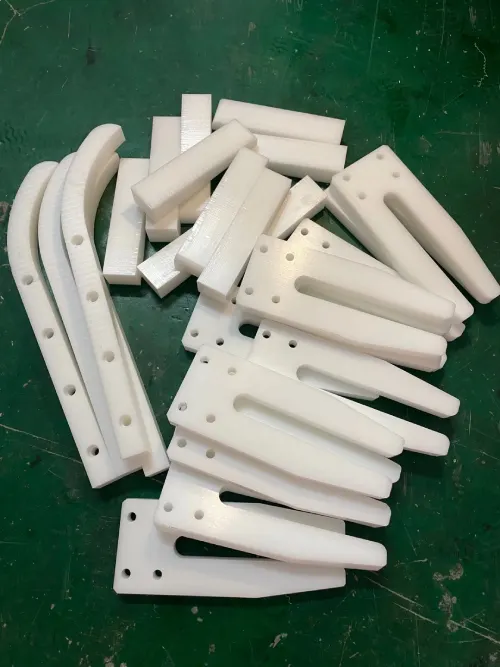

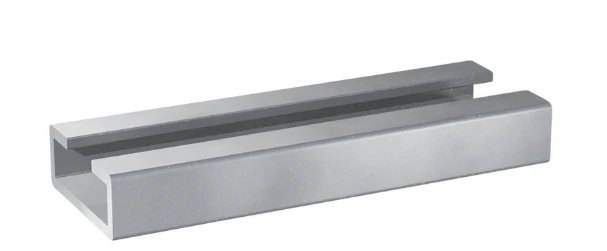
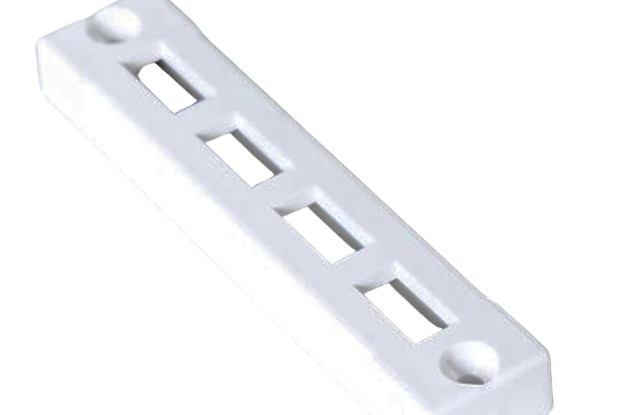
In the field of acrylic CNC machining, the selection of process parameters directly determines success or failure in mass production. When orders transition from single-piece prototyping to large-scale production, the balance between spindle speed, feed rate, and cutting load is no longer merely a theoretical value—it becomes the bottom line for cost and yield. As a professional acrylic CNC machining manufacturer, we have found that many issues—such as edge whitening or dimensional drift—that appear to be caused by equipment actually stem from a failure to dynamically adjust parameters in response to material batches or tool wear.
Differences in thermal response between cast and extruded acrylic, the stability of vacuum clamping, and even path redundancy in G-code are all amplified exponentially during large-scale acrylic PMMA CNC machining. This article will focus on the parameter logic for CNC machining acrylic in mass production scenarios—from equipment selection and toolpath optimization to post-processing integration—providing procurement and engineering teams with traceable, replicable delivery standards for acrylic CNC machined parts.
Mastering the Key Points of Acrylic CNC Machining
For acrylic (PMMA) CNC machining, the following five parameters determine whether the machining results will be predictable or lead to production challenges:
Balance feed rate and cutting depth to prevent melting and achieve precise cutting depth.
Adjust spindle speed to minimize heat buildup and ensure clean, precise cut edges.
Use sharp, specialized cutting tools and optimize toolpaths to minimize cut width and burrs.
Adjust acrylic CNC cutting parameters based on material type (cast acrylic vs. extruded acrylic) to achieve consistent surface finishes.
Equip the machine with a vacuum clamping system and an appropriate fume extraction system to ensure stable and safe operation.
Why choose Supro MFG
Real ex-factory price:
Provide the most cost-effective cost solution for manufacturing and assembling products, expanding product competitiveness.
Professional technical team:
a technical team specializing in custom shell manufacturing for more than 30 years.
Advanced Manufacturing Equipment: Industry-leading custom metal enclosure manufacturer with in-house sheet metal, die casting, precision machining workshops, and surface coating workshops.
ISO 9001-2015 Manufacturer:
ISO 9001-2015, PPAP III level, RoHS, NEMA, CE and other certified production standards.
24H*7 online English technical support: The professional English team responds quickly to users’ technical questions online at any time.
One-stop manufacturing solution:
help users from product design, prototype, batch manufacturing, surface treatment, assembly and packaging, transportation and a series of value-added services.
Authoritative testing capabilities:
With in-house mechanics and chemistry laboratories, it can quickly monitor manufacturing process quality control to ensure the delivery of high-quality products.
Intellectual Property Protection(NDA):
Accept to sign NDA documents to ensure that customers’ product information is protected.
Commitment to On-Time Delivery:
Door-to-door delivery in customizable secure packaging after complying with the delivery details agreed with the customer.
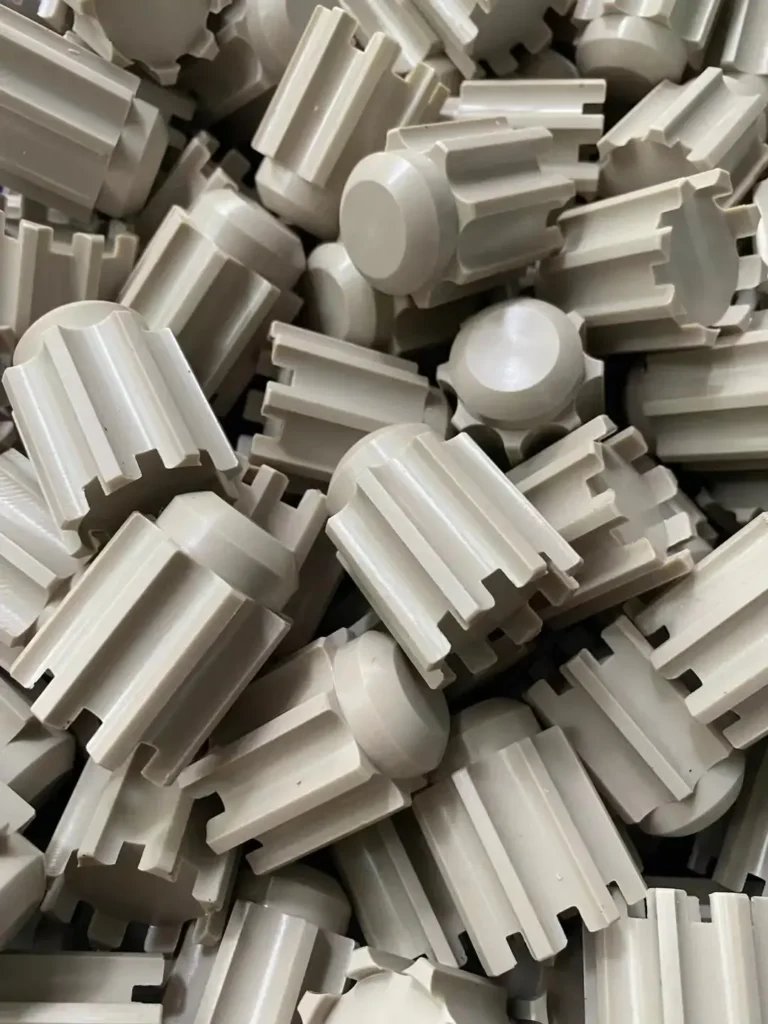
Selecting the Right Tools and Parameters for Acrylic CNC Machining
In acrylic PMMA CNC machining, the choice of tools and parameters determines whether the machining result is flawless or requires repeated rework. Melt-back and vibration marks are not machine malfunctions—they are signals that the spindle speed, feed rate, or workpiece clamping method is not compatible with the material. As an acrylic CNC machining manufacturer, we adjust machine rigidity based on the workpiece geometry, calibrate spindle parameters according to material type (cast vs. extruded), and ensure vacuum clamping effectively eliminates displacement for every job we undertake.
Selecting the Right CNC Machining Equipment for Acrylic
When CNC machining acrylic, the milling machine itself is the foundation for achieving predictable results. Frame rigidity is crucial—a heavy-duty steel structure effectively suppresses vibration, resulting in smoother edges on CNC-machined acrylic parts. An axis system equipped with precision linear guides offers excellent stability and prevents vibration, particularly when machining thin sheets.
Spindle power provides the torque required for thicker stock while maintaining stable thermal control. Smooth interpolation improves curve quality in CNC acrylic cutting. A properly sized worktable accommodates standard sheet dimensions, while an efficient dust collection system removes chips before they can re-deposit on the edges. As an experienced acrylic CNC machining manufacturer, we combine a rigid frame with a reliable spindle to ensure repeatability in CNC machining.
Optimal Spindle Speed Settings for Various Acrylic Types
When CNC machining acrylic, spindle speed must never be set in isolation—it must be balanced with feed rate and cutting load. High spindle speeds combined with low feed rates generate frictional heat, causing the edges to melt. Cast acrylic can withstand higher spindle speeds and produces clean, well-defined chips. Extruded acrylic, on the other hand, maintains lower processing temperatures at moderate spindle speeds and steady feed rates.
Tool diameter is critical: larger-diameter tools are suitable for thicker materials, while smaller-diameter tools reduce stress on fine details. To achieve stable CNC machining of acrylic (PMMA), parameters must be finely tuned. It is through this approach that professional custom acrylic CNC machining services can produce acrylic parts with predictable quality, free from thermal warping or vibration.
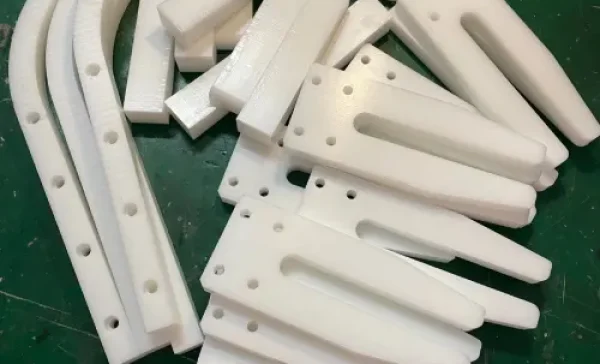
Choosing Between Laser Cutting and Milling Machines
When it comes to CNC machining of acrylic, the choice between laser cutting and milling depends on the application requirements rather than operational convenience. Laser cutting produces flame-polished edges and requires minimal post-processing—making it an ideal choice for thin 2D signage where processing speed and edge finish are critical. CNC-milled acrylic parts feature slightly matte edges, are better suited for mechanical polishing, and offer the flexibility to process thicker materials and 3D profiles that cannot be achieved with laser cutting.
For acrylic PMMA CNC machining, factors such as machine setup time, tool wear, and material utilization must be comprehensively considered. At Supro, we recommend the most suitable process based on the part’s geometry and machining volume to ensure that acrylic CNC machined parts meet both aesthetic and dimensional accuracy requirements while optimizing costs without compromising quality.
The Critical Role of Vacuum Tables in Acrylic CNC Machining
During CNC machining of acrylic, vacuum clamping is just as critical as spindle selection. The capacity of the vacuum pump and stable air pressure ensure uniform clamping force across the sheet surface. A well-designed partitioning system ensures the vacuum distribution matches the workpiece’s geometry—preventing pressure leaks in uncovered areas. A flat, distortion-free sheet directly determines the flatness of the final acrylic CNC machined parts.
Supro’s experience shows that secure clamping reduces vibration, resulting in acrylic CNC machining parts with smoother edges and minimizing corner cracking. In actual production, we place as much emphasis on workpiece clamping as we do on toolpath programming. A properly specified vacuum table transforms acrylic PMMA CNC machining from unpredictable to repeatable.
Are you looking for reliable & cost-effective
China Sheet Metal Fabricators
More than 150,000 OEM metal fabrication products delivered to 5,000+ global buyers.
And benefit from it!
Mass Production: Optimizing the Acrylic CNC Machining Process
Large orders are a game-changer. When acrylic CNC machining shifts from custom fabrication to mass production, speed, precision, and repeatability determine profit margins. From acrylic sheet pre-processing to CNC milling, strict process control effectively reduces scrap rates and increases output.
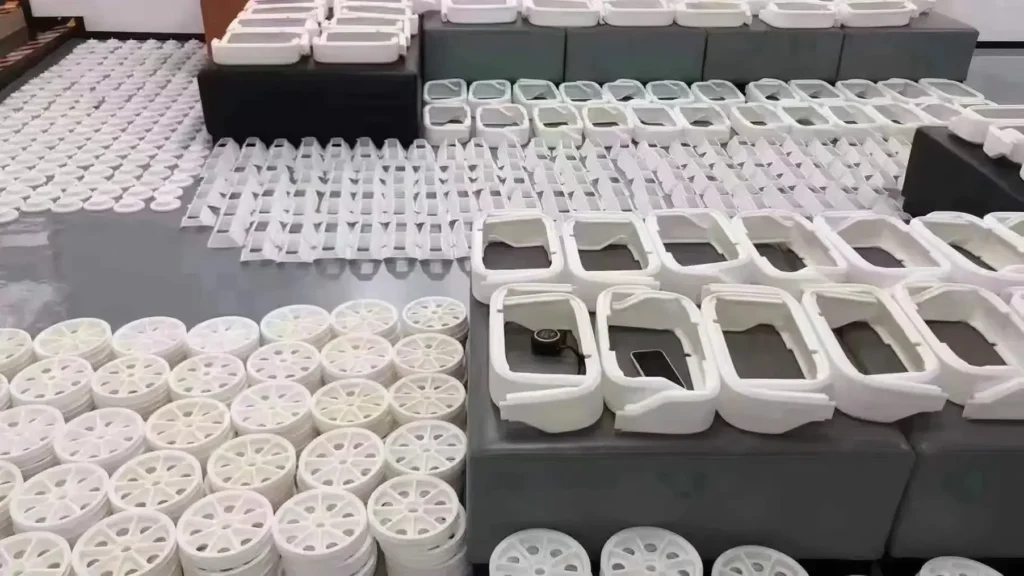
CNC Milling Automation to Meet Mass Production Demands
In the scaled production of acrylic CNC machining, automation transforms mass production from labor-intensive to predictable. Robot material handling systems, integrated with vacuum workbenches, eliminate bottlenecks caused by manual loading. Software-level design is critical—intelligent nesting linked to ERP systems, real-time dashboards, and tool life monitoring ensure a seamless production flow.
The shop floor integration system encompasses automated sheet loading, in-line scrap removal, and centralized dust extraction. Through interconnected CNC machining units, a single operator can manage multiple machines. As an acrylic CNC machining manufacturer, we utilize these systems to minimize downtime and maintain tight cycle times. In this way, we ensure consistency across all machined parts while increasing output.
Best Practices for High-Volume Acrylic Sheet Processing
For high-volume acrylic CNC machining, material handling is just as critical to product quality as cutting parameters. Improper storage or transportation can cause scratches, chipped edges, and warping even before cutting begins.
The following are storage and handling guidelines used in large-scale acrylic CNC machining facilities:
Sheet Thickness (mm) | Max Stack Height (cm) | Recommended Lift Method | Damage Rate Target (%) |
3 | 120 | Vacuum lifter | <1.5 |
5 | 100 | Dual suction frame | <1.2 |
8 | 80 | Fork with soft pads | <1.0 |
10 | 60 | Overhead crane + straps | <0.8 |
Optimizing Toolpaths and G-Code for Efficient Acrylic CNC Machining
Precise toolpath optimization can significantly improve the efficiency of acrylic CNC cutting:
First, perform precise vectorization of the design files.
Apply intelligent nesting algorithms to minimize scrap.
Optimize G-code generation to eliminate idle travel.
Select appropriate acrylic PMMA CNC machining strategies based on sheet thickness.
Supro’s experience shows that shorter travel distances during CNC machining result in fewer tool retractions and smoother arcs. Efficient CNC machining of acrylic reduces heat buildup and edge melting. In a busy workshop, even a three-second savings per part can yield significant cumulative benefits over thousands of machining cycles.
Managing Acrylic CNC Machining Parameters to Ensure Consistent Results
To achieve consistency in acrylic PMMA CNC machining, parameter management transforms the process into a repeatable procedure. Spindle speed must match the tool diameter—mismatches cause overheating. Feed rate must balance cutting load to prevent melting or vibration. Cutting depth controls heat buildup. Tool selection directly affects edge surface quality.
To ensure consistency across shifts, Supro performs weekly calibrations, records spindle speed and feed data daily, and compares scrap rates across different machines. When all parameters are properly coordinated, CNC machining of acrylic produces repeatable edges ready for flame polishing, ensuring every batch of parts meets the same standards.
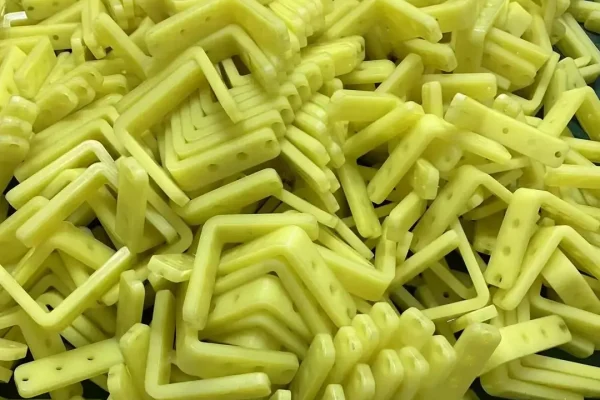
Post-Processing Solutions for Acrylic CNC Machining
After acrylic CNC cutting is complete, finishing determines the quality of the brand.
Practical workflow:
Trim and lightly deburr.
Machine the edges to achieve a uniform gloss.
Select a polishing process—polishing wheel or flame polishing.
Perform final cleaning using an anti-static solution.
Conduct batch-level quality control inspections before packaging.
In high-quality custom acrylic CNC machining services, subtle post-processing adjustments can save rework time. Supro Mfg aligns the post-processing workflow with the acrylic CNC machining process to ensure that the polishing stage never becomes a bottleneck.
Get instant ex-factory price quotation.
If you only have an idea or an old sample,Let us know.
with photo or video and get our quotation and manufacturing solutions.
- Product design drawings or 3D model files.
- Material standards and appearance requirements.
- Product quantity demand.
- Industry standards in the application field.
- Functional requirements
Summary
For acrylic CNC machining, process parameter optimization is the only traceable variable in mass production. Once the equipment and materials are fixed, batch consistency is determined by the precise matching of spindle speed, feed rate, and cutting load. As a professional acrylic CNC machining manufacturer, we control heat buildup through tool geometry optimization and use data logs to track parameter drift, ensuring that acrylic CNC machined parts exhibit consistent edge quality across different shifts.
Supro is a professional acrylic CNC machining manufacturer. Leveraging advanced equipment, extensive manufacturing experience, and a dedicated engineering team, we provide flawless custom acrylic CNC machining services to over 3,000 companies worldwide, offering genuine manufacturer quotes. We deliver a wide range of products efficiently and on time. From product design and rapid prototyping to mass production, we provide professional technical support and exceptional quality. We offer one-stop manufacturing solutions and highly cost-competitive product supply!