
In structural engineering, the reliability of 90-degree metal brackets extends far beyond their simple geometric form. They shoulder complex mechanical transmission tasks: from static support to dynamic load distribution, from environmental corrosion resistance to thermal stress management.
As a professional custom 90-degree metal bracket manufacturer, Supro deeply understands that premature bracket failure rarely stems from sudden overload but often results from fundamental mismatches between materials and operating environments. Failures caused by such mismatches—such as stress corrosion cracking or fatigue fractures—are typically gradual and insidious, ultimately driving up project costs and causing downtime losses.
Therefore, selecting the correct 90-degree metal bracket material is not merely a matter of specification screening but a critical project protection strategy. The choice of material directly determines the structure’s lifecycle cost and safety margin.
This article systematically explains, based on materials science and failure analysis, how precisely selecting 90-degree metal bracket materials transforms performance requirements, environmental challenges, and manufacturing processes into durable and reliable structural connections.
Understanding the Core Failure Modes of 90-Degree Metal Brackets—Why Material Selection Matters
At Supro Mfg, decades of engineering experience have taught us that a successful custom 90-degree metal bracket project begins with a deep understanding of potential failure modes, not merely translating drawings. Material selection is the first and most critical line of defense against these failures. Clarifying these risks directly impacts a project's total cost of ownership, safety compliance, and maintenance cycles.
Stress Concentration and Fatigue Cracks
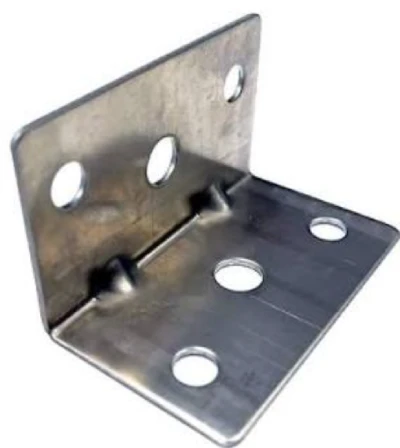
The inner corner of any 90-degree metal bracket inherently creates a stress concentration point. According to elastic mechanics, local stresses here can reach multiples of the average stress. If the selected 90-degree metal bracket material lacks sufficient fatigue strength (as tested per ASTM E466) or contains microstructural defects like inclusions, microcracks can initiate and propagate under dynamic or cyclic loading.
For example, a 90-degree metal bracket made from ordinary A36 steel for use in a vibrating environment may have a significantly shorter service life than an equivalent product manufactured from A572 Gr. 50 steel, which offers a superior toughness-to-strength ratio. Professional material selection fundamentally reduces the risk of fatigue failure for custom 90-degree metal brackets, ensuring they withstand expected dynamic loads throughout their service life.
Electrochemical Corrosion and Dissimilar Metal Contact
This represents an often underestimated threat in assemblies involving multiple materials. When your custom 90-degree metal bracket comes into direct contact with another metal in the presence of an electrolyte (such as humid air), a galvanic cell forms. The more active metal (anode) will accelerate corrosion.
For example, an uninsulated aluminum alloy 90-degree metal bracket connected to a steel structure readily forms a galvanic cell, leading to rapid pitting corrosion of the aluminum bracket. Material selection requires reference to electrochemical series charts, opting directly for more inert materials (e.g., 316 stainless steel) or employing physical isolation through specialized surface treatments and insulating spacers.
Creep and Stress Relaxation
For 90-degree metal brackets operating in high-temperature environments (typically exceeding 0.3-0.5 times the metal’s melting point) or enduring constant high loads over extended periods, time-dependent deformation mechanisms become critical considerations.
Creep refers to the gradual plastic deformation of materials under constant stress over time; stress relaxation denotes the decay of internal stresses within materials under constant strain over time. Creep and stress relaxation in 90-degree metal brackets lead to loss of fastener preload, causing gradual loosening of the entire connection point.
Therefore, select 90-degree metal bracket materials with high creep strength (such as certain stainless steels or specialty alloys) or incorporate appropriate relaxation allowances into the design. This ensures your bracket system maintains stable clamping force and structural integrity during long-term use.
Only 4 steps
online custom metal fabrication parts
Contact our experts team and experience the efficiency and economic benefits of digital metal fabrication services.
Upload Design Files
STL , STEP (.stp), IGES (.igs), (.ZIP), or PDF.
Also be a sample or an idea
Quote & Design Analysis
Instant factory quotes and DfM reports, the most reasonable solution.
Manufacturing Begins
Digital processes can initiate order tasks within 24 hours.
On-Time Delivery
Keeping delivery promises, approved by 3000+ Global Company buyers.
In-Depth Analysis of 90-Degree Metal Bracket Materials
Material selection directly impacts the performance limits, service life, and total cost of ownership of your custom 90-degree metal brackets. The following section systematically analyzes four major categories of core engineering materials to help you make precise decisions based on specific mechanical, environmental, and budgetary requirements.
Carbon Steel and Low-Alloy Steel 90-Degree Metal Brackets: Balancing Economy and Strength
As the most commonly used 90-degree metal bracket materials, carbon steel and low-alloy steel (e.g., ASTM A36, A572 Gr.50) offer an excellent equilibrium between strength, formability, and cost. Their yield strength typically ranges from 250 to 450 MPa, making them suitable for most structural support applications.
However, the primary engineering limitation of these materials lies in corrosion resistance. In humid or industrial environments, reliable surface protection systems are essential. For critical outdoor applications, we recommend hot-dip galvanizing over simple powder coating to provide long-term cathodic protection.
For custom 90-degree metal brackets subjected to impact or dynamic loads, low-alloy high-strength steels like Q345B (equivalent to ASTM A572) are suitable. These achieve finer grain structures through microalloying, enhancing toughness and fatigue resistance, making them ideal for heavy-duty storage or equipment frameworks.
Stainless Steel 90-Degree Metal Brackets: Unifying Corrosion Resistance and Structural Integrity
When your 90-degree metal bracket faces corrosive environments, austenitic stainless steel becomes the preferred choice. 304 stainless steel offers excellent general corrosion resistance, while 316L stainless steel provides significant resistance to chloride-induced pitting and crevice corrosion.
Selecting a stainless steel 90-degree metal bracket involves not only choosing a material but also relying on the dense chromium oxide passivation layer that forms on its surface. Therefore, fabrication and welding processes must protect this layer. Our rigorously enforced custom 90-degree metal bracket manufacturing controls include: using low-carbon grades (“L” grades) to prevent carbide precipitation in weld zones, and performing post-weld passivation (compliant with ASTM A967) when necessary. This ensures your custom 90-degree metal bracket maintains structural integrity and hygiene standards throughout its lifecycle.
Aluminum Alloy 90 Degree Metal Brackets: Lightweight and Weather-Resistant Solutions
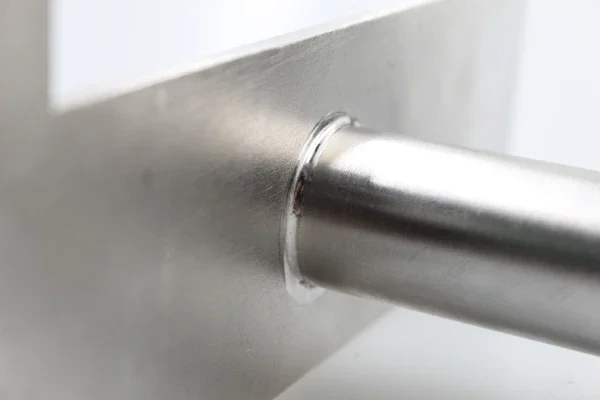
For weight-sensitive applications requiring excellent weather resistance—such as aerospace ground equipment, mobile stage trusses, or communication cabinets—aluminum alloys emerge as the preferred material for 90 degree metal brackets.
The 6061-T6 alloy sets the industry standard due to its excellent combination of strength, weldability, and corrosion resistance. Its naturally formed aluminum oxide layer provides effective atmospheric corrosion protection, which can be further enhanced through anodizing to increase hardness and corrosion resistance.
However, special attention is required when customizing 90-degree metal brackets: aluminum alloy has approximately one-third the elastic modulus of steel, meaning greater deflection may occur under identical loads, necessitating compensation in sectional design. Additionally, when connecting aluminum alloy 90-degree metal brackets to dissimilar metals, insulating washers or coatings must be used to prevent galvanic corrosion.
Special Alloy 90-Degree Metal Bracket: The Professional Choice for Extreme Conditions
Certain extreme conditions demand that your custom 90-degree metal bracket outperforms conventional materials. For instance, in outdoor architecture or art installations, weathering steel (such as the Corten series) forms a stable, dense rust layer on its surface through alloying elements like copper, chromium, and nickel. This layer prevents further corrosion, ensuring decades of service life while developing a distinctive appearance.
For environments subjected to sustained high temperatures (exceeding 500°C) or strong acidic/alkaline media, nickel-based alloys (like Inconel 625) must be considered. These 90-degree metal bracket materials maintain high strength and resist oxidation at extreme temperatures through solution strengthening. Selecting specialty alloys as 90-degree metal bracket materials is a precise engineering decision based on comprehensive lifecycle risk and cost analysis.
Are you looking for reliable & cost-effective
China Sheet Metal Fabricators
More than 150,000 OEM metal fabrication products delivered to 5,000+ global buyers.
And benefit from it!
Application-Based Decision Matrix for 90-Degree Metal Bracket Material Selection
Selecting the optimal 90-degree metal bracket material for your project transcends simple material property comparisons—it is a systematic engineering decision grounded in specific application scenarios. A clear decision matrix translates complex operating parameters into definitive technical specifications, guiding your custom 90-degree metal bracket to achieve a balance between cost, performance, and longevity.
Application Environment | 90 degree metal bracket material | Alternative solutions | Critical Surface Treatment Requirements | Estimated service life |
Indoor Dry Environment (C1) | Carbon steel (ASTM A36) | Powder coating (epoxy/polyester), thickness ≥60µm. Provides fundamental rust prevention and aesthetic appeal. | 15–25 years | |
Indoor high humidity/Outdoor temperate (C3) | High-strength low-alloy steel (ASTM A572 Gr.50) | Carbon Steel A36 + Enhanced Protection | Hot-dip galvanized, average coating thickness ≥85µm (compliant with ASTM A123). Provides excellent sacrificial anode protection. | 20–30 years |
Coastal Atmospheric/Deicing Salt Environment (C5-M) | 316L stainless steel (UNS S31603) | Hot-dip galvanized steel + Specialized coating system | Passivation treatment (ASTM A967)。 | Over 40 years |
Mildly corrosive chemical environment (pH 4–10) | 304 stainless steel (UNS S30400) | 316L Stainless Steel (Superior Corrosion Resistance) | Electropolishing. Enhances surface finish, reduces corrosion medium adhesion points, and strengthens the passivation film. | 25–40 years |
Food Processing/Medical (Requires Cleaning and Disinfection) | 316 stainless steel, mirror polish | 304 stainless steel | Electropolished to Ra<0.8µm. Achieves a sanitary surface finish that prevents microbial harboring and meets FDA/USDA contact requirements. | Perform regular maintenance according to the design specifications. |
High dynamic load/vibration environment | Low-alloy steel A572 or 4140 alloy steel | Aluminum Alloy 2024-T3 (Lightweight) | Phosphate conversion coating + oiling. Provides an excellent coating adhesion foundation and short-term rust protection without introducing hydrogen embrittlement risk. | Based on fatigue calculations, key inspections are typically required every 10 to 15 years. |
Extreme high-temperature environments (>400°C) | 310S Stainless Steel (UNS S31008) | Heat-resistant alloys (such as Inconel) | No organic coating. Relies on the material’s inherent high-temperature oxide layer. May require heat treatment to relieve forming stresses. | Evaluation Based on High-Temperature Creep Data |
Impact of Manufacturing Processes on Material Properties of 90-Degree Metal Brackets
Selecting the appropriate 90-degree metal bracket material is fundamental; manufacturing processes determine whether its potential properties can be fully realized and sustained over time. Improper processing introduces residual stresses, microcracks, or microstructural degradation, compromising the structural integrity of custom 90-degree metal brackets.
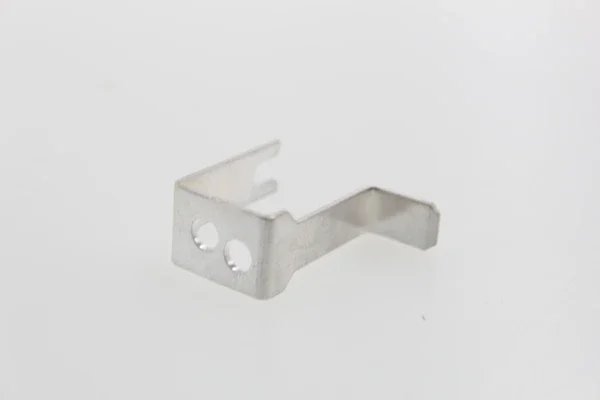
Cold Bending and Strength Compensation
Cold bending is an efficient method for manufacturing 90-degree metal brackets, but it alters the material’s microstructure and mechanical properties. The critical control parameter is the ratio of the inner bend radius (R) to the material thickness (t).
For carbon steel 90-degree metal brackets, we strictly adhere to the R/t ≥ 2.0 guideline; for aluminum alloy 90-degree metal brackets, R/t ≥ 3.0 is recommended. Excessively small bending radii cause excessive thinning or even cracking of the outer material while generating severe work-hardened zones on the inner side. While this hardening locally increases strength, it significantly reduces the 90-degree metal bracket material’s ductility and impact toughness.
For custom 90-degree metal brackets subjected to dynamic loads, Supro performs localized annealing on the bend zone (applicable only to heat-treatable materials) or incorporates structural reinforcement through additional ribs in the design to compensate for strength loss. This ensures the formed component maintains sufficient plasticity reserves in critical stress areas.
Metallurgical Considerations for Welding Processes in 90-Degree Metal Brackets
Welding is a common assembly method for complex custom 90-degree metal brackets. However, it inherently involves localized melting and thermal cycling, significantly altering the material's metallurgical state.
Heat-Affected Zone (HAZ) Control
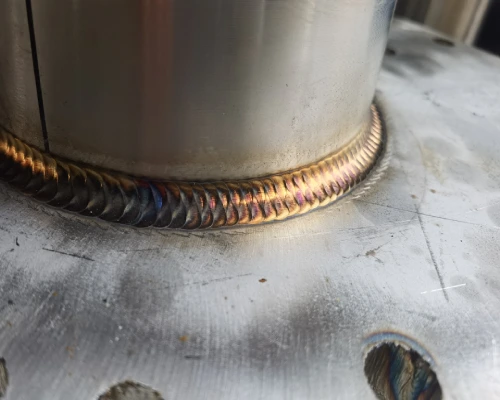
The heated but unfused zone adjacent to the weld is termed the Heat-Affected Zone (HAZ), whose properties often represent the weakest link in the entire custom 90-degree metal bracket. For low-carbon steels, the HAZ may exhibit reduced toughness due to grain coarsening. For precipitation-hardened aluminum alloys (e.g., 6061-T6), the HAZ undergoes over-aging, resulting in strength losses of up to 50%.
Supro’s welding process control centers on precise management of heat input and cooling rates. For example, when welding stainless steel 90-degree metal brackets, we employ argon shielding (TIG/MIG) with backing gas and strictly maintain interpass temperatures below 150°C (for 304/316 grades) to minimize chromium carbide precipitation and preserve corrosion resistance.
Post-Weld Heat Treatment (PWHT)
For thick plates (typically carbon steel >35mm) or highly constrained 90-degree metal brackets, residual stresses from welding can reach yield strength levels. PWHT (e.g., stress relief annealing) aims not to alter strength but to reduce residual stresses to safe levels (typically <30% of yield strength), significantly enhancing resistance to stress corrosion cracking and dimensional stability. This is critical for custom 90-degree metal brackets operating in low-temperature or corrosive environments.
Microstructural Optimization of Additively Manufactured 90-Degree Metal Brackets
For 90-degree metal brackets featuring complex topologically optimized structures or integrated functionalities, metal additive manufacturing (e.g., SLM) offers exceptional design freedom. However, its “layer-by-layer deposition” process characteristics result in anisotropic microstructures and internal defects such as porosity and unfused regions.
Our countermeasure involves employing optimized scan paths and process parameters to refine grain size, followed by hot isostatic pressing (HIP) post-processing for critical load-bearing components. HIP effectively closes internal defects under high temperature and pressure, elevating the material density of the 90-degree metal bracket to over 99.99%. This achieves isotropic mechanical properties approaching or exceeding forged components, alongside exceptionally high fatigue strength.
Why choose Supro MFG's Custom metal bracket Services
Provide the most cost-effective cost solution for manufacturing and assembling products, expanding product competitiveness.
a technical team specializing in custom shell manufacturing for more than 30 years.
Advanced Manufacturing Equipment: Industry-leading custom metal enclosure manufacturer with in-house sheet metal, die casting, precision machining workshops, and surface coating workshops.
ISO 9001-2015, PPAP III level, RoHS, NEMA, CE and other certified production standards.
24H*7 online English technical support: The professional English team responds quickly to users’ technical questions online at any time.
help users from product design, prototype, batch manufacturing, surface treatment, assembly and packaging, transportation and a series of value-added services.
With in-house mechanics and chemistry laboratories, it can quickly monitor manufacturing process quality control to ensure the delivery of high-quality products.
Accept to sign NDA documents to ensure that customers’ product information is protected.
Door-to-door delivery in customizable secure packaging after complying with the delivery details agreed with the customer.
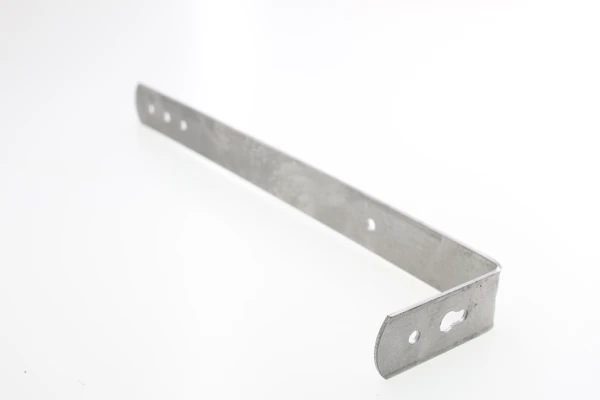
Comprehensive Validation and Quality Assurance System for 90-Degree Metal Brackets
At Supro Mfg, we believe delivering a qualified custom 90-degree metal bracket is merely the foundation; establishing a traceable, verifiable quality assurance system is the core to ensuring its long-term structural reliability.
For critical failure modes, we deploy a three-tiered defensive verification: First, accelerated corrosion testing (e.g., ASTM G85 cyclic corrosion testing) predicts the durability of coating systems or 90-degree metal bracket materials in target environments, providing data-driven support for service life estimation.
Second, we perform standardized non-destructive testing (NDT). This includes magnetic particle testing (MT) or liquid penetrant testing (PT) on welded custom 90-degree metal brackets to detect surface cracks, and ultrasonic testing (UT) on high-stress components to ensure internal integrity.
Finally, for custom 90-degree metal brackets deployed in critical infrastructure, we integrate structural health monitoring (SHM) interfaces or recommendations. This transforms your 90-degree metal bracket from a passive component into a key intelligent node capable of sensing its own condition, enabling predictive maintenance.
Conclusion
In summary, ensuring the enduring reliability of a custom 90-degree metal bracket is not achieved through the optimization of a single process step, but rather through an integrated approach spanning materials science, process engineering, and quality verification.
The correct selection of 90-degree metal bracket material forms the foundation for resisting failure, yet the effectiveness of this choice depends entirely on whether subsequent manufacturing processes can fully preserve and realize the material’s inherent properties. From controlling the R/t ratio during cold bending to metallurgical management during welding, every process detail serves as proactive protection against potential weaknesses in the 90-degree metal bracket material.
Supro is a specialized custom 90-degree metal bracket manufacturer. Leveraging advanced equipment, extensive manufacturing experience, and a professional engineering team, we provide perfect custom metal bracket solutions to over 3,000 companies worldwide, offering genuine manufacturer pricing.
We deliver diverse products efficiently and on schedule. From product design and rapid sheet metal prototype fabrication to mass production, we provide expert technical support and exceptional quality. We offer one-stop manufacturing solutions and highly cost-competitive product supply!