For procurement managers and hardware engineers, choosing the right sheet metal stamping process is more than just a technical preference—it directly determines the return on investment for the dies, lead times, and unit costs. When evaluating compound die stamping versus progressive die stamping, the key to procurement decisions lies in analyzing specific production volumes, cumulative tolerance risks, and material utilization requirements.
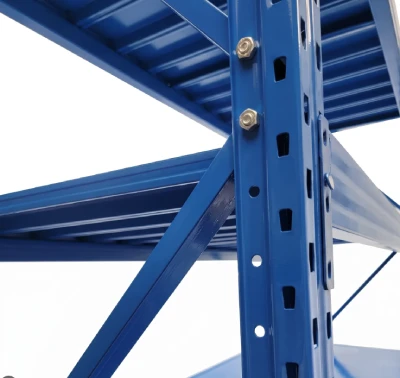
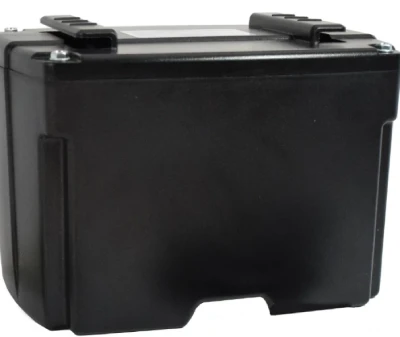
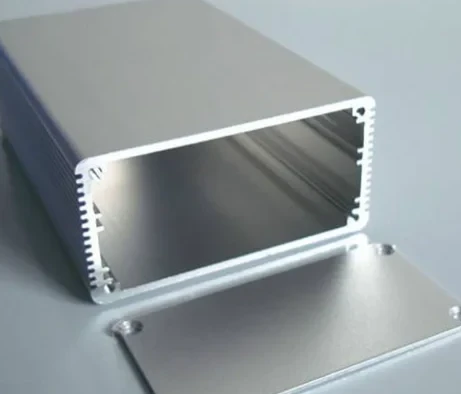
On the production floor, we often see procurement teams grappling with this decision when sourcing precision mounting rails or custom IP enclosures. A misjudgment in selecting the metal stamping process often results in tens of thousands of dollars in initial die costs being wasted and delays in time-to-market.
Compound die stamping can simultaneously perform punching and blanking in a single stamping operation, making it extremely cost-effective for medium-volume production that requires absolute flatness and zero transfer errors. Conversely, for high-volume, long-term production orders, progressive metal stamping significantly reduces unit costs by allowing the strip material to move through a continuous sequence of stations.
This article provides a detailed analysis of the actual die costs, part complexity, and material scrap rates for both processes. By examining real-world production data, we offer a concrete framework to help you determine the right manufacturing strategy, ensuring that your next metal forming project achieves strict quality control without exceeding your budget.
Core Principles of Sheet Metal Stamping
Essentially, precision metal stamping transforms flat sheet metal blanks into parts with precise geometries using precisely calculated stamping tonnage. Understanding these basic principles of die operation is crucial before evaluating which specific process meets your production volume and dimensional tolerance requirements.
How Compound Die Stamping Works
Compound die stamping technology enables multiple operations—typically including punching and blanking—to be completed in a single stamping stroke at a single, independent station. Unlike multi-station setups, the sheet metal remains completely stationary throughout the cutting process.
For precision brackets or custom enclosure panels, this single-stroke stamping technology completely eliminates handling errors. Since the inner hole and outer periphery are cut simultaneously, concentricity and dimensional accuracy are exceptional. Furthermore, the workpiece is securely clamped between the punch and the die pad, resulting in outstanding physical flatness.
At Supro MFG, when designing dies for projects that require tight tolerances and do not require a secondary flattening process, compound die stamping is often the most reliable mechanical solution for producing flat, high-precision metal profiles.
How Progressive Metal Stamping Works
The progressive die stamping process relies on a continuous feeding system in which coiled metal strip sequentially passes through a series of independent stations. Each station performs a different operation—such as punching, coining, or bending—with the finished part ultimately being cut from the carrier strip in the final stage. This continuous stamping method is designed to maximize output and process complex 3D geometries.
Because parts are formed progressively across multiple operations, engineers can seamlessly integrate complex bending and shallow drawing operations—something that single-stroke processes simply cannot achieve. However, progressive metal stamping relies on guide pins to precisely guide the strip’s orientation, ensuring accurate alignment between operations.
For high-volume production of complex mounting rails, progressive die metal stamping leverages these sequentially arranged operations to significantly reduce unit costs while maintaining high-speed production efficiency.
Cost Comparison Analysis of Metal Stamping Dies
Die amortization costs largely determine the financial viability of your custom metal stamping project. When evaluating options, procurement teams should never limit their assessment to the initial die manufacturing quote alone. To accurately calculate the return on investment (ROI), it is essential to carefully weigh the complexity of upfront CNC machining against long-term maintenance frequency and punch wear.
Initial Die Investment (Upfront Costs)
The upfront capital investment required for continuous stamping dies is inherently higher—typically 50% to 200% higher than that for composite die solutions. This difference stems from the internal structure of the dies.
Continuous stamping dies require precision-machined guide pins, lifters, and multiple sequential stations to manipulate the coiled carrier strip. Designing these complex continuous feeding mechanisms requires a significant investment of engineering man-hours. In contrast, composite stamping dies integrate punching and blanking into a single localized station.
By eliminating multi-stage die sets and complex transfer mechanisms, initial manufacturing costs are significantly reduced. For procurement teams with limited budgets who need to launch custom metal enclosures or flat-panel brackets, adopting the compound stamping process in sheet metal stamping projects can significantly lower the financial barrier to entry and accelerate time-to-market without depleting early-stage capital reserves.
Metal Stamping Die Maintenance and Service Life
Beyond the initial procurement cost, long-term maintenance directly determines the true return on investment per unit. In the compound die stamping process, the physical stresses generated by cutting the outer perimeter and inner holes act simultaneously. This concentrated stamping force accelerates punch wear, requiring more frequent regrinding to prevent microcracks or burrs from forming on precision components such as guide rails. However, due to the single-station design, maintenance itself is relatively straightforward.
Progressive dies distribute the forming force across multiple operations, which typically extends the overall die life—especially when reinforced with carbide inserts in high-volume production. However, once a progressive die fails, the resulting downtime can be severe. Troubleshooting issues such as misaligned locating holes or broken springs in complex multi-station metal stamping dies requires highly skilled die technicians and results in costly press downtime; these factors must be factored into your supply chain risk analysis.
Only 4 steps
online custom metal fabrication parts
Contact our experts team and experience the efficiency and economic benefits of digital metal fabrication services.
Upload Design Files
STL , STEP (.stp), IGES (.igs), (.ZIP), or PDF.
Also be a sample or an idea
Quote & Design Analysis
Instant factory quotes and DfM reports, the most reasonable solution.
Manufacturing Begins
Digital processes can initiate order tasks within 24 hours.
On-Time Delivery
Keeping delivery promises, approved by 3000+ Global Company buyers.
The Impact of Production Volume and Unit Cost Efficiency on Metal Stamping Process Selection
For any custom metal stamping project, production volume ultimately determines its break-even point. To calculate the true return on investment (ROI), it is essential to carefully analyze how press cycle time, labor and overhead costs, and die amortization interact across different specific production batches.

Scope of Application for Compound Die Stamping Technology
For small- to medium-volume production—typically between 10,000 and 50,000 pieces—compound die stamping offers the optimal economic balance. In such cases, amortizing the cost of a large, multi-station progressive die is not financially viable. Because the upfront capital investment required for compound dies is significantly lower, procurement teams can achieve a return on investment more quickly, even with slightly longer cycle times. Although operators may need to feed the strip at a lower strokes per minute (SPM) rate, the total cost of the project remains highly favorable to you.
When Supro MFG handles medium-volume orders—such as flat, high-precision custom enclosures or mounting brackets—this single-station metal stamping technology prevents buyers from over-investing in capital. You can flexibly adjust the scale of sheet metal production before market demand is fully validated, without tying up cash flow in expensive metal stamping dies.
Why Progressive Die Metal Stamping Dominates High-Volume Production
When annual production exceeds 100,000 units, the cost structure undergoes a complete transformation, making progressive metal stamping the undisputed choice for procurement managers. At this scale, the high initial investment in multi-station stamping dies is quickly amortized, bringing the cost per unit down to just a few cents. Its economic advantages lie in extremely high production speeds and a high degree of automation.
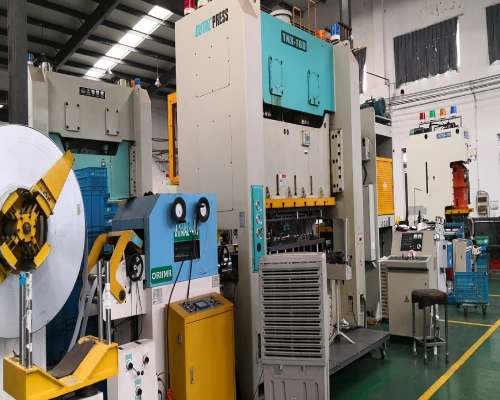
A well-designed progressive die can perform hundreds of strokes per minute (SPM), transforming continuous metal coil into finished parts without any manual intervention. This extremely high output minimizes labor costs and significantly reduces the cost per unit. When manufacturing complex server rack rails or precision enclosure components, the progressive die stamping process ensures uninterrupted production and high output.
Once commissioned, the stamping press operates at peak efficiency, ensuring your high-volume supply chain remains flexible, highly predictable, and free from labor-related bottlenecks.
Precision, Tolerances, and the Complexity of Metal Stamping Parts
In addition to cost considerations, part geometry also strictly limits the choice of metal stamping process. Moving the blank between multiple stations naturally leads to cumulative tolerances. Ultimately, determining the appropriate process requires striking a balance between complex 3D forming capabilities and the strict dimensional concentricity required for flat profiles.
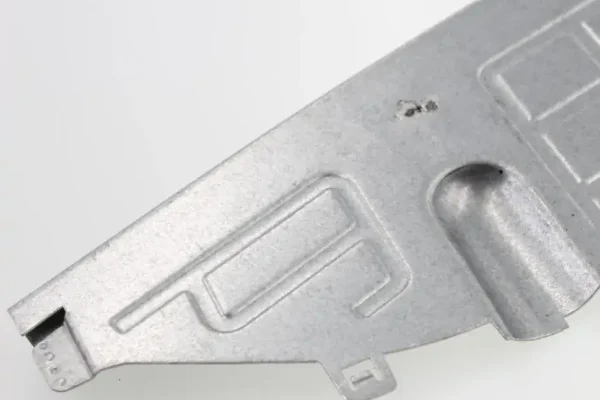
Dimensional Accuracy and Transfer Error
When strict positioning tolerances are critical, compound die stamping technology offers distinct mechanical advantages. Because the die simultaneously cuts the inner hole and outer periphery in a single stamping stroke, the metal blank does not shift. This completely eliminates transfer error—that is, the minute alignment deviations that occur as the carrier strip moves between stations. For engineers designing flat-panel brackets or custom enclosure panels, this ensures exceptional concentricity.
At Supro MFG, we specify this stamping method when drawings require strict flatness tolerances (e.g., ±0.02 mm). By avoiding the cumulative tolerances inherent in sequential operations, the compound die stamping process ensures that every product meets strict quality control standards the moment it exits the press. Ultimately, this single-station stamping method not only produces perfectly flat profiles but also minimizes the need for secondary dimensional inspection.
Handling Complex Geometries and Bends
However, compound dies are limited to flat contours. If your part design includes three-dimensional geometries—such as multi-axis bends, flanges, or shallow draw operations—you must use the progressive die stamping process. This method feeds metal strip sequentially through a series of engineered stations, gradually forming the final shape to prevent material breakage.
For example, when manufacturing complex server mounting rails, progressive stamping allows us to integrate bending, embossing, and punching into a single continuous process. Although setting up multiple stations requires a higher upfront investment, it eliminates the need to send flat blanks to a standalone bending machine for secondary forming.
For procurement teams, utilizing this progressive metal stamping process means that complex sheet metal parts can be completed directly on the stamping press. This method consolidates demanding manufacturing steps into a highly automated, cost-effective production process.
Material Utilization and Scrap Reduction in Metal Stamping
In any custom metal stamping project, raw material costs are typically the largest variable expense. Therefore, optimizing material utilization is just as important as managing initial die quotes. When evaluating scrap rates, compound die stamping offers significant economic advantages. Since this method cuts the entire contour in a single, independent stamping operation, die engineers can maximize the layout of the blank geometry. This compact strip layout significantly reduces residual skeleton scrap.
In contrast, the progressive die stamping process inherently requires a continuous carrier strip to physically move the metal blanks between adjacent stations. This structural connecting strip consumes valuable material, thereby reducing the overall yield. Although skeleton scrap can be recycled, the savings from scrap offsets can never fully compensate for the high cost of raw material coils.
At Supro MFG, we place special emphasis on this distinction when buyers specify high-cost alloys such as 304 stainless steel or beryllium copper. For procurement teams purchasing flat-panel IP enclosures, choosing a single-station sheet metal stamping process maximizes the utilization of metal sheet per inch.
Decision Matrix: Which Metal Stamping Process Is Right for Your Project?
Selecting the optimal sheet metal stamping process requires a thorough evaluation of the project’s estimated annual usage (EAU), part geometry, and available upfront capital.
If your design drawings require flat contours (such as custom IP-rated cabinet brackets) with strict planar concentricity and your annual production volume is less than 50,000 pieces, compound die stamping can minimize your financial risk. Significantly reduced die costs ensure a rapid return on investment without sacrificing dimensional accuracy or increasing scrap.
Conversely, if your engineering design requires multi-axis bending (such as complex server rack rails) and your annual usage (EAU) consistently exceeds 100,000 pieces, progressive metal stamping remains the optimal choice. Although the initial die investment is substantial, automated continuous feeding can reduce labor costs per unit to a fraction of a cent over the die’s service life.
At Supro MFG, our engineers conduct rigorous Design for Manufacturability (DFM) reviews before finalizing any die strategy. By directly aligning your tolerance requirements with your budget, we ensure that the metal stamping process you specify delivers maximum cost-effectiveness starting with the very first prototype.
Partner with a Reliable Metal Stamping Manufacturer
To minimize costs without compromising tolerance specifications, you need not only the right metal stamping process but also a manufacturer capable of executing that process flawlessly. Sourcing overseas often carries hidden risks, ranging from premature die wear to poor quality control management. Procurement managers need a partner capable of independently designing dies and strictly adhering to maintenance protocols.
At Supro MFG, we bridge the gap between initial DFM analysis and scalable mass production. By thoroughly evaluating your precise blueprints, our engineering team will determine whether a single-stroke or progressive stamping configuration will better maximize your long-term return on investment. We operate robust, ISO-certified manufacturing facilities specializing in precision sheet metal fabrication, with a product portfolio ranging from complex server enclosures to mission-critical mounting brackets.
Because we control the entire lifecycle of custom metal stamping—from initial die fabrication to final dimensional inspection—we are able to eliminate the supply chain bottlenecks that often delay your product’s time to market.
Don’t let excessive die amortization costs and unpredictable defect rates erode your profit margins any longer. Contact Supro MFG’s technical engineering team today to fully optimize your next sheet metal stamping project for maximum economic efficiency.