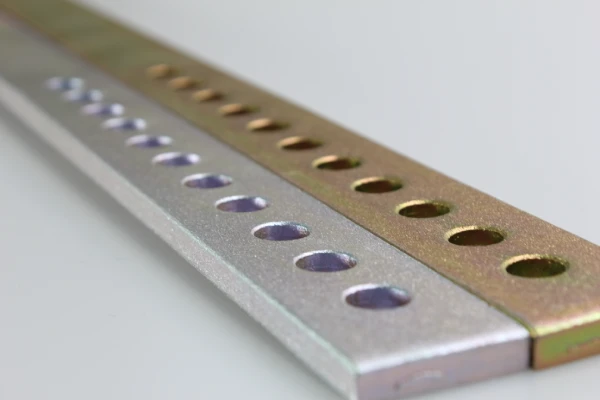
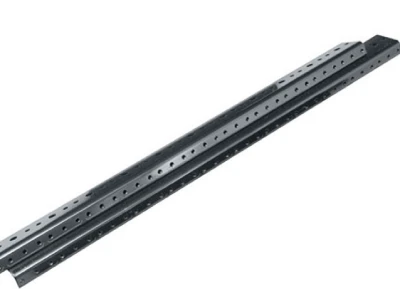
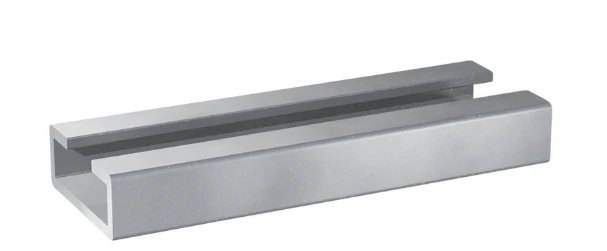
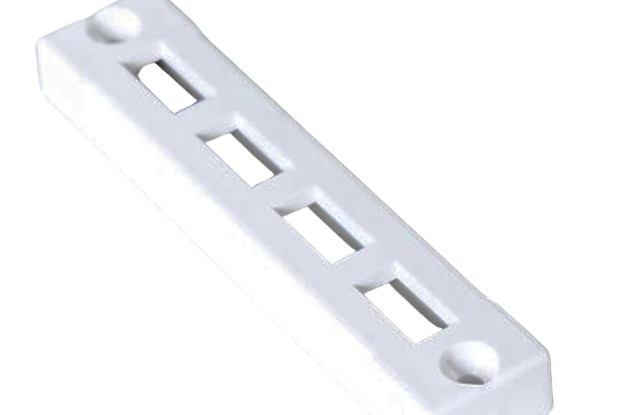
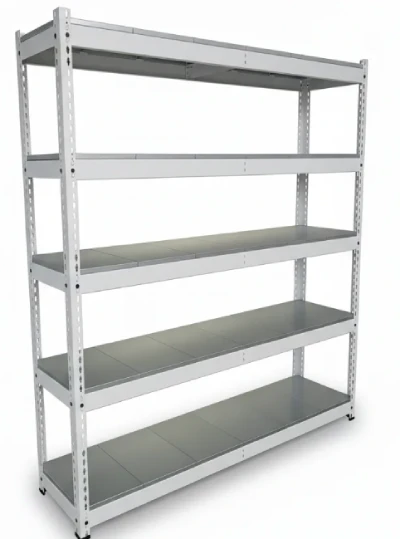
In high-density data center deployments, the structural precision of the physical infrastructure directly determines operational reliability. As critical load-bearing components, custom server rack rails must not only possess high-strength load-distribution capabilities but also ensure absolute edge safety.
From a manufacturing engineering perspective, substandard high-speed stamping and shearing processes often leave behind irregular micro-cracks and razor-sharp burrs. Understanding the rigorous defect control measures behind server rack rails is essential. These residual edge defects are by no means merely cosmetic flaws.
During fast-paced hot-swap operations, they pose a serious risk of cuts to IT technicians and severely threaten the delicate sheathing of high-density fiber-optic cables. Furthermore, unremoved metal burrs compromise the dimensional accuracy required for seamless chassis integration, leading to costly installation bottlenecks.
Drawing on specialized expertise in sheet metal fabrication, this article provides an in-depth analysis of the root causes of edge defects in precision server rack rails. We will explore how precise die clearance calibration and automated mechanical deburring ensure that every metal server rack rail meets the stringent tactile safety standards required in enterprise environments.
Potential Hazards of Burrs on Server Rack Rails
In precision manufacturing, jagged burrs on metal server rack rails are considered critical shear zone defects, not acceptable surface finish tolerances. These microcracks directly compromise structural integrity and pose serious occupational safety hazards; therefore, rigorous mechanical remediation measures must be taken prior to final deployment.
Impact of Server Rack Rail Burrs on IT Personnel Safety and Ergonomics
In fast-paced data centers, hot-swap operations on servers require rapid manual intervention within extremely narrow spaces. When deburring during the server rack rail fabrication process is inadequate, the remaining sharp edges pose a serious risk of cuts.
These razor-sharp micro-burrs form when the stamping clearance tolerance exceeds the optimal ratio for a specific sheet metal thickness. Technicians rely on tactile feedback when working blindly at the rear of the chassis; contact with jagged edges on server rack rail systems can not only cause immediate personal injury but also significantly increase maintenance downtime.
Eliminating these mechanical hazards during the die manufacturing stage ensures that your infrastructure enables safe-to-touch operations without sacrificing structural yield strength.
Impact of Server Rack Rail Burrs on Cable Management and Fiber Optic Integrity
High-density networks rely on complex cable routing, where the physical integrity of fiber optic sheaths is critical. Roughly machined metal server rack rails often feature jagged metal protrusions along their stamped ventilation holes or mounting slots. During installation or when subjected to seismic vibrations, precision Cat6a or fiber optic cables in close contact with substandard server rack rails will suffer from abrasive wear. This continuous micro-abrasion can strip away the protective outer jacket, leading to severe signal attenuation, crosstalk, or even complete core breakage.
At Supro, we understand that high-quality custom server rack rails must feature slots that have undergone automated vibratory polishing and edge rounding. This high-precision surface treatment eliminates abrasive contact points, thereby protecting expensive network cabling infrastructure and ensuring uninterrupted data transmission in enterprise server environments.
The Impact of Burrs on Server Rack Rails on Hardware Installation Tolerances
Precise alignment is the cornerstone of flawless server deployment. Slag or stamping burrs on metal server rack rails can compromise the strict geometric dimensions and tolerances (GD&T) required for seamless chassis integration. When sliding mechanisms encounter untreated metal ridges, the resulting friction can cause severe mechanical jamming and binding. This means that defective server rack rails force technicians to apply excessive force during installation, which can lead to chassis deformation or misalignment of sensitive mating connectors.
Through advanced CNC punching processes and specialized edge-finishing procedures, leading manufacturers can ensure dimensional accuracy for every custom server rack rail. Eliminating these microscopic obstacles ensures that sliding profiles maintain their designed clearances, guaranteeing friction-free equipment installation and extending the mechanical service life of rack components.
Root Cause Analysis: Why Sharp Edges Form on Server Rack Rails During Sheet Metal Processing
To understand why sharp edges have become a persistent problem with metal server rack rails, it is necessary to analyze the physical principles of metal shearing. These irregular defects are by no means accidental; they stem directly from improper die clearance tolerances, microcracks caused by high-speed stamping, or the deliberate omission of secondary processing steps.
Die Wear and Punching Clearance Tolerances
During the manufacturing of server rack rails, the clearance between the punch and the die must be strictly calibrated according to the specific specifications and tensile strength of the cold-rolled steel or alloy being processed. Over time, continuous die wear causes this critical clearance to change. An excessive clearance ratio causes the metal to tear rather than shear cleanly, resulting in long, jagged burrs at the punch notches. Conversely, insufficient clearance leads to premature die dulling and triggers secondary fractures along the edges.
For high-load precision server rack rails, these minute stamping deviations are structurally unacceptable. Leading manufacturers implement rigorous die maintenance programs and monitor punch wear in real time to ensure that the initial cut surface of every custom server rack rail maintains optimal surface finish and minimizes flanging before it proceeds to secondary processing.
Kinetic Principles of High-Speed Stamping and Shearing
The thermodynamic and kinetic characteristics of high-speed shearing directly affect the quality of structural edges. When producing metal server rack rails at maximum stroke speed, the metal substrate undergoes extreme and localized plastic deformation. As press tonnage increases, the shearing speed causes severe stress concentrations along the cut line. If the punching speed exceeds the material’s yield characteristics, it leads to severe micro-tearing and work hardening in the shear zone.
This dynamic damage explains why server rack rails produced quickly and inexpensively often exhibit hardened, brittle burrs that are difficult to eliminate through standard processing.
High-quality precision server rack rails are not simply stamped at the fastest possible speed; engineering teams meticulously optimize the stamping kinematics to strictly control edge fracture behavior while maintaining high output, thereby ensuring consistent structural integrity.
Cutting Corners: Omitting Secondary Processing
Beyond purely physical factors, the presence of dangerous sharp edges is often a deliberate compromise made by manufacturers. To drastically lower quotes and undercut competitors, low-end manufacturers often view automated edge finishing as a dispensable luxury. By intentionally omitting the secondary deburring process, they artificially reduce the initial unit price of server rack rails, but pass the hidden risks directly onto your data center.
This illusion of “cost savings” inevitably leads to rejected shipments, deployment delays, and serious legal liability risks. In the professional sheet metal fabrication industry, deburring is a mandatory compliance step, not an optional add-on service. Leading manufacturers incorporate automated edge chamfering into their standard workflows to ensure that the final precision server rack rails delivered to buyers meet uncompromising safety standards—without imposing hidden downstream costs on you or causing unexpected spikes in your total cost of ownership (TCO).
Only 4 steps
online custom metal fabrication parts
Contact our experts team and experience the efficiency and economic benefits of digital metal fabrication services.
Upload Design Files
STL , STEP (.stp), IGES (.igs), (.ZIP), or PDF.
Also be a sample or an idea
Quote & Design Analysis
Instant factory quotes and DfM reports, the most reasonable solution.
Manufacturing Begins
Digital processes can initiate order tasks within 24 hours.
On-Time Delivery
Keeping delivery promises, approved by 3000+ Global Company buyers.
Advanced Deburring Technology for Server Rack Rails
To eliminate defects in the shearing zone, automated mechanical processing must be employed rather than relying on manual guesswork. To ensure a safe touch, each metal server rack rail undergoes precision edge chamfering. This controlled grinding process eliminates jagged micro-cracks while maintaining the strict dimensional tolerances required for chassis integration.
Use of Automatic Rotating Brushes and Belt Sander Systems in Server Rack Rail Manufacturing
For long, linear profiles such as custom server rack rails, manual deburring simply cannot guarantee processing consistency across B2B batches. Leading production facilities employ continuous-feed automatic belt sander systems combined with multi-directional rotating brush systems.
As the metal server rack rails pass along the conveyor belt, coarse sanding belts first smooth out the rough primary stamping burrs. Immediately afterward, counter-rotating nylon abrasive brushes sweep across the metal surface, creating precise, uniform edge rounding. This automated mechanical process ensures that the entire length of the server rack rails achieves a strictly controlled, safe-to-touch surface finish.
The scalability of this automation ensures perfect dimensional consistency across thousands of units, completely eliminating the variability and human error associated with manual edge finishing.
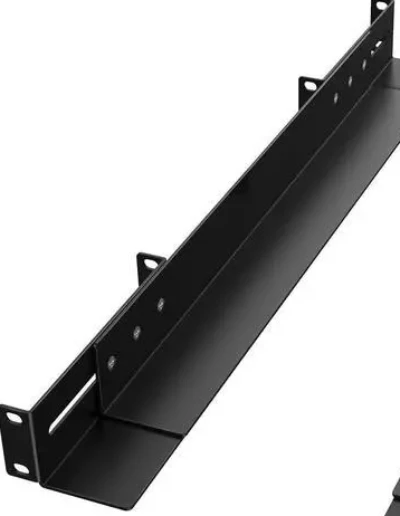
Vibratory Polishing of Complex Geometries in Server Rack Rails
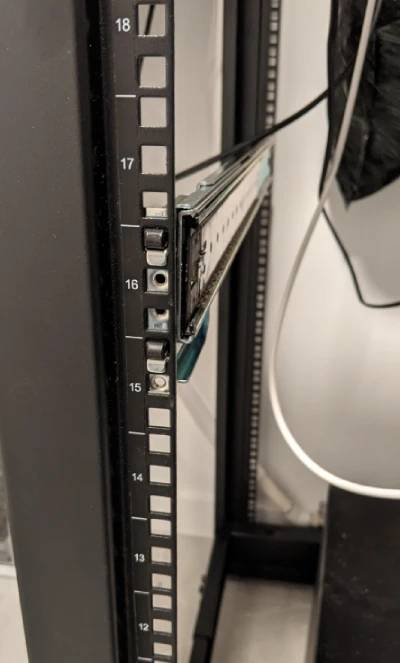
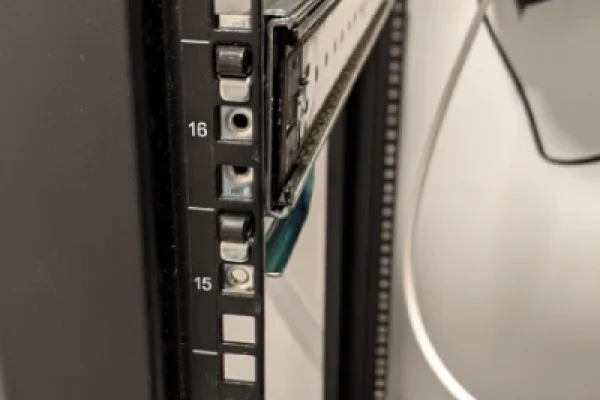
While belt grinding excels at processing straight external contours, the internal openwork structures of precision server rack rails—particularly the square mounting holes compliant with the EIA-310 standard—require a completely different approach. To eliminate micro-burrs hidden within these complex internal geometries, we employ a high-frequency vibratory polishing process.
By immersing the batch to be processed in a dedicated tank containing calibrated ceramic tumbling media and rust-inhibiting compounds, the abrasive media vigorously and uniformly scrubs every internal corner.
This vibratory polishing process ensures that the complex notches of custom server rack rails are perfectly chamfered without altering the critical dimensions of the cage nuts. Ensuring these internal edges are perfectly smooth prevents IT technicians from cutting their fingers while installing hardware, thereby achieving absolute ergonomic safety.
Deburring Strategies for Different Server Rack Rail Materials
Applying a one-size-fits-all abrasive treatment to all metals would severely compromise their structural integrity. Specific deburring solutions for metal server rack rails must be precisely calibrated according to their unique metallurgical properties.
For example, when machining pre-galvanized carbon steel server rack rails, low-pressure, fine-grit nylon brushes must be used to smooth stamped edges while avoiding the removal of the protective zinc coating, thereby preventing premature corrosion on-site. Conversely, processing stainless steel server rack rails requires the use of high-performance ceramic abrasives to overcome the material’s inherent work hardening in the shear zone.
By customizing spindle speed, feed rate, and abrasive media according to the specific alloy type, experienced manufacturers can ensure that edges achieve an exceptional finish. This materials science-based approach provides a high-quality surface preparation for subsequent powder coating, thereby maximizing the environmental durability of the final infrastructure deployment.
Looking for a reliable custom sheet metal fabrication companies?
Talk To Supro MFG Expert Team
Contact us for competitive ex-factory prices,
and a full range of technical support services.
Implementing Strict Quality Control Procedures for Server Rack Rails
Achieving defect-free manufacturing relies on verifiable data. To validate precision server rack rails, Statistical Process Control (SPC) must be directly integrated into the stamping production line. This proactive approach enables the immediate detection of even minor edge deviations, thereby preventing anomalies in the shearing zone from escalating into critical failures during downstream assembly.
In-Line Inspection and Post-Process Verification of Server Rack Rails
For custom server rack rails, quality assurance must begin directly at the stamping press. In-line inspection utilizes automated optical sensors and go/no-go gauges to verify die clearances and punch wear in real time. This immediate feedback mechanism identifies micro-burrs the moment they appear, allowing engineers to halt production before hundreds of defective parts are produced.
Conversely, post-processing verification serves as the final quality control check. After the automated deburring process is complete, quality control personnel evaluate the finished metal server rack rails to ensure that edge chamfers fully comply with precise engineering specifications. By combining proactive in-line monitoring with rigorous post-processing audits, a top-tier manufacturer can guarantee that every precision server rack rail shipped to customers is dimensionally flawless and completely free of shear zone anomalies.
Tactile and Visual Inspection Standards for Server Rack Rails
Defining a “safe edge” requires evidence-based metrics, not subjective visual inspections. High-quality custom server rack rails must pass rigorous tactile and microscopic compliance tests to ensure absolute occupational safety.
For visual inspection, quality control engineers use high-resolution optical comparators to scan stamped notches, actively screening for residual micro-cracks or uneven chamfers left by grinding media. However, tactile testing is the ultimate proof of quality. Inspectors frequently employ a rigorous “cotton swab drag test”—sliding a highly sensitive cotton swab along the entire length of the server rack rail. If even a single fiber is caught by a microscopic burr, the entire batch is immediately quarantined.
This meticulous tactile verification ensures that every metal server rack rail delivered to your facility complies with the stringent ergonomic standards set by the U.S. Occupational Safety and Health Administration (OSHA), thereby eliminating the risk of serious cuts for installation teams.
Partner with a Reliable Custom Server Rack Rail Manufacturer
Choosing the right manufacturing partner is not just about the initial unit price; at its core, it involves fundamentally reducing serious infrastructure risks at the die level. Top-tier manufacturers do not merely reactively address edge defects; we implement proactive die maintenance and punch wear management programs to ensure that every custom server rack rail is stamped with absolute precision.
When low-tier factories neglect die sharpening to artificially cut costs, the resulting jagged micro-cracks on metal server rack rails will significantly drive up your total cost of ownership (TCO) through product returns, ergonomic risks, and data center deployment delays.
By partnering with leading sheet metal experts committed to strict metallurgical standards and automated edge finishing, your procurement team can ensure that every precision server rack rail you receive is a structurally flawless, safe-to-touch component—perfectly safeguarding your high-density enterprise infrastructure.
Conclusion
Eliminating defects in the shear zone is a critical engineering prerequisite for high-density data center infrastructure. Custom server rack rails that undergo rigorous processing not only ensure seamless integration with server enclosures but also eliminate serious ergonomic hazards during the rapid deployment of IT equipment.
When suppliers bypass critical automated deburring processes or neglect precise die clearance calibration in an effort to cut initial costs, they turn standard metal server rack rails into potential operational hazards—endangering not only expensive fiber-optic equipment but also the safety of technicians.
At Supro MFG, our uncompromising commitment to edge chamfering and real-time process monitoring ensures that every precision server rack rail we ship meets the most stringent North American compliance standards. By embedding tactile safety directly into the manufacturing lifecycle, we help procurement teams permanently eliminate deployment bottlenecks and significantly reduce long-term facility risks.
Founded in 2004, Supro is a specialized server rack rail manufacturer. With extensive manufacturing experience, a strong technical team, and comprehensive manufacturing resources, we have provided one-stop server rack rail manufacturing solutions to more than 3,000 companies worldwide.
At Supro, we have a dedicated quality control team, experienced QC personnel, and scientific quality control processes to ensure that products undergo rigorous inspection, meet specified technical standards, and allow for the traceability of defective products at any time. These processes include: raw material inspection, mold inspection, equipment inspection, process sampling, packaging inspection, and final inspection. We conduct QA (Quality Assurance) to ensure products meet the necessary tolerances and quality standards.
We guarantee on-time delivery of all products. From product design and rapid prototype fabrication to mass production, we provide professional technical support and exceptional quality. For technical specifications or inquiries regarding OEM partnerships, please contact our engineering team.