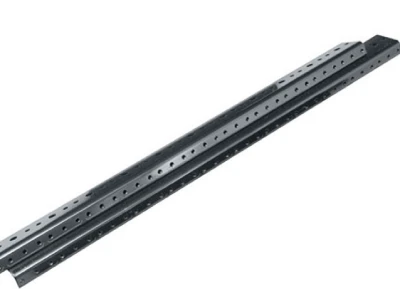
In industrial control cabinets and automation systems, the structural integrity of mounting rails determines the reliability of the entire electrical assembly. Dimensional deviations are not merely cosmetic defects—they are critical failure points.
When metal mounting rails deviate from strict standard tolerances (such as the DIN EN 60715 specification), the direct consequence is that terminal blocks, relays, and contactors cannot be installed correctly. Even a minor deviation of ±0.1 mm in cross-section can weaken the pull-out strength of installed components under high-vibration conditions, leading to catastrophic system downtime.
At Supro MFG, our extensive experience in sheet metal fabrication has shown that basic machining alone is far from sufficient to achieve consistent dimensional tolerance control. This requires proactive root-cause solutions that simultaneously address tool wear and material springback.
This article delves into the precise engineering mechanisms behind dimensional deviations in continuous roll forming and CNC press brake operations. By dissecting these manufacturing challenges, we will demonstrate how advanced metrology techniques and rigorous First Article Inspection (FAI) protocols ensure that every custom mounting rail meets the stringent performance standards required by our customers.
Common Dimensional Deviations in Mounting Rail Manufacturing
In the precision sheet metal forming process, failure to effectively control material stress and mechanical variables can lead to two major categories of geometric dimension and tolerance (GD&T) deviations in custom mounting rails, thereby severely impacting downstream automated assembly.
Mismatched Width and Height in Mounting Rails (Cross-Section Issues)
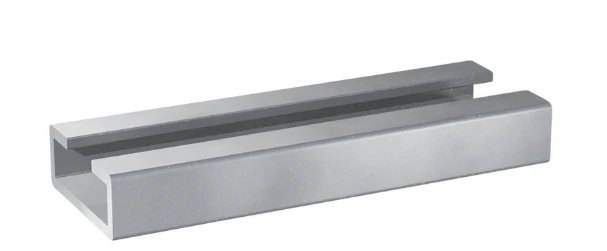
The successful operation of electrical control cabinets depends largely on precision mounting rails, which must strictly adhere to their cross-sectional geometric profiles. For example, standard specifications such as the 35 mm × 7.5 mm DIN standard leave virtually no room for error.
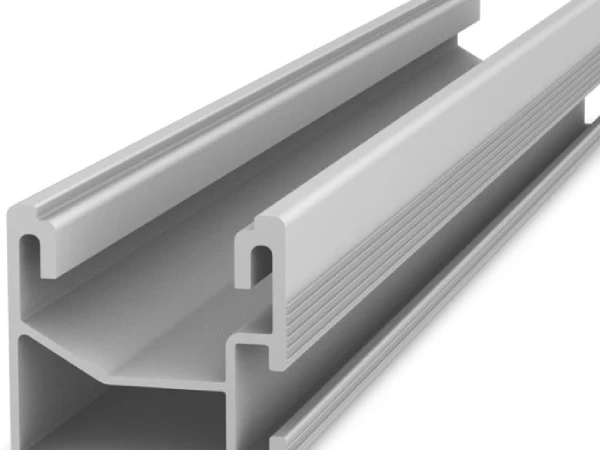
When the width and height dimensions of metal mounting rails exceed the specified tolerance range, it directly affects the snap-fit functionality of automated components. If the profile dimensions are too large, excessive force must be applied during installation, which may cause micro-cracks in the plastic terminal blocks. Conversely, if the mounting rails are too small, they will become loose and fail to securely hold heavy relays under vibration loads during operation.
From an engineering perspective, these cross-sectional dimensional mismatches typically stem from progressive wear of dies in continuous roll-forming production lines or from insufficient calculation of bending allowance during CNC press brake operations.
Twisting, Warping, and Camber Defects in Mounting Rails
In addition to cross-sectional accuracy, minimizing longitudinal deformation remains a key challenge in custom mounting rail fabrication. Twist (rotational deviation along the axis), camber (vertical curvature), and crown (horizontal curvature) are all serious geometric dimension and tolerance (GD&T) defects.
These geometric anomalies primarily result from the uneven release of residual material stresses during high-speed stamping or from unbalanced rolling during cold forming. For assembly technicians, attempting to fasten deformed metal mounting rails to a flat backplate forces the sheet metal into an artificial alignment. This subjects the fasteners and the enclosure itself to immense shear stress, compromising the structural integrity of the control cabinet and significantly extending assembly cycle times.
Root Causes of Tolerance Issues in Mounting Rail Forming
Dimensional deviations in custom mounting rails rarely stem from isolated operator errors; rather, these deviations are systematically driven by complex metallurgical behaviors and progressive mechanical degradation inherent in large-scale metalworking processes.
Die Wear in Continuous Roll Forming Production Lines
For high-volume production, continuous roll forming is the industry’s preferred method for manufacturing standardized metal mounting rails. However, the immense friction and kinetic energy transferred between the steel strip and the roll dies inevitably lead to gradual die wear. As hardened steel rolls undergo microscopic wear over thousands of consecutive cycles, the precisely engineered clearances between forming stations begin to gradually increase. This die wear triggers a subtle manufacturing phenomenon known as “dimensional drift.”
When forming precision mounting rails, even if the die wears by just a few thousandths of an inch, it can cause critical bend radii to flatten or the engagement lip angles to become distorted. If left unmonitored, this mechanical degradation will directly affect the final cross-sectional geometry, resulting in batches of mounting rails that ultimately fail to meet the strict snap-fit tolerances required by electrical assemblers.
Material Springback in CNC Press Brake Processing
When using CNC press brakes to manufacture custom mounting rails—typically for small-batch production or highly specialized proprietary profiles—the most unpredictable variable is material springback. Whenever sheet metal undergoes plastic deformation beyond its yield point, the inherent tensile stress within the material causes it to naturally attempt elastic recovery once the forming pressure is released. This metallurgical behavior dictates that achieving a perfect 90-degree bend requires precise and intentional over-bending.
The engineering challenge lies in the fact that even within a single coil of steel, the exact yield strength often fluctuates slightly. If the press brake relies solely on static bend allowance, these minute material variations will result in inconsistent flange angles on the metal mounting rails.
To mitigate this issue, an active measurement system must be employed to ensure that every precision mounting rail produced maintains absolute geometric accuracy.
Only 4 steps
online custom metal fabrication parts
Contact our experts team and experience the efficiency and economic benefits of digital metal fabrication services.
Upload Design Files
STL , STEP (.stp), IGES (.igs), (.ZIP), or PDF.
Also be a sample or an idea
Quote & Design Analysis
Instant factory quotes and DfM reports, the most reasonable solution.
Manufacturing Begins
Digital processes can initiate order tasks within 24 hours.
On-Time Delivery
Keeping delivery promises, approved by 3000+ Global Company buyers.
Supro MFG’s Advanced Engineering Solutions for Mounting Rail Manufacturing
To eliminate dimensional deviations in precision mounting rails, Supro MFG has shifted from passive sorting to active process control, utilizing real-time measurement technology and strict metallurgical oversight to ensure absolute geometric accuracy.
Dynamic Angle Measurement and Springback Compensation
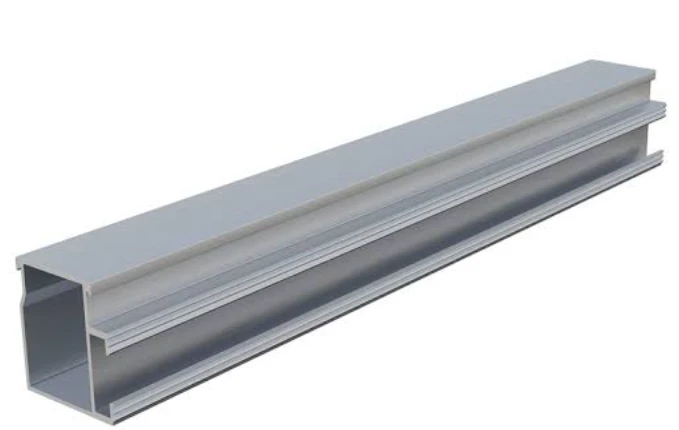
To address the unpredictable elastic springback of metal sheets during mounting rail fabrication, Supro MFG has equipped its modern CNC press brakes with an active optical dynamic angle measurement system. When manufacturing custom mounting rails, these integrated sensors actively measure the inner bend angle in real time during the forming stroke. Rather than relying on static, theoretical bending allowances, the system precisely calculates material springback in real time and instantly adjusts punch depth to over-bend the profiles with sub-degree precision.
This closed-loop compensation mechanism ensures that every precision mounting rail perfectly meets the critical 90-degree flange specification on the first press stroke, completely eliminating geometric variations between batches and avoiding time-consuming and costly manual rework.
Precision Die Calibration Procedures
To mitigate dimensional drift during high-speed continuous roll forming, proactive, data-driven preventive maintenance measures must be implemented. Supro MFG enforces strict die calibration procedures to ensure the absolute precision of the roll dies. Before mass-producing any mounting rails, our engineering team uses a coordinate measuring machine (CMM) and high-resolution 3D scanning technology to inspect the roller die profiles for microscopic wear marks.
We have established mandatory cycle count thresholds for die regrinding and recalibration. By systematically restoring the precise clearances between each forming station, we effectively prevent the flattening of the bending radius. This rigorous protocol ensures that even after completing a production batch of 100,000 units, the final precision mounting rails produced will still maintain cross-sectional integrity that is fully consistent with the first piece on the production line and compliant with standards.
Material Selection and Yield Strength Management for Mounting Rails
Dimensional stability is fundamentally rooted in the raw material itself. Fluctuations in carbon content or yield strength in the parent coil directly exacerbate the impact of springback variables. Supro MFG employs strict Incoming Quality Control (IQC) procedures with a focus on enhanced metallurgical oversight.
Before stamping or bending any metal mounting rail profiles, we require certified mill test reports (MTRs) and conduct spot tensile tests on incoming metal sheet batches. By closely grouping materials with identical yield behavior, our engineers can stabilize the required forming tonnage, thereby achieving consistent plastic deformation.
This proactive yield strength management ensures that your custom mounting rails are not only structurally robust but also dimensionally uniform, completely eliminating downstream assembly bottlenecks caused by inconsistent material properties.
Strict Quality Control and Inspection Procedures for Mounting Rails
To ensure that the dimensions of precision mounting rails fully meet specifications, empirical measurement methods must be employed. Supro MFG implements rigorous, data-driven inspection procedures and validates our metalworking processes through statistical analysis before any batch of products leaves the factory.
Implementation of First Article Inspection (FAI) for Mounting Rails
Before commencing full-scale production, Supro MFG rigorously performs a comprehensive First Article Inspection (FAI) for every custom mounting rails project. This critical process serves as our primary manufacturing checkpoint, enabling us to isolate anomalies before they escalate into large-scale scrap.
Our quality engineers rigorously measure all geometric dimensions and tolerances (GD&T) features—including standard cross-sectional profiles and bend radii—based on the original CAD models. Additionally, we perform a pilot assembly using actual terminal blocks to functionally verify the snap-fit connections of the metal mounting rails. Subsequently, we generate a comprehensive FAI report documenting this precise dimensional baseline.
Only after the initial mounting rail has passed both metrological verification and physical interference testing do we authorize the continuous forming production line to begin mass production, thereby ensuring uncompromising product consistency.
In-Line Measurement and Coordinate Measuring Machine (CMM) Verification
Ensuring dimensional compliance during mass production requires not only initial setup verification but also continuous metrological oversight. For ongoing mounting rail fabrication, our operators use in-line pass/fail gauges and optical sensors at specified intervals to instantly detect gradual deviations in the tooling.
Upon completion of a batch, parts are sent to our temperature- and humidity-controlled laboratory for final Coordinate Measuring Machine (CMM) verification, based on statistical sampling principles. The CMM scans the metal mounting rails to map complex longitudinal deformations—such as micro-twists or arching—with sub-micron precision. We overlay this 3D point cloud data directly onto your proprietary drawings to generate an authoritative Inspection Data Package (IDP).
This dual-pronged approach ensures that every precision mounting rail delivered to your assembly shop strictly complies with standards, completely eliminating bottlenecks in your incoming inspection process.
Looking for a reliable custom sheet metal fabrication companies?
Talk To Supro MFG Expert Team
Contact us for competitive ex-factory prices,
and a full range of technical support services.
Partner with Supro MFG for Custom Sheet Metal Fabrication
Partner with Supro MFG to eliminate assembly line risks caused by poor tolerance control. We specialize in precision sheet metal forming and provide a comprehensive Design for Manufacturability (DFM) review before any tooling is initiated. Whether your project requires standard DIN profiles or highly complex custom mounting rails, our engineers will optimize their geometry to ensure smooth, high-yield manufacturing.
We deliver a wide range of products efficiently and on time. From product design and rapid sheet metal prototype fabrication to mass production, we provide expert technical support and exceptional quality. We also offer one-stop manufacturing solutions and highly cost-competitive product supply. Submit your CAD files today for a quick technical evaluation!