

Having thoroughly analyzed the root causes of defects like cracks and deformation in the aluminum stamping process in the previous article, how can we systematically prevent these risks to ensure supply chain reliability and exceptional part quality? For demanding custom aluminum stamping projects, identifying issues is merely the first step. Transforming insights into an executable, verifiable manufacturing system is the key to achieving the leap from “acceptable” to “exceptional.”
True quality advancement is rooted in the deep integration of three pillars: First, the precise application of advanced aluminum stamping processes and equipment—such as employing hydraulic servo technology for dynamic force control to suppress springback, or utilizing automation systems to eliminate human variability.
Second, establishing a preventive quality control system that must permeate every stage from raw material certification to final shipment. Finally, it requires profound understanding and targeted regulation of critical aluminum stamping process parameters, including the impact of material heat treatment states on formability and the synergistic design of surface treatment with corrosion resistance.
This article delves into how integrating engineering simulation, process monitoring, and closed-loop feedback can virtually eliminate potential defects in aluminum stamping processes during the virtual stage. It further explores maintaining stable output through data-driven methods during production, transforming every aluminum metal stamping operation into predictable, repeatable precision manufacturing outcomes.
Advanced Aluminum Stamping Processes and Equipment Solutions
In high-demand custom aluminum stamping projects, overcoming defects like cracking and deformation hinges on transcending conventional thinking and adopting systematic solutions comprising advanced equipment and digital processes. The value of this system lies not only in enhancing the quality of individual aluminum stamping parts but also in achieving stability, efficiency, and predictability throughout the entire production process, thereby fundamentally reducing supply chain risks.
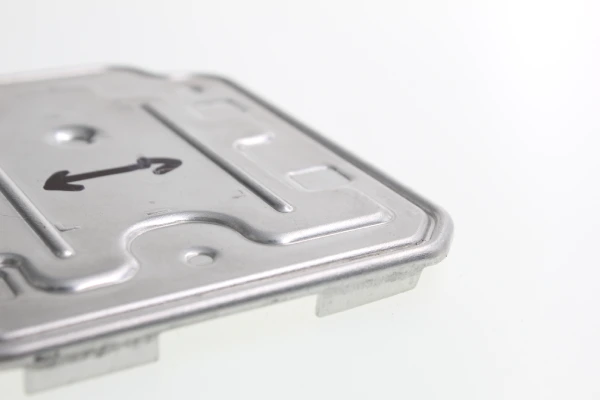
Hydraulic Presses for Precise Force Control
Hydraulic presses deliver stable pressure during aluminum stamping, effectively reducing cracking and wrinkling—particularly beneficial for thin-walled or complex aluminum components.
Their smooth, controlled motion minimizes sudden force peaks that often cause springback or uneven deformation in stamped parts.
Adjustable stroke speeds enable operators to precisely control forming depth—critical when processing high-strength aluminum alloy grades.
Compared to mechanical systems, hydraulic presses are more easily calibrated for varying material properties, such as variable ductility or fluctuating yield strengths.
Their compatibility with programmable control systems also supports sensor integration to detect early signs of aluminum stamping die wear or misalignment, reducing rework caused by dimensional deviations.
Best Practices for Deep Drawing Operations
Deep drawing operations are highly prone to issues without rigorous monitoring of aluminum stamping process parameters. Ensure precision by:
Always matching punch radius and die clearance to the alloy’s grain size and ductility level. Mismatched aluminum stamping process parameters drastically increase tearing risks.
Employ multi-stage forming for deep cups or high-wall components to reduce localized stress and distribute forces more evenly across the stamped sheet.
Strictly prevent insufficient lubrication! Particularly in long-stroke operations, lubricant shortages directly cause galling and unsightly scratches due to rapidly accumulating friction forces.
The table below lists common defect causes by stamping depth:
Draw Depth (mm) | Common Defect Type | Root Cause | Recommended Fix |
15–25 | Wrinkling | Low blank holder force | Increase BHF, optimize lube |
25–40 | Tearing | Sharp die edge | Increase corner radius |
>40 | Surface roughness | Poor lubrication | Switch lubricant formulation |
Any | Springback | High yield material | Adjust punch/die alignment |
Enhancing Efficiency with Automated Transfer Systems
Step 1: Install robotic arms between aluminum metal stamping stations to enable unmanned workpiece transfer. This reduces alignment defects caused by accidental displacement, such as edge tearing or burrs (edge flash).
Step 2: Employ programmable logic controllers (PLCs) to synchronize die closure with part transfer timing; misaligned handover timing is the primary cause of die collisions or double punching, leading to deformation of aluminum stamping parts.
Step 3: Add sensors at each aluminum metal stamping process to verify workpiece presence and orientation before forming; this prevents deformed components from silently progressing to downstream operations.
Step 4: Integrate real-time feedback loops to adjust transfer speeds based on fluctuations in aluminum metal stamping cycle times. This sophisticated design maintains stable output across different aluminum batches while ensuring forming quality remains unaffected. These batches exhibit variations in flow stress behavior due to differences in annealing treatments or cleanliness levels.
In-House Die Manufacturing Capabilities
Achieving zero-defect production demands stringent control over aluminum stamping dies:
Early signs of edge micro-burrs from die wear enable immediate production parameter adjustments. In-house machining allows periodic polishing before soft aluminum surfaces become worn, preventing visible scratches on bent sections. You also gain full control over critical design elements: optimal die clearance, pressure distribution optimization via custom draw beads, and intelligent application of advanced materials like coated steel—all vital for high-precision aluminum stamping parts. This is especially crucial for quenching-sensitive alloys prone to springback, where strict control becomes imperative when geometric tolerances are tight.
Quality Control System for Aluminum Stamping Processes
In precision aluminum metal stamping, a rigorous quality control system serves as the cornerstone for translating advanced processes and equipment capabilities into stable output. A mature quality system, grounded in the ISO 9001 framework, provides a structured pathway for traceability and continuous improvement. Quality control extends beyond error detection to establishing consistency at its source. How does it shape every stage of the aluminum stamping process?
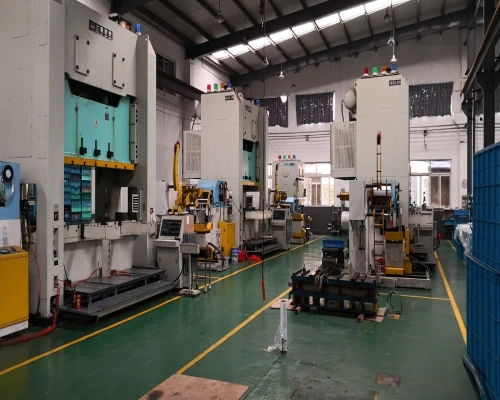
ISO 9001 Certification Framework: Building the Quality Foundation
Quality cannot be faked. Adherence to ISO 9001 standards signifies that Supro’s aluminum metal stamping operations are built upon a mature system.
Ensuring traceability and documentation for all production batches
Aligning each stage with international benchmarks
Reducing variability between batches to enhance consistency in aluminum stamping parts.
A 2024 TÜV SÜD report indicates that factories certified under the ISO framework achieved an average defect rate reduction exceeding 35% within one year. This represents not only significant results but a transformative change for high-volume aluminum metal stamping workshops.
End-to-End Quality Control Process Design
When producing tens of thousands of aluminum stamping parts, even minor flaws can rapidly accumulate. A robust quality control process ensures production remains tightly controlled and orderly.
As a specialized aluminum stamping manufacturer, Supro employs a combined strategy:
- Process Monitoring: Real-time sensors issue early warnings before dimensional deviations escalate into issues.
- Inspection Technology: Optical scanners detect surface defects invisible to the naked eye, such as micro-scratches or pits.
- Statistical Process Control: Charts track trends, enabling operators to promptly identify deviations from standards.
These methods work synergistically to drastically reduce rework time and guarantee dimensional accuracy for every aluminum stamping—even during long production cycles involving complex materials like aluminum-magnesium alloys.
Advanced Quality Assurance Technology Analysis
Let’s dissect how Supro’s smart factory employs a layered strategy to anticipate potential issues before products reach the shipping dock. Step-by-step overview:
- Material verification kicks off—wrong alloy? Stop.
- Pre-stamping inspection screens for surface contaminants or damage.
- Post-stamping measurement verifies tolerances using laser-guided calipers.
- Final review includes visual checks for surface scratches, burrs, or misalignment.
- Data logs fuel continuous improvement cycles, seamlessly integrated with the shop floor’s overall quality management system.
A recent European study by the Fraunhofer Institute reveals: Factories adopting AI-driven quality assurance tools achieve over 20% higher defect detection rates, particularly for parts prone to cracking and edge deformation during deep drawing processes. This proactive approach not only saves time and costs but also safeguards corporate reputation.
Are you looking for reliable & cost-effective
China metal fabrication manufacturer
More than 150,000 OEM metal fabrication products delivered to 5,000+ global buyers.
And benefit from it!
Critical Parameters Affecting Quality in Aluminum Stamping Processes
In custom aluminum stamping, setting process parameters is far from mere machine input—it is the “code” directly determining material plastic deformation behavior. Minor fluctuations in these parameters can trigger chain reactions ranging from slight springback to complete cracking during aluminum metal stamping. Next, let us dissect the key factors that truly impact the surface finish and structural integrity of precision aluminum stamped parts.
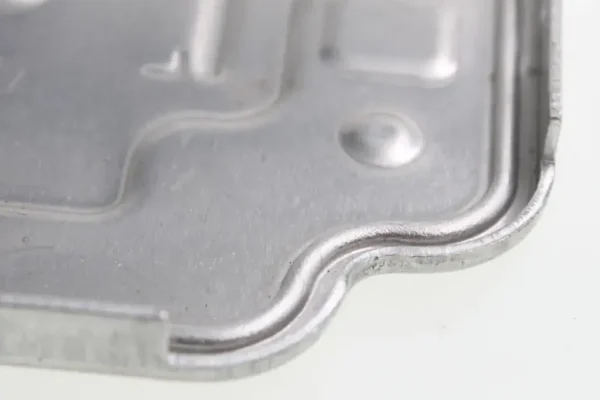
Tolerance Requirements Analysis in Aluminum Stamping Processes
Precision is no empty talk—in custom aluminum stamping, it determines success or failure:
l Controlling dimensional deviations in aluminum stamped parts is critical; even minor deviations can cause assembly failure or part scrap.
lLong-term wear of aluminum stamping dies causes subtle tolerance shifts; regular inspections prevent unexpected defects like cracks or collapses.
lAutomated die alignment systems minimize human error and effectively control tolerance drift.
lRigorous monitoring of press repeatability ensures uniform pressure application across each stamping cycle.
Pay close attention to material springback effects, which impact final dimensions—especially in thin-gauge materials.
Directional Control of Material Stamping Properties via Heat Treatment Processes
Heat treatment is not merely about hardening; it fundamentally modifies the metal’s properties to achieve optimal performance in aluminum stamping processes. When properly executed, heat treatment alters the internal grain structure of aluminum alloys, thereby changing their yield strength, hardness, and even their ability to resist deformation during deep drawing.
For instance, 6000 series alloys subjected to proper aging treatment exhibit superior formability during high-speed stamping while reducing risks like tearing or excessive springback. However, excessive treatment leads to unstable shapes in aluminum stamping parts and unpredictable failure points, rapidly increasing scrap rates.
Synergistic Design of Corrosion Resistance Requirements and Surface Treatment
Though aluminum initially presents a smooth, lustrous appearance, premature corrosion rapidly dulls its shine and compromises structural integrity.
- Surface treatment is critical—smooth surfaces resist oxidation better than rough surfaces with micro-grooves or scratches from mold design flaws
- Coating compatibility is key—lubricants used during custom aluminum stamping may not suit subsequent processes like anodizing
- Alloy selection significantly impacts performance—certain grades possess inherent corrosion resistance, while others require sealants or coatings for enhanced protection
Supro integrates environmental exposure planning into decision-making—for instance, if aluminum stampings will serve as electric vehicle battery trays exposed to road salt spray, protective barriers must be built through coatings or superior alloy choices from the design phase. In short, never treat corrosion protection as an afterthought—it must be integrated into the product lifecycle planning from day one during the development of aluminum stamping parts.
A comprehensive understanding of the complex causes of defects in the aluminum stamping process is fundamental to applying these advanced solutions. For reference: Common Defects in Aluminum Stamping Processes: From Cracks to Deformation.
Frequently Asked Questions (FAQ) About Aluminum Stamping
What factors most impact the quality of aluminum stampings in large-scale orders?
Precision stems from meticulous choices:
Select high-strength aluminum or aerospace-grade aluminum alloy sheets to withstand stress.
Deploy precision-calibrated progressive die presses and hydraulic presses to meet stringent tolerance requirements.
Maintain stable control during deep drawing to prevent sheet warping and deformation.
Select an ISO 9001-certified aluminum stamping manufacturer with robust in-house tooling capabilities for rapid die adjustments, ensuring flawless parts every time.
Why is aerospace-grade aluminum the preferred choice for demanding stamping applications?
It combines the strength of quenched steel with relative lightness and the ability to form complex structures. Its stability during deep drawing and bending without cracking enables it to meet stringent dimensional accuracy requirements in manufacturing aerospace structural components.
What best practices prevent cracking in aluminum sheets during forming?
Fine-tune aluminum stamping process parameters on progressive die equipment to ensure balanced force distribution from punch to draw.
Maintain continuous lubrication during high-stress operations like blanking or punching to reduce stress on molecular bonds within the sheet’s grain structure.
Match material grades to application requirements.
Conclusion
In the fiercely competitive manufacturing sector, achieving excellence in custom aluminum stamping parts extends far beyond improvements in any single process step. The ultimate solution to issues ranging from cracks and deformation to surface defects is a systematic engineering endeavor that deeply integrates advanced process equipment, digital control, and systematic quality management.
At Supro, we offer one-stop aluminum stamping services that not only assist you in selecting the right aluminum materials for your projects but also efficiently deliver the parts you require. Certified to ISO9001 and TS16949 standards, we provide expert technical guidance and comprehensive manufacturing solutions—whether you need precision engineered aluminum alloy components, aluminum enclosures, standard aluminum extrusions, or custom aluminum prototypes!