


The American Welding Society (AWS) filler metal classification system provides the technical foundation for specifying and selecting welding consumables across the entire metalworking industry. Understanding the AWS welding wire classification framework is critical to ensuring weld integrity, compliance with process specifications, and consistent mechanical properties across different production batches.
The AWS classification standards standardize filler metals and clearly define the welding results that specific welding wires will produce, enabling manufacturers to maintain consistency in weld quality, chemical composition, and mechanical properties regardless of the welding wire brand or source.
This article examines the AWS welding wire classification system from a professional sheet metal fabrication perspective, exploring the naming structure, key specifications, and practical selection criteria for driving quality outcomes in custom manufacturing environments.
AWS A5 Series: The Basis for Welding Wire Classification
The AWS A5 series of standards provides the basis for welding wire classification, defining the chemical composition limits and mechanical property thresholds that determine the selection of filler metals. For custom sheet metal fabricators, these standards ensure consistent weld quality across various alloy applications and compliance with specification requirements.
The AWS A5 Committee and the Standards Framework
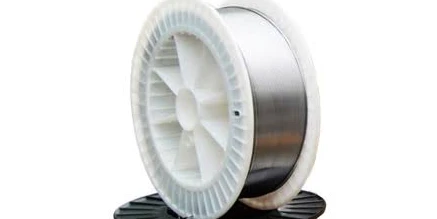
The AWS A5 Committee has published a series of standards covering filler metals for nearly all material categories. For welding wire applications, the most relevant standards include: AWS A5.18 for solid welding wires and electrodes used in gas-shielded arc welding of carbon steel; AWS A5.20 for flux-cored welding wires for carbon steel; AWS A5.9 for bare stainless steel electrodes and welding rods; and AWS A5.10 for welding wires and electrodes for aluminum and aluminum alloys.
Each standard primarily specifies classification requirements based on the chemical composition of the filler metal and provides supplementary provisions regarding mechanical properties, manufacturing tolerances, dimensions, and packaging.
Classification by Chemical Composition and Mechanical Properties
The AWS classification system conveys key information about the characteristics of welding wire through designated designations. This classification system is fundamentally based on the chemical composition of the filler metal, ensuring that welding wire of a specific classification provides consistent elemental percentages, thereby enabling predictable weld metal performance across products from different manufacturers.
Mechanical properties—particularly tensile strength—are also encoded in the classification nomenclature, enabling welding engineers and manufacturers to select consumables that meet the strength requirements of the base metal.
Are you looking for reliable & cost-effective
China Sheet Metal Fabricators
More than 150,000 OEM metal fabrication products delivered to 5,000+ global buyers.
And benefit from it!
Interpreting AWS Welding Wire Naming Conventions
The AWS nomenclature systematically encodes chemical composition, tensile strength, and physical form into a concise alphanumeric sequence. For procurement engineers, proficiency in interpreting this code eliminates ambiguity when specifying welding wire, ensuring that the selected filler material precisely matches the base metal and operating conditions.
Identification of Solid Welding Wire: The “ER” Prefix and Its Meaning
AWS solid welding wire classifications are prefixed with “ER,” which stands for “Electrode/Rod.” This dual-purpose designation indicates that the filler metal can be used both as an electrode for GMAW (in spool form) and as a filler rod for GTAW (in cut-to-length form).
The consistency of the “ER” prefix simplifies inventory management—the same welding wire (e.g., ER70S-6) can be used for both MIG and TIG processes, eliminating the need to procure different grades of filler metal for each process. When reviewing WPS or PQR documents, procurement engineers can confirm that a product is dual-purpose simply by identifying the “ER” prefix.
Tensile Strength Specifications
The number immediately following the “ER” prefix indicates the minimum tensile strength, expressed in ksi (thousand pounds per square inch). For example, the “70” in ER70S-6 indicates that the tensile strength of the deposited metal is no less than 70,000 psi. This specification directly determines the compatibility between the welding wire and the base material—the fabricator must ensure that the strength grade of the filler metal meets or exceeds the design requirements of the base material.
For custom sheet metal parts, selecting a welding wire with insufficient tensile strength will lead to premature failure of the weld joint under load, while overspecifying the wire will unnecessarily drive up consumable costs.
Product Form and Chemical Composition Modifiers
The letters and numbers following the tensile strength designation provide more detailed classification information. In the solid welding wire category, the letter “S” following the tensile strength number indicates solid wire construction. The number that follows (such as the “6” in ER70S-6) denotes a specific chemical composition, with each number corresponding to a specific range of element concentrations for deoxidizers and alloying elements.
ER70S-6, with its high-manganese, high-silicon formulation, offers enhanced deoxidizing capability and is suitable for base metals with slight oxidation or rust on the surface. ER70S-2, on the other hand, features a triple-deoxidized formulation; its weld pool is more sluggish, offering advantages in out-of-position welding.
For stainless steel classifications (such as ER308L), the “L” suffix indicates low carbon content (≤0.03%), which helps mitigate the risk of intergranular corrosion.
Flux-Cored Welding Wire Nomenclature
According to the AWS A5.20 standard, flux-cored arc welding (FCAW) wires use a different classification structure. These designations begin with “E” to represent the electrode, followed by a tensile strength value and a position suitability indicator.
In designations such as E71T-1, “T” denotes a tubular (flux-cored) construction. Additional suffixes indicate shielding gas requirements, impact performance ratings, and diffusible hydrogen identifiers—all of which are key parameters for process certification and quality assurance.
Taking E71T-1 as an example: “7” indicates a tensile strength of 70,000 psi; “1” indicates all-position weldability; “T” denotes tubular/flux-cored construction; and “-1” is the usability designator, indicating that this welding wire is a DCEP multi-pass wire suitable for CO₂ or mixed-gas shielding. A suffix such as “H8” indicates that the diffusible hydrogen content does not exceed 8 ml/100 g of weld deposit. For applications requiring low-temperature impact toughness (e.g., 20 ft·lb at -20°F), grades with the suffixes “-6” or “-7” should be selected.
Only 4 steps
online custom metal fabrication parts
Contact our experts team and experience the efficiency and economic benefits of digital metal fabrication services.
Upload Design Files
STL , STEP (.stp), IGES (.igs), (.ZIP), or PDF.
Also be a sample or an idea
Quote & Design Analysis
Instant factory quotes and DfM reports, the most reasonable solution.
Manufacturing Begins
Digital processes can initiate order tasks within 24 hours.
On-Time Delivery
Keeping delivery promises, approved by 3000+ Global Company buyers.
Key AWS Welding Wire Specifications in Sheet Metal Fabrication
For custom sheet metal fabrication, four AWS A5 specifications determine the selection of key welding wires: A5.18, A5.20, A5.9, and A5.10—each specification defines different standards for chemical and mechanical properties.
AWS A5.18: Solid Welding Wire for Carbon Steel in Gas-Shielded Arc Welding
The AWS A5.18 standard covers solid welding wires and rods used in GMAW and GTAW processes for carbon steel and low-alloy steel. In custom sheet metal fabrication, ER70S-6 is the most widely used grade under this standard.
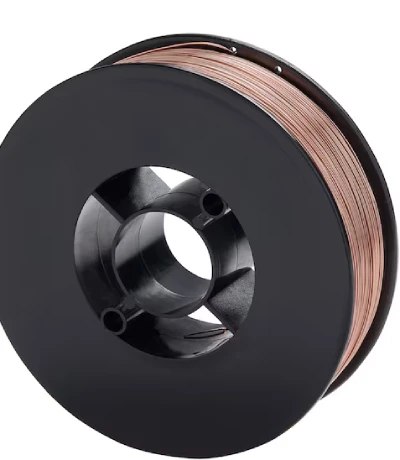
Its typical chemical composition ranges from 0.06–0.15% carbon, 1.40–1.85% manganese, and 0.80–1.15% silicon, and it features a copper-coated surface treatment. The high-manganese, high-silicon formulation provides enhanced deoxidizing capability, enabling it to effectively handle light scale, oil, or rust on the base metal surface. This welding wire has a tensile strength of not less than 70 ksi and is suitable for single-pass and multi-pass welding of carbon steel and 490 MPa-grade low-alloy steel.
AWS A5.20: Carbon Steel Flux-Cored Welding Wire
AWS A5.20 specifies the classification requirements for carbon steel flux-cored arc welding electrodes. Taking E71T-1 as an example: “E” denotes “electrode,” “7” indicates a tensile strength of 70 ksi, and “1” indicates all-position weldability. The suffix “C” or “M” specifies 100% CO₂ or an Ar/CO₂ mixture, respectively, as the prescribed shielding gas.
Flux-cored welding wire may also carry diffusible hydrogen designators such as “H8” or “H4”; for example, “H8” indicates that the diffusible hydrogen content in the deposited metal is less than 8 ml/100 g. For welding sheet metal structural components and pressure vessel-grade applications, E71T-1 offers high deposition rates and good low-temperature impact toughness (e.g., over 20 ft·lb at -20°F).
AWS A5.9: Stainless Steel Welding Wire and Electrodes
AWS A5.9 specifies the classification of bare stainless steel welding electrodes and rods, applicable to processes such as GMAW, GTAW, and submerged arc welding.
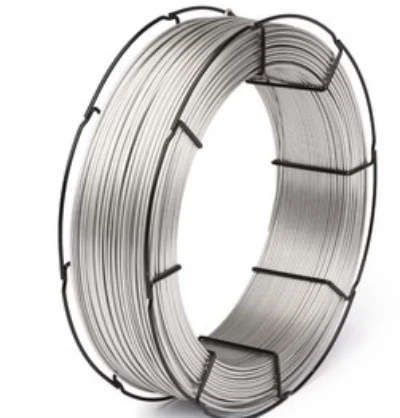
ER308L is the standard classification under this specification for welding 304, 304L, and 308 series stainless steels. Its carbon content is strictly limited to 0.03% to prevent carbide precipitation and intergranular corrosion. The balanced chromium-nickel composition ensures sufficient ferrite content in the weld metal, thereby providing high resistance to hot cracking.
This welding wire typically has a tensile strength of approximately 85 ksi and is suitable for sheet metal applications with strict corrosion resistance requirements, such as food processing equipment, medical components, and chemical process vessels.
AWS A5.10: Aluminum Welding Wires and Rods
AWS A5.10 specifies the classification of aluminum and aluminum alloy welding wires and rods. ER4043 is an aluminum-silicon alloy welding wire (containing approximately 5% silicon) that offers excellent weld pool fluidity and low susceptibility to hot cracking; it is widely used for welding 6XXX series aluminum alloys and repairing castings.
ER5356, on the other hand, is an aluminum-magnesium alloy welding wire (containing approximately 5% magnesium) that provides high shear strength and excellent color matching of the weld after anodizing.
The selection of an aluminum welding wire depends on the base metal alloy series and the final surface treatment requirements—ER4043 is suitable for general structural components, while ER5356 is better suited for applications with higher requirements for strength and visual consistency.
Looking for a reliable custom sheet metal fabrication companies?
Talk To Supro MFG Expert Team
Contact us for competitive ex-factory prices,
and a full range of technical support services.
Practical Considerations for Welding Wire Selection in Custom Fabrication
The AWS classification provides a technical basis for welding wire selection; however, in custom sheet metal fabrication, the selection must also take into account the base material’s strength, process certification, and supply consistency to ensure reliable welds.
Matching Welding Wire to the Base Metal
The primary principle for selecting welding wire is metallurgical compatibility—the chemical composition and mechanical properties of the filler metal must be appropriately matched to those of the base material.
For carbon steel and low-alloy steel, ER70S-6 is the standard choice for general structural components; for stainless steel welding, the filler metal must be selected based on the base material grade—ER308L for the 304 series and ER316L for the 316 series. Using ER70S-6 on stainless steel will result in a loss of weld corrosion resistance and an increased risk of hot cracking; conversely, using ER308L on carbon steel will lead to unnecessary costs and dilution issues. In dissimilar metal joints, the ER309 series filler provides the alloy balance required for the transition layer.
Process Qualification and Code Compliance
AWS and ASME codes impose strict qualification requirements for the use of welding wire. Once a specific AWS classification (e.g., ER70S-6) is specified in the Welding Procedure Specification (WPS) and Process Qualification Record (PQR), it must not be arbitrarily replaced with another classification during production. Changing the AWS A5.X classification constitutes a change to an essential variable and requires re-qualification of the procedure.
For structural steel welding, AWS D1.1 provides a table of prequalified base metal–filler metal combinations, offering a streamlined qualification path for commonly used combinations. The filler metal must meet all requirements of the referenced code and be used strictly in accordance with the classification specified in the WPS.
When sourcing welding wire, the procurement department must verify that the selected classification is included within the qualified range of the existing WPS to avoid compliance risks resulting from changes to the filler metal.
Consistency Across Different Supply Sources
One of the core values of AWS classifications is ensuring that welding wire of the same classification produced by different manufacturers remains consistent in chemical composition and mechanical properties. This standardization mechanism provides fabricators with supply chain flexibility—when a primary supplier experiences a supply disruption, a product of the same AWS classification from a backup manufacturer can be used as a direct substitute without the need for re-qualification of the welding procedure.
However, procurement engineers should note that while AWS specifications guarantee consistency in core performance metrics, there may be subtle differences among brands at the operational level, such as in arc starting characteristics, wetting action, and operator appeal. It is recommended to conduct bead-on-plate test welds when switching suppliers to verify operability, and to require suppliers to provide mill test reports to confirm that their products continue to meet AWS specification requirements.
Conclusion
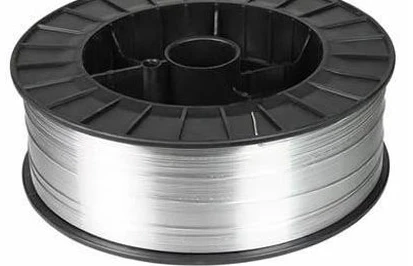
The AWS welding wire classification system provides an essential technical framework for specifying, procuring, and using welding consumables in custom sheet metal fabrication.
From the foundational A5 series specifications to the detailed designations of specific classifications such as ER70S-6, E71T-1, and ER308L, this framework enables manufacturers to select welding wire with predictable mechanical properties, consistent chemical composition, and reliable weld quality. For precision manufacturers serving high-demand industries, mastery of the AWS classification system is not merely an advantage—it is a prerequisite for producing welded assemblies that are specification-compliant, of high integrity, and meet the stringent standards of global markets.
As a specialized custom sheet metal manufacturer, Supro MFG possesses comprehensive processing capabilities for welding carbon steel, stainless steel, aluminum, and other alloys, and strictly adheres to AWS classification standards to ensure consistent, high-quality results for every project.
For inquiries regarding technical specifications, customized project solutions, or OEM partnerships, contact Supro today. Our professional engineering team is ready to provide you with tailored application solutions.