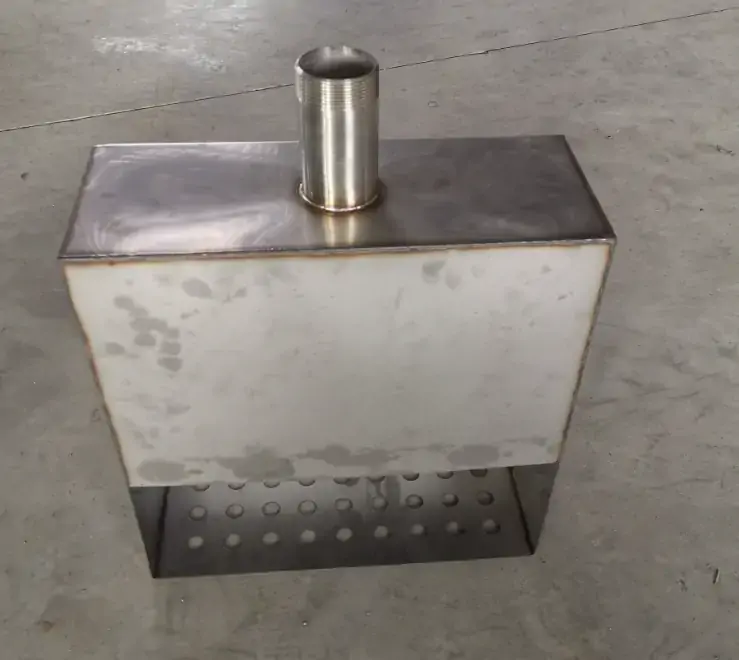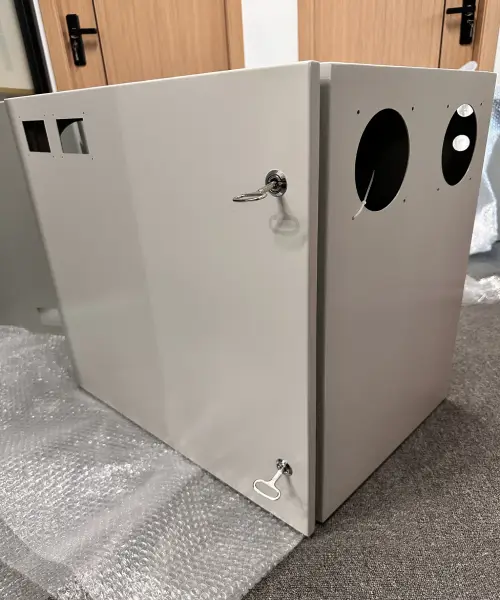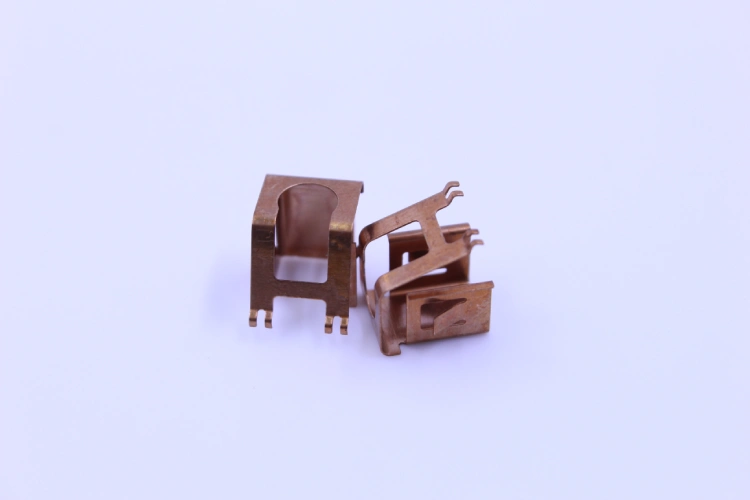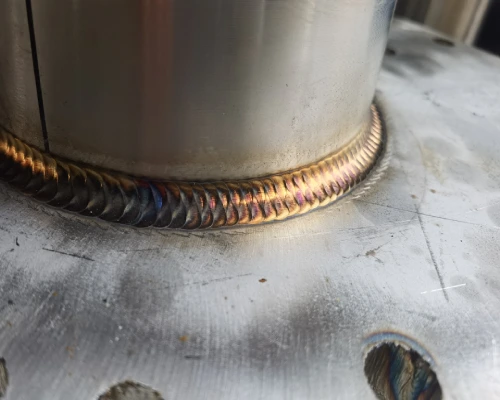
For IP enclosures, electrochemical corrosion is by no means a superficial issue—it is a design flaw that can lead to failure at any time. When two different metals come into contact inside a sealed IP-rated enclosure, the moisture trapped by the IP rating acts as an electrolyte. The result? The metal with the lower potential will be the first to corrode.
We have witnessed aluminum bases develop pitting corrosion within just a few months when paired with stainless steel fittings without proper isolation measures. As a manufacturer of custom IP-rated enclosures with over 20 years of experience, Supro MFG treats electrochemical corrosion as a predictable issue rather than an unexpected consequence of environmental factors.
The challenges are even more severe for outdoor or washdown-rated IP enclosure applications, as condensation cycles and sealed joints prevent natural drying. Neglecting the electrochemical series during material selection or assembly will directly shorten the service life of the enclosure.
In this guide, we will detail metal pairing rules, isolation techniques, and coating specifications to ensure your custom IP-rated enclosures remain intact—without the need for over-engineering.
Why Does Electrochemical Corrosion Damage IP-Rated Enclosures?
In IP-rated enclosure applications, electrochemical corrosion occurs immediately whenever two different metals come into contact in the presence of an electrolyte. The metal with the lower potential (typically aluminum or galvanized steel) acts as the anode and corrodes preferentially. According to the electrochemical potential series, pairing aluminum (anode) with stainless steel (cathode) can generate a corrosion current exceeding 100 µA/cm² in humid environments.
For sealed or outdoor IP enclosure designs, this risk increases exponentially. Higher IP ratings (such as IP65 or IP67) can lead to condensation due to thermal cycling, while also hindering natural drainage. In the absence of airflow, even trace amounts of moisture can sustain the electrochemical cell.
We have examined repair cases involving outdoor IP enclosures where aluminum backplates failed within six months—due to stainless steel fasteners being pressed directly against the bare metal, with no insulation or ventilation. The electrolyte never evaporated. In short, electrochemical corrosion is not a material defect but a predictable consequence of disregarding electrochemical principles during assembly. To control it, one must first understand its mechanism and then strictly enforce isolation and sealing specifications.
Material Compatibility Rules for Ensuring IP Enclosure Reliability
To prevent electrochemical corrosion in IP-rated enclosures, strict control over material selection is paramount. The electrochemical series determines the permissible potential difference—which should typically be less than 0.25V in humid environments. For custom IP-rated enclosures, direct contact between aluminum and stainless steel without isolation should be avoided. Adhering to the correct material compatibility rules before assembly begins can effectively reduce the risk of failure.
Selecting Base Metals with the Lowest Electrochemical Potential Difference for IP Enclosures
For any IP-rated enclosure, the electrochemical potential difference between adjacent metals in the electrochemical series must first be limited to ≤0.25V. This threshold prevents significant current flow under humid or washdown conditions.
5052 or 6061 aluminum alloys (anodic potential of approximately –0.9 V) can be safely paired with galvanized steel (–1.1 V), but cannot be paired with passivated stainless steel (approximately –0.1 V).
When customers request the use of stainless steel fasteners in custom IP-rated enclosures, we offer two solutions: replacing the enclosure base material with a more inert metal with a higher potential (such as 316L stainless steel), or employing an insulated isolation structure to forcibly block the conductive path. If this rule is ignored, pitting corrosion will appear at the fastener locations within a few months.
For outdoor IP enclosure components, be sure to consult the ISO 9223 corrosion classification standard before determining material compatibility.
Avoiding Incompatible Combinations of Fasteners and Inserts
Fasteners and threaded inserts are common failure points inside IP-rated enclosures. A typical mistake is screwing stainless steel screws directly into an aluminum mounting plate. Smaller screws (the cathode) can cause localized corrosion on the larger mounting plate (the anode), resulting in deep pitting around each hole. Similarly, brass grounding studs in contact with galvanized steel can lead to rapid depletion of the zinc coating.
When using aluminum IP-rated enclosures, specify fasteners made of zinc-nickel-plated steel, or place nylon washers under the head of each stainless steel screw. Never use copper or bare brass inside a sealed IP-rated enclosure—these are high-potential cathodic metals that accelerate the corrosion of nearly all structural metals. Document all fastener materials in the Bill of Materials (BOM) to avoid on-site replacements.
The Role of Coated or Plated Components
In IP enclosure applications, coatings and plating can serve as sacrificial or barrier protection. A zinc-nickel plating on steel hardware provides sacrificial protection—it corrodes preferentially, delaying corrosion of the base material even if the coating is scratched. In contrast, powder coatings or electrophoretic coatings on aluminum IP-rated enclosures act as a barrier; once the coating is damaged, the exposed aluminum becomes an anode for any metal with a higher potential that comes into contact with it.
For mixed-material assemblies within IP-rated enclosures, aluminum surfaces should undergo trivalent chromate conversion coating before powder coating—this improves adhesion and forms a thin passivation layer. In outdoor IP enclosure applications, the zinc-nickel plating thickness for fasteners should be at least 12 microns. Field data from Supro MFG shows that properly coated components have a corrosion-free service life 3 to 5 times longer than uncoated components.
Only 4 steps
online custom metal fabrication parts
Contact our experts team and experience the efficiency and economic benefits of digital metal fabrication services.
Upload Design Files
STL , STEP (.stp), IGES (.igs), (.ZIP), or PDF.
Also be a sample or an idea
Quote & Design Analysis
Instant factory quotes and DfM reports, the most reasonable solution.
Manufacturing Begins
Digital processes can initiate order tasks within 24 hours.
On-Time Delivery
Keeping delivery promises, approved by 3000+ Global Company buyers.
Design Strategies for IP-Rated Enclosures to Break Electrochemical Circuits
To prevent electrochemical corrosion in IP-rated enclosures, the current path between dissimilar metals must be interrupted. Physical isolation—such as using non-conductive washers, sealing gaskets, or structural redesign—can prevent current flow even if moisture penetrates.
Installing Non-Conductive Isolation Layers
In IP-rated enclosure applications, the most direct method to break the electrochemical circuit is to insert a non-conductive isolation layer between dissimilar metals. Polyamide (nylon) washers, neoprene gaskets, or PET film spacers can prevent electron flow even in the presence of electrolyte bridging.
For bolted connections in IP-rated enclosures, a flat nylon washer should be placed beneath the fastener head, another beneath the nut, and a sleeve inserted into the hole. Common mistake: using only one washer or omitting washers entirely. We have observed pitting corrosion around each stainless steel screw in aluminum IP-rated enclosures, caused precisely by assembly personnel omitting the barrier layer. Nylon washers should be specified with a minimum thickness of 0.5 mm to prevent creep under torque.
For covers and flanges, placing die-cut PET liners between mating surfaces provides isolation without compromising the sealing clamping force.
Seal Joints to Prevent Electrolyte Intrusion
Electrolytes—typically condensation or rinse water—can form galvanic cells inside the IP enclosure. Sealing the joints prevents electrolytes from coming into contact with dissimilar metals.
Closed-cell silicone or EPDM (ethylene propylene diene monomer) gaskets should be used at all flange joints. Avoid using open-cell foam materials, as they absorb moisture and accelerate corrosion. For outdoor IP enclosure designs, apply a continuous layer of non-hygroscopic sealant (such as polyurethane) along the fastener lines. Note, however, that a completely sealed enclosure may lead to internal moisture buildup.
A practical solution: install pressure-compensated venting ports with Gore membranes. These maintain the IP rating while allowing water vapor to escape. We employ this solution in our custom IP-rated enclosures installed in coastal environments. If improperly sealed, electrolytes will seep into every crevice, leading to corrosion. To ensure consistent seal longevity, set the gasket compression ratio to 25%–30%.
Avoiding Structural Gaps
Within IP-rated enclosures, gaps act as catalysts for corrosion. Narrow gaps between two metal surfaces—even if they are of the same metal—can trap stationary electrolytes, consume oxygen, and trigger localized corrosion. For dissimilar metal combinations, gaps can increase the corrosion rate by a factor of 10 or more.
Whenever possible, redesign lap joints as butt joints. When a lap joint cannot be avoided, add continuous sealing strips to fill the gap. For the backplate and mounting plate of IP enclosures, specify the use of raised spacers rather than flat contact. This aids in drainage and air circulation.
Another approach is to add drain holes at low points—but only where the IP rating permits (e.g., IP54 rather than IP67). Review all internal interfaces during the design phase. Avoiding gaps is both cost-effective and highly effective.
Why choose Supro MFG's Custom metal enclosure Services
Provide the most cost-effective cost solution for manufacturing and assembling products, expanding product competitiveness.
a technical team specializing in custom shell manufacturing for more than 30 years.
Advanced Manufacturing Equipment: Industry-leading custom metal enclosure manufacturer with in-house sheet metal, die casting, precision machining workshops, and surface coating workshops.
ISO 9001-2015, PPAP III level, RoHS, NEMA, CE and other certified production standards.
24H*7 online English technical support: The professional English team responds quickly to users’ technical questions online at any time.
help users from product design, prototype, batch manufacturing, surface treatment, assembly and packaging, transportation and a series of value-added services.
With in-house mechanics and chemistry laboratories, it can quickly monitor manufacturing process quality control to ensure the delivery of high-quality products.
Accept to sign NDA documents to ensure that customers’ product information is protected.
Door-to-door delivery in customizable secure packaging after complying with the delivery details agreed with the customer.
Surface Treatment and Coating Specifications for IP Enclosures
Barrier coatings such as powder coating or anodizing prevent metal from coming into contact with electrolytes, while sacrificial coatings divert corrosion away from the structural metal. For any custom IP-rated enclosure, correctly specifying coating thickness and pretreatment processes directly determines its service life in humid or outdoor environments.
Anodizing and Conversion Coatings for Aluminum IP-Rated Enclosures
For aluminum IP-rated enclosures, anodizing alone does not guarantee electrochemical protection. Although Type II anodizing (compliant with MIL-A-8625) forms a thin barrier layer, an unsealed anodized film remains porous and absorbs moisture—which accelerates corrosion when used with high-potential metal hardware. At Supro, all our outdoor IP enclosures feature Type III hard anodizing (≥25 µm) and are sealed with thermal deionized water.
A superior option is to apply a trivalent chromium conversion coating (chemical film) either beneath a powder coating or as a standalone surface treatment. This passivation layer reduces electrochemical corrosion currents by increasing surface resistance. For IP-rated enclosures used in coastal or washdown environments, never accept unsealed clear anodizing.
Powder Coating Thickness and Edge Coverage
Powder coating can serve as a barrier coating for steel or aluminum IP-rated enclosures, provided that the coating thickness and edge coverage meet the minimum requirements. For external surfaces, the coating thickness on flat areas should be 80–120 µm, while the coating thickness at cut edges and corners should be 120–160 µm.
For IP enclosures containing mixed-metal internal components, zinc phosphate pretreatment is required prior to powder coating. This improves adhesion and provides a secondary protective layer. We also require 100% wet film thickness inspection of edges using an eddy current thickness gauge. A common on-site failure involves powder coating peeling away from the countersunk holes of internal fasteners within IP-rated enclosures, resulting in direct contact between exposed steel and aluminum.
Looking for a reliable custom sheet metal fabrication companies?
Talk To Supro MFG Expert Team
Contact us for competitive ex-factory prices,
and a full range of technical support services.
Environmental Adaptation and Long-Term Monitoring of IP Enclosures
When selecting materials for IP-rated enclosures, failure to consider the operating environment will inevitably result in either insufficient protection or over-engineering. The ISO 12944 standard classifies corrosive environments into grades ranging from C1 (dry indoor) to C5 (coastal/industrial). For IP enclosures used in C4 or higher environments, aluminum with sealed anodized treatment or steel with a powder coating of at least 120 microns should be selected.
Long-term reliability also requires regular maintenance. Inspect the gaskets of IP-rated enclosures every six months; if the hardness exceeds 80 Shore A, they should be replaced. Check ground connections—loose connections increase electrical resistance but do not prevent electrochemical current; confirm that isolation washers are intact. Record the replacement cycle for seals. Even in harsh environments, a well-maintained enclosure has a service life three times longer than one that is neglected.
Summary
By strictly adhering to three rules, electrochemical corrosion in IP enclosures can be effectively prevented. First, ensure the electrochemical potential between paired metals is below 0.25V. Second, insert a physical barrier—such as a nylon washer or sealing gasket—at every dissimilar metal contact point. Third, control the electrolyte through proper sealing and drainage measures. Subsequently, coating thickness and environmental classification (ISO 12944) will serve as the final verification criteria. Implementing these principles in the design of custom IP-rated enclosures can extend their service life by several years.
Supro is a professional IP enclosure manufacturer. Leveraging advanced equipment, extensive manufacturing experience, and a dedicated engineering team, we provide perfect custom manufacturing solutions to over 3,000 companies worldwide, along with genuine manufacturer quotes.
We deliver a wide range of products efficiently and on time. From product design and rapid sheet metal prototype fabrication to mass production, we offer professional technical support and exceptional quality. Furthermore, we provide one-stop manufacturing solutions and highly cost-competitive product supply!