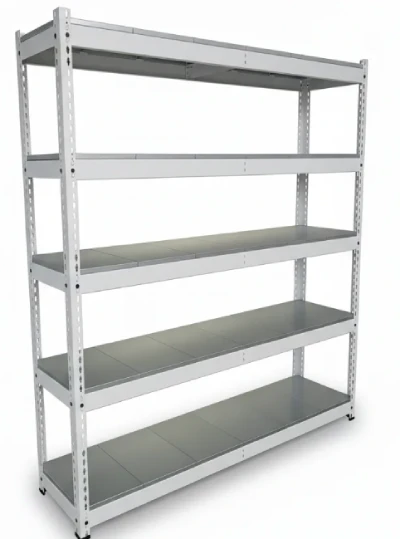
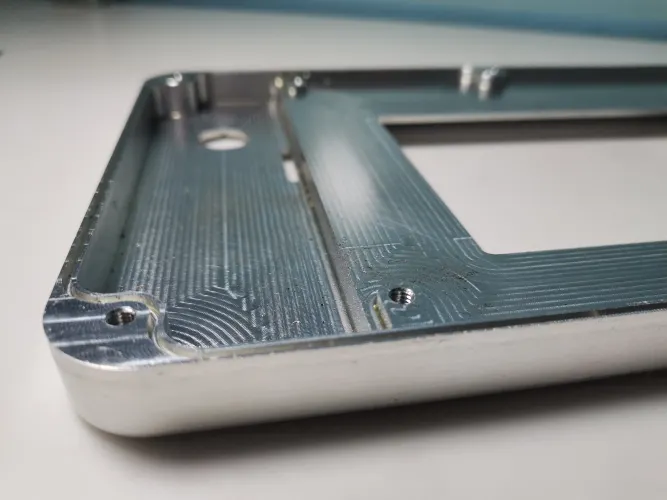
heavy duty shelves are constantly subjected to dynamic loads and frequent loading and unloading impacts in warehousing and industrial environments. Powder coating serves not only as a decorative finish but also as the first line of defense against corrosion and mechanical damage. Once the coating delaminates over a large area due to even a minor impact, the exposed steel surface immediately begins to oxidize, substantially compromising both the structural integrity and service life of the heavy duty metal shelving.
The root cause of adhesion failure can usually be traced to microscopic contamination on the substrate surface prior to coating—residual rolling oil, drawing lubricants, or welding spatter can form a weak layer at the interface between the coating and the steel, preventing chemical bonding between the powder coating and the substrate. This issue is particularly pronounced on thick-gauge components: the hot-rolled steel sheets used in heavy duty shelving carry dense mill scale, and when combined with weld slag residues in areas with long weld seams, conventional cleaning processes struggle to remove them thoroughly.
Adhesion failure is not inevitable—systematic phosphate conversion coating pretreatment and precise curing curve control, combined with the ASTM D3359 cross-hatch adhesion test as a standard quality inspection procedure, can eliminate the risk of delamination at the process source.
This article systematically analyzes the mechanisms and prevention strategies for powder coating delamination on heavy duty shelves from the engineering perspective of sheet metal manufacturers.
Adhesion Mechanisms of Powder Coatings—Why heavy duty Shelves Are Particularly Prone to Problems
The adhesion of powder coatings relies on the synergistic action of two mechanisms: mechanical interlocking and chemical bonding. During curing, the powder melts and flows into microscopic pores on the substrate surface, forming mechanical anchorage, while the phosphate conversion coating establishes a chemically active interface between the steel and the polymer.
However, this process is highly sensitive to surface conditions—organic contaminants such as residual rolling oil, drawing lubricants, or salts and oils from operators’ fingerprints can form a barrier layer between the coating and the substrate, preventing effective contact between the powder and the metal; inorganic contaminants such as mill scale, welding spatter, and oxides further interfere with the formation of the conversion coating.
The thick hot-rolled steel sheets used in heavy duty shelves have a thicker and denser layer of mill scale, making removal significantly more difficult than with thin sheets; large shelving units have extensive areas of long weld seams with substantial slag residue, and the high thermal mass of the components results in slow heating of the curing oven. These structural characteristics present more stringent process challenges for adhesion control in heavy duty metal shelving compared to ordinary sheet metal parts.
Root Causes of Coating Delamination in heavy duty Shelves
The root causes of powder coating delamination on heavy duty metal shelving are concentrated in two key stages: pretreatment and curing. Surface contamination disrupts the chemical bonding at the interface, while deviations in the curing curve compromise the integrity of polymer cross-linking.
Insufficient Surface Pretreatment of heavy duty Shelves
Insufficient surface pretreatment is the primary cause of coating delamination on heavy duty shelving: residual contaminants prevent chemical bonding between the powder and the substrate, resulting in a loss of adhesion.
Organic Contaminants—Oil, Lubricants, and Fingerprints
Rolling oils, drawing lubricants, and salts and oils left behind by operators’ fingerprints are the most common types of organic contaminants on the surfaces of heavy duty shelves. These contaminants form a low-surface-energy barrier film on the substrate surface, preventing the powder coating from penetrating this film and establishing a direct chemical bond with the steel during the curing process.
Even trace amounts invisible to the naked eye—such as a layer of grease from a fingerprint—are sufficient to form a weak layer at the coating/substrate interface. Under the high-temperature conditions of the curing oven, residual organic contaminants may undergo vaporization or carbonization reactions; as the resulting gases escape from beneath the coating, they form defects such as bubbles, fisheyes, or cratering.
An even more insidious problem is that these contaminants are often already present on the surface before the custom heavy duty shelves enter the spray booth—stretching oil from upstream stamping processes, rust-preventive treatments during storage, and direct hand contact during handling are all common sources of contamination.
Effective removal of organic contaminants requires an alkaline wash or emulsification cleaning stage; simply wiping with solvents is insufficient to address the contamination load in the mass fabrication of heavy duty shelves.
Inorganic Contaminants—Mill Scale, Welding Slag, and Oxides
The hot-rolled steel sheets used for heavy duty shelves form a dense layer of mill scale during the rolling process, whose crystal structure is fundamentally different from that of the base steel. Powder coatings cannot form effective chemical bonds or mechanical anchorage with mill scale—the coating actually adheres to the surface of the mill scale rather than the steel substrate itself. When the mill scale cracks and flakes off during subsequent use due to thermal cycling or mechanical impact, the coating peels off as well.
The welding process further introduces weld slag and spatter: elements such as silicon, manganese, and copper in the weld slag originate from the filler material in the welding wire or electrode, forming an inorganic coating in the weld zone. This coating prevents direct contact between the powder coating and the base material of the heavy duty shelving, resulting in adhesion strength in the weld zone that is significantly lower than in the base material areas. Furthermore, the oxide layer formed at high temperatures in the heat-affected zone (HAZ) during welding also interferes with the uniform formation of the phosphate conversion coating.
Unlike organic contaminants, scale and weld slag cannot be removed by chemical cleaning alone—pre-treatment processes such as mechanical cleaning (grinding, sandblasting) or strong acid pickling are required to create an acceptable substrate surface for the subsequent chemical pretreatment of heavy duty metal shelving.
The Necessity of a Multi-Stage Phosphating Cleaning System
A single cleaning step cannot simultaneously address the diverse challenges posed by both organic and inorganic contaminants. A multi-stage iron/zinc phosphate cleaning system solves this problem through a phased functional design:
The pre-degreasing stage uses an alkaline cleaning agent to remove most oils and organic residues;
The main degreasing stage further emulsifies residual lubricants and fingerprint contaminants;
The multi-stage water rinse stage removes degreasing agent residues and suspended contaminants;
The phosphate conversion stage forms a microcrystalline conversion coating on the clean steel surface, providing chemically active anchor points for powder coatings;
The passivation and sealing stage stabilizes the conversion coating and prevents the formation of flash rust.
Iron phosphate is suitable for general industrial applications, offering lower costs and simple maintenance; zinc phosphate provides superior corrosion resistance and adhesion strength, making it suitable for demanding applications such as custom heavy duty shelves.
Given the thick plates and large dimensions characteristic of heavy duty metal shelving, a 5- to 7-stage system configuration ensures sufficient contact time between the cleaning solution and the workpiece surface, avoiding cleaning blind spots caused by high thermal mass or complex geometries.
The weight, crystal structure, and coverage of the phosphate conversion coating must all be precisely controlled within the process specifications—if the coating weight is too light, adhesion strength will be insufficient; if it is too heavy, it may cause the coating to become brittle.
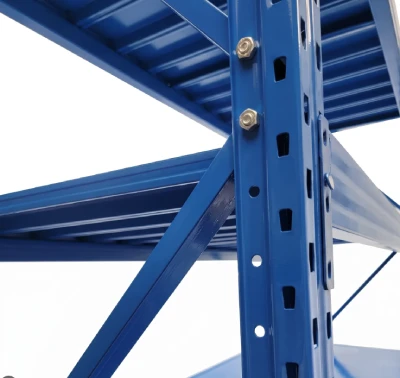
Inappropriate Curing Curves for heavy duty Shelves
Inappropriate curing curves constitute another process-related cause of coating delamination on heavy duty shelves: if the powder cross-linking reaction deviates from the temperature-time window, adhesion will be substantially compromised.
The Concept of the Cure Window
The curing process of powder coatings is essentially a cross-linking reaction of polymer molecules—linear molecular chains form a three-dimensional network structure driven by thermal energy, imparting the required mechanical strength and chemical resistance to the coating.
Each powder formulation has a specific cure window, which is the range of combinations of workpiece metal temperature and holding time. The cure window is determined by the reaction kinetics of the powder resin system—below the lower limit of the window, the cross-linking reaction rate is insufficient to achieve an adequate conversion rate within a limited time; above the upper limit of the window, coating performance may be compromised due to thermal degradation or excessive cross-linking.
For custom heavy duty shelves, the heat capacity of thick plate cross-sections is significantly higher than that of thin plates. This means that under the same oven conditions, it takes much longer for the core of a thick plate to reach the target temperature than it does for the edges or thin-walled sections. Therefore, the selection of the cure window must take into account the maximum wall thickness of the heavy duty metal shelving to ensure that even the thickest cross-sectional areas can complete curing within the window, rather than using only the thin-plate areas as a process reference.
Monitor Metal Temperature, Not Air Temperature
Using oven air temperature as the sole control parameter for the curing process is one of the most common process misconceptions in the coating of heavy duty shelves. Air temperature merely reflects the thermal state of the oven environment, whereas the temperature of the workpiece metal itself (part metal temperature, PMT) is what actually participates in the cross-linking reaction.
The high heat capacity of custom heavy duty shelves means that the workpiece’s heating rate is significantly slower than that of the air—the air temperature may have already reached the setpoint, while the core temperature of thick plates remains well below the lower limit of the curing window. More critically, workpieces with different cross-sections within the same oven batch reach the target temperature at different times; if the holding time based on air temperature is used as the basis for curing time, thick cross-sectional areas may actually be undercured.
Effective process control for heavy duty shelf surface treatment must employ contact thermocouples or data loggers. Measurement points should be placed at representative locations—including the center of the thickest cross-section, the heat-affected zone of welds, and the inner corners of bends—to establish a complete part temperature profile, which serves as the basis for setting curing process parameters.
Consequences of Under-cure and Over-cure
Although both under-cure and over-cure lead to coating adhesion failure on heavy duty shelves, their failure mechanisms and manifestations are entirely different.
In the case of under-cure, the cross-linking density of the polymer does not reach the design value, resulting in insufficient cohesive strength of the coating. Under impact loads, cracks form within the coating, propagate along the cross-section, and extend to the substrate interface; the delamination surface exhibits characteristics of cohesive failure, meaning the coating remains on the substrate surface and on both sides of the adhesive tape.
In cases of over-curing, the polymer network becomes over-crosslinked or undergoes thermal oxidative degradation, causing the coating to become brittle and lose flexibility—under impact, the coating shatters because it cannot absorb the deformation energy; the peeling edges exhibit sharp, irregular boundaries, accompanied by discoloration or a loss of gloss.
For industrial components subjected to dynamic loads, such as heavy duty metal shelving, early adhesion failure caused by insufficient curing typically becomes apparent within a few weeks of service; in contrast, embrittlement failure resulting from over-curing may be delayed by several months, making it more difficult to diagnose the failure mode.
Precise control of the curing temperature and time for powder coatings on custom heavy duty shelves—ensuring that thick-section areas simultaneously meet the minimum curing energy requirements without exceeding the upper limit—is the only way to ensure that the polymer coating is fully cross-linked while maintaining sufficient toughness.
Only 4 steps
online custom metal fabrication parts
Contact our experts team and experience the efficiency and economic benefits of digital metal fabrication services.
Upload Design Files
STL , STEP (.stp), IGES (.igs), (.ZIP), or PDF.
Also be a sample or an idea
Quote & Design Analysis
Instant factory quotes and DfM reports, the most reasonable solution.
Manufacturing Begins
Digital processes can initiate order tasks within 24 hours.
On-Time Delivery
Keeping delivery promises, approved by 3000+ Global Company buyers.
Quality Assurance for heavy duty Shelves—Verifying Adhesion Through Standardized Testing
The quality assurance process verifies the effectiveness of process control through standardized adhesion testing—the ASTM D3359 cross-hatch adhesion test provides a reliable basis for the quantitative evaluation of coating adhesion on heavy duty shelves.
ASTM D3359—Test Methods and Classification
ASTM D3359 is an internationally recognized standard for adhesive tape adhesion testing of coatings and is widely applicable to the evaluation of the adhesion of organic or inorganic coatings, such as paints, powder coatings, and electroplated layers. This standard includes two test methods: Method A (X-cut) and Method B (cross-hatch), both of which involve the core steps of “scoring + tape peeling.”
Method A evaluates adhesion by scoring an X-shaped cut on the coating, then applying and peeling off adhesive tape; it is primarily used for on-site testing.
Method B uses a multi-blade tool to score a lattice pattern on the coating and is better suited for quality control in laboratory or workshop settings.
The choice of test method for custom heavy duty shelves depends on the total coating thickness: Method A is suitable for coating systems thicker than 125 μm (5 mils), while Method B is suitable for coatings thinner than 125 μm.
Test results are graded on a scale from 0B to 5B—where 5B indicates completely smooth cut edges with no coating peeling off from any grid square, and 0B indicates peeling in more than 65% of the grid area. For industrial components such as heavy duty shelves that are subjected to mechanical loads, acceptance criteria typically require a grade of 4B or 5B.
It should be noted that the tape test is a semi-quantitative comparative method that does not provide absolute adhesion values in units of force; furthermore, this method does not distinguish between higher levels of adhesion. For heavy duty metal shelving applications requiring precise quantification of adhesion strength, it should be used in conjunction with the ASTM D4541 pull-off adhesion test.
Incorporating Adhesion Testing into the Production Quality Control of heavy duty Shelves
Adhesion testing should not be used solely as a validation tool during the process development stage but should be systematically incorporated into the standard quality control (QC) protocol. For heavy duty shelves, incorporating the ASTM D3359 cross-hatch adhesion test as a routine inspection item for each batch of products enables a complete closed-loop quality control process, from first-article inspection to in-process sampling.
Specific implementation methods include conducting tests on oven-accompanying test coupons or the non-functional surfaces of the product prior to formal coating application to ensure that the adhesion of each batch of coatings is verified before shipment.
Incorporating the ASTM D3359 adhesion test into the Standard Operating Procedure (SOP) not only provides quantifiable data to support the shipment quality of heavy duty shelving but also offers objective feedback for the continuous optimization of process parameters—such as maintenance cycles for the phosphate cleaning system and fine-tuning of curing curves.
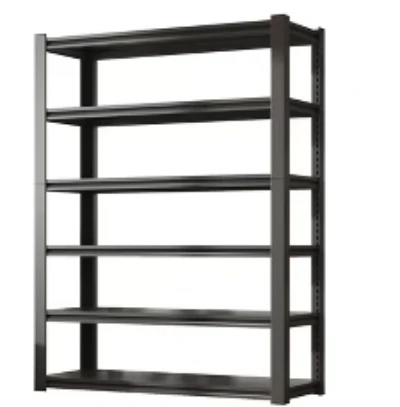
Conclusion
Powder coating delamination affects heavy duty shelves far beyond mere cosmetic defects; it directly compromises their structural durability and service life. Root cause analysis indicates that adhesion failure stems from interface contamination during the pretreatment stage and insufficient curing and cross-linking—both of which can be eliminated through systematic process control.
Rigorous phosphate cleaning, curing monitoring based on metal temperature, and periodic validation according to ASTM D3359 constitute a three-pronged defense against delamination. Incorporating these three measures into standardized operating procedures serves as the engineering benchmark for ensuring the coating durability of heavy duty shelves.
Supro is a professional custom heavy duty shelves manufacturer. Leveraging advanced equipment, extensive manufacturing experience, and a professional engineering team, we provide perfect custom heavy duty shelves solutions to over 3,000 companies worldwide, along with genuine manufacturer quotes.
We deliver a wide range of products efficiently and on time. From product design and rapid sheet metal prototype fabrication to mass production, we provide professional technical support and exceptional quality.
We offer one-stop manufacturing solutions and highly cost-competitive product supply! For technical specifications or OEM partnership inquiries, please contact our engineering team.