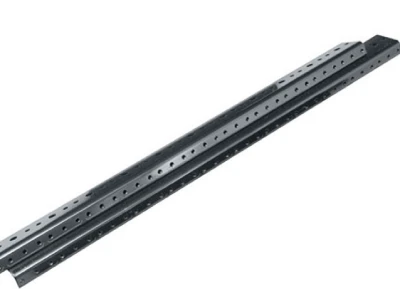


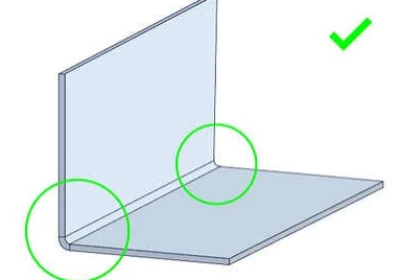
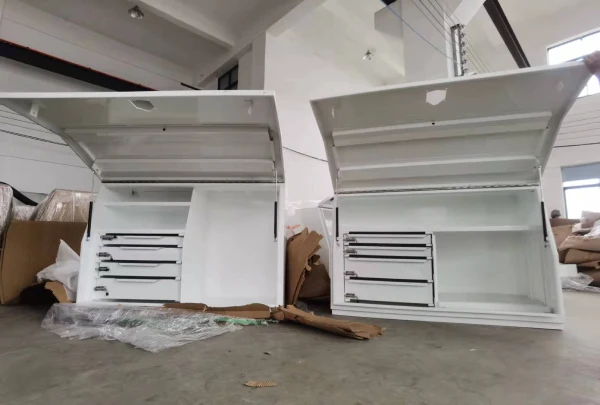
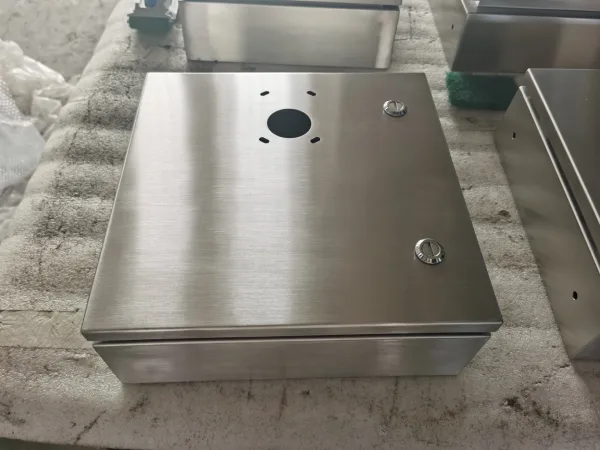
In data center hardware integration, dimensional accuracy of server rack rails is absolutely non-negotiable. According to the strict EIA-310-E standard, maintaining precise 19-inch equipment spacing depends entirely on whether the formed structural flanges have an exact 90-degree geometric angle.
It is a well-known technical fact that even a negligible 0.5-degree angular deviation during manufacturing can lead to serious mechanical failures. Such subtle contour defects can cause sliding mechanisms to jam, misalign critical mounting holes, and reduce the overall load-bearing capacity of server rack rail systems under the heavy weight of server chassis.
Producing precision server rack rails that fully comply with standards requires not only basic metal forming processes but also rigorous engineering oversight to account for the material’s inherent springback and ensure strict dimensional tolerances.
This article provides an in-depth analysis of the root causes of 90-degree bending errors in custom sheet metal fabrication. By exploring advanced CNC press brake technology, material yield behavior, and active compensation methods, we will demonstrate how to ensure that every custom server rack rail delivered provides seamless, secure, and stress-free support for IT infrastructure deployment.
The Critical Role of Precision in Server Rack Rail Manufacturing
In server rack rail fabrication, geometric precision directly determines the success of assembly. A perfect 90-degree profile is a critical mechanical benchmark, not merely an aesthetic feature. Even the slightest angular deviation can directly affect load distribution and dimensional compliance within high-density data center cabinets.
The EIA-310 Standard and Dimensional Tolerances
To comply with the globally recognized EIA-310-E specification, each metal server rack rail must consistently maintain a precise 19-inch internal equipment clearance. This stringent industry standard leaves absolutely no room for any crude sheet metal forming processes.
From a custom manufacturing perspective, meeting this requirement necessitates strict control of linear and angular tolerances in accordance with engineering drawings, with tolerance ranges typically strictly limited to ±0.03 inches. If the primary 90-degree flange deviates, the cumulative tolerance on the cabinet chassis will immediately result in a violation of these dimensional limits.
Non-conforming server rack rail assemblies can bring the entire data center deployment to a standstill. Therefore, manufacturing precision server rack rails with perfect 90-degree bends is not merely a matter of aesthetic geometry; it is a critical pass/fail criterion that ensures third-party hardware aligns naturally within the designated U-space.
Mechanical Impacts of Profile Deviations
When custom server rack rails fail to achieve a true vertical angle, the mechanical implications extend far beyond simple installation alignment errors. Over-bent or under-bent profiles immediately subject compatible hardware to destructive stresses. When installing heavy 1U to 4U servers, flanges that deviate from the vertical force the sliding chassis mechanism to operate at irregular angles, resulting in severe friction, jamming, or ultimately, ball bearing failure.
Non-vertical bending also weakens the core structural rigidity of server rack rail systems, significantly reducing their static load-bearing capacity. For enterprise-level deployments, this physical deformation means the rack cannot safely support the weight of standard equipment without twisting.
By strictly controlling the 90-degree bending angle, we can eliminate dangerous shear forces and ensure that metal server rack rails optimally transfer structural loads vertically to the main cabinet uprights.
Diagnosis of Defects in Server Rack Rails: 90-Degree Bending Deviation
To diagnose angular defects in server rack rail systems, it is necessary to analyze the physical properties of the material under bending stress. Bending deviations in 90-degree flanges are rarely caused by equipment failure; the primary causes are uncompensated springback during the forming process and subtle metallurgical variations.
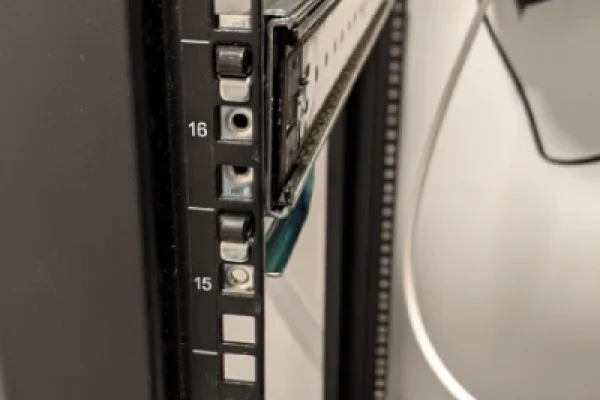
Springback Effect in Sheet Metal Forming of Server Rack Rails
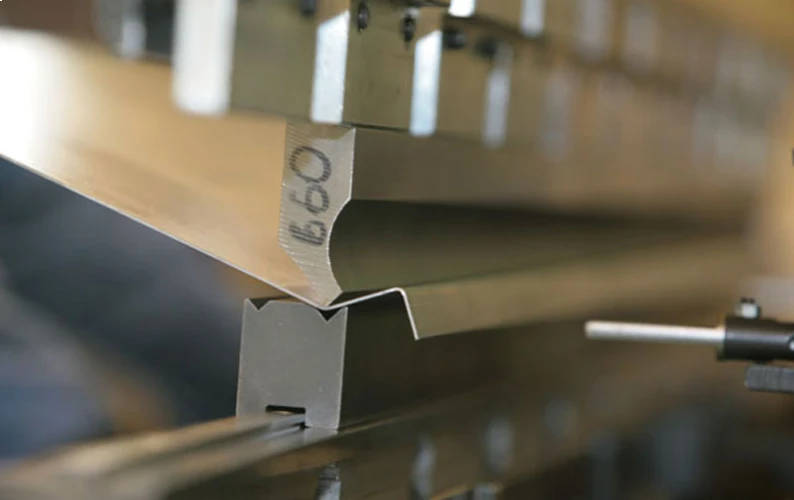
The root cause of angular deviations in precision server rack rails lies in the inherent springback effect of sheet metal. During processing on a CNC press brake, the material is deformed beyond its yield point into the plastic zone to form a 90-degree flange. However, elastic strain always remains in the metal structure. Once the pressure from the upper punch is released, this stored elastic energy can cause the flange to open slightly, resulting in an angle that is wider than the target geometry.
During server rack rail fabrication, failure to perform mathematical calculations and apply an over-bend to account for this specific elastic recovery will inevitably result in rack assembly failure. Professional manufacturing processes require the application of precise springback compensation factors based on the steel’s specific K-factor to ensure that every custom server rack rail delivered maintains perfect perpendicularity, thereby enabling reliable hardware installation.
Material Variables Affecting the Predictability of Bending in Server Rack Rails
Due to microstructural variations between different steel batches, compensating for springback in metal server rack rails becomes extremely complex. Even within the same batch of certified material, localized fluctuations in yield strength and tensile properties can directly alter the metal’s response to bending stress.
The grain orientation formed during the cold-rolling process also has a significant impact on bending predictability; bending along the grain direction versus perpendicular to it results in distinctly different springback behaviors.
Furthermore, the tight sheet thickness tolerances provided by steel mills continuously exacerbate these angular deviations. Therefore, relying solely on static press brake programs is far from sufficient for high-volume server rack rail fabrication. To maintain a precise 90-degree profile, specialized custom fabricators must dynamically adapt to these material variables, ensuring that each custom server rack rail overcomes batch-to-batch inconsistencies without compromising its structural integrity.
Only 4 steps
online custom metal fabrication parts
Contact our experts team and experience the efficiency and economic benefits of digital metal fabrication services.
Upload Design Files
STL , STEP (.stp), IGES (.igs), (.ZIP), or PDF.
Also be a sample or an idea
Quote & Design Analysis
Instant factory quotes and DfM reports, the most reasonable solution.
Manufacturing Begins
Digital processes can initiate order tasks within 24 hours.
On-Time Delivery
Keeping delivery promises, approved by 3000+ Global Company buyers.
Server Rack Rail Fabrication Process for Springback Compensation
To overcome material inconsistencies in metal server rack rails, relying solely on static press brake programming is far from sufficient. Advanced manufacturing processes require the use of adaptive forming technology, which employs real-time algorithmic compensation to actively counteract springback, thereby ensuring precise 90-degree dimensional stability.
Implementation of Active Laser Angle Measurement in the Server Rack Rail Manufacturing Process
To ensure that every precision server rack rail achieves absolute accuracy, the traditional trial-and-error bending process is now completely obsolete. Instead, we have deployed CNC press brakes integrated with an active laser angle measurement system.
During the forming process, high-resolution optical sensors project a laser line onto the structural flange, capturing the precise bending angle in real time before the press head pressure is released. This closed-loop feedback mechanism instantly detects any localized material anomalies that could lead to unpredictable springback.
By continuously monitoring the metal’s geometric state, the system ensures that the actual bending results perfectly match the CAD specifications. This eliminates dimensional risks, significantly reduces incoming quality inspection efforts, and ensures that custom server rack rails install seamlessly within critical data center cabinets.
Dynamic Punch Depth Adjustment
The true advantage of real-time monitoring lies in its integration with the dynamic punch depth adjustment function. As soon as the laser system identifies a precise springback deviation, the CNC controller immediately calculates the required over-bend angle.
Without interrupting production, it fine-tunes the downward stroke of the upper punch—typically in precise increments as small as 0.01 millimeters. This automatic punch positioning slightly bends the sheet metal beyond 90 degrees, allowing the metal server rack rails to precisely return to a perfect right angle after springback.
This feature is critical when manufacturing server rack rails from high-yield-strength steel—as the elastic springback phenomenon is particularly pronounced in such materials. By dynamically compensating for variations between different batches of material, this adaptive process ensures that every custom server rack rail coming off the production line meets the strict verticality requirements necessary to support the load of heavy 4U server enclosures.
Die Selection in the Server Rack Rail Manufacturing Process
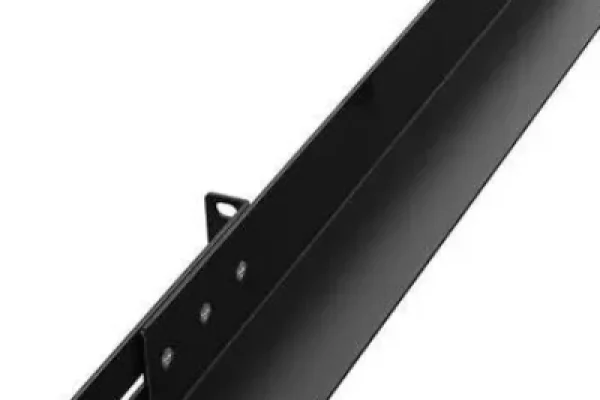
In addition to advanced software compensation technology, the geometry of the physical dies directly determines the structural integrity of precision server rack rails. Optimizing the punch radius and V-shaped die cavity width is a precisely calculated engineering decision. A V-shaped die cavity opening that is too narrow increases the required stamping tonnage and can cause microcracks at the outer bending radius; conversely, a mismatch in the punch tip can result in uneven distribution of bending forces.
To manufacture robust and durable server rack rail systems, we strictly adjust die configurations based on specific material thicknesses and tensile strengths. The use of precision-ground, hardened dies ensures smooth and consistent inner radii that directly meet EIA-310 load-bearing requirements. This rigorous die strategy prevents surface galling and internal stress concentration, ensuring that the final flanges maintain perfect rigidity during years of continuous use.
Quality Assurance Procedures in Server Rack Rail Production
Advanced manufacturing technologies must be validated through rigorous inspection standards. In server rack rail manufacturing, quality assurance is far more than a simple post-production sorting process. It requires strict in-process monitoring and statistical process control (SPC) to ensure absolute compliance with the 90-degree dimensional requirements during high-volume production.
Production Process Monitoring and Post-Production Verification for Server Rack Rails
When manufacturing precision server rack rails, relying solely on post-production verification poses unacceptable risks. If angular defects are detected only at the end of the production line, the quality of the entire batch has already been compromised.
We prioritize rigorous in-process monitoring, with each production batch beginning with a comprehensive First Article Inspection (FAI). Before commencing mass production, the first metal server rack rails undergo rigorous dimensional analysis, utilizing a Coordinate Measuring Machine (CMM) and high-resolution optical profilometers to verify their precise 90-degree perpendicularity. By integrating continuous quality sampling directly into the CNC press brake station, our technicians can immediately identify and correct even minor angular deviations.
This proactive quality assurance approach ensures that every custom server rack rail meets the strict EIA-310 standard well before final packaging, thereby eliminating potential failure risks for hardware integrators during downstream assembly.
Maintaining Strict Tolerances in High-Volume Server Rack Rail Production
When production scales up to tens of thousands of units, progressive die wear becomes a critical variable. As punch tips and V-dies naturally wear down during continuous operation, the internal bend radius of the metal server rack rails undergoes subtle changes, jeopardizing the accuracy of the 90-degree angle.
To maintain uncompromising tolerances during high-volume production, we employ rigorous Statistical Process Control (SPC). By proactively tracking the Cpk (Process Capability Index) metric, our quality engineers can predict this issue long before die fatigue causes dimensional nonconformities. This data-driven approach guides us in proactively replacing dies and adjusting CNC slider offsets. As a result, the 10,000th precision server rack rail is identical to the first unit in terms of geometric accuracy and structural integrity.
This consistency across batches ensures that every server rack rail we deliver can be installed seamlessly, without the need for costly on-site modifications.
Looking for a reliable custom sheet metal fabrication companies?
Talk To Supro MFG Expert Team
Contact us for competitive ex-factory prices,
and a full range of technical support services.
Material Selection Strategies to Ensure Structural Integrity of Server Rack Rails
Ensuring the structural integrity of precision server rack rails begins well before processing on the bending machine. Material selection must strike a mathematical balance between yield strength and formability. Incorrect alloy specifications will inevitably cause microcracks at a 90-degree bend radius, thereby severely compromising the static load limit.
Performance Comparison of Cold-Rolled Steel and Galvanized Steel
When designing custom server rack rails, engineers typically evaluate cold-rolled steel (SPCC) against galvanized steel (SGCC). SPCC offers excellent dimensional consistency and a highly predictable yield point, making it well-suited for meeting strict 90-degree tolerance requirements. However, it requires post-processing electroplating to prevent oxidation.
In contrast, SGCC offers inherent corrosion resistance through its zinc coating. However, during forming, the zinc coating slightly alters the material’s K-factor and increases the risk of micro-peeling at the outer bend radius.
Manufacturers must precisely adjust bend allowance calculations based on the selected alloy. Ultimately, for any heavy-duty server rack rails, the choice between these metals determines not only their environmental suitability but also the precise press brake programming required to ensure that every precision server rack rail meets the exact EIA-310 verticality standard.
Balancing Yield Strength and Formability
The structural foundation of reliable metal server rack rails lies in achieving the optimal balance between high yield strength and practical formability. Data center architecture requires structural flanges to support high-density, heavy-duty hardware without deflecting under static loads.
However, selecting a metal alloy with excessively high tensile strength can lead to severe springback, significantly increasing the complexity of the 90-degree forming process. Harder materials require higher press tonnage and larger minimum bend radii to prevent stress rupture along grain boundaries.
Conversely, metals with excessive ductility, while easy to form, fail critical load-bearing tests. To design optimal precision server rack rails, we conduct rigorous material yield analysis prior to production. By combining the right steel grades with advanced CNC machining capabilities, we ensure that the final custom server rack rails deliver maximum load-bearing capacity while maintaining impeccable geometric precision.
Partnering with a Specialized Custom Server Rack Rail Manufacturer
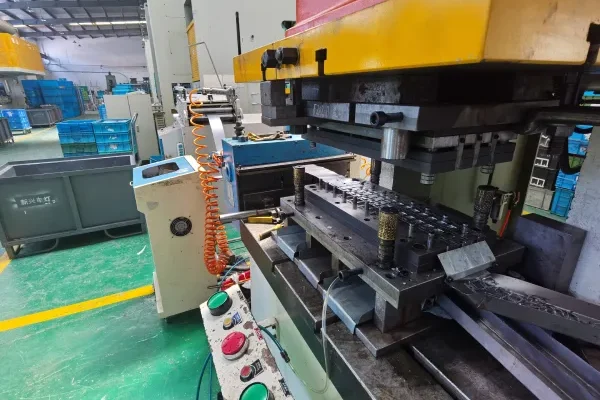
Collaborating with a specialized manufacturer goes beyond basic metal stamping; it requires a deep commitment to manufacturing engineering. At Supro MFG, we eliminate material variables and springback anomalies through engineering design well before full-scale production begins. This analytical approach ensures that high-volume metal server rack rails strictly comply with the EIA-310 standard and enable seamless IT integration.
By combining advanced bending machine technology with rigorous metallurgical processes, we protect your supply chain from costly assembly delays and ensure absolute structural reliability.
Conclusion
Achieving a perfect 90-degree bend in server rack rails is no accident; it is the direct result of a deep understanding of the physical properties of materials and advanced CNC bending technology. From compensating for microscopic springback to rigorously verifying EIA-310 dimensional tolerances, every step requires uncompromising engineering precision.
Supro is a professional custom server rack rail manufacturer. Leveraging our advanced equipment, extensive manufacturing experience, and expert engineering team, we have provided perfect custom server rack rail solutions to over 3,000 companies worldwide and offer genuine manufacturer quotes.
We deliver a wide range of products efficiently and on time. From product design and rapid sheet metal prototype fabrication to mass production, we provide professional technical support and exceptional quality.
We offer one-stop manufacturing solutions and highly cost-competitive product supply! For technical specifications or inquiries regarding OEM partnerships, please contact our engineering team.