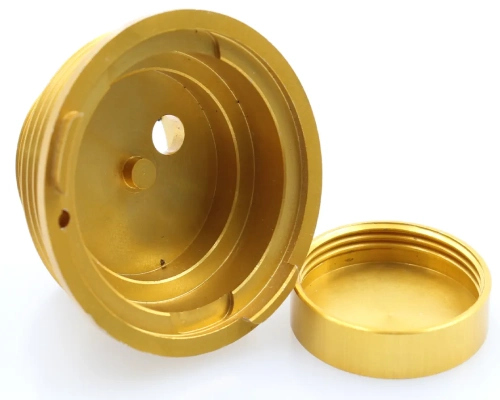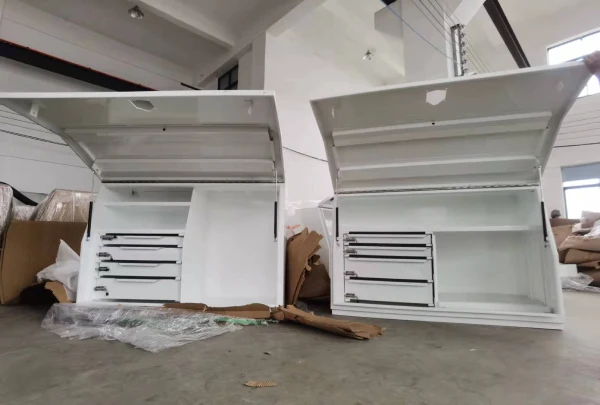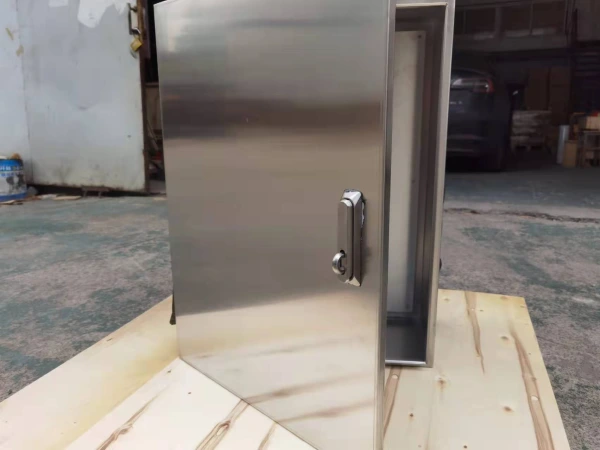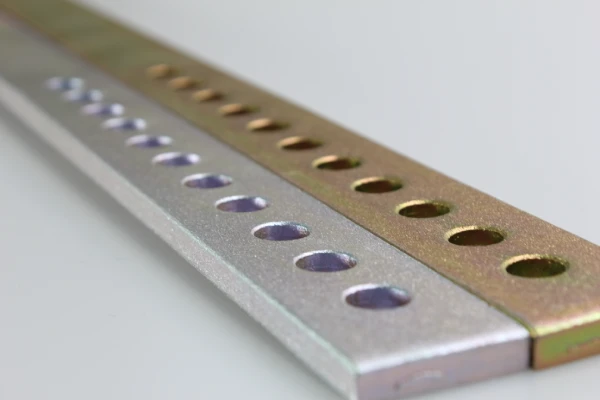


metal parts fabrication is the cornerstone of modern industrial production, whether it is electronic equipment accessories, or heavy machinery parts, its quality and accuracy directly affect the product performance and service life. metal parts fabrication is not a simple cutting and splicing, but the original metal material into a series of precision, powerful parts of a comprehensive process. Metal parts fabrication is not simply cutting and splicing, but a series of processes that transform raw metal materials into precise and powerful parts.
The article will focus on Metal Parts Fabrication, in-depth discussion of its commonly used materials, cutting, molding, welding and other core processes, as well as plating, spraying and other finishing and post-treatment technologies, and list its common applications in different industries, to help you in the process of custom metal parts fabrication to avoid risk, improve production efficiency and ensure the quality of custom metal parts. It also lists their common applications in different industries to help you avoid risks, improve production efficiency, and guarantee the quality of custom metal parts in the process of custom metal parts fabrication!
What is Metal Parts Fabrication?
metal parts fabrication is the process of processing and assembling raw metal materials (such as plates, tubes, profiles or bars) into parts or products that meet specific design requirements through a series of specialized processes and techniques. This process is usually not accomplished by a single process, but rather by a combination of processing methods such as cutting, drilling, bending, stamping, welding, riveting, and so on. Complete METAL PARTS FABRICATION usually includes the following steps:
- Drawing design and planning: Engineers use CAD software to create detailed 3D models and 2D drawings based on the functions and requirements of custom metal fabrication parts.
- Metal raw material processing and molding: According to the drawings, a series of operations such as cutting (laser cutting, plasma cutting, waterjet cutting), molding (bending, stamping, roll pressing) and joining (welding, bolting, riveting) are performed.
- Finishing and Post-treatment: After custom metal parts are molded, they undergo various surface treatments to improve their appearance and performance, such as grinding and polishing, sandblasting, electroplating, spraying powder coating or anodizing, etc., to enhance corrosion resistance, abrasion resistance and aesthetics.
- Quality inspection and assembly: Strict quality checks (e.g. dimensional measurements, strength tests) are performed on the metal fabrication parts to ensure that they meet the design specifications. Finally, multiple metal fabrication parts are assembled into a complete end product as required.
Metal parts fabrication not only produces standardized parts in large quantities using automated production lines (e.g., metal connectors in electronic equipment), but also customized complex sheet metal parts and precision sheet metal components (e.g., precision components in aerospace). At the same time, we can flexibly select the appropriate process according to the characteristics of metal materials (e.g. steel for rigidity, aluminum for light weight, copper for electrical conductivity), so as to meet the functionality, performance and cost requirements of metal fabrication parts in different industries.
Common Materials for Metal Parts Fabrication
The range of materials used in Metal Parts Fabrication is very wide, and choosing the right material is a critical step in determining the performance, cost, durability, and appearance of the final product. The following are commonly used metal materials and their properties in the manufacture of metal structures and parts of structures.
Steel
Steel is one of the most commonly used materials in Metal Parts Fabrication and is popular for its high strength, durability and cost effectiveness. It is mainly categorized into:
- Carbon Steel: Low, medium and high carbon steels are classified according to their carbon content. The higher the carbon content, the stronger and harder the steel is, but the plasticity is reduced. It is the most economical and popular choice for structural members, frames, supports and tools.
- Alloy Steel: Carbon steel to which other elements (e.g., chromium, molybdenum, nickel) have been added to enhance specific properties such as strength, hardness, wear resistance and corrosion resistance. Commonly used for high-strength gears, shafts and automotive parts.
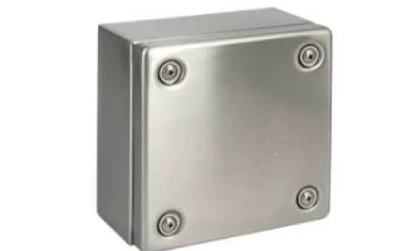
- Stainless Steel: Contains a high percentage of chromium (usually more than 10.5%), which forms a protective chromium oxide film that gives it excellent corrosion resistance and good cleanability. Common types such as 304 and 316 are widely used in food processing, medical equipment, kitchen equipment and building decoration.
Aluminum and its alloys
Aluminum and its alloys are favored for their good strength-to-weight ratio, excellent corrosion resistance and high electrical and thermal conductivity. Its common models are 6061 (the most versatile, high strength, weldable), 5052 (excellent formability), 3003 (general strength, good formability), is widely used in aerospace precision sheet metal components, automotive frames, electronic enclosures, consumer products, radiators, etc..
Copper and its alloys
Copper and its alloys possess excellent electrical and thermal conductivity, as well as good corrosion resistance and antimicrobial properties. Its common models are:
- pure copper: mainly used for electrical components, wires and busbars
- Brass: an alloy of copper and zinc, with good machinability, golden appearance and corrosion resistance, commonly used for decorative parts, valves, fittings and musical instruments
- Bronze: an alloy of copper and tin, more wear-resistant and stronger than brass.
Other commonly used metallic materials
Titanium and titanium alloys: have an extremely high strength-to-weight ratio, excellent corrosion resistance (especially in salt water) and biocompatibility. However, it is costly and difficult to process. Mainly used in aerospace, high performance automotive, medical implants and chemical applications.
Magnesium: The lightest metallic material for engineering applications, lighter than aluminum. Commonly used in applications requiring extreme lightweight, such as laptop enclosures, camera bodies, drone frames, etc.
Only 4 steps
online custom metal fabrication parts
Contact our experts team and experience the efficiency and economic benefits of digital metal fabrication services.
Upload Design Files
STL , STEP (.stp), IGES (.igs), (.ZIP), or PDF.
Also be a sample or an idea
Quote & Design Analysis
Instant factory quotes and DfM reports, the most reasonable solution.
Manufacturing Begins
Digital processes can initiate order tasks within 24 hours.
On-Time Delivery
Keeping delivery promises, approved by 3000+ Global Company buyers.
Metal Parts Fabrication Core Processes
The core processes of Metal Parts Fabrication can be systematically divided into three main categories: cutting, forming and joining. These processes are usually used in sequence or in combination to transform raw metal sheets, profiles or blocks into final metal fabrication parts.
Cutting
This type of process removes excess material from a whole metal blank to obtain the desired shape. It is the key to making COMPLETE sheet metal parts versus PRECISION sheet metal components.
CUTTING.
- LASER CUTTING: Uses a high power laser beam to precisely melt and cut the material for complex two-dimensional shapes with high precision for a wide range of metals such as steel, aluminum, and stainless steel.
- Plasma cutting: using high temperature and high speed plasma arc to melt metal, fast cutting speed, suitable for medium and thick steel plate materials.
- Waterjet Cutting: Utilizing ultra-high-pressure water flow to cut metal, it is a cold cutting process that does not produce heat-affected zone and is suitable for heat-sensitive materials (e.g. titanium) or composite materials.
- Shearing: Used to cut plates in a straight line, it is highly efficient and is a common initial step for undercutting.
Machining.
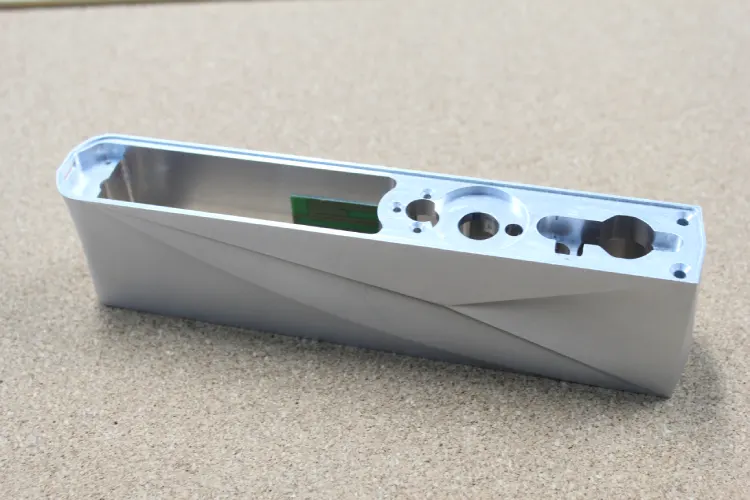
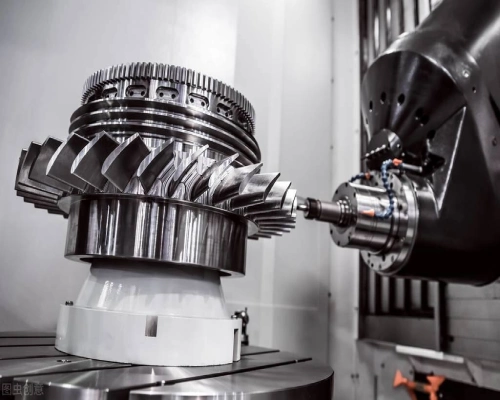
- CNC Milling: the use of rotating multi-flute tools to process the workpiece, can complete the milling of flat surfaces, milling grooves, milling contours, drilling, tapping, and other operations, suitable for complex three-dimensional shapes of the manufacturing.
- CNC Turning: The workpiece rotates and the tool moves in a straight or curved line, mainly used for machining cylindrical, conical and other parts, and can complete the processing of external, internal holes, threads and so on.
- drilling and tapping: drilling is the processing of round holes; tapping is the processing of internal threads in the hole.
Molding Process
This type of process by applying an external force to make the metal plastic deformation, change its shape, without removing the material.
- Bending: the most common forming process, usually using a mold on a bending machine to bend a plate to form a V-shaped, U-shaped or other angular shape.
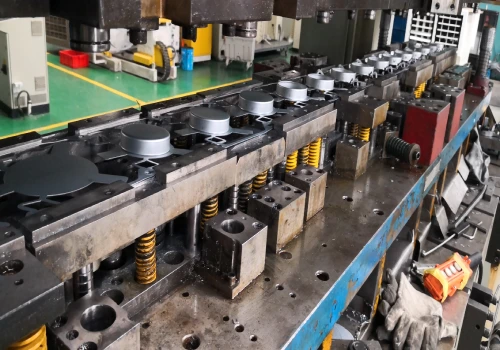
- Stamping: The use of dies and punches to punch, dimple, and stretch form plates. It is suitable for mass production of parts with consistent shape and high production efficiency.
- Roll forming: continuous transverse bending of sheet metal to form a specific cross-section profile.
Connection Processing
This type of process connects multiple processed or formed metal parts together to assemble the final product.
Welding.
- Arc Welding: utilizes an electric arc between the electrode and the workpiece to generate high temperatures, which melts the metal and fills the wire (or melts itself), forming a weld upon cooling. Common types are manual arc welding (MMA), gas shielded welding (MIG/MAG). Its equipment is simple and applicable to a wide range; however, manual welding relies on the welder’s skill, and the weld precision is low, suitable for non-precision structures.
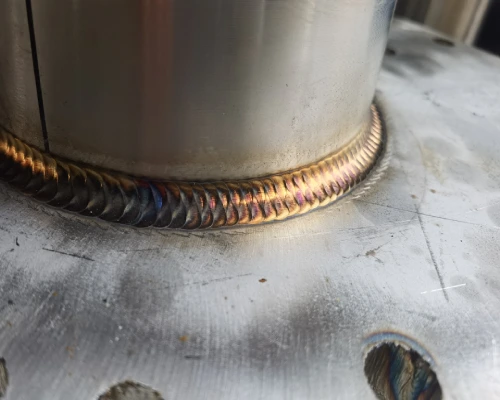
- TIG welding: using non-self-consuming tungsten electrode and inert shielding gas, the weld seam is of high quality and beautiful, commonly used in stainless steel, aluminum and other occasions with high quality requirements.
- Spot Welding: Applies pressure and electricity to overlapping metal sheets through electrodes, using resistive heat to form welded joints, commonly used in automobile body and sheet metal box manufacturing.
Mechanical Connection.
- Riveting: permanent connection using rivets.
- Threaded Connection: Removable connection using bolts, screws, etc. for easy maintenance and assembly.
Are you looking for reliable & cost-effective
China Sheet Metal Fabricators
More than 150,000 OEM metal fabrication products delivered to 5,000+ global buyers.
And benefit from it!
Metal Parts Fabrication Finishing and Post-treatment
After sheet metal fabrication parts have been cut, molded and joined, their surfaces usually have machining marks, burrs or weld scars, and their materials may be susceptible to environmental corrosion. Finishing and post-processing is a very important part of the manufacturing process, which treats the surface of sheet metal fabrication parts through a series of physical or chemical methods, and can effectively improve performance, beautify the appearance and extend service life.
Cleaning and Pretreatment
This is the first step in providing a clean, revitalized surface for subsequent coatings or surface treatments.
Degreasing: removes oil and grease from the surface.
Sandblasting: using a high-speed particle stream to impact the surface of custom metal parts, effectively removing rust, oxidized layer, old paint layer, and produce uniform roughness (increase surface area), enhance the adhesion of the coating.
Grinding and Polishing: Use grinding or polishing wheels to gradually eliminate surface defects, weld lines and scratches.
Coating or plating
This type of process adds a protective or decorative film to the surface of custom metal parts.
Powder Coating: Dry powder with electrostatic charge is sprayed onto custom metal parts and then cured by heat to form a hard, durable, corrosion-resistant coating. The coating is the most widely used surface treatment with uniform thickness, choice of colors, and greater abrasion resistance than traditional paint.
Electroplating: A thin film of metal (e.g., chrome, nickel, zinc) is deposited on the surface of custom metal parts by electrolysis.
Zinc plating: Zinc plating on the surface of custom metal parts provides protection against rust and is commonly used on outdoor structural parts.
Chrome/Nickel Plating: Provides a bright, abrasion-resistant appearance, commonly used for automotive parts, bathroom hardware and decorative parts.
Anodizing: Mainly used for aluminum. Generates a protective layer of aluminum oxide on the aluminum surface through electrochemistry to enhance corrosion resistance.

Chemical treatment
Passivation: mainly used for stainless steel. By cleaning with an acidic solution to remove free iron particles on the surface, promote the formation of a protective layer of chromium oxide, enhance corrosion resistance.
Phosphatization: form a layer of porous phosphate crystal film on the surface of steel, mainly used as a primer for paint or powder coating, which can significantly improve the adhesion of the coating and corrosion prevention.
Other treatments
Silk-screen printing or laser engraving: add permanent identification, logo, column number or instructions on the surface of custom metal parts.
Looking for a reliable custom sheet metal fabrication companies?
Talk To Supro MFG Expert Team
Contact us for competitive ex-factory prices,
and a full range of technical support services.
Benefits of Metal Parts Fabrication
Durable: With high strength, hardness and toughness of metal materials, custom sheet metal parts are able to withstand high weights, resist impacts, abrasions and extreme temperatures, and have a long service life.
Highly flexible: Whether it’s a simple bracket or a complex sheet metal part, it can be highly customized through CAD software and machining technologies such as CNC. Ideal for sheet metal prototype fabrication and custom metal fabrication parts.
Cost-effective: Metal Parts Fabrication is very flexible and can be adapted to different production scales. It optimizes material utilization through automation and standardization, resulting in cost reductions and high productivity.
A wide range of materials to choose from: custom metal parts offers a wide range of metal materials to meet the specific performance requirements of your equipment, whether you need the corrosion resistance of stainless steel, the lightweight properties of aluminum, or the excellent electrical conductivity of copper.
High Precision: Metal Parts Fabrication utilizes modern Computer Numerical Control (CNC) technology for high precision and dimensional consistency.
Metal Parts Fabrication Common Applications
Building and infrastructure construction: Metal Parts Fabrication is mainly used for steel beams and columns in high-rise buildings, factories and gymnasiums; bridges, transmission towers, railroad tracks, lighting poles and ventilation duct systems.
Transportation: Automotive chassis, frames, engine mounts, exhaust systems, and car structures for trains and subways.
Industrial & Manufacturing: machine frames, housings, guards, gears, drive shafts, robot arms, precision sheet metal components for automated production lines
Consumer Electronics & Appliances: metal enclosures for laptops, smartphone bezels, heat sinks and server racks, stainless steel inner tubs for washing machines, frames and enclosures for refrigerators
Medical equipment: manufacture of metal structures and parts of structures for MRI, CT scanners and other large equipment, operating tables, trolleys, and various stainless steel surgical tools and orthopedic implants.
Other fields: agricultural tractor parts, harvester blades, grain bins, etc.
Why choose Supro as your custom metal parts manufacturer?
Supro is a professional custom metal parts manufacturer, with the advantage of advanced equipments, rich manufacturing experience and professional engineering team, we provide perfect custom metal fabrication parts solutions with real manufacturer’s quotation for more than 3000 companies around the world.
As an industry leading custom metal parts manufacturer, we can deliver a wide range of products efficiently and on time. From product design and rapid sheet metal prototype fabrication to mass production, we provide expert technical support and superior quality. We provide one-stop manufacturing solution with cost competitive product supply!
Conclusion
Metal Parts Fabrication is an indispensable cornerstone of modern industrial civilization, from daily necessities to major projects have its figure, systematic knowledge and understanding of Metal Parts Fabrication can help you to make more intelligent and scientific decisions in your projects! If you are looking for custom metal parts manufacturer, please contact us now!