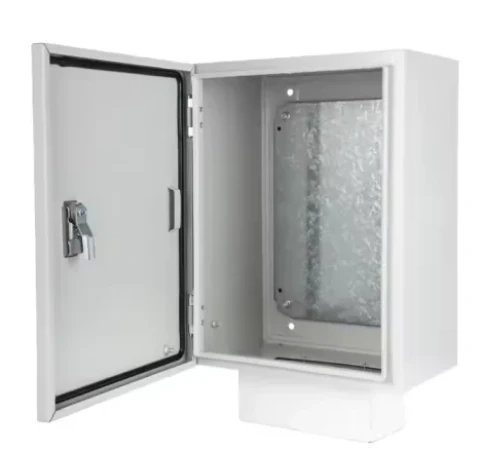

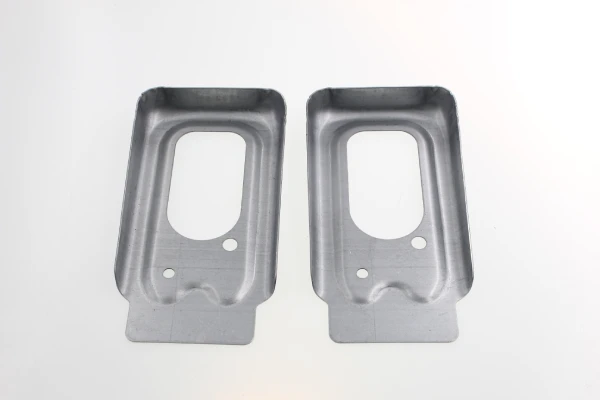
For any UL-certified NEMA enclosure, door sagging and hinge jamming are not merely operational nuisances—they directly compromise the integrity of the gasket compression, leading to a failure of the protection rating.
From a sheet metal fabrication perspective, the vast majority of cases are not due to insufficient material strength, but rather the combined effect of misaligned hinge axes and residual stresses in the door panel. Even a 2° diagonal twist can create contact stress concentrations within the hinge barrel, accelerating wear and causing jamming.
This article focuses on three controllable variables—design tolerances, welding sequences, and hinge selection—for NEMA enclosures, providing procurement and engineering teams with quantifiable pathways for improvement. Supro Mfg analyzes these root causes one by one based on production data compliant with ASTM and UL standards.
Understanding Door Sagging and Hinge Jamming in NEMA Enclosures
Door sagging and hinge jamming in NEMA enclosures stem from a mismatch between the geometric offset of the hinge axis and the stiffness of the door panel. Factors ranging from cumulative sheet metal tolerances to heat distortion from welding collectively compromise the concentricity of the hinge holes, leading to a sharp increase in friction torque. The following sections break down these failure mechanisms one by one.
The Fundamental Mechanical Cause of Door Sagging in NEMA Enclosures
Door sagging in NEMA enclosures is typically not caused by material yielding, but rather by uneven shrinkage in the heat-affected zone between the hinge housing and the door panel. When hinges are distributed along the height of the door, post-welding residual stresses force the hinge axis to deviate from the vertical reference.
Even a deviation of 0.5 mm/m can generate a significant rotational torque due to the door’s own weight. Furthermore, many NEMA enclosures use cold-rolled steel sheets less than 1.5 mm thick, whose sectional moment of inertia is insufficient to resist the additional load imposed by the mounting panels inside the door. The combination of these two defects results in diagonal distortion of the door, directly causing sagging.
Mechanism of Hinge Seizing in NEMA Enclosures
The physical mechanism of hinge seizing occurs when the contact pressure between the inner wall of the hinge barrel and the pin exceeds the load-bearing limit of the lubricating film. In NEMA enclosures, a common cause is the loss of concentricity between the hinge holes in the frame and the door panel following stamping or welding. When the door closes, the misalignment of the hinge barrel axes forces the pin to bend, resulting in edge-to-edge contact. The coefficient of friction consequently rises to over 0.3, far exceeding the design value.
Additionally, uneven buildup of powder coating or electroplating inside the hinge barrel further reduces the clearance. For outdoor NEMA enclosures, corrosion products can also encroach on the clearance, leading to progressive jamming.
Why Standard NEMA Enclosures Fail Over Time
Even NEMA enclosures compliant with UL 50E often experience door sagging and jamming after 3–5 years of service. This is not due to an initial manufacturing defect, but rather the cumulative effects of fatigue and creep.
Repeated opening and closing of the door causes micro-wear in the metal around the hinge seat; for every 0.1 mm increase in clearance, the amount of door sagging multiplies. Simultaneously, permanent compression deformation in gasket materials (such as neoprene) alters the relative position of the door and frame, transferring additional preload to the hinges. More critically, many NEMA enclosures undergo on-site retrofitting with heavy components after leaving the factory, and the weight of these components was never factored into the original hinge load calculations.
Are you looking for reliable & cost-effective
China Sheet Metal Fabricators
More than 150,000 OEM metal fabrication products delivered to 5,000+ global buyers.
And benefit from it!
Engineering-Driven Solutions for NEMA Enclosures
To address door sagging and hinge jamming in NEMA enclosures, a three-pronged approach is required, addressing hinge geometry, door panel stiffness enhancement, and welding tolerance control. Quantifiable design parameters and process specifications are provided below for reference by procurement and technical teams.
Optimizing Hinge Position and Type
For NEMA enclosures, hinges are not necessarily better positioned closer to the corners of the door. Mechanical analysis shows that placing the top hinge at the front 1/6 of the door height and the bottom hinge at the rear 1/6 maximizes torsional stiffness. If the door height exceeds 1200 mm, a third hinge should be added, and the hinges should be spaced unevenly.
In terms of type, the clearance of standard stamped hinges is difficult to control; continuous piano hinges or adjustable hinges with needle bearings are recommended. Piano hinges distribute linear loads evenly across the entire door edge, preventing localized stress concentration. For NEMA enclosures that are frequently opened and closed, stainless steel hinges combined with self-lubricating bushings can reduce the coefficient of friction to below 0.12, significantly delaying the onset of sticking.
Reinforcing the Door Structure Without Increasing Mass
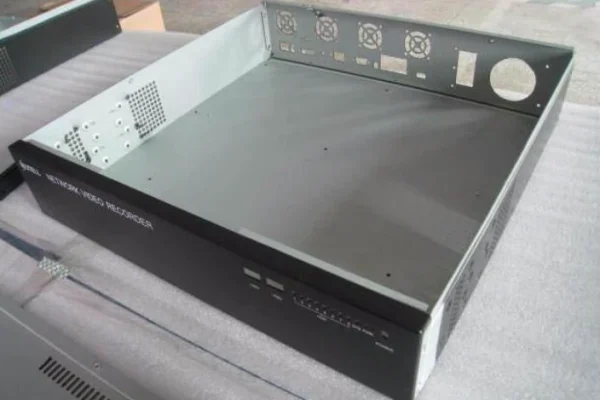
The stiffness of the door directly determines the NEMA enclosure’s ability to resist sagging. Finite element analysis shows that stamping trapezoidal stiffeners with a depth of 8–10 mm and a width of 25 mm on the inner side of the door panel can increase the door panel’s moment of inertia by more than three times, while adding less than 5% to the weight.
Another approach is to perform a 180° fold (edge fold) on all four sides of the door panel to form a closed cross-section, which can increase bending stiffness by 4–6 times.
Welded stiffeners are suitable for extra-wide doors, but intermittent welding must be used to control thermal deformation. For stainless steel NEMA enclosures, we recommend using a laser-welded sandwich structure to achieve a door panel flatness of 0.3 mm/m while maintaining NEMA ratings. These methods avoid the cost and weight burdens associated with indiscriminately increasing panel thickness.
Precision Manufacturing Tolerances for NEMA Enclosures
The vast majority of hinge sticking issues stem from uncontrolled tolerances during the manufacturing phase. For custom NEMA enclosures, we specify that the diagonal difference in the frame must not exceed 1.0 mm, and the coaxiality of adjacent hinge holes must be controlled within 0.2 mm. This requires the use of CNC punch presses and precision welding fixtures: the frame is first spot-welded to a platform with a flatness of 0.1 mm, followed by full-penetration welding. The welding sequence should proceed symmetrically from the center toward both ends to minimize distortion caused by thermal contraction.
Additionally, the punching direction of the hinge holes must be perpendicular to the hinge pin axis to prevent inward-curving burrs. For powder-coated NEMA enclosures, silicone plugs must be used to protect the hinge holes prior to coating to ensure the coating thickness does not intrude into the mating clearance. Strict adherence to these tolerances can extend the switch cycle life from 20,000 cycles to over 50,000 cycles.
Only 4 steps
online custom metal fabrication parts
Contact our experts team and experience the efficiency and economic benefits of digital metal fabrication services.
Upload Design Files
STL , STEP (.stp), IGES (.igs), (.ZIP), or PDF.
Also be a sample or an idea
Quote & Design Analysis
Instant factory quotes and DfM reports, the most reasonable solution.
Manufacturing Begins
Digital processes can initiate order tasks within 24 hours.
On-Time Delivery
Keeping delivery promises, approved by 3000+ Global Company buyers.
Material and Surface Treatment Considerations for NEMA Enclosures
The material grade and surface treatment of NEMA enclosures directly determine the long-term stability of the hinge system. The strength of the base material affects the door’s creep resistance, while the type of coating controls the wear rate of the friction pair. The following engineering recommendations address both material selection and anti-friction coatings.
Selecting Material Grades Based on Load Requirements
When selecting base materials for NEMA enclosures, one must not focus solely on yield strength but also consider the modulus of elasticity and creep resistance. For doors with a total weight of less than 15 kg, 1.5 mm cold-rolled steel (DX51D+Z275) is sufficient to meet the requirements.
When transformers or control panels weighing over 25 kg are installed inside the door, the material must be upgraded to 2.0 mm hot-rolled pickled sheet or 304 stainless steel. The elastic modulus of stainless steel is approximately 193 GPa, which is similar to that of carbon steel; however, the higher corrosion fatigue limit of stainless steel NEMA enclosures makes them suitable for chemical plants or coastal environments.
Additionally, the hinge pin material should be one hardness grade higher than the door panel—416 stainless steel or chrome-plated alloy steel is recommended to prevent fretting wear under long-term cyclic loads. Although aluminum NEMA enclosures are lightweight, the hinge seats require steel bushings to withstand frequent opening and closing.
Anti-Friction Coatings to Extend Hinge Service Life
Hinge sticking in custom NEMA enclosures often begins with lubrication failure. Traditional grease lubrication can be washed away in dusty or washdown environments, so solid anti-friction coatings should be prioritized. We recommend applying a molybdenum disulfide (MoS₂) dry film coating to the inner walls of the hinge housing and the surface of the pins. This coating maintains a stable coefficient of friction between 0.05 and 0.08 and withstands temperatures ranging from -180°C to +350°C.
For food-grade or stainless steel NEMA enclosures, a PTFE (polytetrafluoroethylene) impregnated anodized coating is a safer option. Important note: Prior to coating, the mating surfaces of the hinges must be sandblasted to create a 3–5 μm micro-textured surface for proper adhesion. As verified by salt spray testing, MoS₂-coated hinges maintain jam-free operation even after 1,000 hours of neutral salt spray exposure.
Why choose Supro MFG's Custom metal enclosure Services
Provide the most cost-effective cost solution for manufacturing and assembling products, expanding product competitiveness.
a technical team specializing in custom shell manufacturing for more than 30 years.
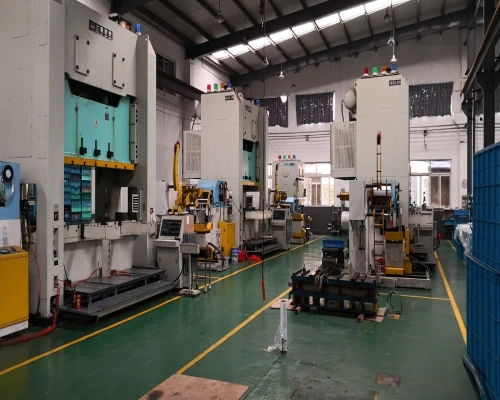
Advanced Manufacturing Equipment: Industry-leading custom metal enclosure manufacturer with in-house sheet metal, die casting, precision machining workshops, and surface coating workshops.
ISO 9001-2015, PPAP III level, RoHS, NEMA, CE and other certified production standards.
24H*7 online English technical support: The professional English team responds quickly to users’ technical questions online at any time.
help users from product design, prototype, batch manufacturing, surface treatment, assembly and packaging, transportation and a series of value-added services.
With in-house mechanics and chemistry laboratories, it can quickly monitor manufacturing process quality control to ensure the delivery of high-quality products.
Accept to sign NDA documents to ensure that customers’ product information is protected.
Door-to-door delivery in customizable secure packaging after complying with the delivery details agreed with the customer.
On-site Adjustment and Modification Procedures for NEMA Enclosures
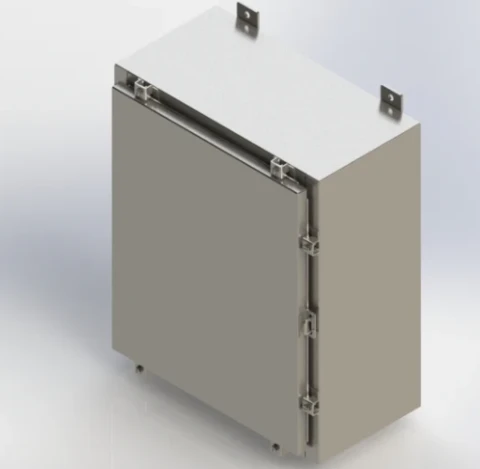
When NEMA enclosures exhibit door sagging or hinge jamming, the goal of on-site intervention is to restore axial concentricity and uniform shim compression. The following provides a standard operating procedure from fault diagnosis to the installation of adjustable hinges.
Diagnosis of Major Faults in Existing NEMA Enclosures
When performing on-site diagnostics on NEMA enclosures already in service, the first step is to distinguish between door panel deformation and hinge misalignment. Use a dial indicator to measure the flatness of the door frame along the diagonal: if the deviation exceeds 2.0 mm/m and the door bulges in the middle, this is caused by the release of residual stress in the door panel. Another method is to use a feeler gauge to check for changes in the door closure gap—from the hinge side to the lock side; a gap increase exceeding 1.5 mm indicates a misaligned hinge axis.
For multi-hinged NEMA enclosures, perform a “partial opening” test on each hinge individually: open the door approximately 30°, then rock the door panel up and down to quickly identify loose or jammed hinges.
After recording all measurement data, decide whether to use shimming (spacer compensation) or replace the entire hinge assembly. This diagnostic process prevents blind adjustments and reduces on-site rework time by 70%.
Installing Adjustable Hinge Mounts
When the fixed hinges on NEMA enclosures cannot meet alignment requirements, installing adjustable hinge mounts is the most cost-effective modification solution. We recommend using eccentric bushing-type hinge mounts, which have an internal eccentricity of 1.0–1.5 mm; the rotating bushing provides a vertical and horizontal adjustment range of ±2 mm.
During installation, first position the door to the ideal closed position using 5 mm thick temporary shims, then weld or bolt the hinge mount to the frame. For stainless steel NEMA enclosures, use bolts made of the same material and apply anti-seize compound. After adjustment, verify that all hinge pins can be easily inserted when the door is free, and that the door does not drop automatically when opened to a 90° angle. This modification can extend the remaining service life of existing NEMA enclosures by 5–8 years at a cost of only 15–20% of replacing the entire cabinet.
Preventing Recurring Failures Through a Maintenance Plan
Even after adjustment, the door hinge system of NEMA enclosures requires regular maintenance to prevent recurring failures. We recommend performing a standard inspection every 6 months: use a torque wrench to verify the torque values of all hinge mounting bolts (8–10 N·m is recommended for M6 bolts); clean out old grease from the hinge cups and apply MoS₂ grease using a non-woven cloth; check the parallelism between the door frame and the door panel; if the deviation exceeds 1.0 mm, re-shim.
For NEMA enclosures used in vibrating environments or outdoors, additional inspection of hinge pin wear is required—measure the pin diameter with a vernier caliper; replace the pin if wear exceeds 0.2 mm. By incorporating the above maintenance items into the company’s CMMS (Computerized Maintenance Management System), the annual failure rate of hinge jamming can be reduced to below 2%.
Looking for a reliable custom sheet metal fabrication companies?
Talk To Supro MFG Expert Team
Contact us for competitive ex-factory prices,
and a full range of technical support services.
Why Supro Mfg Eliminates Door Sagging and Hinge Jamming in NEMA Enclosures
The key to eliminating door sagging and hinge jamming in NEMA enclosures lies in controlling hinge geometry and stiffness design during the manufacturing phase. Supro Mfg integrates FEA validation and precision welding processes into its production workflow. The following outlines our core technical advantages.
Customized Hinge Systems for NEMA Enclosures
Supro Mfg does not use standard stamped hinges; instead, we perform finite element optimization of the hinge layout for each batch of custom NEMA enclosures. Based on door dimensions, mounting panel weight, and expected cycle life, we calculate the number of hinges, their spacing, and the rated load capacity of each hinge. For NEMA enclosures taller than 1500 mm, we design a three-hinge system with unequal spacing, positioning the middle hinge at the 1/3 point toward the lock side to balance the closing torque.
All hinge barrels are precision-machined using CNC turning, with inner diameter tolerances controlled to H8 grade (0/+0.033 mm) and pins to g7 grade (-0.010/-0.028 mm), ensuring a clearance of 0.03–0.06 mm. This design ensures that custom NEMA enclosures remain free of sticking even after 50,000 opening and closing cycles.
Quality Assurance Procedures
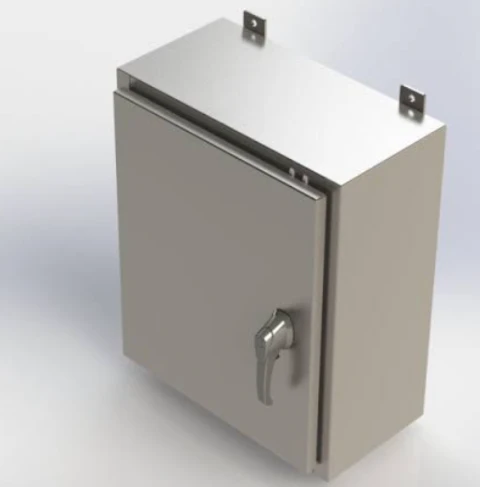
Our quality system establishes internal standards for door hinge systems in NEMA enclosures that are stricter than those of UL 50E. After welding, each enclosure must undergo inspection using a coordinate measuring machine (CMM): the diagonal deviation of the frame and door frame must be ≤ 0.8 mm, and the coaxiality of the hinge holes must be ≤ 0.15 mm.
Welding is performed using robotic MIG welding, following a symmetrical skip-weld sequence—starting from the center and moving toward both ends, with each weld bead 20 mm long and spaced 50 mm apart—to minimize thermal shrinkage.
Prior to powder coating, all hinge holes are protected with high-temperature-resistant silicone plugs to ensure that the powder coating does not intrude into the mating surfaces. A 100% manual verification is also performed prior to shipment: the door is opened and closed 20 times, and the rotational torque of each hinge is measured with a torque wrench, with the initial value recorded as a baseline. These procedures result in a field hinge repair rate of less than 0.3% for Supro Mfg’s custom NEMA enclosures.
Design Support for Specific Applications
NEMA enclosures across different industries have vastly different requirements for door hinges. For petrochemical clients, Supro Mfg provides all-316L stainless steel hinges with Hastelloy pins, validated through 1,000-hour salt spray testing.
For NEMA enclosures in the food processing sector, we use lubrication-free PTFE composite bushing hinges that comply with FDA 21 CFR 178.3570 and require no on-site greasing.
In seismic zones or railway signaling applications, we design adjustable hinges with locking screws capable of withstanding 2g acceleration without displacement.
In addition, we offer reverse engineering services for retrofit projects: we scan and perform FEA analysis on old NEMA enclosure doors returned by customers, and provide a remediation plan within three business days. This deep customization capability is the core advantage that sets Supro Mfg apart from standard enclosure suppliers.
Conclusion
Resolving door sagging and hinge sticking in NEMA enclosures essentially involves integrating manufacturing tolerances, hinge mechanical design, and material selection into a closed-loop control system. Data from Supro Mfg indicates that by controlling coaxiality with precision welding fixtures, utilizing piano hinges to distribute loads, and applying a MoS₂ solid lubricant coating, the hinge lifespan of custom NEMA enclosures can be increased to 2.5 times that of standard UL products. Buyers should view the hinge system as a key indicator affecting total lifecycle costs, rather than merely an accessory.
Supro is a professional custom NEMA enclosure manufacturer. Leveraging advanced equipment, extensive manufacturing experience, and a dedicated engineering team, we provide optimal NEMA enclosure solutions to over 3,000 companies worldwide and offer genuine manufacturer quotes.
For technical specifications, customized project solutions, or business collaboration opportunities, please feel free to contact Supro at any time. Our professional engineering team is ready to provide you with tailored application solutions.