
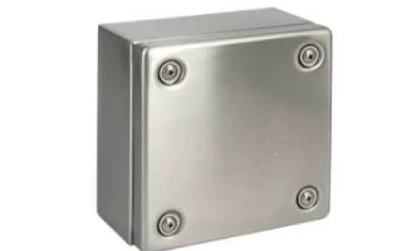


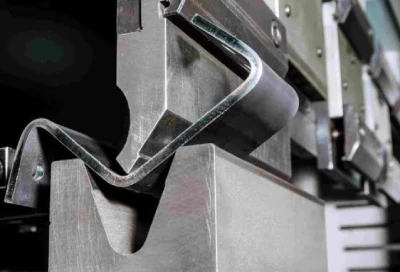


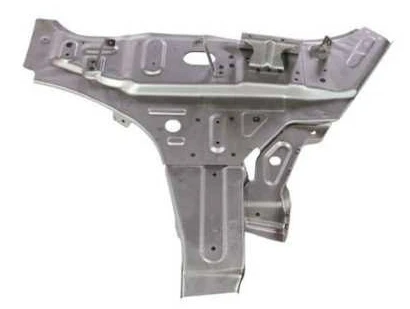
Bubbling and peeling of powder coatings on IP enclosures are not merely cosmetic defects; they directly threaten the structural integrity of the enclosure’s protection rating. From a physical failure analysis perspective, the vast majority of coating adhesion failures are not caused by the powder itself, but rather by inadequate substrate pretreatment or uncontrolled gas release during the thermal curing process. For example, residual degreasers or excessively thick phosphate conversion coatings can reduce interfacial adhesion, while hydrogen gas released by cast aluminum or galvanized substrates during the curing heat-up phase—if unable to escape—will form typical “pinhole-type blisters” beneath the molten coating.
As a professional IP-rated enclosure manufacturer, we understand that the long-term reliability of IP enclosures depends on the precise control of every process step, from degreasing and conversion coating to the curing window.
This article will reveal the core mechanisms and preventive measures for coating failure in IP-rated enclosures to procurement and engineering personnel, covering aspects such as welding degassing, electrostatic reverse ionization, and gasket sealing boundaries.
The Importance of Powder Coating for IP-Rated Enclosures
From IP54-rated telecommunications cabinets to IP66-rated industrial enclosures, powder coating is increasingly being used on IP-rated enclosures to provide corrosion resistance, UV stability, and consistent aesthetics.
By applying thermosetting polyester or epoxy powders to pretreated metal substrates via electrostatic spraying, a durable, solvent-free coating is formed. However, despite advances in coating chemistry, blistering (localized bubbles beneath the coating) and delamination (separation at the interface) remain persistent quality challenges during processing and application.
For IP enclosures, powder coating is more than just a decorative finish—it is a functional coating that must withstand moisture ingress, salt spray, and thermal cycling. Once blistering or peeling occurs, the exposed substrate becomes susceptible to corrosion. More critically, coating delamination around sealing gaskets compromises the protection rating itself, allowing water or dust to bypass the intended sealing path.
Failure of Surface Treatment on IP Enclosure Substrates
For IP-rated enclosures, the adhesion of the powder coating depends on the pretreatment of the substrate. Residual contaminants, uneven conversion coatings, or insufficient drying can all compromise the interfacial bond, leading to blistering and delamination.

Failure to Thoroughly Remove Contaminants During the Pretreatment Stage of IP Enclosures
For IP-rated enclosures, the most common cause of blistering is contaminants remaining on the metal surface prior to coating. Drawing lubricants, cutting coolants, and even fingerprint oils can form low-surface-energy barriers. During oven curing, these organic compounds evaporate and expand, lifting the uncured powder coating and forming hemispherical blisters.
Even trace residues (less than 0.1 mg/cm²) can compromise adhesion. Thorough degreasing with alkaline or emulsifying cleaners must be performed, followed by adequate rinsing. Any welds or internal corners that are not thoroughly cleaned will become failure points after thermal cycling or exposure to moisture.
Imbalance in Conversion Coatings—Excess or Insufficiency
Conversion coatings (typically iron phosphate or nanoceramics) are applied to IP enclosures to enhance corrosion resistance and provide a micro-roughened anchor layer for powder adhesion. However, excessive coating weight (over 1.2 g/m²) results in a brittle, powdery intermediate layer that undergoes shear delamination upon impact, leading to delamination. Conversely, if the conversion treatment is insufficient (below 0.3 g/m²), mechanical interlocking is inadequate, causing the powder coating to peel off in large sheets.
The optimal range for phosphate systems is 0.4–0.8 g/m². Regular bath titration and coating weight testing are critical for maintaining this narrow range.
Inadequate rinsing and drying of IP enclosures prior to powder coating
Inadequate rinsing or drying before powder coating can result in soluble salts and residual moisture remaining on the substrate surface. For custom IP enclosures, these contaminants can cause permeation blistering: trapped salts absorb moisture from the atmosphere through the cured coating, forming liquid-filled blisters that expand and rupture.
Similarly, moisture trapped in crevices or on rough surfaces will vaporize instantly during the 160–200°C curing cycle, resulting in voids and pinholes. To prevent this, the final rinse should use deionized water, and forced hot-air drying must be employed to ensure the metal surface temperature rises above the dew point before the powder enters the spray booth.
Why choose Supro MFG's Custom IP enclosure Services
Provide the most cost-effective cost solution for manufacturing and assembling products, expanding product competitiveness.
a technical team specializing in custom shell manufacturing for more than 30 years.
Advanced Manufacturing Equipment: Industry-leading custom metal enclosure manufacturer with in-house sheet metal, die casting, precision machining workshops, and surface coating workshops.
ISO 9001-2015, PPAP III level, RoHS, NEMA, CE and other certified production standards.
24H*7 online English technical support: The professional English team responds quickly to users’ technical questions online at any time.
help users from product design, prototype, batch manufacturing, surface treatment, assembly and packaging, transportation and a series of value-added services.
With in-house mechanics and chemistry laboratories, it can quickly monitor manufacturing process quality control to ensure the delivery of high-quality products.
Accept to sign NDA documents to ensure that customers‘ product information is protected.
Door-to-door delivery in customizable secure packaging after complying with the delivery details agreed with the customer.

Degassing in Porous Substrates of IP Enclosures
Certain IP-rated enclosures—particularly castings or galvanized components—contain trapped gases that are released during the curing process. If left unaddressed, this gas release can cause molten powder to float, resulting in the formation of bubbles.
Trapped Gases in Cast and Welded IP Enclosures
In cast aluminum or welded steel IP-rated enclosures, microscopic gas bubbles often remain trapped within the metal substrate or weld seams. When the component enters a curing oven at 160–200°C, these gases expand and attempt to escape through the molten powder layer. Since the powder has begun to cross-link, the escaping gases cannot penetrate the coating, resulting in bubbles forming beneath the surface. These bubbles may rupture, creating pits or pinholes.
Common causes include porosity in die-cast parts, flux residues in welds, and voids in welds resulting from incomplete fusion. Preheating such substrates to 100–150°C prior to coating allows for controlled degassing without compromising the final surface finish. This step is particularly critical for custom IP enclosures that must maintain a continuous, defect-free moisture barrier.
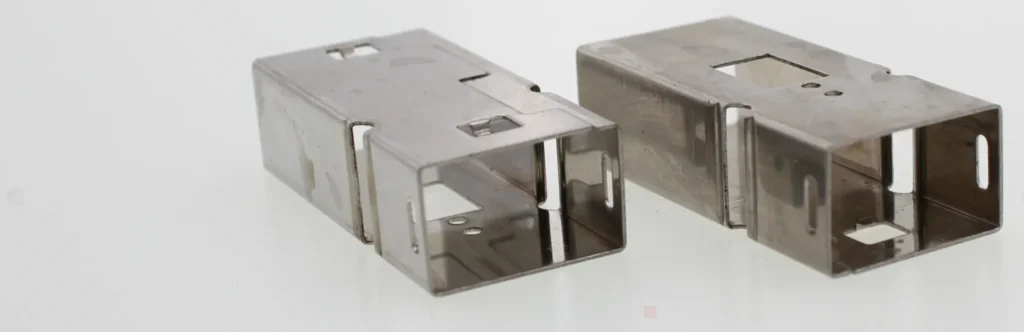
Hydrogen Trapping in Galvanized Substrates
Hot-dip galvanized substrates used for outdoor IP enclosures present unique degassing challenges. During the galvanizing process, hydrogen becomes trapped within the zinc layer and at the zinc-steel interface. When exposed to typical powder curing temperatures, this hydrogen is rapidly released. Without appropriate mitigation measures, the escaping gas will cause the coating to bubble, forming characteristic clustered bubbles that are often mistaken for contamination-induced failure.
This risk increases when the zinc coating thickness on custom IP enclosures exceeds 85 microns. Unlike surface contaminants, hydrogen cannot be removed by cleaning alone. To address this issue, powder formulations containing anti-gasification additives should be selected, or low-temperature curing powders (below 140°C) should be used to minimize the rate of gas expansion.
Mitigating Degassing Issues—Substrate Preheating and Powder Selection
For IP-rated enclosures made of porous or galvanized materials, there are currently two proven mitigation strategies. First, preheating the substrate to 100–150°C and holding it at that temperature for 10–15 minutes before powder coating allows trapped gases to escape while the metal is exposed. This step is particularly effective for castings and heavy-duty welded components.
Second, selecting “outgassing-resistant” (OGF) powders containing aluminum hydroxide or similar additives can slightly delay the gelation phase, creating a window for residual gases to escape. OGF powders are comparable to standard formulations in terms of mechanical properties and corrosion resistance.
Production lines handling mixed material types should adopt preheating as a standard operating procedure and validate powder selection based on the degassing potential specific to the IP enclosure substrate. Without these measures, even perfectly cleaned custom IP enclosures may develop blistering defects.
Only 4 steps
online custom metal fabrication parts
Contact our experts team and experience the efficiency and economic benefits of digital metal fabrication services.
Upload Design Files
STL , STEP (.stp), IGES (.igs), (.ZIP), or PDF.
Also be a sample or an idea
Quote & Design Analysis
Instant factory quotes and DfM reports, the most reasonable solution.
Manufacturing Begins
Digital processes can initiate order tasks within 24 hours.
On-Time Delivery
Keeping delivery promises, approved by 3000+ Global Company buyers.
Deviations in Powder Coating and Curing Processes for IP Enclosures
Coating and curing parameters directly affect the integrity of the surface coating on IP-rated enclosures. If left uncontrolled, electrostatic parameters, temperature distribution, and compressed air quality can all lead to various failure modes. The following subsections will explore each process deviation and its role in bubbling and peeling phenomena.
Electrostatic Spraying—Reverse Ionization and Extreme Coating Thickness
During electrostatic spraying of IP-rated enclosures, excessively high voltage or inadequate component grounding may trigger reverse ionization. As the insulating powder layer thickens, accumulated charge repels incoming particles, leading to dielectric breakdown. This results in pinholes, pits, and localized depressions—locations that subsequently develop blisters due to moisture ingress.
Both excessively high and low coating thicknesses exacerbate this issue: below 50 microns, coverage is insufficient over substrate protrusions; above 150 microns, internal stresses increase and the risk of solvent cracking rises. For custom IP enclosures, the target thickness range should be 70–110 microns. Regular voltage calibration, ground continuity testing, and automated thickness monitoring can effectively prevent these defects without compromising production efficiency.

Under-curing and Over-curing — Improper Thermal Distribution Management
IP enclosures require precise temperature-time profiles to achieve full cross-linking. Under-curing (typically caused by insufficient dwell time or low oven temperatures) results in a soft, under-cross-linked film with poor adhesion and chemical resistance. Such coatings are highly susceptible to peeling under compression from gaskets or thermal cycling.
Conversely, over-curing disrupts the polymer network, leading to embrittlement and microcracks, which can progress to visible delamination. Neither scenario meets the integrity requirements for custom IP enclosures. To achieve reliable control, component temperature distribution must be monitored, not just ambient air temperature. Oven temperature mapping should be performed quarterly, and components with high thermal mass must reach the curing temperature at their thickest points.
Sources of Compressed Air Contamination
The compressed air used in powder coating booths is an often-overlooked factor contributing to coating defects on IP-rated enclosures. Oil mist from lubricated compressors, condensation resulting from insufficient drying, and particulate contaminants can all contaminate the powder delivery system and the applied coating.
Oil contamination reduces the powder’s resistivity, leading to uneven deposition and poor transfer efficiency. Moisture in the air stream evaporates during curing, causing porosity and blistering. To eliminate this risk, a refrigerated air dryer (with a pressure dew point below 4°C) and a coalescing filter rated at 0.01 microns must be installed. Regular air quality testing (including oil vapor measurements) should be incorporated into the preventive maintenance plan for any IP-rated production line.
Are you looking for reliable & cost-effective
China Sheet Metal Fabricators
More than 150,000 OEM metal fabrication products delivered to 5,000+ global buyers.
And benefit from it!
Environmental and Design Considerations for IP Enclosures
In addition to process controls, the geometry and operating environment of IP enclosures present unique coating risks. Gasketed joints, edges, welds, and UV exposure all require special consideration during the design phase. The following subsections will elaborate on these factors.
Risks Associated with Gasketed Seals
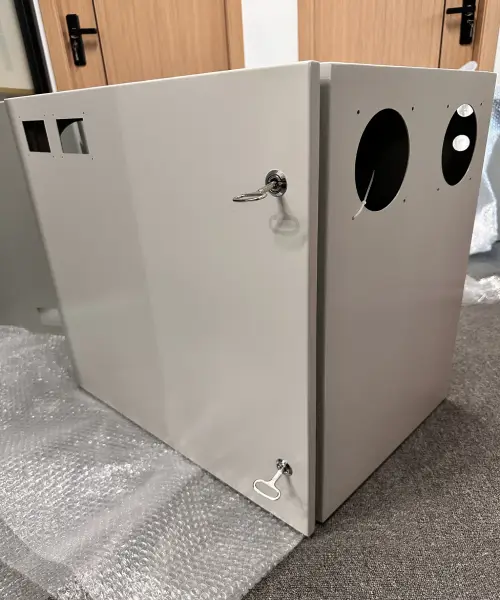
IP enclosures rely on compressed sealing gaskets (typically made of silicone, thermoplastic elastomers, or polyurethane) to maintain ingress protection. Powder coating applied to sealing surfaces presents several risks. Excessively thick coatings can impede the normal compression of the gasket, leaving gaps that allow moisture to penetrate.
Conversely, if sealing surfaces are masked and left uncoated, the exposed metal at the coating interface is susceptible to electrochemical corrosion, which can compromise the long-term sealing performance of the IP-rated enclosure. Additionally, coating peeling near the gasket interface may cause capillary action, allowing moisture to penetrate beneath the gasket.
The solution lies in establishing strict masking procedures and controlling coating thickness—typically kept below 60 microns on sealing surfaces—and verifying compliance through regular measurements.
Edge Coverage and Weld Vulnerability
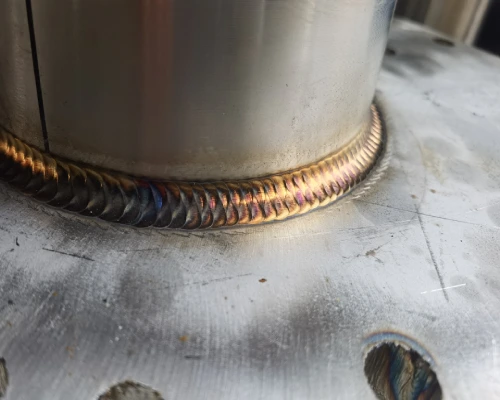
Geometric defects are a primary cause of premature failure in IP-rated enclosures. Due to charge concentration, sharp external edges attract excessive powder, resulting in an overly thick and brittle coating that is prone to peeling during handling or vibration. Internal corners—the so-called Faraday cage areas—receive minimal deposition, creating areas with thin or bare coatings that become corrosion initiation points. Welds can produce porosity, residual flux, and irregular surfaces, all of which disrupt the continuity of the coating.
If proper weld finishing (i.e., grinding to a smooth, rounded edge) is not performed, these areas will become initiation points for failure. Preventive measures include chamfering edges to a minimum radius of 0.5 mm, performing post-weld finishing, and manually touching up the Faraday cage areas of complex IP enclosures.
Accelerated Aging of IP Enclosures—UV Degradation and Moisture Blistering
Outdoor IP enclosures are subjected to the dual effects of UV radiation and moisture. Polyester TGIC or ultra-durable polyester powder coatings offer excellent UV resistance, whereas epoxy or hybrid coatings tend to chalk and deteriorate rapidly. As the surface degrades, the coating thins and becomes porous, allowing moisture to penetrate. If soluble salts remain on the substrate (due to inadequate rinsing or atmospheric exposure), osmotic pressure draws moisture into the coating, causing blistering. These blisters eventually rupture, exposing the metal to corrosion.
To prevent this, ultra-durable polyester powder coatings should be used on outdoor IP enclosures, and strict water quality standards for rinsing (conductivity below 200 µS/cm) must be enforced. Field failure data consistently indicates that UV-induced blistering can be traced to resin selection or salt contamination.
Looking for a reliable custom sheet metal fabrication companies?
Talk To Supro MFG Expert Team
Contact us for competitive ex-factory prices,
and a full range of technical support services.
Conclusion
For IP enclosures, powder coating blistering and peeling are rarely random defects—they are predictable outcomes of process deviations. Substrate contamination, outgassing from porous materials, curing deviations, and design geometry are all factors contributing to these defects.
Preventing such issues requires systematic controls: validated pretreatment chemical processes, substrate-specific preheating, component temperature curing profile control, and edge treatment. By implementing these measures, manufacturers can deliver IP-rated enclosures with excellent coating adhesion that withstand thermal cycling, humidity, and UV exposure, thereby ensuring both the protection rating and the long-term value of the assets.
Supro is a professional IP-rated enclosure manufacturer. Leveraging advanced equipment, extensive manufacturing experience, and a dedicated engineering team, we provide perfect custom enclosure solutions to over 3,000 companies worldwide, along with genuine manufacturer quotes. For technical specifications, customized project solutions, or business collaboration opportunities, contact us today! Our professional engineering team is ready to provide you with tailored application solutions.