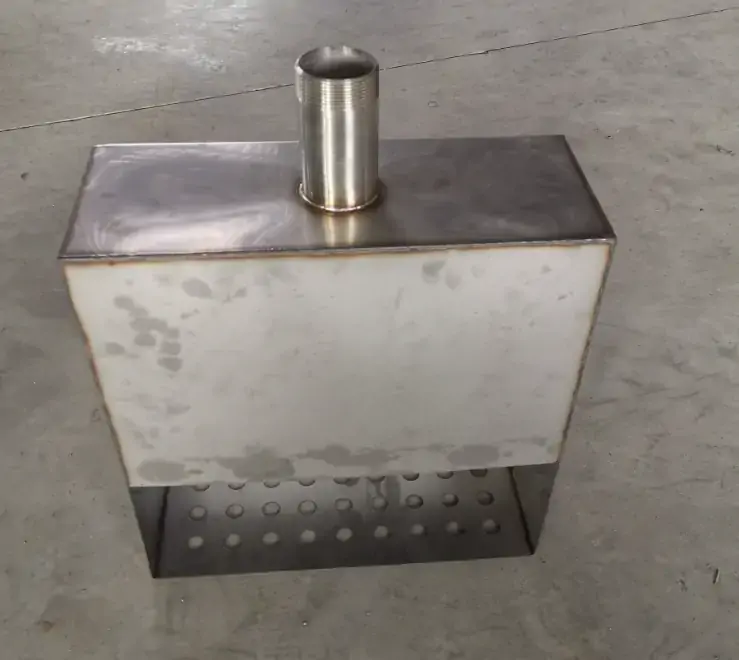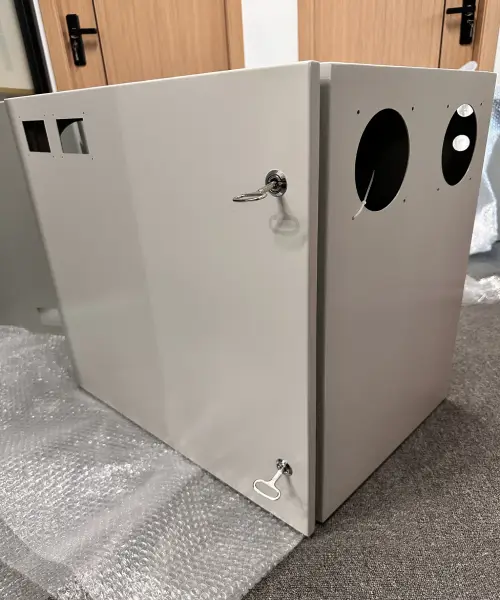

For metal water tanks, microbial-induced corrosion (MIC) is a threat to structural integrity that is often significantly underestimated. Unlike traditional corrosion driven by electrochemical potential differences, MIC stems from the colonization and metabolic activity of microorganisms on metal surfaces.
Bacteria form biofilms by secreting extracellular polymers, creating a microenvironment on the inner walls of metal water tanks that differs significantly from the main water body in terms of pH, dissolved oxygen, and chemical species. This microenvironment leads to localized electrochemical potential differences, which in turn induce severe pitting corrosion; the perforation rate can reach significant levels within a matter of weeks or even days.
MIC can occur in various materials commonly used for water tanks, such as carbon steel, austenitic stainless steel, and aluminum alloys, and tends to develop preferentially in areas with microstructural inhomogeneities, such as welds and heat-affected zones. More critically, stagnant water conditions provide an ideal breeding ground for bacterial proliferation—water left standing in a tank that is not drained in a timely manner can induce MIC in as little as 30 days.
The mechanisms described above indicate that the prevention and control of MIC cannot rely on post-treatment measures but must begin at the manufacturing stage of metal water tanks. This article will provide a detailed analysis of how to physically prevent the conditions necessary for microbial adhesion and proliferation during the manufacturing process through surface finish control, drainage geometry design, and verifiable cleaning protocols.
Understanding the Mechanism of Microbial-Induced Corrosion (MIC) in Metal Water Tanks
Microbial-induced corrosion (MIC) in metal water tanks follows a distinct three-stage sequence: Microorganisms first attach to the metal surface via extracellular polymers, then colonize and proliferate to form a biofilm. The biofilm creates a microenvironment at the metal/solution interface that differs significantly from the main water body in terms of pH, dissolved oxygen, and chemical species—this microenvironment serves as the physicochemical basis for all subsequent corrosion behavior.
Within this microenvironment, microbial metabolic activity produces two main types of corrosive byproducts. Aerobic bacteria (such as sulfur-oxidizing bacteria) metabolize to produce inorganic acids such as sulfuric acid; anaerobic bacteria (such as sulfate-reducing bacteria) reduce sulfate to hydrogen sulfide. These metabolic byproducts continuously accumulate in the biofilm-covered areas, directly destroying the passivation layer on the stainless steel surface and thereby inducing localized pitting corrosion—which is also the most typical form of MIC failure in metal water tanks.
Aerobic and anaerobic environments within a metal water tank are not mutually exclusive but coexist. The biofilm itself can create localized anaerobic microzones—even when the main body of water is well-oxygenated. Welds and their heat-affected zones, due to their microstructural heterogeneity, as well as areas beneath deposits formed by stagnant flow in the still water zone at the bottom of the metal water tank, are all locations where biofilms preferentially adhere and MIC preferentially initiates. Understanding this sequence of mechanisms is a prerequisite for developing effective prevention and control strategies.
Surface Treatment as the First Line of Defense Against MIC in Custom Metal Water Tanks
For metal water tanks, surface treatment is the first and most decisive line of defense against MIC. Rough surfaces provide physical shelter for initial bacterial attachment, whereas smooth surfaces reduce the effective area available for colonization and shorten the residence time.
Reducing the inner wall surface roughness of metal water tanks to 10 Ra or lower through mechanical polishing is not merely a cosmetic enhancement; rather, it physically eliminates niches for microbial colonization, laying a quantifiable engineering foundation for subsequent cleaning and passivation.
The Relationship Between Surface Roughness and Bacterial Adhesion
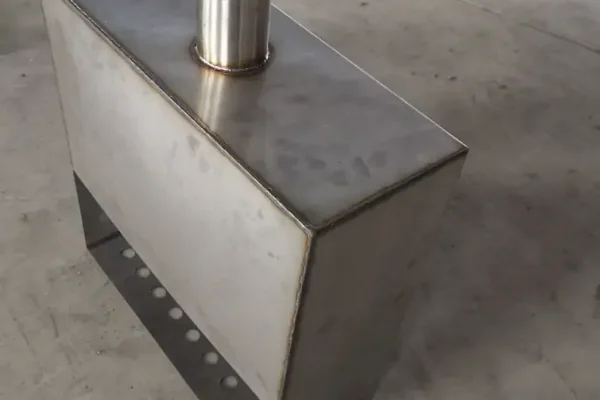
The surface roughness of the inner walls of metal water tanks directly determines the probability and intensity of initial microbial adhesion.
The microscopic valleys and scratches on a rough surface provide physical refuge for bacteria—microorganisms can hide within these defects, evading the shear forces of cleaning fluids and contact with chemical disinfectants. Studies have shown that when surface roughness (Ra) exceeds 0.8 µm, bacterial adhesion increases significantly; conversely, when Ra is below 0.8 µm, adhesion becomes more difficult. Surface roughness not only increases the surface area available for cell attachment but also promotes the retention of specific bacterial morphologies through features such as linear scratches.
For custom metal water tanks, welds and heat-affected zones become preferred sites for microbial colonization due to their inherent microscopic heterogeneity. Therefore, controlling surface roughness below a quantified threshold is the primary engineering measure to physically block microbial colonization niches.
Custom metal water tanks achieve a surface roughness of Ra 10 or lower through mechanical polishing
For the inner walls of metal water tanks, mechanical polishing is a well-established process that removes microscopic surface irregularities through successive grinding stages to reduce the Ra value. Achieving Ra ≤ 0.8 µm (approximately 32 microinches) typically involves a multi-stage, progressive abrasive process—progressing from coarse to fine grinding, and finally finishing with a polishing wheel and polishing compound.
This roughness level is widely recognized as the benchmark requirement for sanitary-grade surfaces. For pharmaceutical and high-purity applications, mechanical polishing can further achieve levels of Ra ≤ 0.6 µm or even Ra ≤ 0.4 µm. It should be noted that the effectiveness of mechanical polishing is highly dependent on process control—a bright surface does not necessarily mean the Ra value meets the standard, and quantitative verification using instruments such as a profilometer is required.
The inner walls of polished metal water storage tanks not only eliminate attachment sites for microorganisms but also provide a uniform chemical reaction substrate for subsequent passivation treatment.
Surface Treatment Specifications for Food-Grade and Pharmaceutical Applications
The food and pharmaceutical industries have established clear, quantifiable specifications for the surface treatment of the inner walls of metal water tanks. Food-grade applications typically require Ra ≤ 0.8 µm, a standard adopted by EN 10088, 3-A Sanitary Standards, and FDA regulations.
The pharmaceutical and biopharmaceutical sectors adhere to the more stringent ASME BPE standards, which typically require wet surfaces in contact with the product to be mechanically polished to SF1 grade (Ra ≤ 0.51 µm) or electropolished to SF4 grade (Ra ≤ 0.38 µm). ASME BPE also stipulates that 100% endoscopic inspection of welds is required to ensure consistency between the weld and the base metal surface. In addition, GMP and FDA regulations set clear quantitative requirements for passivation film integrity and cleanability.
As a professional metal water tank manufacturer, Supro understands and strictly adheres to these graded specifications—rather than simply pursuing a vague notion of “smoothness”—to meet the acceptance criteria of clients across various industries.
Only 4 steps
online custom metal fabrication parts
Contact our experts team and experience the efficiency and economic benefits of digital metal fabrication services.
Upload Design Files
STL , STEP (.stp), IGES (.igs), (.ZIP), or PDF.
Also be a sample or an idea
Quote & Design Analysis
Instant factory quotes and DfM reports, the most reasonable solution.
Manufacturing Begins
Digital processes can initiate order tasks within 24 hours.
On-Time Delivery
Keeping delivery promises, approved by 3000+ Global Company buyers.
Drainage Design for Metal Water Tanks: Eliminating Standing Water
The drainage design of custom metal water tanks directly determines the risk level of residual standing water. Under static water conditions, microorganisms can colonize within weeks and induce MIC—a corrosion rate that can be 10 to 100 times higher than that of conventional electrochemical processes. Residual water provides bacteria with a continuous source of electrolytes and nutrients, while areas covered by sediment further create localized anaerobic microenvironments that accelerate the pitting corrosion process.
To eliminate water accumulation at the manufacturing stage, a controlled slope must be incorporated into the tank bottom design to ensure that water flows completely toward the drain under the force of gravity. For metal water tanks, drainage geometry is not a secondary feature but a core element of MIC prevention and control, on par with surface finish.
The Role of Slope and Taper in Preventing Water Accumulation
The slope and taper design at the bottom of custom metal water tanks are intended to utilize gravity to achieve complete drainage—eliminating residual water, a key contributor to MIC.
Although ASME BPE does not specify a single slope value, the industry generally adopts a slope of 1/8 to 1/4 inch per foot (approximately 1% to 2%) as the engineering benchmark for drainage design. The 3-A Sanitary Standards also explicitly require that all surfaces in contact with the medium must be capable of self-draining, preventing the accumulation of any liquid—including cleaning solutions, disinfectants, water, or product—through appropriate slopes or inclines.
For custom metal water tanks, this slope must extend across the entire bottom surface of the tank to ensure that water flows continuously from the highest point toward the drain outlet, thereby preventing localized low-lying areas from becoming breeding grounds for biofilms.
Comparison of Cone-Bottom and Slope-Bottom Structures
Cone-bottom and slope-bottom are the two primary structural designs for metal water tank drainage.
A cone bottom uses a conical funnel structure to direct liquid toward the drain outlet at the lowest point in the center of the tank; the typical cone angle ranges from 10° to 15°. This design achieves a near-100% drainage rate and is suitable for high-purity and pharmaceutical applications, but requires supporting structures.
A slope bottom features a flat tank bottom sloping toward one side, with the drain outlet located at the lowest point on the tank’s periphery. The Slope Bottom structure facilitates maintenance of the drain outlet and frequent draining operations, but offers slightly less usable volume than the Cone Bottom design for tanks of the same height. From a custom metal water tank manufacturing perspective, the Cone Bottom design demands higher precision in bending and welding, while the Slope Bottom is easier to fabricate. The choice of structure requires a comprehensive evaluation of tank capacity, installation space, draining frequency, and cleanliness grade.
Minimum Drainage Slope Requirements and Drainage Validation for Metal Water Tanks
The minimum drainage slope for custom metal water tanks is typically set at no less than 1% (i.e., a drop of 10 millimeters per meter). In applications with extremely high cleanliness requirements, API standards mandate a tank bottom slope of 5% to ensure positive-pressure drainage and self-cleaning. Once the slope is determined, it must be verified through drainage validation—common methods include fill-and-drain tests: the metal water tank is filled to the design liquid level and then completely drained, after which the bottom and all weld intersections are inspected for visible droplets or residual water films.
Some pharmaceutical-grade applications also use riboflavin fluorescence testing to visually verify drainage effectiveness. At Supro, our slope designs are quantitatively documented during the manufacturing phase through instrumental measurements (such as digital inclinometers), and these records form part of the technical documentation for delivery acceptance.
Are you looking for reliable & cost-effective
China Sheet Metal Fabricators
More than 150,000 OEM metal fabrication products delivered to 5,000+ global buyers.
And benefit from it!
Validation of Custom Metal Water Tanks via the Riboflavin Test
The riboflavin coverage test is a visual inspection method used to verify the spray coverage effectiveness of the Metal Water Tank’s Clean-in-Place (CIP) system. This test uses vitamin B2 (riboflavin) as a tracer—which emits a bright yellow-green fluorescence in an aqueous solution when exposed to 365 nm ultraviolet light.
The procedure is as follows: A riboflavin solution with a concentration of approximately 0.2 g/L is evenly applied to the entire inner surface of the metal water tank. After running the CIP cleaning cycle, a visual inspection is conducted using an ultraviolet lamp. Any residual fluorescence indicates that the area was not adequately covered by the cleaning solution. It should be noted that this test verifies whether the spray system can deliver the cleaning solution to all target surfaces; it does not directly prove the cleanability of the equipment.
The ASME BPE standard explicitly requires that no riboflavin residues be detected on the inner surfaces within the process boundaries after a cleaning cycle. This test is typically performed as part of a Factory Acceptance Test (FAT) and is also recommended by organizations such as VDMA and EHEDG for hygienic design and CIP validation.
Best Practices for Manufacturing MIC-Resistant Metal Water Tanks
For MIC prevention and control in metal water storage tanks, multidimensional coordination during the manufacturing phase is key to achieving lasting reliability—no single measure can provide sufficient assurance. Regarding materials, appropriate alloy grades must be selected based on the chemical composition of the water; for welding, parameter control and post-weld treatment must ensure the geometric continuity of welds and surface uniformity; and in terms of process, passivation treatment can restore and strengthen the chromium-rich oxide film on the stainless steel surface.
These measures must form a complete engineering closed-loop system in conjunction with the previously discussed surface finish control and drainage geometry design. As a professional metal water tank manufacturer, Supro transforms design intent into quantifiable, verifiable manufacturing specifications—a critical path to ensuring the delivered products possess MIC resistance.
Material Selection and Welding Quality for Custom Metal Water Tanks
The material selection for metal water tanks must be engineered to match the chemical composition of the water and operating conditions. 304L and 316L are the most commonly used austenitic stainless steel grades in water tank manufacturing—316L, due to the addition of 2.0%–2.5% molybdenum (Mo), exhibits superior resistance to pitting and crevice corrosion in chloride-containing environments. In terms of MIC sensitivity, 316L also demonstrates excellent resistance.
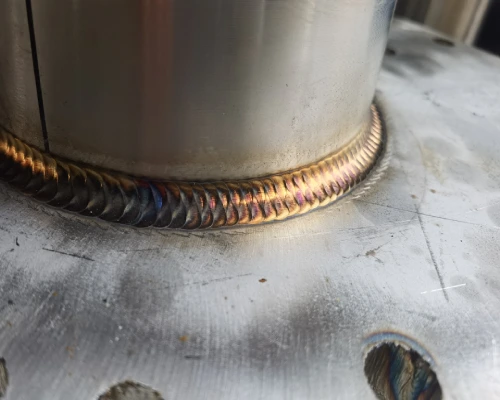
Weld quality has a decisive impact on the MIC resistance of metal water storage tanks—MIC primarily initiates at welds and in the heat-affected zone. Full-penetration welds are a fundamental requirement for eliminating the risk of crevice corrosion. For the GTAW process, double-sided welding must be employed with back-side protection using an inert gas (such as argon) to prevent the formation of chromium-depleted zones caused by high-temperature oxidation.
After welding, the heat-affected zone (heat tint) and spatter must be removed, which can be achieved through grinding or acid pickling. The geometric continuity and surface uniformity of the weld are core quality indicators for the acceptance of custom metal water tanks.
Cleaning and Passivation of Metal Water Tanks After Manufacturing
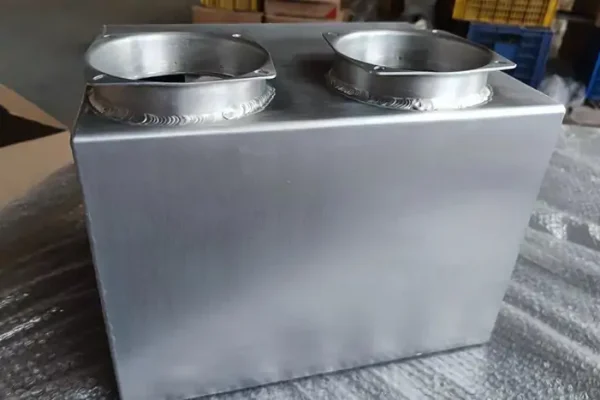
After welding and mechanical polishing are completed, metal water storage tanks must undergo thorough cleaning and passivation to restore the corrosion resistance of the stainless steel. Passivation is a chemical dissolution process that removes exogenous iron or iron compounds from the surface of stainless steel, allowing chromium to react with oxygen to form a chromium-rich oxide layer.
ASTM A967 specifies the standard method and acceptance criteria for chemical passivation. For the passivation of metal water tanks, a 20% nitric acid solution is commonly used for 30–60 minutes at approximately 60°C, followed by thorough rinsing with deionized water.
The oxide layer (heat tint) in the weld heat-affected zone must be removed by grinding or acid washing prior to passivation. For custom metal water tanks, verification should be performed after passivation—ASTM A967 provides various test methods to confirm the effectiveness of passivation.
Cleaning and passivation must be performed after final assembly is complete and prior to delivery to ensure the integrity of the protective layer.
Integration of Design, Surface Treatment, and Validation
The effectiveness of MIC prevention and control for metal water tanks depends on the systematic integration of design, manufacturing, and validation—no single measure can provide sufficient assurance.
During the design phase, drainage geometry (minimum slope ≥ 1%), target surface roughness (Ra ≤ 0.8 µm), and material grade (316L for chlorine-containing or high-purity applications) must be clearly defined.
During the manufacturing phase, these design requirements are translated into executable process parameters—including the abrasive grading for polishing, the back-side protection scheme for welding, and the chemical formulation and time-temperature curve for passivation.
The validation phase quantitatively confirms compliance at each stage through methods such as drainage and drainage-emptying tests, profilometer roughness measurements, and riboflavin fluorescence testing.
Simple geometric configurations and a design with minimal tank openings reduce the risk of contamination and simplify cleaning and validation procedures.
Looking for a reliable custom sheet metal fabrication companies?
Talk To Supro MFG Expert Team
Contact us for competitive ex-factory prices,
and a full range of technical support services.
Conclusion
Microbial-induced corrosion poses a systemic threat to the integrity of Metal Water Tanks—its prevention and control cannot rely on a single measure or post-facto chemical treatment. The technical approach outlined in this paper demonstrates that surface roughness control (Ra ≤ 0.8 µm), drainage geometry design (minimum slope ≥ 1%), riboflavin coating validation, material selection (316L preferred over 304L), and welding and passivation processes must be implemented synergistically as interrelated engineering elements during the manufacturing phase.
Supro is a professional metal water tank manufacturer with over 20 years of experience in custom sheet metal fabrication. By choosing Supro, we help you prevent microbial-induced corrosion (MIC) in metal water tanks from the very beginning.
If you need technical specifications, customized project solutions, or to discuss business partnerships, please contact Supro immediately. Our professional engineering team is always ready to provide you with tailored application solutions.