

The global electric vehicle charging infrastructure is undergoing unprecedented expansion—the EV charging station housing market is projected to grow from $3.05 billion in 2025 to $8.49 billion in 2032, at a compound annual growth rate (CAGR) of 15.7%. However, this growth presents a widely underestimated engineering challenge: the structural stability of EV charging station housings under dual thermal loads—exposure to direct sunlight outdoors and full-load operation of internal power modules.
Large enclosure door panels—typically over 1.5 meters in height—are highly susceptible to metal buckling under thermal stress, leading to warping and uneven gaps. This compromises the IP rating’s seal integrity, exposing sensitive electrical components to the risk of moisture and particulate ingress.
When carbon steel (with a linear expansion coefficient of approximately 11.7×10⁻⁶/°C) undergoes linear expansion exceeding 1 millimeter along the 1.8-meter height of the door panel due to a 50°C temperature rise, a custom EV charging station housing design lacking proper rib reinforcement will directly result in permanent deformation. The UL 50E standard sets clear compliance requirements for the sealing compression and fastener performance of enclosures—gap widening caused by thermal deformation will directly challenge the ability to meet these specifications.
This article will systematically elaborate on multi-dimensional engineering strategies, including material thickness selection, rib structure design, precision welding processes, and integrated thermal management, to provide quantifiable sheet metal fabrication solutions for thermal deformation issues in EV charging station housings.
Understanding the Thermal Challenges Faced by EV Charging Station Housings
The thermal challenges faced by EV charging station housings stem primarily from the physical properties of material thermal expansion. The coefficient of linear thermal expansion (CTE) of carbon steel is approximately 12×10⁻⁶/°C—a 1.8-meter-high door panel will undergo more than 1 millimeter of linear expansion under a 50°C temperature rise. When the housing structure lacks proper rib reinforcement and sufficient material thickness, this expansion stress will transform into compressive loads under constrained conditions; once these loads exceed a critical threshold, they trigger metal buckling (thermal buckling).
The sources of thermal stress are twofold and cumulative: the temperature rise on the surface of the custom EV charging station housing caused by outdoor solar radiation, combined with the heat continuously dissipated by power semiconductors when the internal fast-charging modules are operating at full load. Inside high-power DC fast-charging cabinets, power conversion modules and rectifiers generate significant thermal loads under high-load conditions; the temperature rise accumulates rapidly within the enclosed space, subjecting large flat structures such as door panels to continuous thermal cycling loads.
The engineering consequences of this issue extend far beyond cosmetic defects. When door panels warp and gaps widen, the compression of the seal is lost, and the IP protection rating can no longer be maintained. Moisture and particulate matter invade the outdoor EV charging station housing through the widened gaps, directly threatening the insulation performance and long-term reliability of sensitive internal electrical components.
From a compliance perspective, the UL 50E standard sets forth explicit structural and testing requirements for the environmental performance of electrical equipment enclosures—gap expansion caused by thermal deformation directly challenges the ability to meet these specifications. From a commercial standpoint, a single DC fast-charging station out of service due to failure can result in monthly revenue losses exceeding $5,000.
EV charging station housings have evolved from a passive protective role to a critical component that directly impacts system resilience, operational continuity, and brand perception.
Material Thickness Selection for EV Charging Station Housings
For custom EV charging station housings, material thickness selection is fundamental to ensuring thermal stability—sufficient thickness directly determines the structure’s ability to withstand thermal stress and prevent instability. The following subsections will explore key engineering parameters in detail.
Determining the Minimum Thickness for Large Doors
For EV charging station housing applications, material specifications must be selected based on the actual dimensions of the door panel, rather than arbitrary default values. For doors taller than 1.5 meters, No. 14 (1.9 mm) steel sheet is the practical minimum thickness—any thinner material is prone to buckling under thermal loads.
The engineering principle is simple: bending stiffness is proportional to the cube of the thickness. Upgrading from No. 16 (1.5 mm) steel plate to No. 14 approximately doubles the bending resistance; whereas upgrading from No. 14 to No. 12 (2.7 mm) steel plate requires only a 40% increase in material thickness to achieve an approximately eightfold increase in stiffness.
For wall-mounted and floor-standing equipment compliant with NEMA 4/4X ratings, No. 12 steel plate has long been the industry “workhorse.” Industry conventions further refine this standard: EV charging station housings no taller than 54 inches are typically manufactured using No. 14 steel plate, while equipment 60 inches or taller uses No. 12 steel plate. For enclosures taller than one meter, No. 10 steel plate or internal reinforcing ribs must be used.
The final selection requires balancing thermal stability, material cost, and manufacturing complexity—specifying unnecessarily thick steel plates increases steel consumption, shipping costs, and press brake cycle times without delivering commensurate benefits.
Material Properties and Coefficient of Thermal Expansion
The coefficients of thermal expansion (CTE) of common housing materials vary significantly, and these differences directly influence design decisions for custom EV charging station housings.
The CTE of carbon steel is approximately 11.7 × 10⁻⁶/°C—a 1.8-meter door panel will expand linearly by more than 1 millimeter when the temperature rises by 50°C. The CTE of aluminum alloy is approximately twice that value, or about 23 × 10⁻⁶/°C. This causes greater displacement at the sealing interface and leads to gradual relaxation of the compressed state of the gasket after thousands of thermal cycles. This periodic expansion and contraction creates pathways for moisture to gradually seep in.
Stainless steel has a coefficient of thermal expansion comparable to that of carbon steel (approximately 16 × 10⁻⁶/°C for Grade 304). It offers excellent corrosion resistance in coastal or highly chemically corrosive environments, but work hardening occurs during forming, which accelerates die wear.
The 5052-H32 aluminum alloy is often specified for the manufacture of lightweight outdoor EV charging station housings. It offers excellent natural heat dissipation and crack-resistant bending properties; however, its high coefficient of thermal expansion requires larger clearances around fasteners and sealing interfaces.
Therefore, material selection must account not only for extreme ambient temperatures but also for the internal heat generated by high-power DC fast-charging modules—this dual thermal load exacerbates thermal expansion stresses throughout the entire charging cabinet structure.
Only 4 steps
online custom metal fabrication parts
Contact our experts team and experience the efficiency and economic benefits of digital metal fabrication services.
Upload Design Files
STL , STEP (.stp), IGES (.igs), (.ZIP), or PDF.
Also be a sample or an idea
Quote & Design Analysis
Instant factory quotes and DfM reports, the most reasonable solution.
Manufacturing Begins
Digital processes can initiate order tasks within 24 hours.
On-Time Delivery
Keeping delivery promises, approved by 3000+ Global Company buyers.
Structural Reinforcement Strategies for EV Charging Station Housings to Ensure Thermal Stability
Structural reinforcement measures for custom EV charging station housings compensate for the inherent limitations of material thickness by providing localized stiffness and enforcing alignment to counteract thermal stresses; the following subsections will explore in detail the arrangement of reinforcement components, the selection of hinges, and multi-point latching systems.
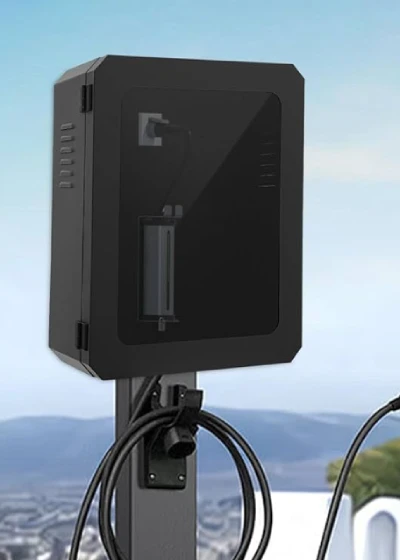
Design and Layout of Reinforcing Elements for EV Charging Station Housings
Structural reinforcement of custom EV charging station housings begins with the layout of the reinforcing ribs. Whether they have “Z”-shaped, “U”-shaped, or cap-shaped cross-sections, these reinforcing ribs increase the cross-sectional area and moment of inertia of thin plates, thereby significantly improving bending stiffness without requiring a corresponding increase in material thickness or cost.
The basic principle involves shifting material mass away from the neutral axis: stiffness is proportional to the cube of the rib height, meaning that even a moderate increase in rib height can yield a significant improvement in stiffness. For large doors exceeding 1.5 meters in height, design guidelines recommend maintaining a rib-to-panel-thickness ratio between 4:1 and 8:1. Depending on panel dimensions and material properties, rib spacing typically ranges from 100 to 250 millimeters; to maximize effectiveness, ribs must be arranged perpendicular to the expected direction of bending moment.
When welded reinforcements are specified, heat input must be carefully controlled—using full-penetration fillet welds along the entire length of the reinforcement and welding in a staggered sequence to minimize deformation.
The reinforcement structure of an EV charging station housing must extend continuously across the entire span of the door panel; interrupted or intermittent reinforcement creates stress concentrations and local weaknesses, which can easily lead to buckling under thermal cycling.
For aluminum EV charging station housings—which have a coefficient of thermal expansion approximately twice that of carbon steel—tighter rib spacing and lower rib heights are typically required to accommodate greater material displacement and maintain flatness.
Hinge and Latch Systems for Forced Alignment
Hinge and latch systems serve as the final mechanical line of defense against thermal deformation in outdoor EV charging station housings. When door panels expand and warp under thermal stress, the hinge and latch assemblies must actively maintain alignment and keep the gaskets compressed.
Heavy-duty concealed hinges distribute the door’s weight evenly across its full height, thereby preventing localized sagging and avoiding further seal failure. Unlike exposed double-hinge designs, the concealed design eliminates external prying points, reduces corrosion pathways, and maintains a clean exterior profile—a necessary requirement for vandal-resistant public charging infrastructure.
The multi-point latch system is equally critical. A single handle operates latch points at the top, middle, and bottom of the door, ensuring that compression force is evenly distributed along the entire perimeter of the seal. This distributed force path is critical for custom EV charging station housings used in hot environments: as the door expands, the three-point latching system maintains uniform clamping pressure on the seal, thereby preventing localized gaps that could result from a single-point latching system.
Latching rods and cams must be manufactured from corrosion-resistant materials (galvanized steel or stainless steel) and designed with sufficient adjustability to accommodate dimensional changes caused by thermal cycling. Loss of fastener preload—a known failure mode caused by vibration, thermal expansion, and repeated opening and closing cycles—must be mitigated through the use of locking devices: for example, nylon-insert lock nuts, serrated lock washers, or the application of threadlocker during assembly.
As a professional EV charging station housing manufacturer, Supro ensures that door alignment, gasket compression, latch force, and hinge-side sealing performance all collectively support the cabinet’s specified IP or NEMA protection rating.
Are you looking for reliable & cost-effective
China Sheet Metal Fabricators
More than 150,000 OEM metal fabrication products delivered to 5,000+ global buyers.
And benefit from it!
Manufacturing Precision and Quality Control for EV Charging Station Housings
The manufacturing precision and quality control of EV charging station housings determine the success or failure of thermal management strategies—welding processes, flatness verification, and dimensional inspection translate engineering design intent into reality. The following subsections will explore in detail welding and measurement procedures aimed at minimizing deformation.
Welding Techniques to Minimize Deformation in EV Charging Station Housings
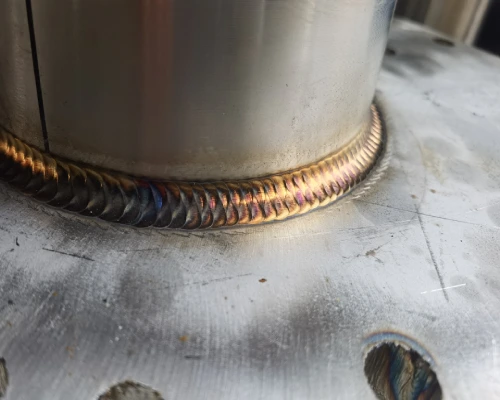
Welding-induced deformation remains one of the most critical quality challenges in the manufacturing of EV charging station housings. The root cause is that localized heating during the welding process causes thermal expansion in the weld zone, while the surrounding base material—which is at a lower temperature—restricts this expansion, thereby generating residual stresses that manifest as warpage once the weld cools.
For large custom EV charging station housings—especially at door frames and cabinet seams where sealing is critical—controlling this distortion is absolutely non-negotiable.
Laser welding has become the preferred process for manufacturing thin-gauge EV charging station housings. Compared to traditional MIG welding, laser beam welding reduces out-of-plane distortion in thin sheets by approximately 75% while narrowing the distribution range of high tensile residual stresses by 50%. Laser welding delivers highly concentrated energy with an extremely small heat-affected zone (HAZ), thereby minimizing heat input into the surrounding material and virtually eliminating distortion.
Cold Metal Transfer (CMT) welding offers another viable option for even thinner materials (as thin as 0.3 mm)—significantly reducing distortion by applying a lower thermal load to the workpiece.
In addition to process selection, manufacturing techniques are equally critical. Sequential welding and strategic spot welding—that is, using short, intermittent welds rather than continuous ones—allow heat to dissipate between weld passes. Reinforced fixtures and positioning jigs hold the workpiece in place during welding, preventing displacement caused by thermal stress. Welding parameters—voltage, current, and wire feed speed—must be strictly controlled and documented during every EV charging station housing manufacturing process.
For outdoor EV charging station housings, an IP65 or IP67 protection rating is typically required; any deformation caused by welding that results in seal failure would constitute an irreparable quality defect.
Flatness Verification and Dimensional Inspection of EV Charging Station Housings
For custom EV charging station housings, flatness and dimensional inspections translate weld quality and forming accuracy into quantifiable metrics.
Coordinate measuring machines (CMMs) are the industry standard for verifying critical geometric features. CMMs are essential for verifying hole pattern layouts within a tolerance of ±0.002 inches and for verifying the flatness of sealing surfaces. For outdoor EV charging station housings that comply with NEMA standards and must meet IP67 sealing requirements, flatness tolerances are typically tightened to ±0.005 inches—a specification that necessitates strict inspection procedures.
Height gauges and flatness plates provide complementary flatness verification, while optical profilometers perform non-contact surface profile measurements to meet the quality assurance needs of large-scale EV charging station housing manufacturing.
For a custom EV charging station housing that is 2 meters high, 1.2 meters wide, and has a wall thickness of 1.5 millimeters, the entire manufacturing process—from CNC punching and cutting to bending, precision hole forming, and welding—must control surface flatness deviations within 0.1 millimeters.
Achieving this standard requires not only measurement equipment but also the establishment of a closed-loop quality system that feeds inspection data back into process control. Once Coordinate Measuring Machine (CMM) programs are established for a specific cabinet design, repeatable inspections can be achieved with minimal operator intervention.
As an experienced EV charging station housing manufacturer, Supro strictly adheres to calibration schedules: the CMM used for sheet metal processing is calibrated annually, while the micrometer used to measure gasket groove depth—due to its frequent use on the shop floor—is calibrated every six months.
Looking for a reliable custom sheet metal fabrication companies?
Talk To Supro MFG Expert Team
Contact us for competitive ex-factory prices,
and a full range of technical support services.
Integration of Thermal Management and Design Synergy in EV Charging Station Housings
The integration of thermal management in EV charging station housings is not limited to passive cooling—it also influences structural layout, material selection, and maintainability, while simultaneously affecting thermal expansion.
Passive Cooling and Enclosure Design
Passive cooling of the EV charging station housing relies on natural convection and conduction—no fans, no moving parts, and no parasitic power consumption. The enclosure itself serves as the primary heat dissipation surface. An aluminum heat sink integrated into the enclosure structure transfers the heat generated by the power electronic components to the ambient air. Ventilation louvers and their strategic placement promote airflow circulation while minimizing heat buildup.
Component layout must isolate hot spots (MOSFETs, diodes, rectifiers) from sensitive control electronics.
For outdoor installations, the geometry of custom EV charging station housings must account for solar radiation heat gain: surface area, orientation, and color all influence heat absorption.
The design objective is to maintain the internal temperature within the components’ rated ranges without the need for active intervention—a design principle that directly impacts thermal expansion behavior and long-term structural stability.
Modular Design for Maintainability and Upgradeability
A modular outdoor EV charging station housing architecture allows key subcomponents—controllers, connectivity modules, metering devices, contactors, and socket assemblies—to be replaced without replacing the entire cabinet. This approach directly reduces the mean time to repair (MTTR) and lowers the total cost of ownership for network operators.
From the perspective of EV charging station housing manufacturing, modularity entails the use of standardized mounting interfaces, quick-disconnect electrical connectors, and access panels that facilitate front-panel maintenance.
The design must strike a balance between maintainability and durability: weather-sealed enclosures must withstand repeated opening and closing, and hardware must be able to withstand vandalism in public spaces.
For purchasers, modularity means an extended product lifespan—as charging standards and connectivity requirements evolve, only the modules need to be upgraded, rather than scrapping the entire EV charging station housing.
Conclusion
Addressing thermal deformation issues in EV charging station housings requires a multidimensional engineering approach. The selection of material thickness lays the foundation; rib design and a reinforced hinged latch system provide structural protection; welding precision and metrological verification ensure manufacturing quality; and passive cooling and a modular architecture extend service life.
Outdoor EV charging station housings are no longer merely passive commodities—they are key contributors to system resilience, brand reputation, and site-level profitability. A single DC fast-charging station failure can result in monthly revenue losses of over $5,000.
Choosing a manufacturing partner that truly understands these thermodynamic principles—one that not only quotes based on drawings but also engineers for thermal performance—is a strategic decision with direct financial and operational implications.
Supro is a specialized custom EV charging station housing manufacturer. Leveraging advanced equipment, extensive manufacturing experience, and a professional engineering team, we provide perfect custom EV charging station housing solutions to over 3,000 companies worldwide, along with genuine manufacturer quotes.
For inquiries regarding technical specifications, customized project solutions, or OEM partnerships, contact Supro immediately. Our professional engineering team is always ready to provide you with a tailored application solution.