

Today, ethanol-gasoline blends (such as E10 and E85) and biodiesel have become standard fuels in the North American and European markets. While these blends reduce emissions and improve octane ratings, they also present a series of material compatibility challenges that directly affect the integrity of metal fuel tank systems.
Ethanol is hygroscopic; it readily absorbs moisture from the atmosphere and contains corrosive ions such as chloride ions. Similarly, biodiesel has high oxygen and moisture content, and the fatty acids and their degradation products further enhance corrosion of carbon steel.
Steel fuel tanks exposed to fuel-grade ethanol are susceptible to stress corrosion cracking, and Q235 carbon steel also exhibits measurable corrosion when immersed in ethanol-gasoline blends. The consequences extend beyond surface rust—they include the generation of particulate contaminants that can clog pumps and injectors; in severe cases, perforation may occur, leading to leaks and safety hazards.
For metal fuel tank manufacturers and procurement engineers, specifying metal fuel tank materials that eliminate corrosion at its source is the most critical decision during the design phase.
This article provides a comparative analysis of two field-proven solutions—aluminum-coated steel and 5052 marine-grade aluminum alloy—based on key performance indicators (corrosion resistance, formability, weldability, and life-cycle cost).
Traditional carbon steel fuel tanks are prone to corrosion
Traditional cold-rolled carbon steel is chemically incompatible with modern fuels. Ethanol’s hygroscopic nature draws moisture and corrosive ions—such as chloride ions—into the metal fuel tank, while the degradation of biodiesel produces organic acids that actively corrode the metal surface.
The resulting corrosion manifests as pitting corrosion, uniform corrosion, and stress corrosion cracking (SCC), as has been confirmed in carbon steel fuel tanks and pipelines used with ethanol fuel.
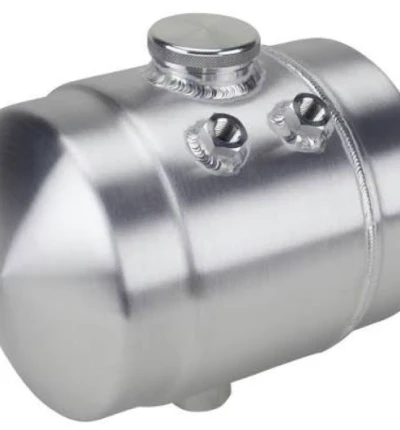
Corrosion Mechanisms in Ethanol and Biodiesel Environments
In modern fuel environments, carbon steel fuel tanks fail due to multiple mechanisms acting simultaneously. Ethanol is hygroscopic—it absorbs moisture from the atmosphere and contains corrosive ions such as chloride ions—which alters the fuel’s polarity and hydrophilicity, thereby increasing its corrosiveness. Biodiesel has high oxygen and moisture content; the fatty acids and their degradation products present in it actively corrode the surface of metal fuel tanks.
In addition to general corrosion, stress corrosion cracking (SCC) poses a more insidious threat. As early as 1995, SCC was documented in the bottoms of tanks and terminal equipment storing fuel-grade ethanol; since then, SCC has also been observed in carbon steel fuel tanks, piping systems, and equipment throughout the ethanol distribution network.
Laboratory studies indicate that oxygen is the most critical factor causing SCC, followed by inherent mill scale, chlorides, and methanol. The selective dissolution of ferrite within the pearlite structure further accelerates crack propagation. Microbial-induced corrosion (MIC) adds another layer of complexity: Acetobacter aceti converts ethanol into acetic acid, which is highly corrosive to ordinary carbon steel.
The result is not a single failure mode, but rather the combined effect of electrochemical, mechanical, and biodegradation pathways; these factors collectively threaten any metal fuel tank manufactured from uncoated carbon steel.
Impact of Internal Corrosion in Metal Fuel Tanks on Operation
The consequences of internal corrosion extend far beyond the metal fuel tank itself. As corrosion intensifies, iron oxide and reaction byproducts flake off the inner walls, forming particulate debris that circulates throughout the fuel delivery system. These particles—often described in field reports as a dark metallic substance resembling coffee grounds—accumulate on fuel pump strainers and at the orifices of fuel injectors, thereby restricting flow and altering the fuel injection pattern. The resulting decline in fuel delivery accuracy directly affects combustion efficiency and engine performance.
Pitting corrosion, in particular, can create localized perforations, leading to fuel leaks. In custom metal fuel tanks, even microscopic perforations can compromise the system’s integrity, creating safety hazards and necessitating premature replacement.
Industry research indicates that corrosion phenomena, which previously took 10 to 20 years to manifest, can appear in as little as 30 to 60 days when using ethanol-blended fuels. The SAE J1747 test procedure evaluates corrosion, pitting, weight loss, the formation of reaction products, and their leaching into the test fuel for metal fuel tank base materials—all of these metrics consistently indicate that carbon steel fails to meet the requirements.
Only 4 steps
online custom metal fabrication parts
Contact our experts team and experience the efficiency and economic benefits of digital metal fabrication services.
Upload Design Files
STL , STEP (.stp), IGES (.igs), (.ZIP), or PDF.
Also be a sample or an idea
Quote & Design Analysis
Instant factory quotes and DfM reports, the most reasonable solution.
Manufacturing Begins
Digital processes can initiate order tasks within 24 hours.
On-Time Delivery
Keeping delivery promises, approved by 3000+ Global Company buyers.
Evaluation Criteria for Metal Fuel Tank Materials
Selecting materials for custom metal fuel tanks requires a systematic evaluation framework that goes beyond simple corrosion resistance. The SAE J1747 standard provides an industry-standard method for immersion corrosion testing in hydrocarbon fuels containing oxygenated additives such as ethanol and biodiesel.
According to this test procedure, candidate materials must be evaluated based on multiple criteria: substrate corrosion, pitting susceptibility, mass loss, the formation of reaction products, and the leaching behavior of these products into the test fuel. Additionally, the evaluation must take into account the formability and weldability of metal fuel tank materials.
Performance Requirements for Metal Fuel Tank Materials Beyond Corrosion Resistance
Corrosion resistance alone is not sufficient for a material to meet the requirements for manufacturing metal fuel tanks. The manufacturing process requires materials to possess excellent deep-drawing properties—metal fuel tanks are typically formed into complex, single-piece shells through a multi-stage deep-drawing process, which requires that the material not crack or experience coating delamination when subjected to significant plastic deformation.
Weldability is equally critical: the manufacturing of metal fuel tanks relies on resistance roll seam welding or laser welding to form an airtight seal at the peripheral flanges. Even if a material possesses excellent corrosion resistance, its practical value in production is diminished if it performs poorly in terms of formability or weldability.
For aluminum-coated steel, the aluminum coating must remain intact during deep drawing to maintain its sacrificial protective function. For 5052 aluminum alloy, forming operations must avoid grain coarsening that leads to “orange peel” defects on the surface.
Therefore, engineers must evaluate metal fuel tank materials based on these three criteria—corrosion resistance, formability, and weldability—all of which are equally important when determining a material’s suitability for mass production.
Industry Testing Standards and Methods
Standardized test procedures provide an objective framework for material certification. SAE J1747 specifies a standardized test method for corrosion testing in hydrocarbon fuels or their substitutes containing oxygenated additives such as ethanol and methanol.
According to this procedure, test specimens are immersed in corrosive ethanol-blended fuels; these formulations are designed to simulate contaminants found in real-world environments and provide accelerated corrosion data.
The DIN 50905/4 standard complements the above method by evaluating uniform corrosion, pitting corrosion, stress corrosion cracking, and crevice corrosion through laboratory immersion tests conducted under controlled conditions.
The pass thresholds defined in these standards are very clear: the uniform corrosion rate must not exceed 0.1 mm/year, and no form of localized corrosion may occur. Materials that meet these standards are proven not to release particulate debris into the fuel stream or develop perforations over the service life of a metal fuel tank.
For any custom metal fuel tank application, SAE J1747 and DIN 50905/4 constitute the minimum due diligence standards for material selection.
Are you looking for reliable & cost-effective
China Sheet Metal Fabricators
More than 150,000 OEM metal fabrication products delivered to 5,000+ global buyers.
And benefit from it!
Recommended Materials for Metal Fuel Tanks
Based on the technical evaluation criteria specified in SAE J1747 and DIN 50905/4, two types of materials consistently meet the requirements of modern fuel applications. Hot-dip aluminized steel, backed by a decade of production experience, has demonstrated its corrosion resistance to methanol and biodiesel (rapeseed methyl ester) in a series of laboratory corrosion tests.
The 5052-H32 marine-grade aluminum alloy offers an alternative; its inherent oxide layer effectively resists corrosion from ethanol-blended fuels and sulfur-containing compounds. Neither material requires an internal coating, and both meet the corrosion resistance, formability, and weldability requirements necessary for any metal fuel tank application.
Aluminum-Coated Steel
Hot-dip aluminum-coated steel sheets combine specially designed deep-drawing IF steel with the exceptional corrosion resistance of an aluminum coating.
In the hot-dip aluminum coating process, molten aluminum reacts with oxygen to form a protective layer of Al₂O₃, which passivates the steel surface. This aluminum-silicon alloy coating—typically containing 5% to 10% silicon—provides both barrier protection and sacrificial corrosion protection. If the coating is scratched, the aluminum corrodes preferentially to protect the underlying steel; this self-healing property is particularly important for metal fuel tanks subjected to the mechanical stresses of deep drawing and seam welding.
A series of laboratory corrosion tests has demonstrated that these metal fuel tank materials exhibit excellent fuel resistance, including tolerance to fuels containing methanol and rapeseed methyl ester (biodiesel). According to the DIN 50905/4 standard, in a four-week test conducted at 50°C, the corrosion rates of aluminized steel in E10, E85, and biodiesel blends were all well below the limit of 0.1 mm/year. For applications with extremely high corrosion resistance requirements, a thin organic coating (1–2 μm) can be applied, achieving 2,000 hours without red rust in salt spray tests.
From the perspective of manufacturing metal fuel tanks, aluminum-coated steel is specifically designed for demanding stamping processes. Currently, two processes have been established for joining the upper and lower halves of metal fuel tanks: resistance roll seam welding with filler wire, or laser beam welding. This material uses an IF steel substrate, which ensures that the aluminum coating remains intact during deep drawing without cracking or peeling. This combination of formability and weldability makes aluminum-coated steel a proven production solution for any metal fuel tank application requiring high-volume, cost-effective manufacturing.
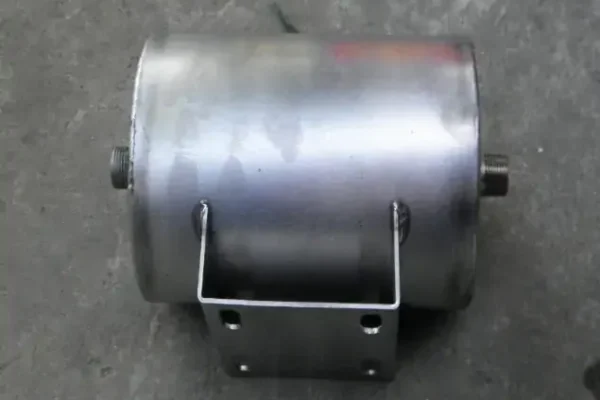
5052 Marine-Grade Aluminum Alloy
5052-H32 is a medium-strength aluminum-magnesium alloy that offers excellent corrosion resistance, high fatigue strength, and superior weldability. The addition of magnesium allows a stable, self-passivating oxide layer to form on the surface, providing robust protection in acidic and alkaline media as well as fuel environments. Compared to ordinary steel and most other aluminum alloys, this metal fuel tank material exhibits superior resistance to sulfides and ethanol.
Unlike the 3003 aluminum alloy—which is also used for metal fuel tanks but has poorer corrosion resistance—the 5052 alloy offers the optimal balance for any custom metal fuel tank exposed to ethanol-blended fuels, road de-icing salts, or coastal environments.
5052-H32 offers excellent machinability and good formability for bending, roll forming, and complex tank shell forming. This alloy can be easily welded using all standard welding methods (GMAW (MIG) and GTAW (TIG)) with common 4043 or 5356 filler metals.
Since 5052 does not require heat treatment, welding does not alter its strength properties, which offers a significant advantage in maintaining consistent structural integrity at the weld. When manufacturing metal fuel tanks, 5052-H32 delivers reliable and repeatable results while avoiding the process complexities associated with heat-treatable alloys.
5052-H32 is the material of choice for a variety of demanding applications, including aircraft fuel and oil lines and fuel tanks, marine fuel tanks exposed to seawater and salt spray, and off-road and four-wheel-drive vehicles that require an optimal balance of strength, weight, and corrosion resistance. This metal fuel tank material is lightweight—with a density of about one-third that of steel—which improves a vehicle’s fuel efficiency and handling.
For any custom metal fuel tank application where weight reduction, corrosion resistance, and weldability are key considerations, 5052-H32 is a field-proven, specification-compliant ideal solution.
Why choose Supro MFG's Custom Sheet Metal Fabrication Services
Provide the most cost-effective cost solution for manufacturing and assembling products, expanding product competitiveness.
a technical team specializing in custom shell manufacturing for more than 30 years.
Advanced Manufacturing Equipment: Industry-leading custom metal enclosure manufacturer with in-house sheet metal, die casting, precision machining workshops, and surface coating workshops.
ISO 9001-2015, PPAP III level, RoHS, NEMA, CE and other certified production standards.
24H*7 online English technical support: The professional English team responds quickly to users’ technical questions online at any time.
help users from product design, prototype, batch manufacturing, surface treatment, assembly and packaging, transportation and a series of value-added services.
With in-house mechanics and chemistry laboratories, it can quickly monitor manufacturing process quality control to ensure the delivery of high-quality products.
Accept to sign NDA documents to ensure that customers’ product information is protected.
Door-to-door delivery in customizable secure packaging after complying with the delivery details agreed with the customer.

Comparative Analysis of Metal Fuel Tank Materials
Based on evaluations conducted in accordance with the SAE J1747 protocol and the DIN 50905/4 standard, both hot-dip aluminized steel and 5052-H32 aluminum meet the requirements for use in metal fuel tanks.However, the choice between the two depends on three practical considerations: corrosion resistance, formability, and life-cycle cost.
Aluminized steel combines the strength and formability of steel with the sacrificial protection of an aluminum coating. 5052 aluminum alloy offers inherent oxide layer protection, has a density of only one-third that of steel, and exhibits excellent weldability; however, it has a higher material cost.
The following comparison analyzes the performance of these two metal fuel tank materials across various criteria.
Corrosion Resistance
Both of these metal fuel tank materials meet the uniform corrosion threshold of 0.1 mm/year specified in the DIN 50905-4 standard, but their protective mechanisms differ fundamentally.
Hot-dip aluminized steel sheets feature a dual protective mechanism: the aluminum coating provides barrier protection while also acting as a sacrificial corrosion inhibitor when scratches occur.
5052-H32 aluminum relies on a stable, self-passivating oxide layer formed by its magnesium content to provide strong protection against sulfides and ethanol components.
In terms of resistance to external corrosion, aluminized steel that has undergone in-line chromate treatment or been additionally coated with a 1–2 μm organic coating can achieve 2,000 hours without red rust in salt spray tests; The 5052 alloy, due to its inherent resistance to salt water, performs particularly well in marine and coastal environments.
Mechanical and Manufacturing Properties
The processing characteristics of metal fuel tank materials determine their suitability for production. Aluminum-coated steel utilizes a specially designed deep-drawing IF steel substrate, which is engineered specifically for demanding stamping processes. Two established joining methods are resistance roll seam welding with filler wire or laser beam welding.
5052-H32 offers good machinability and excellent formability, making it suitable for bending and roll forming. This metal fuel tank material can be welded using 4043 or 5356 filler alloys via GMAW (MIG) and GTAW (TIG). Since 5052 is non-heat-treatable, welding does not alter its strength properties—a significant advantage for maintaining consistent structural integrity at the weld.
5052-H32 has a tensile strength of approximately 228 MPa and a yield strength of 193 MPa, whereas aluminum-coated steel offers the higher absolute strength characteristic of its steel substrate. For high-volume manufacturing of metal fuel tanks, aluminum-coated steel offers superior deep-drawing performance; for complex geometries where weight reduction is critical, the 5052 aluminum alloy provides superior formability.
Cost and Application Considerations
When evaluating applications for metal fuel tanks, economic analysis must consider material costs, manufacturing expenses, and life-cycle value.
Aluminum-coated steel is a low-cost solution and has therefore become the mainstream choice for high-volume passenger vehicle production. Although 5052-H32 aluminum alloy has a higher material cost, it offers a weight reduction of approximately 66% compared to steel—a critical factor in off-road and four-wheel-drive applications requiring an optimal balance of strength, weight, and corrosion resistance, as well as in marine fuel tanks exposed to seawater and salt spray environments.
There are also differences in manufacturing costs: aluminum-coated steel benefits from established automotive manufacturing infrastructure and high-speed stamping lines, while aluminum requires specialized welding techniques and forming process considerations.
The final choice of metal fuel tank material depends on application priorities—high-volume, cost-sensitive projects tend to favor aluminum-coated steel, whereas weight-sensitive or marine applications justify paying a premium for 5052-H32.
For any custom metal fuel tank system, as long as the selection is made in accordance with the application’s specifications, both materials offer field-proven reliability.
Looking for a reliable custom sheet metal fabrication companies?
Talk To Supro MFG Expert Team
Contact us for competitive ex-factory prices,
and a full range of technical support services.
Best Practices for Manufacturing Corrosion-Resistant Metal Fuel Tanks
In the manufacturing of metal fuel tanks, design and process control are just as important as the materials themselves. The geometry of the fuel tank must allow water to drain freely into a sump, preventing stagnant water from accumulating in low-lying areas—stagnant water creates an environment conducive to microbial growth, and the acetic acid produced by these microorganisms can severely corrode metal surfaces.
When selecting metal materials, electrolysis between different materials should be avoided; when the metal fuel tank shell comes into contact with components of different electrochemical potentials, an electrochemical corrosion cell is formed, thereby accelerating localized corrosion.
On the production floor, welding parameters must be precisely controlled. For aluminum-coated steel, resistance seam welding with filler wire or laser beam welding are recognized standard methods. The resistance of the coated surface must be controlled, and the welding current reduced to prevent electrode degradation caused by alloy reactions between the electrode and the coated metal—further optimizing the electrode tip shape ensures consistent weld quality.
For 5052 aluminum alloy, the surface must be thoroughly cleaned before welding to remove the oxide layer, and appropriate shielding gas—argon or an argon-helium mixture—must be used regardless of whether the TIG or MIG process is employed. Adopting a diagonal welding sequence and minimizing the number of welds through proper bending design can reduce thermal deformation and minimize potential corrosion initiation points.
These practices ensure that the inherent corrosion resistance of metal fuel tank materials is preserved at every stage of production, resulting in products that achieve their expected service life without the need for internal coatings or post-treatment.
Conclusion
The transition to ethanol and biodiesel fuels has fundamentally changed the material requirements for metal fuel tanks. Although cold-rolled carbon steel was once sufficient to meet the demands of traditional gasoline, it now poses an unacceptable risk of corrosion due to the chemical composition of modern fuels.
Hot-dip aluminized steel and 5052-H32 marine-grade aluminum alloy have been certified under the SAE J1747 and DIN 50905/4 test protocols. The choice between these two metal fuel tank materials depends on the specific application: aluminized steel is better suited for high-volume, cost-sensitive production, while 5052-H32 is ideal for applications with strict weight requirements and marine environments.
Supro is a professional metal fuel tank manufacturer. Leveraging advanced equipment, extensive manufacturing experience, and a dedicated engineering team, we provide perfect custom metal fuel tank solutions to more than 3,000 companies worldwide, along with genuine manufacturer quotes.
For inquiries regarding technical specifications, customized project solutions, or business cooperation, please contact Supro immediately. Our professional engineering team is always ready to provide you with a tailored application solution.