
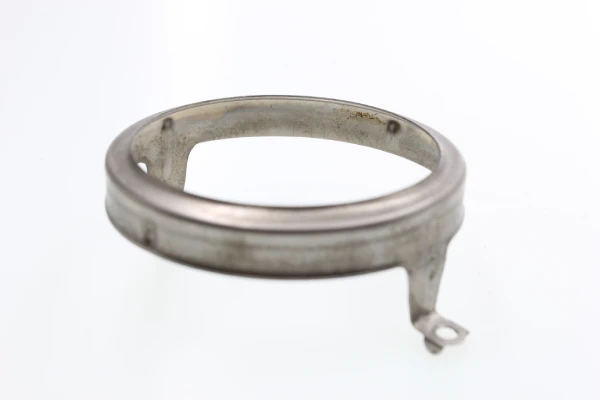

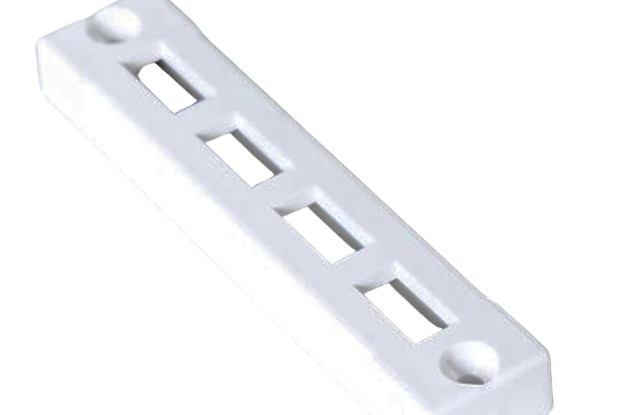
Splash guards installed on production equipment fail within a few months—not due to impact or corrosion, but because of cracks caused by vibration fatigue around the mounting bolts.
This failure mode has been extensively documented in sheet metal applications: bolted joints create geometric discontinuities that lead to cyclic stress concentrations. When the equipment’s excitation frequency matches the splash guard’s natural frequency, resonance amplifies the deflection amplitude, thereby accelerating crack initiation and propagation. The problem is further exacerbated when thin sheets lack sufficient section modulus (a geometric property that determines bending stiffness).
From a splash guard fabrication perspective, the solution is not simply to increase material thickness, but rather to strategically modify the sheet metal geometry to raise its natural frequency and redistribute stress away from the connection areas.
This article explores the root causes of fatigue failure in custom splash guards and proposes practical forming strategies—rib reinforcement, edge rolling, and vibration isolation—that can extend service life without significantly increasing weight or cost.
Understanding the Failure Mechanism—Why Splash Guards Crack
To understand the fatigue failure of custom splash guards, it is necessary to analyze the cyclic stresses caused by resonance and the stress concentrations at the bolted joint interfaces. These mechanisms interact to reduce the component’s endurance limit, making crack initiation nearly inevitable under continuous vibration conditions.
Resonance Excitation and Cyclic Stress
Every sheet metal component has a natural frequency determined by its mass and stiffness distribution. Resonance occurs when the excitation frequency generated by the equipment’s operating speed matches or approaches the splash guard’s natural frequency. The resulting deflection amplitude increases significantly—typically by an order of magnitude or more compared to non-resonant conditions.
This amplified deflection directly leads to cyclic stress reversal during each vibration cycle. The cumulative effect of these repeated cycles gradually degrades the structure through fatigue damage. Custom splash guards undergo millions of stress cycles during months of continuous operation, with each cycle inducing minute yet irreversible crystal slip within the metal’s grain structure. Once the cyclic stress exceeds the endurance limit—that is, the threshold at which the material can theoretically withstand an infinite number of cycles—the initiation of cracks is no longer a matter of “if,” but of “when.”
From a manufacturing perspective, the design objective is to shift the natural frequency of the splash guard away from the equipment’s excitation spectrum, thereby effectively detuning the structure to avoid resonance amplification.
Stress Concentration at Splash Guard Mounting Points
Bolt connections introduce geometric discontinuities, which fundamentally alter the local stress field in custom splash guards. The bolt holes themselves act as notches—that is, they cause a sudden change in cross-section, leading to stress line concentration, which multiplies the nominal stress by a factor known as the stress concentration factor (Kt). For a simple circular hole in a tensioned plate, the Kt value is close to 3.0; under the composite loads typical of vibrating equipment, the effective stress concentration factor may be even higher.
The clamping condition between the fastener head, the washer, and the plate surface further complicates the stress state. The bolt applies a local compressive preload around the hole, but this clamping force does not eliminate the cyclic bending moment stresses generated by the deformation of the splash guard during vibration. Conversely, the transition from the constrained clamping region to the free-span region creates a bending moment gradient whose peak occurs precisely at the edge of the hole. This explains why cracks always initiate at the periphery of the mounting hole rather than in the open areas of the panel.
The combination of geometric stress concentration and cyclic loading at the connection interface makes the bolted joint a critical fatigue location in the design of custom splash guards.
Only 4 steps
online custom metal fabrication parts
Contact our experts team and experience the efficiency and economic benefits of digital metal fabrication services.
Upload Design Files
STL , STEP (.stp), IGES (.igs), (.ZIP), or PDF.
Also be a sample or an idea
Quote & Design Analysis
Instant factory quotes and DfM reports, the most reasonable solution.
Manufacturing Begins
Digital processes can initiate order tasks within 24 hours.
On-Time Delivery
Keeping delivery promises, approved by 3000+ Global Company buyers.
Root Cause Analysis—Design Defects in Typical Splash Guard Fabrication
An analysis of the root causes of splash guard failure reveals two systemic design defects: insufficient section modulus of the thin-walled plate and a lack of geometric reinforcement. These defects directly reduce bending stiffness, leading to excessive deflection under vibration.
Insufficient Section Modulus of Thin Plates
Thin splash guards inherently have a low section modulus—a geometric property that determines their resistance to bending. For flat rectangular plates, the section modulus is proportional to the square of the thickness; a reduction in thickness of just 1 millimeter can decrease bending stiffness by more than 30%.
Custom splash guards with insufficient section modulus act like flexible diaphragms, transmitting vibration energy directly to the mounting joints rather than dissipating it elastically. The result is accelerated accumulation of fatigue damage, which significantly shortens service life.
Lack of Geometric Reinforcement Features in Splash Guards
A flat, seamless panel without ribs or rolled edges relies entirely on material thickness for its structural stiffness.
The stiffness of sheet metal depends on the distribution of material around the neutral axis; geometric features such as ribs push the material outward, thereby significantly increasing the effective moment of inertia with a negligible increase in mass.
The absence of these features causes custom splash guards to become flat and flexible, unable to resist bending beyond their nominal thickness range. This oversight is common in cost-driven technical specifications, where splash guards are viewed merely as barriers rather than load-bearing components.
Without stiffeners, the panel has a lower natural frequency, making it more susceptible to resonance excitation from adjacent equipment. By forming stiffeners or flanges, the cross-sectional shape can be modified to significantly increase the natural frequency, thereby preventing harmonic interference in the operating environment of custom splash guards.
Structural Optimization to Improve Splash Guard Durability
Engineering solutions for splash guard durability primarily employ three distinct strategies: geometric reinforcement through ribs, edge reinforcement through flanges, and vibration isolation at installation interfaces—each strategy targeting specific failure mechanisms.
Rib Arrangement—Increasing the Moment of Inertia Without Adding Weight
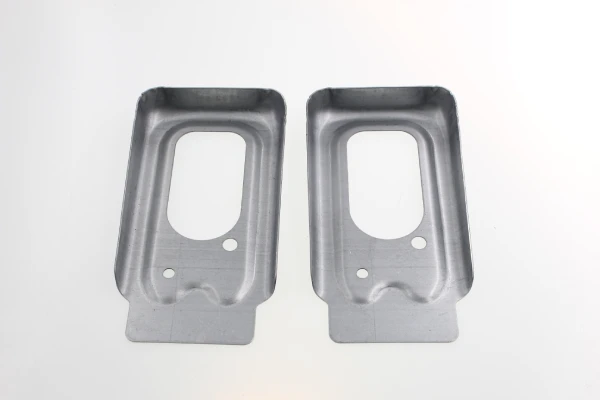
Without increasing material thickness, ribs are one of the most effective methods for improving the bending stiffness of a plate. They shift the material away from the neutral axis, thereby increasing the effective moment of inertia—the geometric parameter that determines a plate’s ability to resist deflection. For a typical splash guard, a single rib of moderate depth can increase the section modulus by 40% or more with virtually no increase in weight.
The direction of the ribs must align with the expected bending direction; ribs perpendicular to the principal axis of deflection provide the greatest reinforcement effect. For splash guards mounted along one edge, the ribs should run parallel to the unsupported span, thereby effectively shortening the panel’s free length.
This geometric modification not only reduces the deflection amplitude under cyclic loading but also increases the splash guard’s natural frequency, shifting it away from resonance-prone frequency bands. By strategically placing stiffeners, the moment of inertia of custom splash guards can be increased with minimal additional cost and complexity.
Edge Flanging—Doubling the Thickness at Critical Boundaries of the Splash Guard
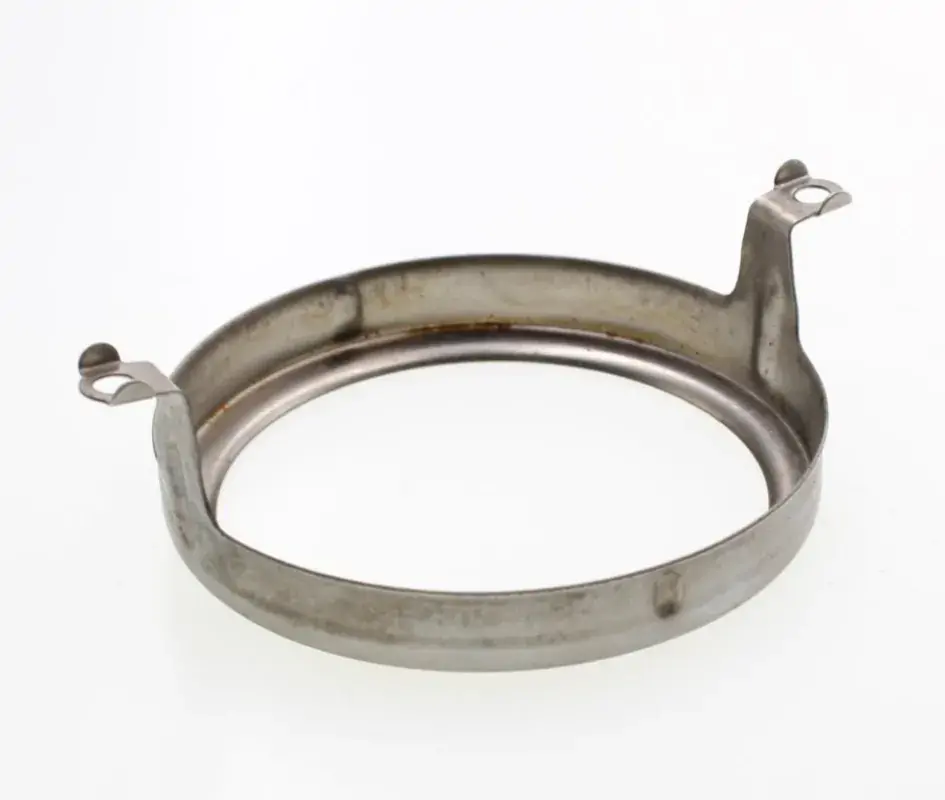
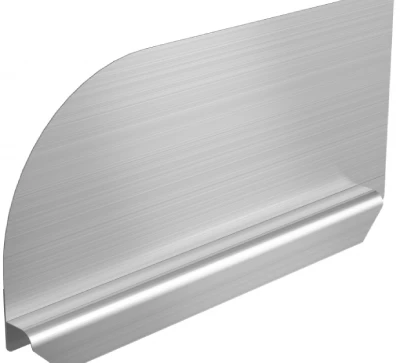
Flanging—folding the sheet metal edge inward—effectively doubles the material thickness at the boundary, thereby significantly increasing edge stiffness.
The flanged edge acts as a built-in reinforcement, resisting out-of-plane deformation around the perimeter of the sheet. For custom splash guards, mounting holes are typically located near the edges; flanging these areas directly reinforces the mounting zones, thereby reducing the bending moment gradient that can lead to crack initiation.
Closed or straight roll-forming provides maximum stiffness, while open roll-forming strikes a balance between stiffness and formability. This process requires no additional material—only an extra stamping operation—making it a cost-effective solution for improving splash guard durability.
It is worth noting that roll-forming not only increases local thickness but also eliminates sharp edges, thereby simultaneously enhancing the safety and corrosion resistance of the splash guard’s edges. However, for sheet metal thicker than 3 mm, the roll-forming process becomes more challenging due to reduced ductility and an increased risk of edge cracking.
Vibration Isolation at Mounting Interfaces—Rubber Bushings
Even with optimized rib placement and edge roll-forming, some vibration energy will inevitably be transmitted through the bolted joint interface. Installing rubber bushings or vibration-damping washers at each mounting point isolates the splash guard from the equipment’s vibration spectrum.
The elastomer compresses between the fastener head and the panel surface, thereby absorbing the high-frequency components that have the greatest impact on fatigue damage. This decoupling measure prevents the splash guard from becoming a mechanical extension of the vibrating structure. Its effectiveness depends on the correct material selection—nitrile rubber or ethylene propylene diene monomer (EPDM) compounds with appropriate Shore hardness—as well as proper dimensional design to ensure that the rubber bushings remain in a state of slight compression without bottoming out.
For retrofit applications or situations where design constraints prevent the use of reinforcing ribs, rubber isolation offers a practical solution for extending the service life of the splash guard.
Are you looking for reliable & cost-effective
China Sheet Metal Fabricators
More than 150,000 OEM metal fabrication products delivered to 5,000+ global buyers.
And benefit from it!
Design for Manufacturing—Practical Considerations for Splash Guard Fabrication
To translate structural improvements into a mass-producible splash guard design, careful consideration must be given to material thickness selection and forming constraints—the optimized solution must be compatible with stamping capabilities.
Material Selection and Thickness Trade-offs for Splash Guards
Selecting the optimal sheet thickness for custom splash guards requires balancing structural requirements, forming limitations, and cost. While increasing thickness directly improves bending stiffness—since the section modulus is proportional to the square of the thickness—weight and material costs also rise proportionally. More importantly, thicker sheets reduce formability; materials thicker than 3 millimeters become increasingly difficult to process during deep drawing, rib forming, or flanging.
Commercially viable splash guard designs typically use thinner materials and compensate through geometric reinforcement (such as ribs and flanges) rather than relying solely on sheet thickness.
Conducting finite element analysis during the design phase helps determine the minimum sheet thickness that meets stiffness targets while maintaining manufacturability.
Tooling and Forming Constraints
Optimizing the forming processes for custom splash guards—ribbing and flanging—involves specific tooling design requirements that directly impact production costs and feasibility.
Deep ribs require greater drawing depths, which in turn demand higher press tonnage and more complex die structures. A rib-to-material-thickness ratio exceeding 5:1 often leads to localized thinning and potential fracture, particularly in steel grades with poor ductility.
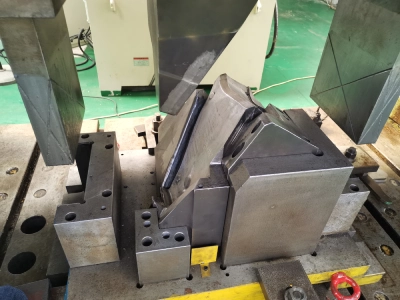
The flanging process adds an additional step and requires specialized flanging dies and precise gap control to achieve a smooth, consistent fold and prevent nicking or tearing.
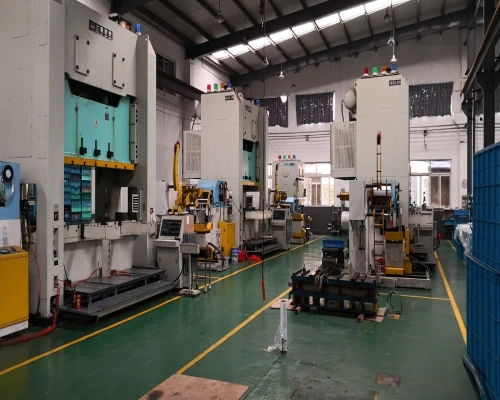
For high-volume splash guard fabrication, the amortized cost of the die sufficiently justifies the upfront investment; however, for low-volume or prototype production, using simpler rib geometries or roll forming alternatives may be more cost-effective. As an experienced splash guard manufacturer, Supro evaluates these trade-offs early in the quoting process to ensure the production of splash guards that meet specifications within the customer’s budget and delivery constraints.
Looking for a reliable custom sheet metal fabrication companies?
Talk To Supro MFG Expert Team
Contact us for competitive ex-factory prices,
and a full range of technical support services.
Conclusion
Addressing vibration fatigue in splash guards requires a systematic approach that treats structural design and manufacturability as interdependent variables. Rib forming and edge rolling can increase the panel’s natural frequency and redistribute stress from bolt hole boundaries to other areas, while rubber bushings can dampen transmitted vibrations at the source. Taken together, these measures can extend the service life of the splash guard without increasing material thickness or adding to weight and cost.
Supro is a professional custom splash guard manufacturer. Leveraging advanced equipment, extensive manufacturing experience, and a dedicated engineering team, we provide perfect custom splash guard solutions to over 3,000 companies worldwide, along with genuine manufacturer quotes.
We deliver a wide range of products efficiently and on time. From product design and rapid sheet metal prototype fabrication to mass production, we provide professional technical support and exceptional quality. We also offer one-stop manufacturing solutions and highly cost-competitive product supply!
For technical specifications or inquiries regarding OEM partnerships, please contact our engineering team.