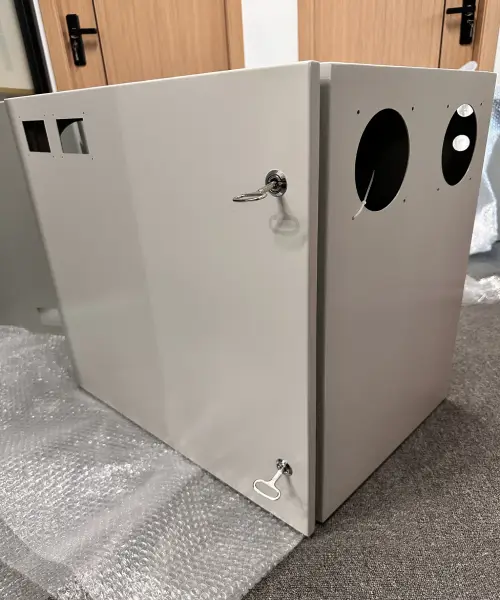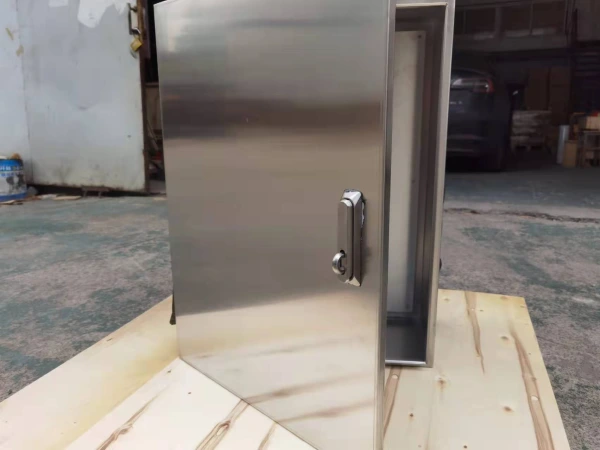
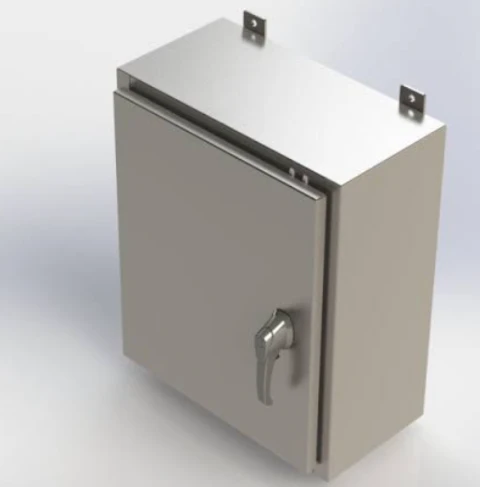
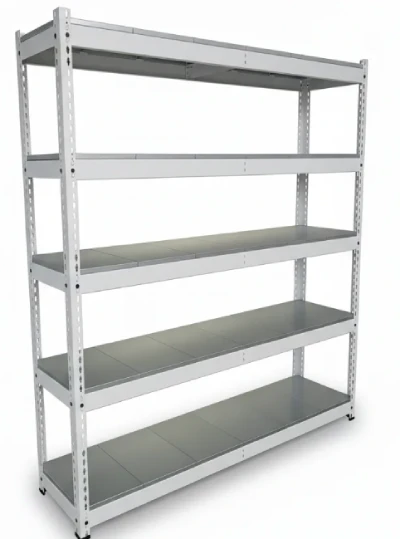
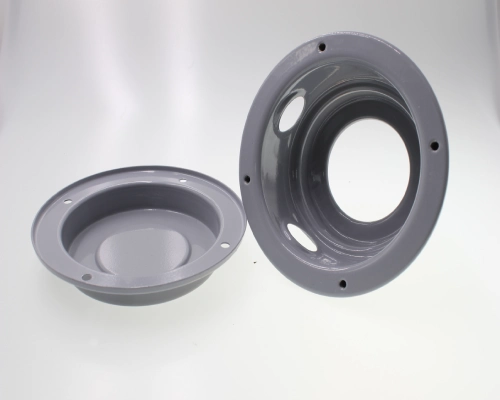
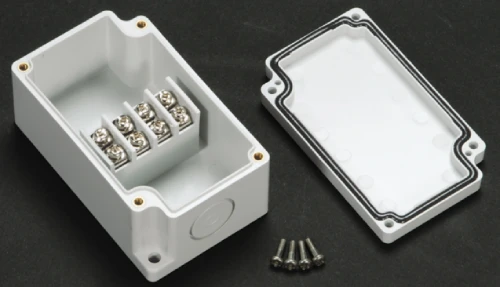
Field-formed gaskets (FIPG) have become the mainstream sealing solution for NEMA enclosures, offering design flexibility, superior sealing performance, and cost-effectiveness that traditional die-cut or strip gaskets cannot match. This technology typically uses a two-component silicone or polyurethane system applied directly to the flanges of NEMA-rated electrical enclosures, which not only eliminates corner seams and reduces material waste but also accommodates complex geometries.
However, a long-standing challenge persists in FIPG applications: the delamination and peeling of the gasket from the metal substrate. When the FIPG material fails to maintain a strong bond with the surface of the NEMA enclosure, leakage paths form, compromising the NEMA rating and exposing sensitive electrical components to environmental contaminants. This failure mode directly threatens product reliability, creates warranty risks, and jeopardizes brand reputation.
This article provides an in-depth analysis of the root causes of FIPG delamination in custom NEMA enclosure applications and proposes engineering-based preventive strategies grounded in surface science, material selection, and process control.
Understanding the Root Causes of FIPG Delamination in NEMA Enclosures
FIPG gasket delamination in NEMA-rated electrical enclosures is primarily caused by the following four mechanisms: residual surface contaminants that hinder molecular adhesion; chemical incompatibility between the gasket and the substrate; a curing process that fails to achieve full bond strength; and mechanical stress resulting from compression set or uneven clamping. These factors often interact synergistically, accelerating interface failure.
Systematically isolating and controlling each variable is the first step in ensuring the long-term sealing performance of NEMA enclosures.
Improper Surface Treatment and Contamination in NEMA Enclosures
The most critical factor in FIPG bond failure is surface condition. FIPG material functions as an adhesive—its chemical composition and functional properties place it within the broader category of adhesive systems. To form a strong bond, molecular-level contact must occur between the gasket material and the substrate.
Contaminants commonly found on custom NEMA enclosures—including rolling oils, lubricants, greases, dust, release agents, and even fingerprints—create physical barriers that prevent FIPG from wetting the surface. Traditional cleaning methods (such as wiping with alcohol or acetone) have known limitations: they may merely redistribute contaminants rather than remove them thoroughly, and they cannot quantitatively verify surface cleanliness.
Surface energy also plays a decisive role. If the surface of a NEMA enclosure has low surface energy—a common occurrence with certain powder-coated or passivated surfaces—the FIPG material cannot achieve sufficient wetting, resulting in poor adhesion.
Material Incompatibility
Not all FIPG formulations adhere equally well to all NEMA enclosure substrates. The chemical composition of the FIPG material—whether silicone, polyurethane, or MS polymer—determines its adhesion properties to a specific substrate.
Although silicone-based FIPG offers excellent temperature tolerance and flexibility, it may exhibit poor adhesion on certain unprimed metal or coated surfaces. Polyurethane systems, on the other hand, may bond well to powder-coated surfaces but fail on bare steel or aluminum.
Common material combinations for custom NEMA enclosures include cold-rolled steel, stainless steel, aluminum, and various powder-coated surfaces; each substrate reacts differently to FIPG formulations. Selecting materials based solely on general data sheets rather than systematic adhesion testing on actual production parts often leads to widespread adhesion failure—when the chemical properties of the FIPG and the substrate are incompatible, sufficient chemical bonding cannot be formed at the interface.
Improper Curing Conditions
FIPG materials cure through different mechanisms—RTV silicones rely on ambient humidity for cross-linking, UV-curing systems require sufficient light intensity and exposure time, and thermal-curing systems demand precise temperature profiles. Insufficient curing directly prevents the full development of bond strength.
For RTV silicone, commonly used in custom NEMA enclosure applications, curing begins at the surface and progresses inward. When ambient humidity falls below the material’s specified requirements, the curing rate decreases significantly, and the deeper layers of the material may remain in a state of incomplete curing for an extended period.
If the production cycle does not allow sufficient time for complete curing, or if humidification measures are not taken in low-humidity environments, a weak boundary layer will form at the interface between the FIPG and the NEMA enclosure substrate. This weak interface is highly susceptible to delamination failure under subsequent assembly compression or in-service stresses.
Compression Set and Mechanical Stress
Even if the initial bond meets requirements, FIPG gaskets may still fail during long-term use due to compression set. Compression set measures an elastomer’s ability to recover its original thickness after sustained compression. When the FIPG material loses its resilience, the sealing force diminishes, and delamination gradually initiates and propagates at the bonded interface under cyclic stress.
Improper design of the door locking mechanism, hinge misalignment, or uneven fastener torque in NEMA-rated electrical enclosures can all cause the gasket to undergo uneven compression. Areas of localized over-compression accelerate stress relaxation in the elastomer, while areas of under-compression fail to establish sufficient sealing force. Failing to consider the operating temperature range and compression ratio requirements during material selection, or designing the door without a compression stop mechanism, will significantly shorten the effective service life of the FIPG bond interface.
Only 4 steps
online custom metal fabrication parts
Contact our experts team and experience the efficiency and economic benefits of digital metal fabrication services.
Upload Design Files
STL , STEP (.stp), IGES (.igs), (.ZIP), or PDF.
Also be a sample or an idea
Quote & Design Analysis
Instant factory quotes and DfM reports, the most reasonable solution.
Manufacturing Begins
Digital processes can initiate order tasks within 24 hours.
On-Time Delivery
Keeping delivery promises, approved by 3000+ Global Company buyers.
Engineering Strategies to Prevent FIPG Delamination in NEMA Enclosures
To prevent FIPG coating delamination in NEMA enclosures, a multifaceted engineering approach is required to systematically address each root cause. Supro quantitatively evaluates and verifies surface cleanliness through objective measurements; material selection is validated based on the chemical properties of the actual substrate; curing parameters are strictly monitored; and custom NEMA enclosure designs incorporate structural features that evenly distribute pressure.
Through the organic integration of these control measures, NEMA enclosures can achieve consistent and long-term seal integrity, preventing failures caused by delamination.
Surface Quality Management for NEMA Enclosures
Preventing FIPG delamination in NEMA-rated electrical enclosures begins with strict surface quality control. Effective surface quality management requires a shift from qualitative inspections to quantitative measurements.
Contact angle measurements and dyne pen tests can objectively quantify the surface energy of the substrate, ensuring it reaches the critical value required for FIPG material wetting.
The cleaning process should utilize alkaline cleaning agents in conjunction with ultrasonic or high-pressure spray cleaning, supplemented by plasma treatment to further activate the surface and remove organic contaminants.
An in-line surface inspection station should be set up on the production line to perform sampling verification on each batch of sheet metal. Only when the surface energy is consistently maintained at 38 dynes/cm or higher and no residual contaminants are present can FIPG form a durable chemical bond on the metal flanges of NEMA enclosures. This data-driven control approach significantly reduces the risk of batch-specific delamination caused by fluctuations in cleanliness.
Material Selection and Certification
Selecting the correct FIPG material for specific NEMA-rated enclosure applications requires a systematic evaluation of operating conditions:
Temperature range: FIPG must maintain its performance across the entire operating temperature range of NEMA enclosures.
Chemical Exposure: In harsh environments, fluorosilicone-based formulations with enhanced chemical resistance may be required.
Substrate Compatibility: Verify adhesion to the specific metal alloys and surface treatment processes used in production.
Resistance to Compression Set: For applications involving repeated door opening and closing, select materials proven to have a low compression set rate.
For NEMA 4/4X enclosures, gasket materials must pass rigorous test protocols, including oil immersion and temperature cycling. Because silicone rubber foam and EPDM sponge offer low compression set rates and a wide temperature resistance range, they remain the most common materials for these applications.
During the material selection phase for FIPG materials, we conduct 90° peel and tensile shear tests in accordance with ASTM D429, followed by temperature cycling and salt spray exposure to verify long-term durability. Different batches of the same grade are also periodically retested for viscosity, cure rate, and bond strength. Only materials that have undergone comprehensive certification can ensure the sealing reliability of NEMA enclosures in various industrial settings.
Process Control and Automation
Human error introduced by manual dispensing is one of the primary causes of peel failure. The use of a CNC-controlled automatic dispensing system, combined with closed-loop flow valves and real-time pressure sensors, can control bead width and height tolerances within ±0.1 mm.
Dispensing path programming must account for deceleration at corners and smooth transitions through arcs to prevent buildup or stringing. During the curing process for RTV silicone, ambient humidity (40%–70% RH) and temperature (23±2°C) must be precisely controlled, and sufficient curing time must be allowed in accordance with the material’s technical data sheet.
An in-line vision inspection system can instantly detect gaps or misalignments in the sealant bead. Through end-to-end automation and parameter monitoring, the FIPG application quality for every NEMA enclosure is both reproducible and traceable.
Design for Manufacturability of NEMA Enclosures
Meeting FIPG requirements during the design phase of NEMA-rated enclosures can prevent issues that cannot be corrected during production. Design considerations include:
The flange structure should have sufficient flexural stiffness to prevent uneven compression caused by flange deformation when the door is closed; The design should incorporate compression limit tabs or grooves to control the final compression within the range recommended by FIPG (typically 15%–25%).
Adhesive application paths should avoid sharp turns and excessively small radius of curvature to facilitate uniform adhesive application by robots.
The placement of hinges and latches must ensure balanced stress distribution around the door frame to prevent overloading on a single side.
In addition, drainage holes and ventilation structures should be provided to prevent water accumulation from accelerating interface aging.
Incorporating the above design criteria into the NEMA enclosure design process can fundamentally reduce the risk of stress concentration and delamination—issues that cannot be corrected during subsequent manufacturing processes.
Are you looking for reliable & cost-effective
China Sheet Metal Fabricators
More than 150,000 OEM metal fabrication products delivered to 5,000+ global buyers.
And benefit from it!
Quality Assurance and Validation of NEMA Enclosures
The quality assurance system must cover the entire process, from raw material receipt to finished product shipment. At Supro, during the incoming inspection phase, we conduct random sampling tests on the metal surface adhesion of each batch of FIPG material in accordance with the ASTM F607 standard. Simultaneously, we use a contact angle measuring instrument to verify that the surface energy of the panels reaches at least 38 dynes/cm.
During process control, each NEMA-rated enclosure undergoes online visual inspection to verify the width, height, and path continuity of the sealing gaskets, while environmental temperature, humidity, and curing time are recorded in real time.
Final product verification involves water and dust resistance testing in accordance with NEMA 250 and IEC 60529; for NEMA 4X and higher ratings, additional salt spray exposure and thermal cycling aging tests are required. Comprehensive traceability records—including lot numbers, process parameters, and test results—ensure that every custom NEMA enclosure meets its rated protection level requirements.
Conclusion
By systematically addressing surface quality, material compatibility, process control, and design, it is possible to effectively prevent FIPG coating delamination in NEMA-rated electrical enclosures. The root causes—insufficient surface preparation, material incompatibility, improper curing, and mechanical stress—are well understood and can be addressed through existing engineering practices.
Supro is a professional manufacturer of custom NEMA enclosures with over 20 years of experience in custom enclosure fabrication. When you choose Supro, we help you prevent FIPG gasket delamination from the very beginning.
For technical consultations, design solutions, or product specifications, please feel free to contact our engineering team at any time.