
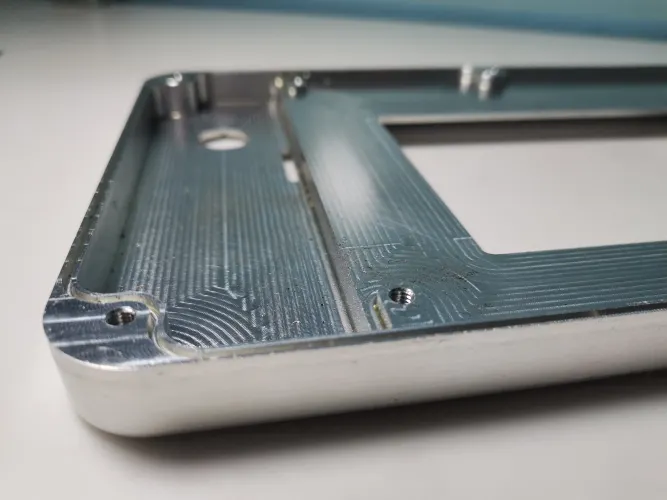

In high-volume custom sheet metal stamping, the die selection made during the design phase directly determines the final unit cost, production cycle, and structural integrity.
Choosing between progressive stamping and transfer die stamping requires a rigorous technical evaluation of geometric dimensions and tolerances (GD&T) requirements, total production volume, and material utilization targets. While progressive die stamping excels at high-speed, continuous production of small parts with tight tolerances, the transfer die stamping process offers unmatched geometric flexibility required for deep-drawn housings and large panels. If the product design does not align with the manufacturing process, it often results in high die amortization costs or unacceptable metal scrap rates.
In this article, we will provide a detailed analysis of the mechanical feasibility, cost implications, and design constraints of both progressive die and transfer die stamping, offering you precise technical data to help you make optimized and risk-free procurement decisions.
Understanding Progressive Die Stamping
The progressive die stamping process processes continuous metal coils through a sequence of synchronized die stations. For high-volume production, this automated forming process ensures fast cycle times and strict adherence to geometric dimensions and tolerances (GD&T), significantly reducing unit costs before the parts even leave the press.
Principles of Progressive Die Stamping
Essentially, the principle of progressive die stamping relies on a highly synchronized automated feeding system. A continuous metal coil is fed into the press and precisely guided through a series of sequentially arranged stamping stations. At each station, one or more distinct operations—such as punching, embossing, bending, or blanking—are performed simultaneously during each stamping stroke.
A key engineering feature of this process is the carrier strip. Unlike other methods, the workpiece remains securely attached to this carrier strip until it reaches the final cutting station. This continuous connection ensures absolute positional accuracy and enables complex geometries to strictly comply with geometric dimensions and tolerances (GD&T) requirements.
Understanding this process is crucial when evaluating custom metal stamping solutions, as it determines how features are processed in stages and explains why tolerances can be consistently maintained during rapid production cycles.
Key Advantages for Mass Production
When scaling up production, the primary advantages of progressive die metal stamping lie in its extremely high production speed and minimal labor intervention. Modern progressive stamping presses typically achieve speeds of 400 to 800 strokes per minute (SPM) or higher, depending on the alloy material and part complexity. Such short cycle times significantly reduce the unit cost of labor and overhead.
Furthermore, since the entire process is completed using a single automated die setup, repeatability between parts in progressive stamping production is extremely high. For procurement managers handling annual production volumes exceeding 50,000 units, this high-speed metalworking capability translates to a highly predictable supply chain and significantly reduced unit costs. Once the initial die passes PPAP validation, the production floor can mass-produce millions of defect-free parts without any downstream bottlenecks.
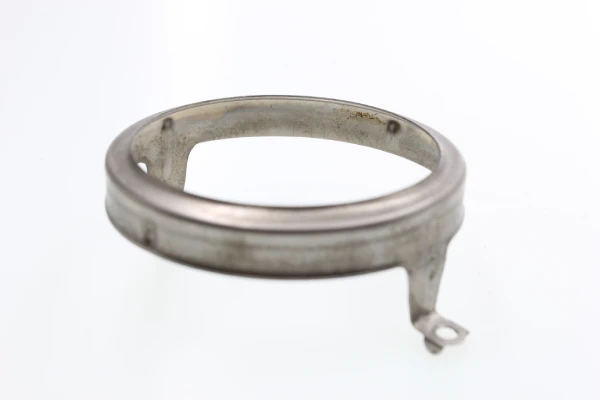
Technical Limitations to Consider in Progressive Metal Stamping
Despite its high efficiency, the progressive die stamping process has inherent engineering limitations that procurement teams must take into account during Design for Manufacturability (DFM) reviews.
First is material utilization. Since the part must remain attached to the carrier strip throughout the stamping process, this method has a notably higher scrap rate—which becomes a key cost factor when using expensive alloys such as copper or aerospace-grade aluminum.
Furthermore, this process is fundamentally unsuitable for deep-drawn parts. If the drawing depth exceeds the part’s diameter, the continuous strip will warp or break. Finally, designing multi-station dies requires significant upfront capital expenditure. If your product lifecycle does not guarantee high-volume production, the initial die investment for this specific stamping process will significantly drive up unit costs, thereby offsetting any advantages in production speed.
Exploring Transfer Die Stamping
When the complexity of a geometric shape exceeds the capabilities of progressive metal stamping, the transfer die stamping process offers the optimal solution. By immediately separating the blanks and using mechanical automation to move parts between independent stations, this method provides engineers with unparalleled design freedom for deep-drawn and multi-axis geometries.
How Transfer Die Stamping Works
In the transfer die stamping process, the metal blank is cut from the master coil immediately at the first station. Once separated from the carrier strip, the individual blank is mechanically transferred between subsequent independent stamping stations via automated transfer fingers or servo-driven arms. This means the workpiece is no longer constrained by continuous strip material.
At Supro MFG, we design these independent stations to perform complex secondary operations—such as cam punching, knurling, or multi-angle tapping—which, if performed on continuous strip, would often result in strip tangling or breakage.
Understanding this decoupled metal stamping mechanism is crucial, as it explains how a factory can perform 360-degree, all-around processing on individual metal blanks without any restrictive connecting strips.
Advantages for Complex and Deep-Drawn Parts
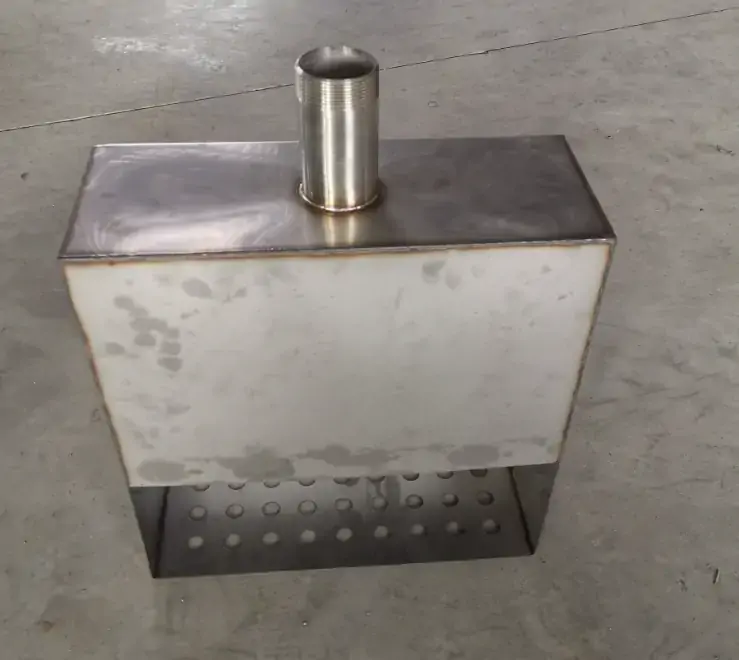
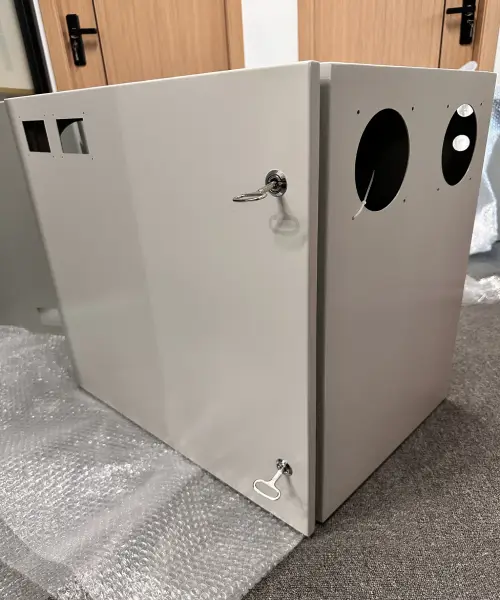
A significant advantage of this automated process lies in its unparalleled deep-drawing and extreme geometric forming capabilities. Since there is no restrictive carrier strip applying tension to the metal, transfer die stamping allows the material to flow freely into the deep die cavity without tearing. This makes it the process of choice for manufacturing deep-drawn housings, automotive structural bodies, and heavy-duty industrial storage tanks.
Furthermore, because the initial blank is precisely cut to volume, material utilization is significantly optimized. When procuring parts stamped from high-quality materials such as stainless steel or aerospace-grade aluminum, minimizing scrap is critical.
This specialized precision metal stamping offers engineering design freedom, allowing complex multi-axis features to be integrated into a single production run, thereby effectively eliminating the need for costly secondary CNC machining.
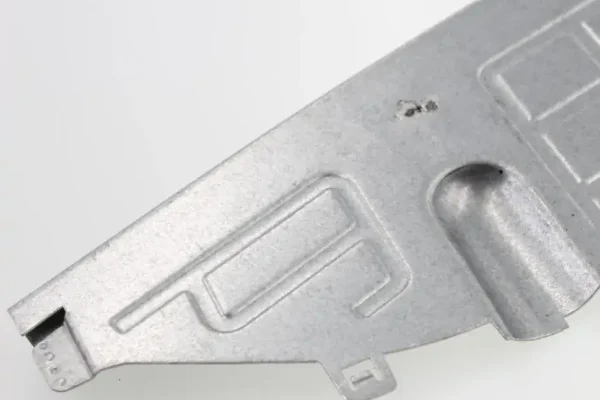
Potential Disadvantages of the Transfer Die Stamping Process in Terms of Speed and Tooling
Although transfer die stamping offers exceptional versatility, procurement teams must objectively weigh its inherent limitations. The most notable drawback is production speed.
Because mechanical fingers must physically grip, lift, and move the workpiece to transfer it between stations, the maximum strokes per minute (SPM) for this stamping process is significantly lower than that of progressive die metal stamping—typically ranging from 15 to 40 SPM.
Furthermore, the capital expenditure for dies can be substantial. Die bases are large, and the automated turret mechanism must be equipped with a precise array of sensors to ensure accurate positioning of the workpiece at each station, thereby preventing catastrophic die collisions. Consequently, if your custom metal stamping project involves producing millions of parts with simple, flat geometries, the longer cycle times and complex setup processes associated with transfer presses will unnecessarily drive up the cost per unit.
Are you looking for reliable & cost-effective
China metal fabrication manufacturer
More than 150,000 OEM metal fabrication products delivered to 5,000+ global buyers.
And benefit from it!
Direct Comparison: Progressive Die vs. Transfer Die Stamping
To select the optimal metal stamping process, procurement teams must carefully weigh die amortization costs, material utilization, and cycle time per part to determine which die configuration will deliver the highest return on investment for their specific geometries.
Production Volume and Cost Amortization
The financial break-even point between these two methods depends entirely on die amortization and annual production volume. Progressive stamping requires significant upfront capital to design multi-station progressive dies. However, since its stamping speed easily exceeds 400 SPM, the amortized die cost per unit drops significantly when annual production exceeds 100,000 pieces.
In contrast, the return on investment curve for transfer dies is entirely different. Although the initial die cost may be comparable for complex geometries, the slower production speed (15–40 SPM) means that labor costs and overhead account for a higher proportion of the cost per unit.
For procurement managers, the calculation is simple: if your custom metal stamping project requires high-volume, multi-year production, progressive dies offer a clear advantage. For medium-volume production requiring extreme forming processes, transfer dies can mitigate the risk of substantial capital expenditures.
Complexity and Size Limitations of Metal Stamping Parts
Long before cost considerations come into play, a part’s geometry and physical dimensions already determine your manufacturing limits.
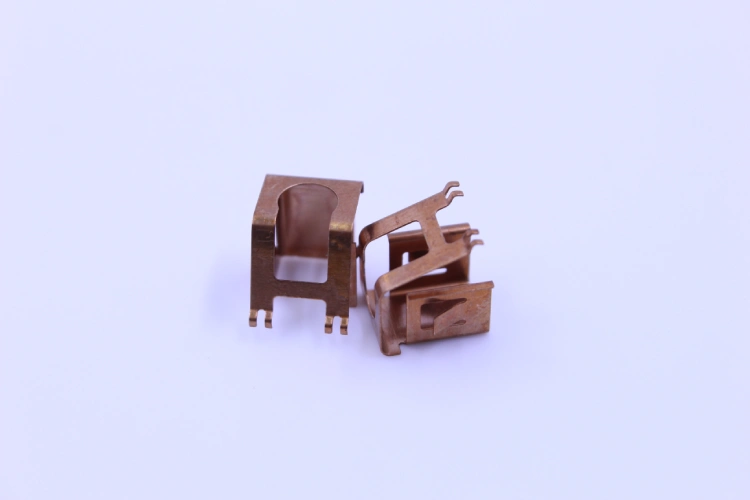
Progressive stamping is inherently limited by the length of the press table and the structural requirements of the carrier strip. It is particularly well-suited for producing brackets, terminals, and internal components, as the contour design of these parts ensures that the metal blank remains securely held in place. However, if your design involves large panels or deep-drawn housings, warping of the continuous strip is inevitable.
This is where the transfer die stamping process comes into play. By immediately separating the blanks, automated grippers can handle larger, thicker metal materials between independent die cavities without interference from the strip. This specialized stamping method provides spatial flexibility when sourcing parts that involve multi-axis punching or deep-drawn components.
Material Utilization and Scrap Rate
In custom metal fabrication, raw material utilization directly impacts your profits, especially when sourcing high-end alloys such as 316 stainless steel, beryllium copper, or aerospace-grade aluminum.
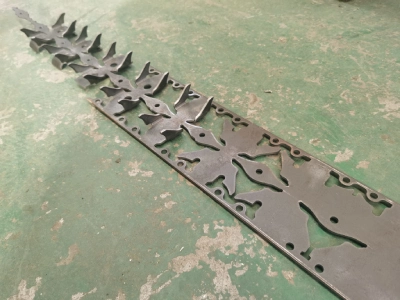
Progressive die metal stamping typically results in high scrap rates because a significant portion of the coil material is used solely as a carrier strip to feed the workpiece forward. If your parts are large or irregularly shaped, this metal waste can rapidly drive up unit costs.
Transfer die stamping eliminates this inefficiency. Since the blank is precisely cut to the required size at the first station, there is absolutely no waste from the strip.
When analyzing the total cost of ownership (TCO) for high-end alloy machining projects, procurement professionals often find that the significant reduction in material waste achieved through the transfer die stamping process fully offsets its slower operating speed.
Key Factors in Selecting the Right Stamping Solution
Determining the optimal manufacturing solution goes beyond a basic cost comparison; it also requires a rigorous evaluation of the specifications in the design drawings. Before finalizing any custom metal stamping solution, the procurement team must verify strict geometric tolerances and implement a rigorous DFM (Design for Manufacturability) process.
Geometric Tolerance (GD&T) Evaluation
When evaluating blueprints, the strictness of GD&T annotations significantly influences die selection. Since workpieces are always securely held on the carrier strip, progressive die stamping offers exceptional positional accuracy. Guide holes precisely position the strip at each station, making it easy to meet strict positional tolerances as tight as ±0.001 inches across multiple operations.
In contrast, transfer die stamping introduces minor positioning deviations. Because robotic arms must physically release and re-grip the blank between separate die cavities, achieving absolute positional accuracy on multi-axis features becomes inherently more difficult.
Purchasing teams must consult with quality engineers: if your custom metal stamping components require zero-deviation alignment for microelectronic or aerospace connectors, a continuous strip process must be used to avoid costly assembly line scrap.
Design for Manufacturability (DFM) in Sheet Metal Fabrication
Early intervention through rigorous “Design for Manufacturability” (DFM) reviews is the most effective strategy for preventing catastrophic die modifications. Before cutting the first piece of D2 tool steel, engineers must analyze clearances between holes and edges, bend radii, and material springback. For example, in any progressive die stamping process, attempting to punch a hole with a diameter smaller than the material thickness will result in punch breakage.
At Supro MFG, our early-stage DFM process can identify whether minor geometric adjustments can transform an inefficient transfer die design into a highly efficient, high-speed progressive stamping process, thereby immediately and significantly reducing your unit costs.
Partnering with a manufacturer that provides transparent, data-driven DFM analysis ensures your custom stamping project launches on time and within budget, while avoiding bottlenecks in downstream manufacturing.
Partner with Supro MFG to Optimize Production
Selecting the correct die architecture is one of the most critical decisions in a product’s lifecycle. When product geometry allows for tape-fed feeding, progressive dies dominate high-volume production by minimizing unit costs. Conversely, transfer dies provide the necessary spatial freedom for complex, deep-drawn housings while maximizing the utilization of expensive materials.
At Supro MFG, we do more than just quote based on drawings; our manufacturing engineers also conduct rigorous DFM reviews to ensure your design drawings align with optimal stamping processes. By analyzing part geometry and dimensional and tolerancing (GD&T) requirements in advance, we guarantee a customized metal stamping solution centered on precision, scalability, and a predictable return on investment.
For technical specifications or inquiries regarding OEM partnerships, please contact our engineering team.