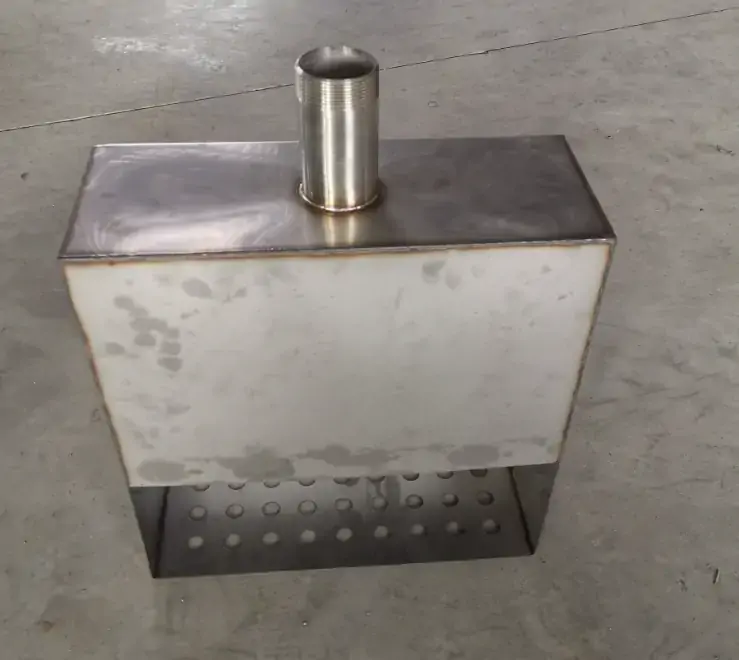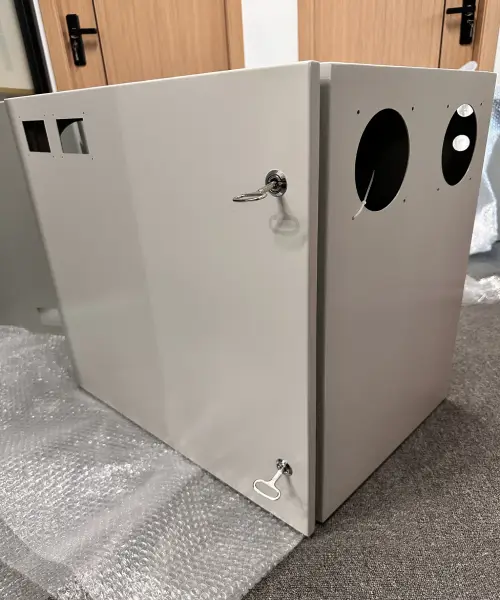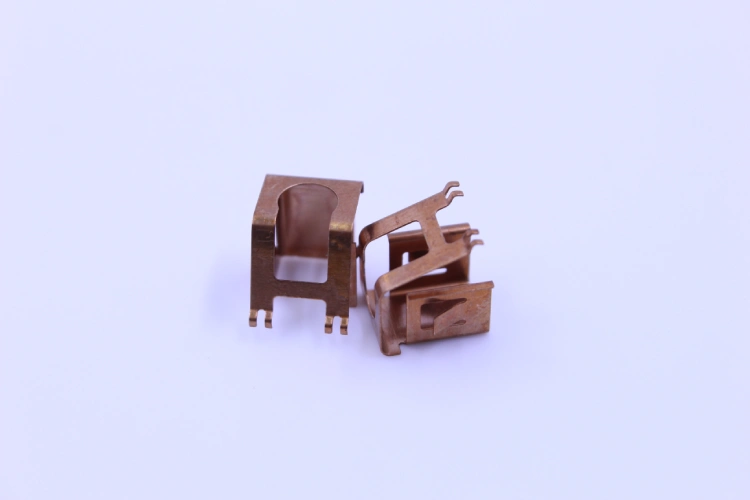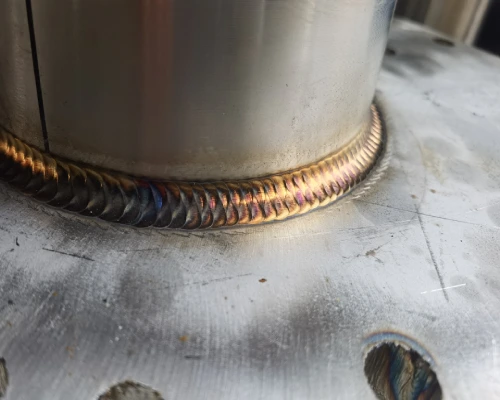
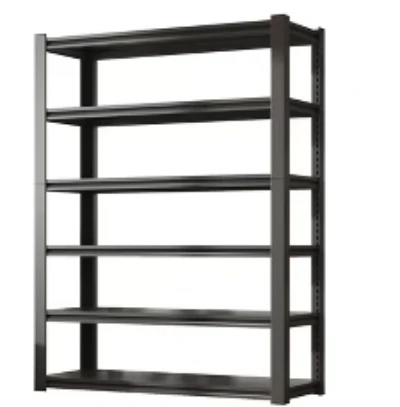


For commercial-grade storage systems such as metal hanging shelves, internal corrosion of tubular suspension rods is a long-underestimated design flaw. In humid environments such as kitchens and unheated garages, condensation accumulates on the inner walls of vertically suspended tubes, causing gradual rusting. Eventually, brown rusty water seeps out from the tube ends or weld seams, contaminating the items stored below.
The root cause of this failure mode in custom metal hanging shelves is not the quality of the coating—when electrostatic powder coating is applied to tubular components, the Faraday cage effect causes charged powder particles to deposit primarily on the outer edges and flat surfaces, preventing effective penetration into the deep recesses of the tube’s interior. The exposed steel continues to corrode under the influence of condensation, while the external coating remains intact, making the problem extremely difficult to detect during the procurement and acceptance inspection stages.
This article systematically analyzes the physical mechanisms of this hidden failure from the perspective of sheet metal manufacturing engineering and provides engineering solutions based on two technical approaches: ASTM A653 G90 pre-galvanized steel tubing and E-coat electrophoretic immersion coating.
Hidden Failure Modes of Metal Hanging Shelves: Brown Rust Water Leaking from Tubular Brackets
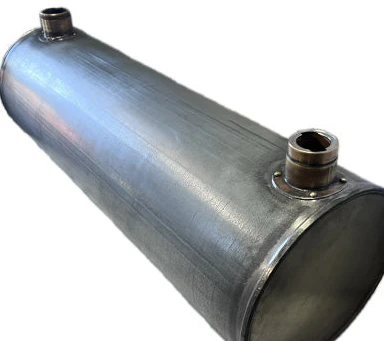
In humid environments, the inner walls of the suspension tubes in metal hanging shelf systems corrode due to the accumulation of condensation. Rust water seeps out along the welds, but the exterior coating remains intact; this hidden failure mode is often overlooked during acceptance inspections.
On-Site Observations in Commercial Kitchens and Unheated Garages
In commercial kitchen environments, the tubular suspension rods of metal hanging shelves are continuously exposed to steam generated by cooking, grease, and fluctuating temperature and humidity cycles. Unheated garages, on the other hand, face seasonal condensation buildup—when nighttime temperatures drop, the temperature of the inner surface of the tube walls falls below the dew point, causing water vapor to condense on the bare steel surface. This moisture cannot evaporate naturally within the enclosed tube cavity and continues to undergo electrochemical reactions with the steel.
A typical failure observed is that, several months after installation, brown rusty water begins to seep from the bottom welds or ends of the suspension tubes, contaminating food or tools stored below. It is worth noting that at this stage, the external powder coating on the tubes is often intact, leading end users to attribute the problem to “coating quality” while overlooking the corrosion process that has long been occurring inside the tube lumen.
Why Inspecting Only the External Coating of Metal Hanging Shelves Is Insufficient
Conventional quality acceptance typically relies on visual inspections and spot checks of the external coating on custom metal hanging shelves using a coating thickness gauge; however, this approach has fundamental blind spots when it comes to tubular components.
During the powder coating process, charged powder particles preferentially deposit on the outer edges and flat surfaces where the electric field is strongest; however, due to the Faraday cage effect, electric field lines cannot penetrate the deep interior of tubular components, making it difficult for powder to reach these areas. This means that the inner walls of the tube may be completely unprotected by the coating, leaving the bare steel directly exposed to corrosion from condensation. Even if the external coating meets the specified film thickness, it does not reflect the true state of internal protection.
For purchasers, visual inspection alone cannot identify this hidden defect—corrosion begins from the inside, and by the time rusty water seeps out, the pipe wall cross-section has already thinned significantly, resulting in reduced load-bearing capacity.
Analysis of the Causes of Internal Rusting in the Tubular Suspension Rods of Metal Hanging Shelves
The root cause of internal rusting in the tubular suspension rods of Metal Hanging Shelves systems is not a coating quality issue, but rather a physical limitation of the electrostatic powder coating process—the Faraday cage effect prevents charged powder from penetrating deep into the tube’s interior, leaving the bare steel inner walls directly exposed to a condensation-prone environment.
Principles of Electrostatic Spraying and Their Limitations
Powder coating relies on the principle of electrostatic adsorption: the electrode of the spray gun generates a high-voltage electric field, causing the powder particles to become charged, which are then attracted to the grounded metal workpiece and deposited on its surface. However, this principle has fundamental limitations when applied to tubular components.
When a workpiece has deep cavities, internal corners, or enclosed tubular cavities, electric field lines preferentially flow toward the nearest grounded surface—namely, the edges of the tube openings and the outer walls. The interior of the tube cavity becomes an “electromagnetic shielding zone” that the electric field cannot penetrate, and the charged powder is repelled beyond the entrance to the cavity.
Engineering experience shows that powder penetration depth typically does not exceed twice the width of the opening. This means that the inner walls of the suspension tubes in custom metal hanging shelves—especially sections where the depth exceeds twice the width of the opening—receive absolutely no powder deposition.
Adjusting spraying parameters (such as reducing the voltage to 30–50 kV or increasing air pressure) can only improve penetration to a limited extent and cannot fundamentally overcome this physical limitation.
Unprotected Internal Surfaces as Corrosion Initiation Points
The inner walls of the tubular cavities in custom metal hanging shelves are completely exposed due to the Faraday cage effect and are not covered by any organic coating. In humid environments such as commercial kitchens or unheated garages, this exposed steel is directly subjected to long-term erosion by condensation.
Corrosion begins on the inner walls of the tubular cavities, and electrochemical reactions continuously erode the steel cross-section. As the corrosion products (rust) expand in volume, rusty water seeps outward along the tube ends or through weld gaps; by this point, the “brown rusty water” visible externally is already a late-stage indicator of the corrosion process.
The risk of this failure mode lies in its hidden nature: while the external powder coating of the tubing remains intact and meets thickness standards, the internal wall has been continuously thinning. The load-bearing capacity of metal hanging shelves depends on the effective wall thickness of the tubing. When internal corrosion causes cross-sectional loss to reach a critical threshold, the shelves may suffer structural failure without warning.
The root cause of this issue with custom metal hanging shelves does not lie in the quality of the coating process, but rather in the irreconcilable conflict between the tubular geometry itself and the physical principles of electrostatic spraying.
Only 4 steps
online custom metal fabrication parts
Contact our experts team and experience the efficiency and economic benefits of digital metal fabrication services.
Upload Design Files
STL , STEP (.stp), IGES (.igs), (.ZIP), or PDF.
Also be a sample or an idea
Quote & Design Analysis
Instant factory quotes and DfM reports, the most reasonable solution.
Manufacturing Begins
Digital processes can initiate order tasks within 24 hours.
On-Time Delivery
Keeping delivery promises, approved by 3000+ Global Company buyers.
Engineering Solutions for Corrosion Protection of Metal Hanging Shelves
Regarding the internal corrosion of tubular suspension rods in metal hanging shelf systems, relying solely on process optimization of powder coating cannot address the root cause. There are two viable engineering approaches:
First, directly use pre-galvanized steel that complies with the ASTM A653 G90 standard during the tube manufacturing stage, ensuring that both the inner and outer walls of the tubes are protected by a zinc coating; Second, subject the formed tubular components to an electrophoretic coating (E-coat) immersion process, utilizing the penetration capability of the electrophoretic coating to achieve full coverage of the interior cavity. Both approaches circumvent the physical limitations of the Faraday cage effect at the design stage.
Solution 1 — Pre-galvanized Steel Tubes
To address internal corrosion at the source of metal hanging shelf fabrication, the most direct solution is to use pre-galvanized steel directly during the tube manufacturing stage.
A G90 galvanized coating compliant with the ASTM A653 standard indicates a total zinc coating weight of 0.9 ounces per square foot (oz/ft²), equivalent to a thickness of approximately 20 micrometers (µm) on a single side. This coating is formed through a hot-dip process at approximately 450°C, creating a metallurgically bonded zinc-iron alloy layer that provides dual protection—a physical barrier and cathodic sacrificial protection—for both the inner and outer walls of the pipe. Even if the coating is scratched, the zinc layer will corrode first, protecting the underlying steel.
In the ASTM B117 salt spray test, the G90 coating typically withstands over 1,500 hours before red rust appears, making it an excellent solution for custom metal hanging shelves used in high-humidity and coastal corrosive environments such as commercial kitchens and unheated garages.
By using pre-galvanized tubing, the interior of the tube is fully protected by a zinc layer prior to forming, thereby avoiding the Faraday cage limitations associated with powder coating.
Solution 2 — Electrophoretic Coating (E-Coat)
For tubular assemblies that have already been formed or welded, electrophoretic coating (E-coat) offers another technical approach. In this process, the component is fully immersed in a water-based coating bath, and a direct current voltage of 200 to 400 volts is applied, causing the charged coating particles to migrate electrochemically and deposit onto the workpiece’s surface.
Its core advantage lies in its self-limiting deposition mechanism: once the coating reaches a certain thickness, the electrical resistance increases, and the electric field automatically shifts toward uncovered areas, ensuring uniform coverage of surfaces inaccessible to conventional spraying, such as cavities, weld seams, and internal corners.
E-coat is essentially an organic barrier coating that provides corrosion protection by isolating moisture and oxygen; its salt spray test performance can exceed 1,000 hours, and it offers uniform coating thickness and excellent edge coverage.
For tubular hanging rods in metal hanging shelves that have already undergone processes such as tube bending and welding, E-coat immersion is an effective process for ensuring full coverage of internal cavities.
Comparative Analysis: Pre-galvanizing vs. Electrocoating
Both approaches have their respective applications in the fabrication of metal hanging shelves; the choice should be based on product specifications and the production stage.
The advantage of pre-galvanizing (G90) lies in addressing the issue at the source—the inner and outer walls of the tubing are protected by a zinc layer before forming, eliminating the need for additional processes. This makes it suitable for the continuous production of high-volume, standard metal hanging shelves. Its corrosion protection mechanism relies on sacrificial anode protection, which continues to provide protection even if the coating is damaged.
The advantage of E-coat lies in post-forming coverage—it is suitable for components that have already undergone tube bending and welding, and it can penetrate the internal cavities and weld seams of complex geometries. However, it should be noted that E-coat is an organic barrier coating; if damaged in certain areas, the bare steel is exposed, and it requires a complete pretreatment process (degreasing, phosphating, etc.).
In terms of cost, the incremental material cost for pre-galvanized steel is relatively manageable; E-coat, on the other hand, involves capital investment in immersion tank equipment and multi-stage pretreatment processes.
It is recommended to prioritize G90 pre-galvanized steel for high-volume, standard-spec metal hanging shelf tubular rods; for custom components that have already been formed or welded, use E-coat immersion as a primer layer prior to powder coating.
Quality Verification and Testing Procedures for Metal Hanging Shelves
To translate specification requirements into verifiable quality standards, a systematic testing and acceptance process must be established. The primary verification method is the ASTM B117 salt spray test—in which a fully assembled metal hanging shelf system is placed in a salt spray chamber and exposed to a continuous salt spray environment consisting of a 5% sodium chloride solution.
A G90 galvanized coating typically withstands over 1,500 hours in the ASTM B117 test before red rust appears; E-coat coatings can withstand over 1,000 hours of salt spray.
As a professional manufacturer of metal hanging shelves, Supro can provide salt spray test reports issued by third-party organizations (such as SGS or BV) as the basis for batch release. Secondly, we also conduct destructive cross-sectional inspections—randomly sampling tubing from each batch for transverse cutting, then measuring the thickness of the galvanized layer or E-coat film on the inner wall of the tube under a microscope to verify the integrity and uniformity of the internal coating. Additionally, E-coat coatings must undergo the ASTM D3359 cross-cut adhesion test, with a requirement to meet Grade 3B or higher.
Conclusion
The root cause of internal corrosion in the tubular suspension rods of Metal Hanging Shelves lies in the Faraday cage effect of electrostatic powder coating, which prevents the inner walls of the tube from receiving coating protection. Resolving this issue requires making a choice during the design phase: either using pre-galvanized steel tubes compliant with ASTM A653 G90 or applying an E-coat electrophoretic immersion coating to the formed components. Incorporating protection for the inner walls of the tubular sections from the design stage is the only way to ensure product reliability throughout its entire lifecycle.
Founded in 2004, Supro is a manufacturer of metal hanging shelves. With extensive manufacturing experience, a strong technical team, and comprehensive manufacturing resources, we have provided one-stop metal hanging shelf manufacturing solutions to more than 3,000 companies worldwide.
At Supro, we have a professional quality control team, experienced QC staff, and scientific quality control processes to ensure that products undergo rigorous inspection, meet specified technical standards, and allow for the traceability of defective products at any time. These processes include: raw material inspection, mold inspection, equipment inspection, process sampling, packaging inspection, and final inspection. We conduct QA (Quality Assurance) to ensure products meet the necessary tolerances and quality standards.
We guarantee on-time delivery of a wide range of products. From product design and rapid prototype fabrication to mass production, we provide professional technical support and exceptional quality. For inquiries regarding technical specifications, customized project solutions, or business collaboration opportunities, please contact Supro immediately. Our professional engineering team is always ready to provide you with tailored application solutions.