In the field of galvanized steel stamping, dezincification stands as one of the critical challenges affecting part quality and durability. As a professional custom sheet metal manufacturer, Supro understands that localized peeling of the zinc coating during forming not only directly compromises the corrosion resistance of galvanized steel stamping parts but can also lead to premature failure of critical components like automotive body panels. De-zincing typically originates from excessive friction during stamping, localized stress concentration, or unsuitable die design, which disrupts the bond between the zinc layer and the substrate.
Understanding the causes and solutions for de-zincing is crucial. Optimizing the galvanized steel stamping process involves not only selecting appropriate material thickness specifications and alloy compositions but also depends on precise control of stamping parameters and compliance with corrosion resistance testing standards like ASTM B117. As an experienced galvanized steel stamping manufacturer, we emphasize maintaining zinc coating integrity through precision stamping techniques and systematic mechanical property testing during custom galvanized steel stamping. This ensures long-term reliability of components in demanding environments.
The following sections will explore how technical optimization can effectively suppress dezincification, enhancing the overall performance and lifespan of galvanized steel stampings.
Understanding Dezincification in Galvanized Steel Stamping
In the galvanized steel stamping process, dezincification refers to the phenomenon where the zinc coating partially peels off or transfers from the steel substrate during forming. Dezincification is not caused by a single factor but results from an imbalance within the custom galvanized steel stamping system.
Its primary causes can be summarized as follows: First, excessive localized plastic deformation leads to insufficient ductility of the zinc layer to follow substrate deformation, resulting in mechanical stripping. Second, friction-induced heat and high pressure at the interface between the die and sheet cause the zinc layer to soften and adhere to the die surface (adhesive wear). This issue is particularly pronounced in complex deep drawing or stretching operations.
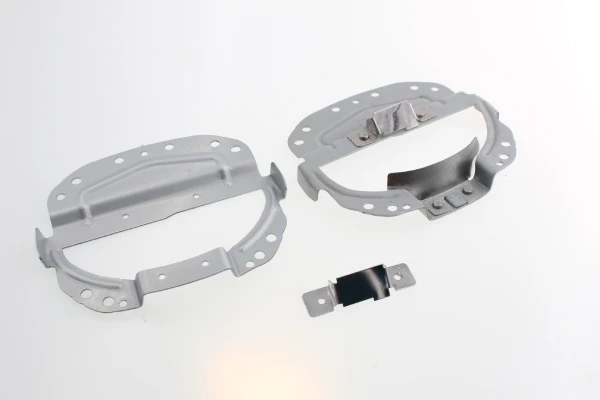
Causes of Dezincification in Cold-Rolled Coils
Understanding dezincification begins at the raw material stage. The dezincification tendency of cold-rolled galvanized steel coils directly impacts the yield rate and component lifespan of subsequent precision galvanized steel stamping processes. Its primary causes form a chain of coupled factors:
The metallurgical quality of the coating itself is fundamental. Improper continuous annealing processes (CGL) can create microcracks, serving as pathways for corrosion intrusion.
Moisture exposure during storage or transportation accelerates zinc leaching.
Surface defects (such as pinholes or coating irregularities) allow oxygen and moisture to penetrate beneath the zinc layer.
When stored or transported in humid conditions, condensation contacting the coating surface—especially if the coil surface is contaminated with chloride or sulfate ions (from marine shipping environments or industrial atmospheres)—can induce electrochemical corrosion, preferentially dissolving the zinc layer. This “pre-corrosion” occurs before entering the precision galvanized steel stamping line, significantly lowering the material’s baseline corrosion resistance.
Impact of Dezincification on Automotive Body Stamping Parts
Dezincification causes systemic damage to automotive body stamping parts, directly affecting safety, cost, and brand reputation. During precision galvanized steel stamping, localized zinc layer detachment exposes the steel substrate, transforming it into an anode for electrochemical corrosion and rapidly inducing red rust. This not only completely undermines the coating’s cathodic protection function but also severely compromises subsequent painting: the exposed rough surface and oxide layer significantly reduce paint film adhesion, leading to premature blistering and peeling in tests like the GMW14872 cyclic corrosion test.
Simultaneously, hard particles generated by zinc stripping accelerate mold wear in precision galvanized steel stamping, increasing production and maintenance costs. Therefore, selecting a galvanized steel stamping manufacturer with mature process control capabilities is critical to ensuring stamped parts meet long-term durability requirements.
Analysis of Corrosion Resistance Testing Standards for Hot-Dip Galvanized Steel
Test Method | Duration | Key Metric Measured | Typical Result Range |
Salt Spray Test | Up to 1000 hrs | Rust breakthrough time | >500 hrs |
Electrochemical Tests | Variable | Zinc dissolution rate | <10 µm/year |
Coating Integrity | Visual + Mechanical | Peeling or cracking | Minimal |
Accelerated Humidity | Up to 240 hrs | Blistering or flaking | None allowed |
These tests simulate years of wear within days, proving crucial for predicting the hot-dip coating’s tolerance under stress—whether physical pressure or chemical corrosion. Reliable testing ensures your galvanized steel stampings won’t flake off when it matters most.
How to Prevent Dezincification in Galvanized Steel Stamping
To avoid dezincification issues in custom galvanized steel stampings, systematic preventive engineering is essential. As a professional galvanized steel stamping manufacturer, Supro understands that the key lies in controlling interface friction and localized strain.
Core countermeasures include: selecting coating types (e.g., G90 or ZF100) and alloying treatments matched to application demands; precisely controlling galvanized steel stamping process parameters (such as strain path and speed) to prevent localized deformation exceeding coating ductility limits; optimizing die clearance, surface treatments (e.g., PVD coatings), and lubrication schemes to manage interface friction and heat generation.
Material Thickness Specifications to Reduce Dezincification Risk
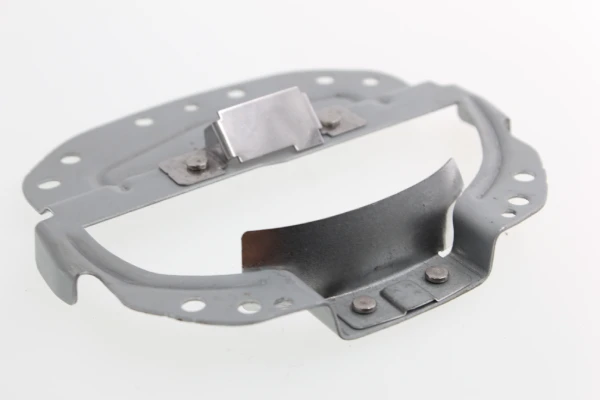
Selecting appropriate material thickness is crucial not only for strength but also to prevent corrosion issues like dezincification, particularly during precision galvanized steel stamping:
Material thicknesses below 0.5 mm are prone to severe coating damage during intense forming processes.
The 0.7 mm to 1.2 mm range is ideal, balancing formability with coating integrity.
Materials exceeding 1.5 mm thickness offer better resistance to mechanical stress but require precise die clearance control to prevent coating cracking.
Strictly controlling galvanized coating weight (typically Z180 to Z275 specifications) is critical for corrosion prevention.
When optimizing the galvanized steel stamping process, ensure the mold geometry matches the selected thickness range with the stamping force.
For galvanized steel stampings used in high-humidity or salt-spray environments, prioritize thicker coatings over thicker base materials whenever possible.
Scientific material selection = reduced rework, lower failure rates, and extended service life for galvanized steel stampings.
Effective Techniques for Stamping High-Strength Low-Alloy Steel
Successfully stamping high-strength low-alloy galvanized steel (HSLA) while maintaining coating integrity serves as a key benchmark for evaluating a galvanized steel stamping manufacturer’s technical capabilities. These materials feature high strength and significant springback, imposing stricter demands on precision galvanized steel stamping processes. The core strategy lies in balancing material formability with coating protection through systematic process control.
First, optimize die design and surface treatment. Compared to ordinary steels, HSLA requires larger bending radii to alleviate tensile stress on the outer coating. Die working surfaces must achieve extremely high surface roughness (typically Ra < 0.1µm) and employ coatings like diamond-like carbon (DLC) or cemented carbide to minimize adhesive wear against the zinc layer. Drawbead design and polishing require precise calculations to ensure uniform flow of galvanized steel stamping blanks, preventing localized over-thinning that could cause mechanical zinc layer stripping.
Second, lubricant selection is critical. For HSLA components in custom galvanized steel stamping applications, high-viscosity dry film lubricants containing extreme pressure additives or high-performance synthetic lubricants are recommended. These lubricants form stable boundary lubrication films under high pressure, effectively reducing the coefficient of friction. Compared to conventional mineral oils, they can decrease friction by over 30%, significantly lowering the risk of dezincification.
Finally, precise tuning of galvanized steel stamping process parameters is essential. A lower initial stamping speed should be adopted to minimize impact, coupled with multi-stage blank holder force (BHF) control to optimize blank flow. Holding time and cushion pressure settings must adequately control springback while preventing secondary damage to the formed zinc coating.
Through this integrated technical approach, Supro ensures galvanized steel stampings deliver exceptional performance while preserving their corrosion-resistant zinc coating integrity post-stamping.
Are you looking for reliable & cost-effective
China metal fabrication manufacturer
More than 150,000 OEM metal fabrication products delivered to 5,000+ global buyers.
And benefit from it!
Key Parameters for Optimizing the Galvanized Steel Stamping Process
In precision galvanized steel stamping, systematic optimization of process parameters is central to suppressing dezincification and ensuring part consistency. Beyond material and tooling, precise control of press operating parameters directly determines the stress state experienced by the coating.

Press Operation Parameter Optimization
Supro practice demonstrates that controlling the following three parameters is critical for coating protection:
In precision galvanized steel stamping, especially during deep drawing operations, precise regulation of stamping speed and acceleration curves is vital. Excessively high instantaneous speeds generate severe shear effects and frictional heat, causing the zinc layer to soften and adhere to the dies. Modern servo presses enable programming of non-uniform motion curves, significantly reducing mechanical impact on the coating.
Uniform or improper blank holding force (BHF) is a common cause of coating scratches or excessive thinning in galvanized steel stampings. Supro’s advanced stamping systems utilize multi-point hydraulic or nitrogen springs to achieve dynamic, gradient BHF. During stamping, BHF across different zones adjusts in real-time based on material flow requirements. This ensures smooth blank entry into the die cavity while preventing localized coating failure from excessive friction or stretching.
For custom galvanized steel stampings, die clearance must be specifically optimized for the coating thickness and substrate thickness of the particular material. Excessively narrow gaps cause shearing and squeezing of the coating; overly wide gaps lead to uncontrolled sheet flow and wrinkling—both damaging the zinc layer. A rule of thumb sets the gap within (substrate thickness + 1.5 to 2 times coating thickness), validated through actual sample testing.
Dimensional Tolerance Requirements for Galvanized Steel Stamping Parts
Precision is paramount in precision galvanized steel stamping, particularly for demanding applications like automotive manufacturing or aerospace components. Accurate dimensional tolerances prevent assembly errors and eliminate costly rework.
Tolerance Type | Typical Range | Application Example | Inspection Method |
Linear Dimensions | ±0.05 mm – ±0.5 mm | Brackets, housings | CMM / Calipers |
Angular Tolerances | ±0.5° – ±2° | Hinges, mounts | Optical Comparator |
Flatness | ≤0.1 mm | Covers, panels | Surface Plate & Gauge |
Hole Position | ±0.075 mm | Fastener holes | Coordinate Measuring |
Selecting the Right Equipment: High-Speed Press vs. Hydraulic Metal Press
Choosing between a high-speed press and a hydraulic press depends on your requirements:
For mass-producing thousands of thin-walled parts per hour from coil stock, a high-speed press is the optimal choice—it’s engineered to maximize production efficiency and minimize cycle times.
However, for forming thick materials or deep drawing requiring precise force control, hydraulic presses outperform their counterparts.
Mold compatibility for precision galvanized steel stamping must also be considered—some dies are incompatible across platforms. Cost analysis remains critical: if precision is paramount, avoid overspending solely for speed. This choice determines the success of the entire galvanized steel stamping process, as pressure stability significantly impacts surface integrity.
Summary
Supro is a professional galvanized steel stamping manufacturer. Leveraging advanced equipment, extensive manufacturing experience, and a specialized engineering team, we provide perfect galvanized steel stamping services to over 3,000 companies worldwide, offering genuine manufacturer quotes.
As an industry-leading galvanized steel stamping manufacturer, we efficiently deliver diverse products on schedule. From product design and rapid sheet metal prototype fabrication to mass production, we provide expert technical support and exceptional quality. We offer one-stop manufacturing solutions and highly cost-competitive product supply!