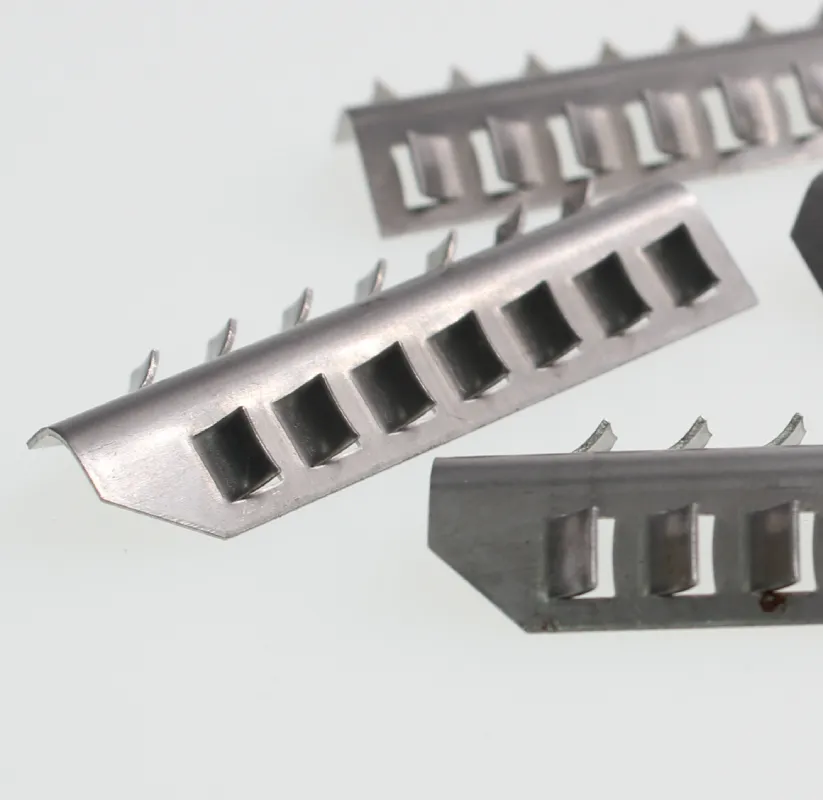
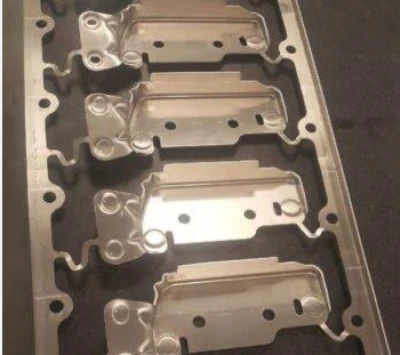

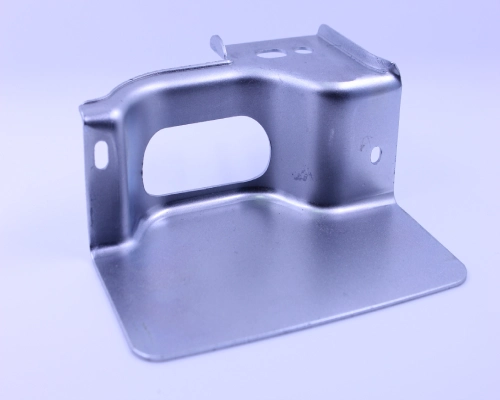
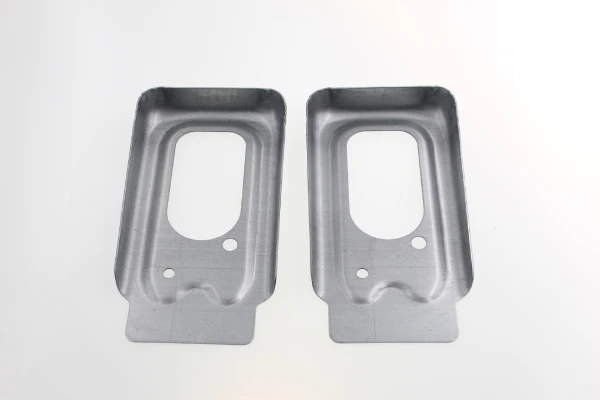
In the industrial metal manufacturing sector, procurement teams are constantly faced with a critical financial challenge: how to balance substantial upfront capital expenditures (CapEx) with the goal of achieving the lowest possible unit cost. When annual production volume for a parts program exceeds the 20,000-unit threshold, the economics of production shift, making progressive die stamping a decisive strategy for achieving long-term profitability.
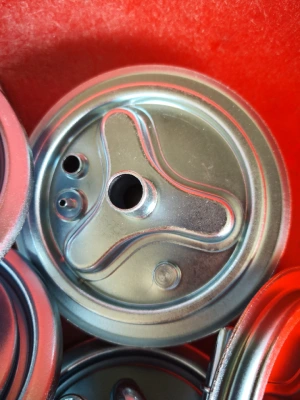
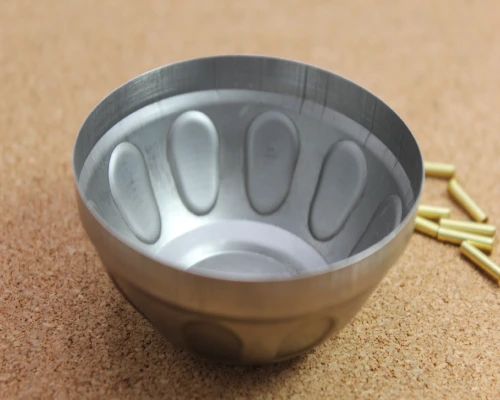
Although the initial investment in custom hard dies may seem high—typically accounting for 60% to 80% of the startup budget for high-volume projects, according to industry benchmarks for precision metal forming—a carefully designed progressive die metal stamping workflow allows these costs to be amortized exponentially. By integrating piercing, coining, and flanging into a single synchronized stamping stroke, this process drastically reduces cycle time from several minutes to just a few milliseconds, virtually eliminating labor-intensive secondary processing steps.
However, achieving a rapid return on investment (ROI) requires precise break-even calculations and rigorous design for manufacturability (DFM). In this article, we will delve into the true cost structure of the progressive die stamping process, providing procurement managers with an accurate financial framework that enables them to confidently justify their next investment in a progressive stamping die.
Cost Structure of Progressive Stamping Dies
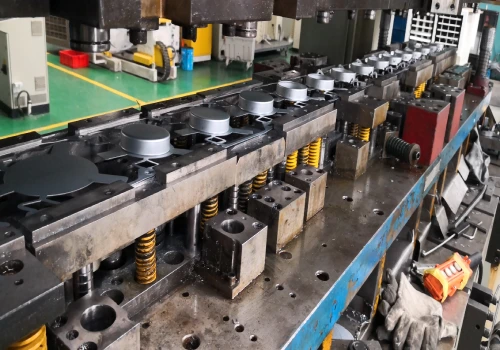
Die quotations are by no means arbitrary; rather, they reflect strict engineering requirements. In custom progressive die stamping, upfront costs are directly determined by the tight clearance between the punch and die, high-quality materials, and the extensive wire-cutting machining hours required to ensure dimensional stability over millions of cycles.
Die Steel Selection and Metallurgy
The foundation of a die investment lies in its metal composition. Purchasing managers must recognize that while specifying high-quality tool steel directly increases upfront capital expenditure, it significantly extends the die’s service life. For standard production runs, D2 or SKD11 tool steel provides excellent wear resistance. However, when performing high-volume progressive metal stamping of abrasive materials such as 304 stainless steel, engineers typically need to use carbide inserts. Although cemented carbide doubles the raw material cost of the die, it ensures a service life exceeding two million stamping cycles.
Compromising on metallurgical materials inevitably leads to premature dulling of the cutting edges and severe workpiece galling. By matching the die steel grade to the yield strength of the workpiece, custom progressive die stamping projects can avoid costly and unplanned maintenance and achieve optimal financial returns.
Station Complexity and Strip Layout
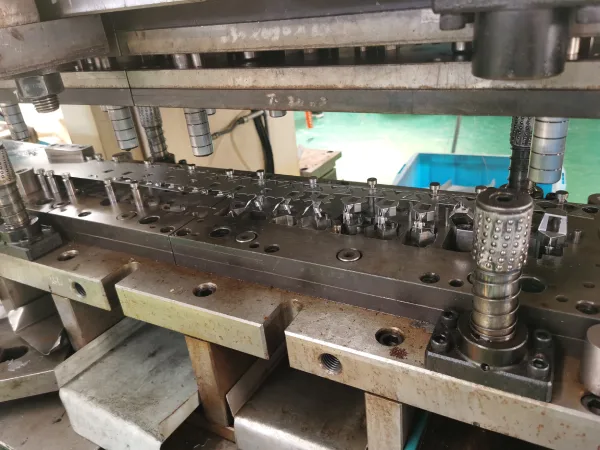
The cost of a progressive stamping die depends largely on the die’s physical length, which is entirely determined by the complexity of the stations. Each additional piercing, coining, or flanging operation requires a dedicated station within the die. In the progressive die stamping process, a complex part may require a 15-station die blank, which significantly increases the amount of die steel required and the machining workload.
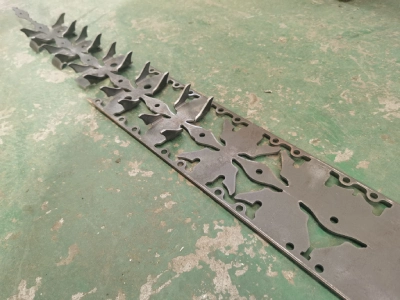
Furthermore, optimizing strip layout is an engineering task that requires a delicate balance. Improperly designed carrier ribs increase scrap material, wasting valuable raw materials. Conversely, a highly optimized staggered layout—while maximizing material utilization—requires a complex multi-row die structure.
Investing in a robust strip layout early on ensures that the progressive die metal stamping process minimizes material waste, thereby accelerating the overall return on investment (ROI) for the project.
Wire EDM and CNC Machining Hours
Although raw tool steel accounts for only a small portion of the budget, the true cost drivers in custom progressive die stamping are the intensive machining operations. Achieving the micron-level punch-to-die clearances required for zero-defect production demands hundreds of hours of precision wire electrical discharge machining (Wire EDM) and CNC milling.
When procurement teams demand extremely tight geometric tolerances, manufacturing engineers must use slower, higher-precision wire feed rates to prevent microcracks in the tool steel. This causes machine-hour costs to increase exponentially. Consequently, over-engineering non-critical part features directly inflates your die quote.
By partnering with Supro MFG to conduct a Design for Manufacturing (DFM) review to relax non-essential tolerances, buyers can significantly reduce wire EDM hours without sacrificing functional performance, thereby substantially lowering the capital expenditure (CapEx) required for progressive stamping dies.
Calculating the Break-Even Point: A Comparison of Hard and Soft Dies
Determining the manufacturing break-even point is a rigorous mathematical calculation involving capital allocation. Although flexible dies can avoid upfront capital expenditures, progressive stamping dies—with cycle times of less than one second—can quickly offset these initial die costs during high-volume production; therefore, from a financial perspective, this transition is imperative.
The Cost Equation for Sheet Metal Fabrication (Laser/Bending)
Flexible tooling methods using fiber lasers and CNC press brakes require virtually no upfront capital expenditure while offering ultimate engineering flexibility. This makes them ideal for prototyping or small-batch production. However, as production scale increases, cost-effectiveness rapidly deteriorates. Without the automation and multi-station integration found in progressive metal stamping, each part must be set up individually and sequentially.
While laser cutting a steel blank may take as little as fifteen seconds, each bend performed by a press brake operator incurs significant labor costs. Consequently, the unit cost remains high regardless of production volume.
For procurement teams setting annual budgets, relying on flexible tooling for high-volume projects is a financial pitfall. It completely lacks the economies of scale found in custom progressive die stamping production lines—which can drastically reduce unit costs through continuous, cyclical production.
Production Volume Threshold: When to Switch to Progressive Die Stamping
Determining the exact break-even point at which a hard die becomes more economically advantageous requires a rigorous break-even analysis. According to manufacturing rules of thumb aligned with Precision Metalforming Association (PMA) industry benchmarks, for parts of moderate complexity, this die threshold typically falls between an annual production volume of 15,000 and 25,000 pieces. Below this volume, the amortization costs of a custom hard die drive up the unit price. However, once production exceeds this threshold, the progressive die stamping process becomes the economically inevitable choice.
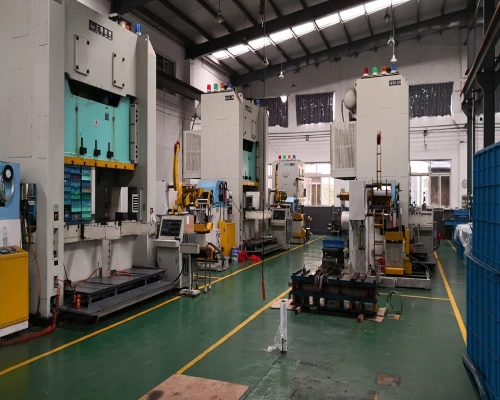
Because progressive die metal stamping integrates all blanking and flanging operations into a stamping stroke lasting less than one second—thereby completely eliminating costly labor expenses—the unit cost drops significantly. Purchasing managers must continuously model and forecast product lifecycles. Switching to progressive die stamping technology at the correct production volume threshold ensures a rapid return on upfront capital expenditures (CapEx), thereby achieving long-term profitability that soft dies cannot match.
The exact break-even point varies depending on part geometry and raw material thickness, but it is typically reached when the labor cost savings from progressive die stamping exceed the initial investment in the hard die.
Manufacturing Process | Upfront Tooling CapEx | Piece-Part Cost | Optimal Annual Volume | Best Suited For |
$0 (No hard tooling) | High (Labor-intensive setups) | < 15,000 units | Prototyping, Low-Volume Agility | |
$15,000 – $40,000+ | Extremely Low (Automated SPM) | > 20,000 units | High-Volume, Zero-Defect Scaling |
Only 4 steps
online custom metal fabrication parts
Contact our experts team and experience the efficiency and economic benefits of digital metal fabrication services.
Upload Design Files
STL , STEP (.stp), IGES (.igs), (.ZIP), or PDF.
Also be a sample or an idea
Quote & Design Analysis
Instant factory quotes and DfM reports, the most reasonable solution.
Manufacturing Begins
Digital processes can initiate order tasks within 24 hours.
On-Time Delivery
Keeping delivery promises, approved by 3000+ Global Company buyers.
Hidden Cost Drivers in Progressive Die Stamping
In addition to the initial quote, hidden cost losses in custom progressive die stamping also stem from suboptimal material utilization and unplanned die maintenance. Maximizing strip utilization and strictly adhering to a predictive regrinding schedule are critical to preventing an increase in scrap and avoiding costly press downtime.
Material Utilization and Scrap Rate
In high-volume progressive metal stamping, raw material consumption often accounts for 70% of the final unit cost. Purchasing managers frequently overlook the hidden financial losses caused by inefficient strip layout. The engineering design of carrier strips and scrap frames directly impacts material utilization. Improper coil nesting can result in scrap rates exceeding 40%.
At Supro MFG, our die engineers use advanced simulation software to optimize pitch and blanking layouts before cutting the steel. By incorporating staggered or double-row strip layouts into the progressive die stamping workflow, we have significantly improved material utilization. In stamping production runs of millions of parts, increasing material utilization by just 5% can eliminate substantial hidden costs and directly boost profits, rather than allowing that material to end up in the recycling bin.
Progressive Stamping Die Maintenance and Regrinding (Preventive Maintenance)
Another key hidden cost in progressive die metal stamping is the financial loss caused by unplanned die maintenance. Continuous high-speed operation inevitably leads to punch wear and edge dullness, particularly when stamping high-strength alloys. If a manufacturer operates a die until it fails, the buyer will face severe supply chain bottlenecks, rush shipping charges, and unacceptable burr heights.
To eliminate this risk, leading custom progressive die stamping partners enforce strict predictive maintenance (PM) protocols. Based on real-time stroke counters and material shear strength, we proactively schedule die regrinding cycles before dimensional drift occurs. Since Supro MFG operates a fully in-house die manufacturing shop, this preventive maintenance can be performed with zero logistics delays.
Proactive maintenance of progressive stamping dies ensures that hidden downtime costs never drive up your annual procurement budget or compromise part quality.

Maximizing Return on Investment: DFM Strategies for Progressive Die Stamping
To maximize return on investment (ROI), rigorous design for manufacturability (DFM) must be conducted prior to steel stamping. By relaxing non-critical tolerances and integrating secondary processing steps, an optimized progressive die stamping process can significantly reduce die complexity, thereby effectively lowering upfront capital expenditures (CapEx) and accelerating the time to financial break-even.
Optimizing Tolerances and Fillet Radii for Progressive Die Stamping Parts
Over-engineering is the “silent killer” of die budgets. Many drawings for progressive die stamping parts specify strict tolerances for non-critical features, forcing manufacturers to design complex trimming operations.
In custom progressive die stamping, when a tolerance of ±0.005” is sufficient, requiring a tolerance of ±0.001” will lead to an exponential increase in initial capital expenditures due to the significant time required for precision wire-cut EDM. Similarly, excessively small internal radii often cause high-strength alloy materials to fracture. To prevent this, manufacturers must incorporate costly coining stations into the progressive die stamping process to control springback.
Through collaborative DFM reviews with Supro MFG, engineers can strategically relax unnecessary geometric constraints. This pragmatic approach simplifies the internal structure of the die, significantly reducing your upfront investment in progressive die stamping and accelerating your return on investment—all while ensuring that the part’s end-use functionality remains unaffected.
In-Die Operations (Tapping and Fastener Insertion)
The ultimate economic advantage of high-volume production lies in the elimination of secondary manual operations. Traditionally, adding threaded holes or PEM studs required transferring parts to separate CNC machining units or manual insertion machines, which severely disrupted the production flow. Modern progressive die stamping technology eliminates this bottleneck through advanced in-die machining processes.
By integrating automated tapping heads and fastener insertion units directly into the die set, we can complete these complex operations within a stamping stroke of less than one second. Although designing these precision modules increases the initial capital expenditure for the die, it completely eliminates the labor costs associated with secondary processing. For procurement teams conducting return on investment (ROI) analyses, adopting in-die technology in custom progressive die stamping projects ensures the absolute lowest cost per unit.
This strategy transforms standard progressive metal stamping production into a fully automated “production-to-stock” manufacturing solution, thereby maximizing long-term profitability.
Conclusion
In high-volume metal manufacturing, investing in custom hard dies is the most critical financial decision. However, as our break-even analysis demonstrates, once production volume exceeds a critical threshold, progressive die stamping transforms from a heavy capital expenditure burden into a powerful engine driving profitability.
At Supro MFG, we understand that ensuring a return on your die investment requires not only highly competitive pricing but also rigorous and forward-thinking engineering design. By optimizing strip layout, selecting high-quality die steel, and integrating complex secondary operations into the primary progressive metal stamping cycle, we mathematically guarantee the lowest cost per unit.
Don’t let inefficient soft dies or poorly designed stamping dies erode your annual profit margins any longer. Submit your CAD files to our in-house engineering team today for a comprehensive DFM (Design for Manufacturability) review, and let us create a customized progressive die stamping solution for you that delivers consistent, zero-defect production and a rapid return on investment.