
In precision sheet metal fabrication, welding galvanized steel requires striking a critical balance between the integrity of structural joints and long-term surface corrosion resistance. While hot-dip galvanized and electrogalvanized coatings provide vital sacrificial cathodic protection for industrial enclosures, structural frames, and HVAC components, thermal joining processes present significant metallurgical challenges.
At arc welding temperatures, zinc’s low vaporization point (≈ 906°C) leads to the generation of significant amounts of zinc oxide fumes, severe porosity in the weld pool, and localized element depletion in the heat-affected zone (HAZ). For North American engineering and procurement professionals evaluating total cost of ownership (TCO) and required to strictly comply with ISO/AWS D1.1 standards, the use of improper welding protocols for galvanized steel poses risks of premature in-service failure, weld brittleness, and costly rework.
This technical guide explores the metallurgical failure modes associated with welding galvanized steel, defines key design-for-manufacturing (DFM) process parameters—including shielding gas composition for gas-metal arc welding (GMAW) and pre-weld mechanical stripping—and evaluates cost-effective cold-joint alternatives to optimize production efficiency and product lifecycle performance.
The Metallurgical and Health Risks of Welding Galvanized Steel
If welding operations on galvanized steel are performed without strict engineering controls, they can lead to severe deterioration of metallurgical properties and pose serious occupational hazards. During critical processing steps, the vaporization of zinc produces acutely toxic fumes and causes severe porosity and microcracks in the weld metal.
Metal Fume Fever and Occupational Safety Hazards
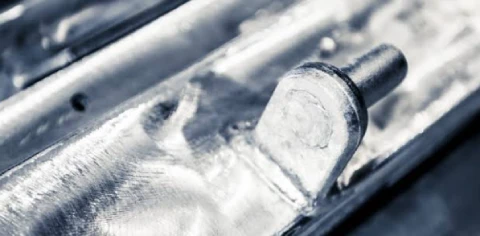
When welding galvanized steel, the thermal energy generated by the arc far exceeds 1,500°C, which is well above the boiling point of the protective zinc coating (≈ 906°C). This rapid thermal reaction instantly vaporizes the surface zinc layer, causing it to oxidize upon contact with the atmosphere and form high-concentration zinc oxide (ZnO) particulate fumes. Inhalation of these submicron-sized particles poses serious occupational health risks, particularly “Metal Fume Fever”—an acute toxic respiratory disease characterized by severe flu-like symptoms, pulmonary distress, and physical fatigue.
For North American procurement managers assessing supplier compliance, zinc exposure without mitigation measures not only jeopardizes workplace safety but also violates the U.S. Occupational Safety and Health Administration’s (OSHA) strict Permissible Exposure Limit (PEL ≤ 5 mg/m³). To meet occupational safety audit requirements when welding galvanized steel, original equipment manufacturers (OEMs) must mandate the use of local exhaust ventilation (LEV) systems, high-efficiency particulate air (HEPA) filtration, or positive-pressure air-supplied respirators in all production units.
Porosity, Microcracks, and Reduced Weld Integrity
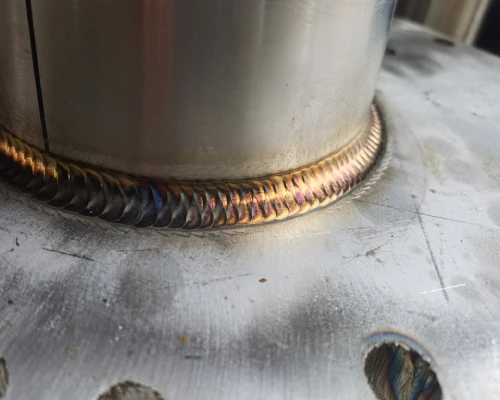
The core challenge in welding galvanized steel stems from the violent gas expansion of zinc vapor trapped within the molten pool. As the arc travels along the joint, liquid zinc volatilizes ahead of the arc; if these bubbles fail to escape before the molten pool solidifies, they become trapped, forming spherical porosity or worm-like porosity.
Furthermore, the penetration of liquid zinc along austenite grain boundaries leads to liquid metal embrittlement (LME), which triggers microcracks and results in a sharp decline in the joint’s fatigue life. When welding galvanized steel components subjected to mechanical stress, these microdefects act as severe stress concentration points, significantly reducing ultimate tensile strength and shear capacity.
Ultrasonic testing (UT) and radiographic testing can often detect subsurface volumetric defects in non-stripped joints; therefore, mechanical surface preparation and optimization of process parameters are essential prerequisites for ensuring full compliance with the AWS D1.1 structural welding standard.
Compromised Corrosion Resistance in the Heat-Affected Zone (HAZ)
Although hot-dip galvanizing and electrogalvanizing provide excellent barrier protection and sacrificial cathodic protection for sheet metal components, localized welding of galvanized steel can compromise these engineered coatings.
The extreme thermal gradients generated in the heat-affected zone (HAZ) cause the zinc layer within a range of 10 to 25 mm from the weld centerline to completely vaporize. Consequently, the underlying carbon steel substrate is directly exposed to atmospheric oxygen and moisture, triggering rapid localized oxidation and leading to premature red rust formation. This creates a serious quality paradox: while the main components retain their zinc coating, the structural joints—which bear the greatest mechanical loads—become the weakest links, most susceptible to corrosion.
For Western procurement directors evaluating long-term total cost of ownership (TCO), failure to address thermal damage in the heat-affected zone (HAZ) will accelerate corrosion failure, necessitating rigorous post-weld surface restoration via high-solids cold galvanizing compounds or thermal spray metallization compliant with ASTM A780 practices.
Advanced Process Controls and Best Practices for Welding Galvanized Steel
When welding galvanized steel, precise control of the metallurgical process is required to achieve structurally sound welds. By implementing optimized weld preparation, flux-cored arc welding techniques, and post-weld surface restoration treatments compliant with AWS standards, it is possible to eliminate porosity while maintaining critical corrosion resistance to meet the demands of stringent OEM applications.
Pre-Weld Surface Preparation and Zinc Removal
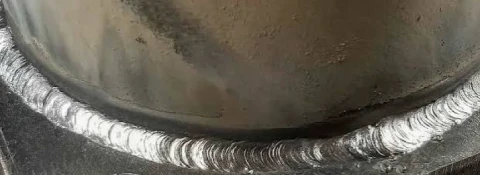
To implement high-integrity welding procedures for galvanized steel, meticulous pre-weld mechanical surface preparation is essential. To prevent zinc vapor entrapment and severe turbulence in the weld pool, the zinc coating at the joint interface must be stripped back 1 to 2 inches (25–50 mm). Mechanical grinding using coarse-grit abrasive wheels, flap discs, or specialized chemical pickling agents reliably removes the zinc coating until the bare carbon steel surface is exposed.
When welding thin-gauge galvanized steel components, the grinding depth must be strictly controlled to prevent wall thinning or the creation of localized stress concentrations. For engineering procurement professionals in North America, verifying that contract manufacturers follow standardized pre-welding desilvering procedures ensures the thorough elimination of subsurface porosity, prevents liquid metal embrittlement (LME), and guarantees full compliance with the AWS D1.1 Structural Welding Code requirements prior to striking the arc.
Selecting the Optimal Welding Process (GMAW vs. GTAW vs. FCAW)
Selecting the appropriate arc welding process directly impacts production efficiency and joint soundness when welding galvanized steel. Gas Metal Arc Welding (GMAW/MIG) utilizing short-circuit or pulsed-spray transfer represents the industrial baseline for medium-to-high volume sheet metal assemblies.
However, Flux-Cored Arc Welding (FCAW) with specialized rutile or basic flux formulations offers superior tolerance for welding galvanized steel without complete coating removal; the aggressive fluxing agents react chemically with zinc vapors, scavenging impurities into a easily removable slag layer.
Conversely, Gas Tungsten Arc Welding (GTAW/TIG) is strictly discouraged unless zinc is completely stripped, as volatilized zinc instantly contaminates the non-consumable tungsten electrode, destabilizing the arc cone and causing severe root porosity. Sourcing directors should prioritize suppliers equipped with pulsed GMAW or self-shielded FCAW platforms for optimized throughput.
Shielding Gas Optimization and Parameter Tuning
Optimizing the composition of the shielding gas and the electrical parameters is critical for stabilizing the arc dynamics in welding galvanized steel. Standard pure argon (Ar) or high-CO₂ gas mixtures tend to exacerbate spatter and arc instability when they interact with residual zinc vapors. For GMAW operations on galvanized steel, a binary gas mixture consisting of 75–85% Ar and 15–25% CO₂—or a specialized ternary mixture containing trace amounts of oxygen (O₂) or helium (He)—should be used to provide optimal arc voltage stability, smooth molten pool wetting, and minimize spatter.
From a process perspective, compared to welding parameters for ordinary low-carbon steel, the wire feed rate should be increased by 10–20%, and a 10–15° forward-tilt (push-welding) torch operation should be maintained. This technique pushes zinc vapor ahead of the molten pool, thereby significantly reducing heat input, minimizing the heat-affected zone (HAZ), and lowering the risk of burn-through.
Post-Weld Coating Restoration and Corrosion Mitigation
Since the thermal energy of the arc can damage the zinc coating within the heat-affected zone, post-weld surface restoration is an essential quality control step when welding galvanized steel. To restore full sacrificial cathodic protection and barrier protection, the weld and surrounding heat-affected zone must undergo thorough slag removal, wire-brushing, and solvent cleaning.
Fabricators must apply high-solids cold galvanizing compounds containing a minimum of 92–95% zinc dust in the dry film, strictly adhering to ASTM A780 repair standards. Alternatively, for critical structural components, thermal spray metallization (zinc wire flame spraying) or specialized zinc-rich epoxy primers offer enhanced mechanical durability.
When reviewing suppliers’ quality assurance (QA) documentation, purchasing managers in Europe and the United States should request dry film thickness (DFT) measurement data and proof of compliance with salt spray testing (ASTM B117 ≥ 500 hours) to verify the long-term corrosion resistance of welded galvanized steel components.
Only 4 steps
online custom metal fabrication parts
Contact our experts team and experience the efficiency and economic benefits of digital metal fabrication services.
Upload Design Files
STL , STEP (.stp), IGES (.igs), (.ZIP), or PDF.
Also be a sample or an idea
Quote & Design Analysis
Instant factory quotes and DfM reports, the most reasonable solution.
Manufacturing Begins
Digital processes can initiate order tasks within 24 hours.
On-Time Delivery
Keeping delivery promises, approved by 3000+ Global Company buyers.
Alternative Joining Methods and Material Selection Strategies for Welding Galvanized Steel
To mitigate the costs, health risks, and metallurgical defects inherent in welding galvanized steel procedures, modern sheet metal engineering favors heat-free assembly solutions. The use of mechanical fasteners, post-fabrication galvanizing, or specialized alloys not only completely eliminates zinc evaporation but also ensures that structures meet code requirements.
Mechanical Fastening and Clinching as Thermal Alternatives
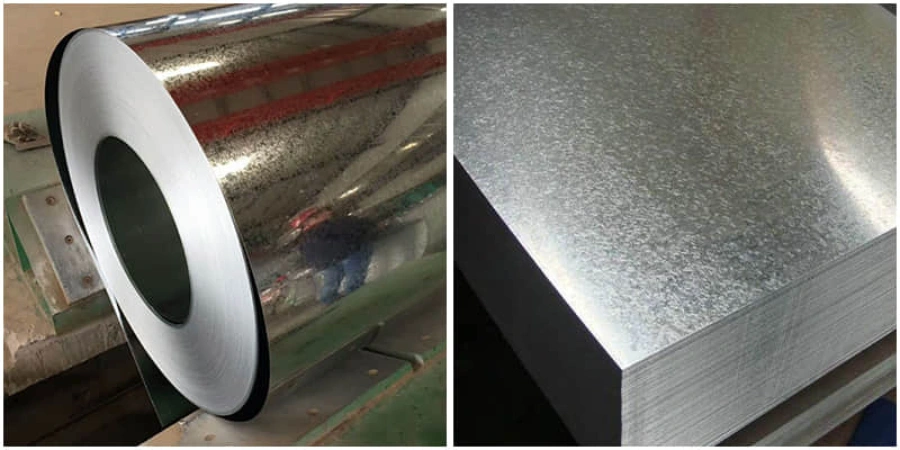
Mechanical fastening offers a reliable industrial alternative when high-volume assembly or thin-walled enclosures require the complete elimination of the complex heat treatment issues associated with welding galvanized steel. Self-clinching fasteners (such as PEM nuts and studs), structural blind rivets, and high-pressure mechanical clinching technologies can securely join metal sheets without damaging the protective zinc coating.
This mechanical joining method completely eliminates thermal deformation, arc spatter, and the generation of toxic zinc fumes, thereby simplifying workplace safety management and eliminating the need for secondary coating repairs.
For North American procurement teams, mechanical fastening significantly reduces direct labor costs, shortens production cycles, and eliminates the risk of structural microcracks commonly associated with welding galvanized steel components in precision construction and electronic enclosure applications.
Post-Fabrication Hot-Dip Galvanizing (HDG)
By adopting a “weld first, galvanize later” approach—reversing the manufacturing sequence—metallurgical defects caused by welding galvanized steel are effectively avoided. Manufacturers use uncoated virgin low-carbon steel to fabricate complete structural welded assemblies, brackets, and chassis components, enabling all structural joints to be completed under optimal parameters without interference from zinc, porosity, or fume emissions.
Once fully assembled, the entire component undergoes post-fabrication hot-dip galvanizing (HDG) in accordance with the ASTM A123 standard. Immersing the finished structure in a molten zinc bath ensures 100% coverage, completely sealing every weld, corner, and crevice with a continuous, metallurgically bonded zinc layer. This process guarantees exceptional long-term corrosion resistance for heavy-duty structural frames, outperforming traditional galvanized steel welding procedures in harsh outdoor and marine environments.
Switching to Alternative Corrosion-Resistant Alloys
When strict project specifications or aesthetic requirements preclude the use of welded galvanized steel components due to heat treatment and structural issues, switching to alternative corrosion-resistant alloys becomes a highly viable engineering strategy.
The use of austenitic stainless steel (such as AISI 304 or 316) or aluminum-zinc alloy-coated sheet metal (such as Galvalume) completely eliminates risks such as zinc oxide fumes, porosity, and liquid metal embrittlement. Although the raw material cost of stainless steel is higher than that of standard carbon steel, the complete elimination of labor costs associated with pre-weld zinc removal, specialized shielding gas mixtures, and post-weld repair typically balances out the total cost of ownership (TCO).
For the food processing, chemical, or marine sectors, replacing the base material not only ensures predictable weld integrity compared to welding galvanized steel but also streamlines the manufacturing workflow.
Conclusion: Partnering with Supro MFG to Optimize Manufacturing Quality
To successfully perform welding procedures on galvanized steel, it is essential to have a thorough understanding of high-temperature metallurgy, strictly adhere to OSHA/AWS process control standards, and establish a rigorous quality assurance system. From mitigating the effects of toxic zinc oxide fumes and microporosity to repairing the heat-affected zone (HAZ) in accordance with the ASTM A780 cold-galvanizing standard, precise execution ensures both joint strength and extends the service life of the structure.
Partnering with Supro MFG eliminates production risks associated with welding galvanized steel. As a trusted custom sheet metal manufacturer in China, Supro MFG integrates advanced DFM engineering, automated GMAW/FCAW welding cells, and rigorous non-destructive testing (NDT) quality inspections to deliver fully compliant, corrosion-resistant components.
By optimizing pre-welding descaling procedures and post-welding surface integrity, Supro MFG ensures that the precision components it produces meet North American standards—optimizing total cost of ownership (TCO) without compromising quality or lead times.