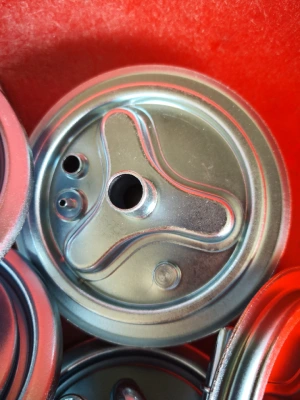
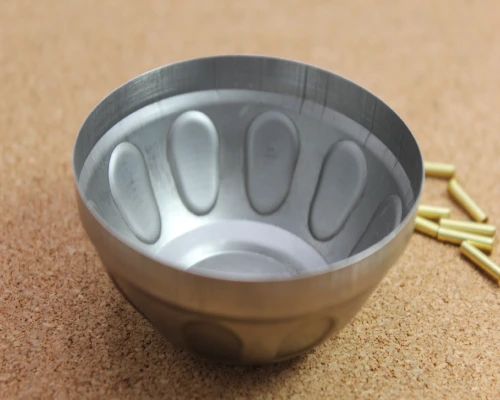

When scaling up production of complex components such as ratchets, clutch plates, or heavy-duty structural brackets, engineers must carefully evaluate the trade-off between edge quality and production cost-effectiveness. This dilemma inevitably leads to the industry’s most hotly debated comparison of manufacturing processes: fine blanking versus progressive die stamping.
Fine blanking is renowned for delivering 100% clean, sharp edges and extremely high micro-flatness, typically eliminating the need for secondary machining. However, this exceptional precision comes with staggering tooling capital expenditures and longer cycle times.
In contrast, the progressive die stamping process is the ultimate driver for achieving high-speed, cost-effective mass production. While traditional shearing processes leave a characteristic “cut-to-fracture ratio” along part edges, modern progressive die stamping technology—with cycle times of less than one second—can significantly reduce unit cost amortization.
In this article, we will delve deeply into the physical principles behind these two processes. By analyzing precision limits, edge profiles, and real-world supply chain costs, we will provide procurement managers with the precise data they need to optimize their next die investment.
Process Mechanics of Progressive Die Stamping and Fine Blanking: Conventional Shearing vs. Cold Extrusion
To master metal forming technology, it is essential to understand the metallurgical differences between conventional shearing and cold extrusion. Progressive metal stamping rapidly separates material using high-speed shear forces, while fine blanking extrudes parts by actively controlling internal compressive stresses without causing physical fracture of the material.
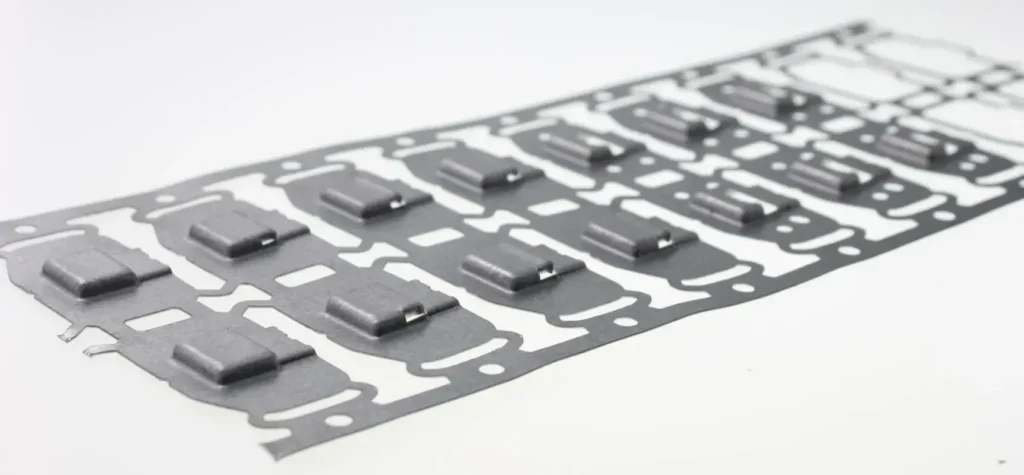
Kinematic Principles of Progressive Die Stamping
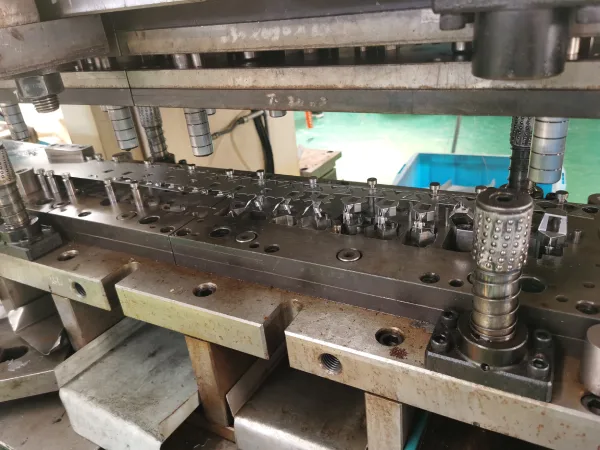
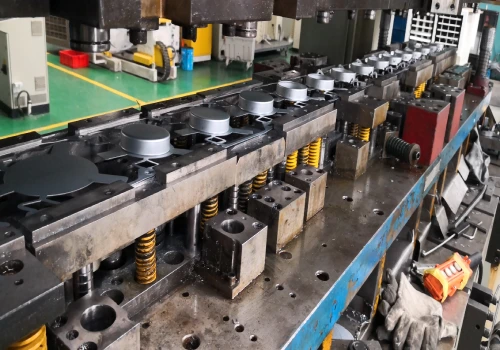
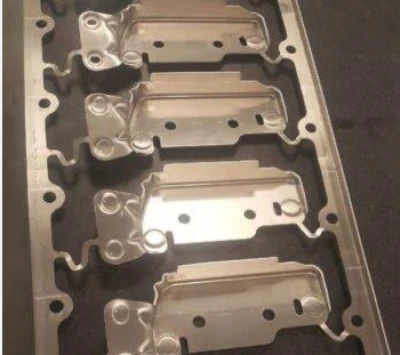
The kinematic principles of progressive die metal stamping are based on high-speed linear feed and sequential forming. Coiled metal is continuously fed through a custom-machined multi-station die set, with each station performing discrete punching or bending operations. As the press ram descends, it applies immense vertical shear force, driving the hardened punch through the material and into the die base. This rapid action essentially relies on the conventional principle of shearing, whereby the metal is pushed beyond its ultimate tensile strength until it fractures naturally.
Its decisive engineering advantage lies in sheer operational speed. Since the progressive die stamping process can simultaneously form multiple geometric features on a metal strip within a cycle time of less than one second, it achieves unparalleled production output. For buyers who need to manage large-scale production schedules, modern progressive die stamping technology remains the most cost-effective process in the field of high-volume metal forming.
The Triple-Action Principle of Fine Blanking
In stark contrast, fine blanking—as a highly controllable cold extrusion process—eliminates material fracture. This effect is achieved through the physical and mechanical principles of a specialized triple-action press. Before the cutting punch makes contact, a powerful V-shaped ring punch (impact ring) bites deeply into the edge of the metal sheet, firmly clamping the material in place. At the same time, a high-pressure counter-punch supports the workpiece from below. As the main punch slowly descends, the metal is completely confined under extreme triaxial compressive stress.
Unlike the high-speed shearing characteristic of progressive die metal stamping, this high-pressure confinement forces the metal to flow plastically into the die cavity without tearing. Although this triple-action mechanism cannot match the extremely high cycle speeds of standard progressive metal stamping production lines, it produces parts with perfect geometric shapes.
Edge Quality Analysis of Progressive Die Stamping vs. Fine Blanking: Burnish, Rollover, and Die Break
For high-wear components, evaluating the cross-sectional edge profile—specifically the ratio of rollover, burnish, and die break—is critical. The fine blanking process ensures a fully sheared surface, whereas the progressive die stamping process inherently produces a break zone, thus requiring strict engineering alignment.

The 30/70 Edge Profile in Progressive Die Stamping
In standard progressive die metal stamping, the clearance between the punch and the die naturally creates a unique cross-sectional profile along the metal edge. As the punch penetrates the material, a slight buckling occurs, followed by the formation of a smooth, load-bearing shear zone—known as the “polished zone.” Typically, this polished zone covers only 30% to 40% of the material thickness. The remaining portion of the material fractures due to tensile failure, forming a rougher, tapered surface known as the “die-edge fracture zone” or “fracture zone.”
For standard structural brackets or internal housings, this 30/70 ratio is entirely acceptable and provides structural integrity. By optimizing die clearances during the progressive stamping die design process, Supro MFG’s engineers can maximize the proportion of the polished zone, ensuring that the high-speed progressive die stamping process meets your edge functionality requirements without increasing upfront costs.
Achieving 100% Sheared Edges with Fine Blanking
When designing heavy-duty load-bearing components such as transmission gears or locking pawl mechanisms, fractured edges are functionally unacceptable. Fine blanking technology addresses this issue by employing an extremely tight clearance (typically less than 0.5% of the material thickness) combined with the compressive clamping action of a V-ring punch (stinger). This prevents metal tearing, resulting in 100% clean, crisp edges that are perfectly flat and perpendicular.
Although this completely eliminates the need for secondary operations such as CNC trimming or grinding, it requires highly specialized presses and expensive dies. For parts that do not require such a fully extruded edge as a gear working surface, specifying the fine blanking process is a costly overdesign. In such cases, switching to high-precision progressive die stamping technology can both meet the necessary tolerance requirements and take full advantage of high production speeds.
The Ability of Progressive Die Stamping and Fine Blanking to Meet Strict Geometric Dimensions and Tolerances (GD&T)
Meeting strict geometric dimensions and tolerances (GD&T) requirements will determine your manufacturing strategy. While the fine blanking process dominates in meeting extremely tight flatness specifications, the progressive die stamping process can reliably maintain strict linear tolerances and high Cpk values over millions of stamping cycles, thereby ensuring absolute dimensional capability without increasing production costs.
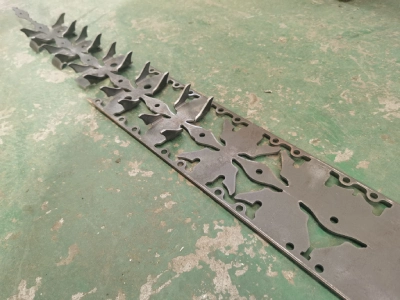
Dimensional Stability in Progressive Die Stamping
Meeting strict geometric dimensions and tolerances (GD&T) requires a robust die structure. Modern progressive die stamping technology maintains excellent dimensional stability over millions of stamping cycles. By integrating precision-ground guide pins and a feeding system equipped with advanced sensors, manufacturers ensure that metal coils maintain perfect alignment at every station.
For standard structural components, high-precision progressive die metal stamping reliably controls linear tolerances within the range of ±0.002” to ±0.005”. When dies are manufactured using tungsten carbide inserts, abrasive wear on the dies is significantly reduced, ensuring that your Cpk values remain stable while avoiding frequent press downtime.
Ultimately, a rigorously designed progressive stamping die achieves exceptional GD&T compliance, making it the most cost-effective choice for hardware components that require strict dimensional repeatability throughout their entire product lifecycle.
Micro-Tolerances and Flatness in Fine Blanking
Although traditional forming processes offer excellent linear accuracy, the fine blanking process takes precedence when drawings require extremely high micro-flatness and extremely high hole-to-thickness ratios. Because the material is fully clamped by the press ring and counter punch, the metal does not warp or spring back during the extrusion stage. This three-axis constraint ensures absolute flatness and enables engineers to punch holes smaller than the actual material thickness—something that is physically impossible with standard processes.
However, meeting these micron-level tolerance requirements necessitates significant upfront capital investment, and punching speeds are correspondingly reduced. Purchasing teams must rigorously review Geometric Dimensioning and Tolerancing (GD&T) specifications before finalizing the design. If the functional fit of the part does not strictly require sub-micron concentricity, it is strategically advisable to prioritize the progressive die stamping process.
By optimizing these tolerances, manufacturers can fully leverage high-speed progressive die stamping technology, thereby immediately achieving significant reductions in unit costs.
Only 4 steps
online custom metal fabrication parts
Contact our experts team and experience the efficiency and economic benefits of digital metal fabrication services.
Upload Design Files
STL , STEP (.stp), IGES (.igs), (.ZIP), or PDF.
Also be a sample or an idea
Quote & Design Analysis
Instant factory quotes and DfM reports, the most reasonable solution.
Manufacturing Begins
Digital processes can initiate order tasks within 24 hours.
On-Time Delivery
Keeping delivery promises, approved by 3000+ Global Company buyers.
The Economics of Progressive Die Stamping: Capital Expenditures, Return on Investment, and Cycle Time
To optimize supply chain economics, a balance must be struck between high upfront capital expenditures and the long-term return on investment for components. While the fine blanking process requires substantial upfront die investment, the progressive die stamping process—with cycle times of less than one second—can rapidly amortize die costs through high production volumes.
Supply Chain Metric | Fine Blanking | |
Tooling CapEx (Initial Investment) | Baseline (1.0x) | 2.0x – 3.0x Premium |
Production Velocity (Strokes Per Minute) | 200 – 1,000+ SPM | 15 – 90 SPM (Extremely slow cycle) |
Capital Equipment Required | Standard Mechanical Press | Specialized Triple-Action Hydraulic Press |
Edge Profile (As-Stamped) | ~30% Burnish / 70% Break (Functional) | Up to 100% Fully Sheared (Smooth) |
Secondary Machining Reliance | May require CNC shaving for micro-tolerances | Typically eliminated |
Piece-Part ROI (High Volume Amortization) | Extremely High (Sub-second cycle times) | Low to Moderate (Restricted throughput) |
Optimal Economic Break-Even Volume | > 100,000+ Units / Year | > 50,000+ Units / Year (High-value gears only) |
Initial Die Capital Expenditures and Press Tonnage
Ensuring that the budget for hard dies is met requires a rigorous analysis of capital expenditures. Fine blanking dies are expensive, typically costing 200% to 300% more than traditional dies.
This high cost stems from the micrometer-level punch clearance required, as well as the necessity of using specialized, high-tonnage three-action hydraulic presses. In contrast, the initial capital investment required for progressive metal stamping is significantly lower. Although precision wire cutting is still required to manufacture robust multi-station dies, these dies can operate efficiently on widely available mechanical presses.
By avoiding the reliance on heavy-duty equipment associated with fine blanking, purchasers who adopt progressive die metal stamping can significantly reduce their initial financial risk. Procurement teams must rigorously evaluate whether the product’s geometry truly necessitates such high tooling capital expenditures, or whether the exact same mechanical functionality can be achieved through a highly engineered custom progressive die stamping solution.
Cycle Time Advantages of Progressive Die Stamping
In global supply chains, manufacturing speed determines the price of individual products. The most significant financial weakness of the fine blanking process lies in its inherently slow operating speed, which is severely limited by the physical principles of cold extrusion. To significantly reduce unit costs, manufacturers must fully leverage the unparalleled cycle time advantages of progressive die stamping technology.
Standard mechanical presses operate at hundreds of strokes per minute (SPM), feeding and forming metal coil at an astonishing rate. This massive production throughput means that progressive die metal stamping can seamlessly meet annual production volume demands exceeding millions of units, while significantly reducing the amortization cost per unit from a mathematical perspective.
For procurement directors facing massive production capacity demands and strict cost-reduction targets, maximizing equipment uptime through high-speed progressive die stamping remains the ultimate strategy for ensuring supply chain resilience and pricing dominance in the market.
The Key to Return on Investment: Eliminating Secondary Processing
To determine the true return on investment (ROI), one must calculate the total cost of goods delivered, including post-stamping processes. The fine blanking process is widely adopted precisely because it eliminates secondary processing, producing the finished gear profile directly on the stamping press. However, buyers must carefully calculate the break-even point. If the scrap ratio from a standard progressive die stamping process is 30/70, engineers can achieve the required functional precision by performing secondary CNC trimming or grinding on the workpiece.
Purchasing departments must determine whether the labor costs of secondary trimming exceed the significant capital expenditure (CapEx) difference associated with fine blanking dies. In most automotive and industrial applications, modern progressive die stamping combined with automated secondary processing is significantly more cost-effective. By strategically modeling these variables, purchasers can confidently adopt progressive die stamping technology to maximize profits without compromising mechanical integrity.
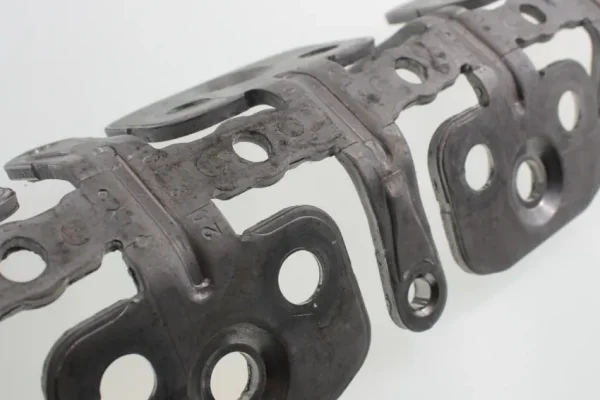
Quality Assurance: FMEA and PPAP in High-Volume Progressive Die Stamping Production
To ensure zero-defect compliance over millions of production cycles, an automotive-grade quality framework must be adopted. Through strict adherence to advanced FMEA and comprehensive PPAP protocols, the progressive die metal stamping process reduces the risk of die wear, thereby guaranteeing absolute dimensional repeatability for mass production.
Reducing Risks in Progressive Die Stamping
High-volume production must strictly adhere to automotive-grade quality frameworks. To proactively eliminate structural defects, our engineers employ advanced Failure Mode and Effects Analysis (FMEA) during the progressive stamping die design phase. By rigorously analyzing foreseeable die wear patterns and material springback behavior, we incorporate preventive measures directly into the die structure.
Prior to launching mass production, Supro MFG strictly enforces the Production Part Approval Process (PPAP) and comprehensive First Article Inspection (FAI) protocols. This validation process ensures that every component machined through our progressive die stamping process maintains absolute dimensional tolerance capability. Should any minor deviation occur during millions of stamping cycles, the Corrective and Preventive Action (CAPA) system is immediately activated.
Ultimately, the integration of these robust quality control measures ensures that your custom progressive die stamping project achieves consistent, zero-defect production and guarantees long-term supply chain resilience.
Conclusion
Strategic metal component procurement requires a perfect balance between metallurgical realities and aggressive financial goals. If your transmission components require 100% sheared edges to withstand extreme mechanical loads, the fine blanking process is structurally indispensable. However, for the vast majority of high-volume industrial applications, custom progressive die stamping remains the undisputed driver of cost-effectiveness.
By accepting 30/70 functional edge profiles or strategically integrating automated CNC trimming processes, procurement teams can achieve stamping cycle times of less than one second, thereby significantly reducing the long-term unit cost from a mathematical perspective.
At Supro MFG, we bridge the critical gap between engineering intent and supply chain economics. We optimize your progressive die metal stamping projects through rigorous DFM analysis, FMEA risk mitigation measures, and strict PPAP compliance. Stop over-engineering your parts and avoid eroding profit margins with unnecessary tooling capital expenditures.
Submit your CAD files to our engineering team for a comprehensive review today, and let our customized progressive die stamping solutions maximize your return on investment in final production while ensuring zero-defect manufacturing.