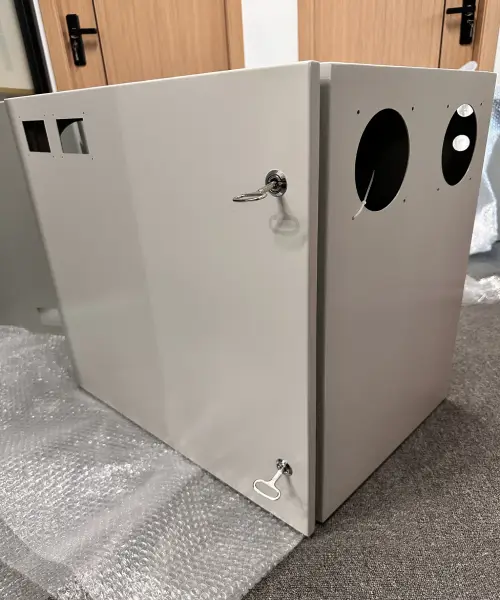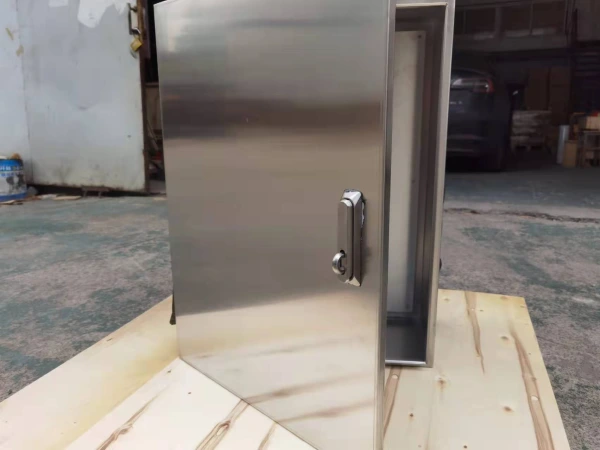
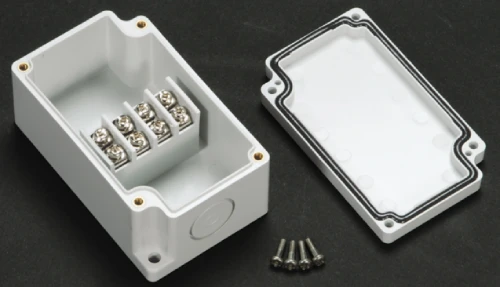
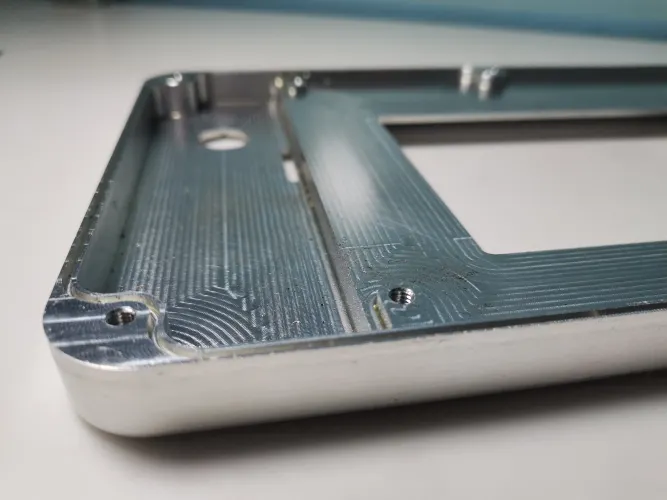

For terminal box enclosures designed for industrial electrical infrastructure—such as outdoor utility installations, process control cabinets, and environments compliant with NEMA standards—the integrity of the powder coating is not merely an aesthetic consideration but a functional requirement. Once delamination occurs, the exposed underlying metal is subject to accelerated corrosion, thereby compromising service life and safety ratings.
Peeling—defined as the separation of the coating from the substrate over a large area, as opposed to localized flaking—indicates a fundamental failure at the interface between the coating and the substrate.
The primary failure mechanism can be traced to surface contamination: residues of drawing aids, cutting oils, flux, and handling contaminants left behind by the forming process that remain on the electrical terminal box substrate prior to coating.
Curing parameters are the second key control point. Powder coatings require precise temperature profiles to achieve complete cross-linking. Under-cured powder coatings can result in “false adhesion”: the coating appears to adhere but will peel off when subjected to stress. Over-curing or uneven oven temperature distribution can lead to coating embrittlement and interfacial failure.
This article examines the root causes of powder coating delamination on custom terminal box housings from a manufacturing process perspective and discusses the control measures required to eliminate them.
Main Causes of Coating Peeling on Terminal Boxes
Coating peeling on custom terminal boxes stems from four interrelated process defects: residual surface contaminants, inadequate or omitted phosphating pretreatment, improper curing temperature profiles, and excessive coating thickness. These factors all lead to insufficient interfacial bond strength; all of these defects can be prevented through strict process control.
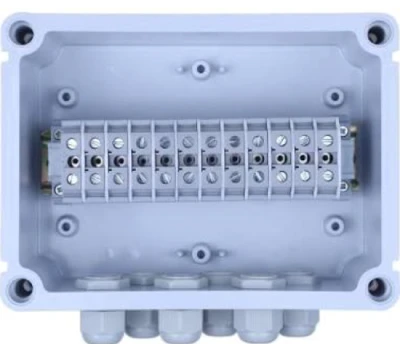
Surface Contamination—The Primary Mechanism of Coating Failure on Terminal Boxes
Surface contamination is the most common root cause of adhesion failure in powder coatings. During stamping, bending, and welding processes, electrical terminal boxes can accumulate drawing compounds, cutting oils, welding slag, as well as salts and oils from operators’ fingerprints. These contaminants form a low-energy boundary layer on the substrate surface—the powder adheres to the contaminants rather than the metal surface, leading to interfacial failure under mechanical stress or environmental thermal cycling.
Even if the surface appears clean to the naked eye, residual oil films at the microscopic level are sufficient to prevent molecular-level bonding between the powder and the substrate. Solvent wipe tests or water film break tests can be used to verify cleanliness prior to coating.
Inadequate or Missing Chemical Pretreatment
For carbon steel terminal boxes, a phosphate conversion coating is not an optional step but rather the fundamental guarantee of adhesion and corrosion resistance. Iron phosphate or zinc phosphate conversion treatment forms a microcrystalline layer on the steel surface, increasing the micro-surface area and providing polar bonding sites for the powder.
Insufficient pretreatment manifests in various forms: concentration drift in the phosphating bath, an imbalance in the ratio of total acid to free acid, depletion of accelerators, or sludge buildup in the tank, resulting in the deposition of a loose, powdery layer rather than a dense crystalline layer.
When the weight of the phosphate coating exceeds the range of 0.8–1.0 g/m², the excessively thick conversion layer itself becomes a weak boundary layer, leading to cohesive failure under stress. Skipping or improper pretreatment is the primary cause of extensive peeling of custom terminal boxes in outdoor or humid environments.
Improper Curing of Terminal Box Powder Coatings—Deviations in Temperature and Time
Powder coatings require a precise thermal profile to complete the cross-linking reaction—the chemical process by which molten powder particles transform into a continuous, durable film. Typical curing temperatures for industrial powder coatings range from 180°C to 200°C (metal surface temperature, not oven air temperature), and the specified holding time must be met.
Insufficiently cured powder coatings fail to achieve adequate cross-linking density, resulting in poor adhesion and mechanical strength; over-curing or uneven oven temperature distribution leads to coating embrittlement and interfacial failure.
Due to differences in cross-sectional thickness across the terminal box—with thicker mounting flanges and thinner enclosure walls—there are variations in heating rates; achieving uniform metal temperatures throughout the entire part is a critical control point in manufacturing.
Excessive Coating Thickness on Terminal Boxes
The dry film thickness of powder coatings must be strictly controlled within the recommended range—typically 2.5 to 3.5 mils (60 to 90 micrometers). When this range is exceeded, an excessively thick coating generates internal stresses during the curing and cooling process; when the electrical terminal box undergoes handling, assembly, or on-site thermal cycling, these stresses exceed the interfacial adhesion, causing the coating to delaminate or peel from the substrate.
Edge buildup is a prominent issue at the flanges and mounting holes of terminal boxes—these geometric features attract excessive powder deposition during electrostatic spraying. Supro regularly uses a dry film thickness gauge to take measurements at multiple points on the parts, ensuring that the film thickness of each custom terminal box consistently remains within the 2–4 mil range.
Are you looking for reliable & cost-effective
China metal fabrication manufacturer
More than 150,000 OEM metal fabrication products delivered to 5,000+ global buyers.
And benefit from it!
Preventing Coating Delamination on Terminal Boxes Through Process Control
To prevent coating delamination on electrical terminal boxes, three interdependent process areas must be strictly controlled: chemical pretreatment, thermal uniformity in the curing oven, and spray parameters that determine coating thickness. Each variable is measurable and must be verified through routine monitoring and documented calibration.
Five-Stage Chemical Cleaning and Phosphating
The five-stage chemical cleaning and phosphating process is an indispensable pretreatment step prior to coating carbon steel terminal boxes. This process consists of the following stages in sequence: alkaline cleaning (to remove drawing oil and cutting fluid residues), hot water rinsing (to remove saponification products), surface conditioning (acid pickling to activate the substrate surface), phosphate conversion (deposition of iron phosphate or zinc phosphate), and final passivation and sealing.
The parameters of each bath solution must be strictly controlled: total acidity 18–22 points, free acid 0.8–1.2 points, accelerator concentration 2–4 points, treatment temperature 43–55°C, and immersion time 3–5 minutes. The weight of the phosphate coating should be maintained within the range of 0.8–1.2 g/m²—a coating that is too thin cannot provide effective adhesion sites, while one that is too thick will form a loose, powdery layer.
For components such as electrical terminal boxes that require long-term weather resistance, skipping any stage or allowing bath concentration to drift will directly result in reduced interfacial adhesion of subsequent coatings, manifesting as extensive peeling during humidity-heat cycling tests.
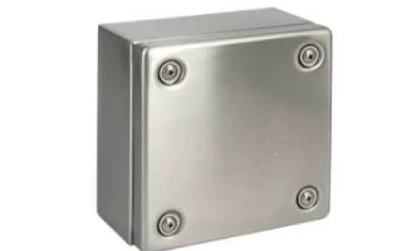
Oven Temperature Profile Analysis and Temperature Calibration
Curing parameters must be set based on the actual metal temperature of the terminal box, not the oven air temperature setpoint. Use a data logger in conjunction with thermocouples directly attached to different cross-sectional locations of the workpiece (such as the flange edge and the center of the side panel) to continuously measure temperature, thereby obtaining accurate temperature rise profiles and hold times.
The curing window for typical thermosetting powder coatings is a metal temperature of 180–200°C maintained for 10–20 minutes (specifics depend on the powder’s TDS). Temperature uniformity within the oven should be maintained within ±3°C; otherwise, thick-walled areas may be under-cured while thin-walled areas may be over-cured.
Supro performs full-furnace temperature zone calibration at least once per quarter and retains all curve records as evidence for process traceability. Consistency in curing curves across Terminal Box production batches is a prerequisite for ensuring the reproducibility of adhesion for each product.
Powder Coating Parameters
The process parameters for electrostatic powder coating directly affect the dry film thickness and uniformity on the various surfaces of custom terminal boxes. The spray gun voltage is typically set to 70–100 kV, with the current controlled at 20–40 µA; the powder feed pressure and atomization pressure must be optimized based on the powder particle size and conveyance distance. The target film thickness range is 2.5–3.5 mils (60–90 µm). During each shift, a film thickness gauge must be used to measure at least five points on the flat surfaces, bent edges, and around the mounting holes of the terminal box.
The integrity of the grounding system is critical—poor grounding can lead to abnormal static buildup, resulting in excessively thick edges (exceeding 5 mils) and insufficient powder coverage on flat surfaces. For the internal corners of the electrical terminal box, adjust the spray gun trajectory and reciprocating speed to avoid localized thin coating or missed areas caused by the Faraday cage effect.
Regularly verify the relationship between spray parameters and film thickness to effectively eliminate the risk of delamination caused by excessive internal stress in the coating.
Quality Validation of Terminal Boxes—ASTM D3359 Cross-Cut Test
The final stage of process control must be validated to close the loop. For verifying the adhesion of powder coatings on custom terminal boxes, ASTM D3359 is a widely accepted quantitative testing standard in the North American market.
This test uses a specialized multi-blade cutting tool to score two sets of parallel lines perpendicular to each other (spaced 1–2 mm apart) on the coated surface, forming a cross-hatch pattern of 25 squares, cutting through to the base metal. Pressure-sensitive tape (with specified adhesion) is then applied over the grid area, and uniform pressure is applied before the tape is rapidly peeled off at a 180° angle. The rating is determined based on the percentage of the coating that peels off within each square relative to the total grid area, ranging from 5B (no peeling) to 0B (peeling area exceeds 65%).
For functional components such as terminal boxes, a 5B rating is a mandatory requirement for shipment approval. This test is simple and efficient and can be performed inline on the production line; however, attention must be paid to the consistency of cutting depth, standardization of tape types, and operator training—as deviations in any of these areas will affect the reproducibility of the rating.
At least two units from each batch of electrical terminal boxes must be sampled for cross-cut verification; the results are recorded in the batch traceability documentation and submitted to the customer for audit as evidence of process control.
When the rating drops from 5B to 4B or 3B, this serves as a warning signal indicating a drift in the pretreatment bath solution or curing curve, which should trigger a production line shutdown for investigation.
Conclusion
The root cause of coating peeling on terminal boxes can be traced to three major process stages: pretreatment, curing, and film thickness. Through a five-stage chemical cleaning process, oven temperature uniformity calibration, and real-time film thickness monitoring, the stability of the phosphate conversion layer and cross-linking density can be ensured. The 5B rating per ASTM D3359 serves as the release criterion, providing traceable evidence of adhesion for each batch of custom terminal boxes.
Founded in 2004, Supro is an experienced terminal box manufacturer. With extensive manufacturing experience, a strong technical team, and comprehensive manufacturing resources, we have provided one-stop terminal box manufacturing solutions to more than 3,000 companies worldwide.
At Supro, we have a professional quality control team, experienced QC staff, and scientific quality control processes to ensure that products undergo rigorous inspection, meet specified technical standards, and allow for the traceability of defective products at any time. These processes include: raw material inspection, mold inspection, equipment inspection, process sampling, packaging inspection, and final inspection. We conduct QA (Quality Assurance) to ensure products meet the necessary tolerances and quality standards.
We guarantee on-time delivery of all products. From product design and rapid prototype fabrication to mass production, we provide professional technical support and exceptional quality.
For inquiries regarding technical specifications, customized project solutions, or OEM partnerships, please contact Supro immediately. Our professional engineering team is always ready to provide you with tailored application solutions.