

In the field of precision sheet metal fabrication, material selection determines production reliability and impacts total cost of ownership, and zinc alloys offer unique value between standard aluminum and engineering plastics.
Unlike standard metal sheets, zinc alloy sheet metal fabrication enables the production of highly complex structures with near-net-shape forming and exceptional dimensional stability—thereby directly reducing the need for secondary processing.
As a professional zinc alloy sheet metal fabrication manufacturer, Supro MFG’s experience demonstrates that proper die design and alloy selection (Zamak 3 for ductility, ZA-27 for strength) directly impact part lifespan. We frequently provide custom zinc alloy sheet metal fabrication services to clients in the automotive and electronics industries, meeting their requirements for sub-millimeter tolerances in thin-walled enclosures.
This guide provides a detailed exploration of zinc alloys, covering their metallurgical properties, common grades, processing methods, and practical applications in industrial OEM production.
Definition of Zinc Alloys—Composition and Key Properties
Zinc alloys are metallic compounds with zinc as the primary component. Their main alloying elements include aluminum, copper, and magnesium, and sometimes titanium. Pure zinc lacks the mechanical strength required for structural components, but through alloying, it becomes a widely used engineering material.
Most commercial zinc alloys contain 4% to 27% aluminum, which helps refine the grain structure and improve fluidity during casting. Copper (0.5–2.5%) enhances hardness and creep resistance, while magnesium (0.03–0.08%) prevents intergranular corrosion.
From a metalworking perspective, the material exhibits three key characteristics: a low melting point (typically 380–390°C), excellent fluidity (enabling the filling of thin-walled molds), and outstanding dimensional stability. These properties make it an ideal material for the mass production of complex net-shape components that require minimal secondary processing.
Furthermore, when used in conjunction with steel or aluminum fasteners, zinc alloys inherently possess resistance to electrochemical corrosion—a key advantage in multi-material assemblies commonly found in automotive and electronic device housings.
Mechanical Properties of Zinc Alloys Related to Sheet Metal Fabrication
When selecting materials for bent, stamped, or deep-drawn parts, engineers primarily focus on tensile strength, elongation, and hardness. Zamak 3, the most widely used zinc alloy, typically has a tensile strength of approximately 280–320 MPa and an elongation of 15%–24%, comparable to certain aluminum alloys but with superior damping capabilities.
The tensile strength of the ZA-27 zinc alloy is typically 310–420 MPa (sand casting), and high-grade versions (such as the JF condition) can reach approximately 440 MPa, exceeding the strength of most cast aluminum alloys. However, its impact toughness at sub-zero temperatures is relatively low. For sheet metal operations such as flanging or roll forming, zinc alloys with higher ductility (e.g., Zn-Cu-Ti rolled alloys) should be selected to prevent edge cracking.
Common Types of Zinc Alloys in Industrial Production
Not all zinc alloys are suitable for every processing method. The industry classifies these materials into three major categories: Zamak, ZA (zinc-aluminum), and specialty rolled alloys. Each category of alloy offers distinct advantages in casting, stamping, or machining.
Zamak Series—The Benchmark in Die Casting
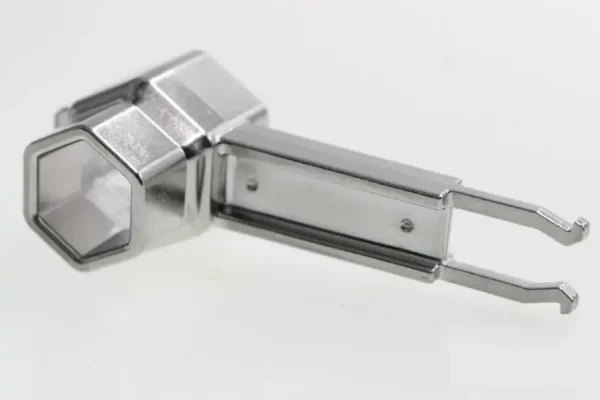
Zamak zinc alloys (Zamak 2, 3, 5, and 7) dominate the high-pressure die casting sector. Zamak 3 offers the best overall performance in thin-walled components (wall thickness 0.5–3 mm), combining both ductility and impact strength. Zamak 5 achieves a 25% increase in hardness through the addition of copper, though at the cost of slightly reduced ductility. For precision zinc alloy sheet metal fabrication, the Zamak alloy series is the material of choice for manufacturing complex brackets, lock bodies, and hinge bodies, which integrate seamlessly with stamped steel covers.
ZA Series—High-Performance Structural Alloys
The ZA series of alloys (ZA-8, ZA-12, ZA-27) contain 8%–27% aluminum and offer significantly higher strength than traditional Zamak alloys. From a fabricator’s perspective, zinc alloy sheet metal fabrication processes for ZA alloys require stricter cooling control, as their shrinkage rate can reach 1.2%, compared to just 0.7% for Zamak.
For buyers evaluating zinc alloy sheet metal fabrication services, please note: Due to its relatively low fluidity, ZA-27 is not suitable for thin-walled die-castings with wall thicknesses less than 2 mm. Conversely, ZA-12 should be specified for medium-sized structural brackets produced by gravity casting, where both rigidity and corrosion resistance are essential requirements.
Rolled Zinc Alloys (Zn-Cu-Ti) for Sheet Metal Fabrication
For true sheet metal fabrication—including bending, stamping, and deep drawing—Zn-Cu-Ti alloys (e.g., containing 0.8–1.0% copper and 0.1–0.2% titanium) are the most suitable choice. This alloy maintains excellent formability (with elongation up to 40%) and exhibits superplastic behavior at 200–250°C.
In custom zinc alloy sheet metal fabrication (such as architectural cladding, battery enclosures, or expansion joints), the forming force required for Zn-Cu-Ti is 35% lower than that for 3003 aluminum. These parts also exhibit creep resistance under sustained loads—a key advantage over pure zinc. Rolled Zn-Cu-Ti material performs reliably in any application involving progressive dies or multi-stage forming.
Only 4 steps
online custom metal fabrication parts
Contact our experts team and experience the efficiency and economic benefits of digital metal fabrication services.
Upload Design Files
STL , STEP (.stp), IGES (.igs), (.ZIP), or PDF.
Also be a sample or an idea
Quote & Design Analysis
Instant factory quotes and DfM reports, the most reasonable solution.
Manufacturing Begins
Digital processes can initiate order tasks within 24 hours.
On-Time Delivery
Keeping delivery promises, approved by 3000+ Global Company buyers.
Manufacturing Processes for Zinc Alloy Sheet Metal Fabrication Parts
Selecting the correct process for this material will determine the final part quality, production cycle, and tooling investment. As a custom fabricator, Supro MFG employs four primary zinc alloy sheet metal fabrication processes, each suited for different geometries and production volumes.
Hot-Chamber Die Casting—The Benchmark Process
Hot-chamber die casting is the primary process for producing zinc alloy sheet metal fabrication parts with complex geometries. Unlike cold-chamber systems, the plunger and gooseneck of a hot-chamber system are directly immersed in molten zinc alloy at 380–420°C, allowing cycle times for small components to be kept under 10 seconds. This process produces near-net-shape parts with surface roughness as low as 1–2 µm Ra, thereby eliminating most secondary machining operations.
In precision zinc alloy sheet metal fabrication, hot-chamber casting is the preferred process for producing high-volume brackets, lock bodies, and electromagnetic shielding enclosures. For thin-walled parts with wall thicknesses as low as 0.5 mm, Zamak 3 material should be specified; chamfer designs that increase ejection difficulty should be avoided.
Sheet Metal Stamping and Deep Drawing of Rolled Zinc Alloys
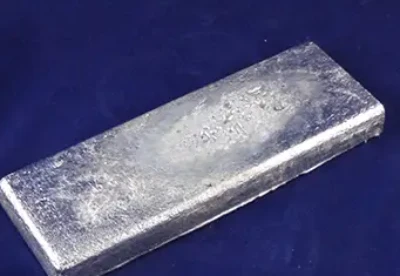
For Zn-Cu-Ti alloys, conventional stamping and deep drawing processes can be used directly. Compared to 3003 aluminum, these zinc alloy sheet metal fabrication processes require 30% to 40% less forming force, thereby reducing wear on the stamping press. In custom deep drawing applications for battery enclosures or architectural flashing panels, a draw ratio of up to 2.5:1 can be achieved without intermediate annealing.
Key to success: Use polished D2 tool steel and apply a chlorine-free lubricant to prevent seizing. After forming, the material undergoes moderate work hardening, increasing the yield strength by 15–20%.
For buyers evaluating zinc alloy sheet metal fabrication services, it is recommended to request a 0.8 mm thick sample to verify its resistance to edge cracking—a common failure mode when titanium content exceeds 0.2%.
CNC Machining and Secondary Processing
Although zinc alloys are typically cast near-net-shape, CNC machining is essential to achieve tolerances below ±0.01 mm or to machine features such as perforations.
This material offers excellent machinability: chips break cleanly, tool wear is minimal, and surface roughness as low as 0.4 µm Ra can typically be achieved. When performing precision zinc alloy sheet metal fabrication, carbide end mills with a large positive rake angle (12°–15°) should be selected, and high-flow coolant should be avoided to prevent thermal microcracking. However, the machining process generates fine, flammable dust, so dust collection equipment must be used, and open flames are strictly prohibited.
As an experienced zinc alloy sheet metal fabrication manufacturer, we recommend allowing a 0.2–0.3 mm allowance at critical hole locations to accommodate post-machining turning. It is essential to specify trivalent chromate treatment after machining to restore the corrosion resistance of the machined surfaces.
Surface Treatments for Corrosion Protection and Aesthetics
The surface of as-cast zinc alloy naturally forms a gray oxide layer, but this provides only moderate corrosion protection. To enhance the durability of zinc alloy sheet metal fabrication parts, there are three primary surface treatment options: trivalent chromate (clear, yellow, or black), electroplated nickel/chrome, and powder coating.
A zincate pretreatment must be performed prior to electroplating to ensure adhesion—if this step is omitted, the plating will blister within 48 hours. For custom zinc alloy sheet metal fabrication parts intended for outdoor environments, a clear chromate treatment with a sealer should be specified; this treatment passes the 240-hour neutral salt spray test (ASTM B117).
Avoid using acidic cleaners on this material, as they can cause intergranular corrosion. For architectural zinc-copper-titanium (Zn-Cu-Ti) sheets, pre-weathered patina is generally preferable to organic coatings.
Are you looking for reliable & cost-effective
China Sheet Metal Fabricators
More than 150,000 OEM metal fabrication products delivered to 5,000+ global buyers.
And benefit from it!
Industrial Applications of Zinc Alloys
From automotive engine compartment components to consumer electronics, zinc alloys offer a unique balance of castability, strength, and corrosion resistance that other materials struggle to match. In the field of custom zinc alloy sheet metal fabrication, four industries consistently maintain a steady demand for zinc alloy parts.
1) Automotive Engine Compartments and Interiors: Fuel pump housings and seatbelt retractors cast from Zamak 3 can withstand engine compartment temperatures as high as 120°C and effectively resist electrochemical corrosion when bolted to steel chassis components.
2) Electronics and Connectors: Precision zinc alloy sheet metal fabrication produces USB housings and relay frames with 80–100 dB electromagnetic interference (EMI) shielding—a critical requirement for 5G infrastructure.
3) Construction and Hardware: Standing seam roofs and gutters made from rolled Zn-Cu-Ti alloys naturally develop an oxide layer within 15 years, eliminating the need for repainting.
4) Prototyping and Small-Batch Production: For orders ranging from 100 to 5,000 pieces, zinc alloy gravity casting using Kirkcaldy molds enables the delivery of functional metal components within two weeks—without the need for hard molds.
As an experienced zinc alloy sheet metal fabrication manufacturer, we verify creep limits and forming parameters for each application before providing a quote.
Advantages and Limitations of Zinc Alloy
Every material involves trade-offs. Zinc alloy excels in certain areas but is unsuitable for others. Professional manufacturers must evaluate these factors before custom fabrication.
Cost and Production Efficiency Advantages of Zinc Alloy
Among common non-ferrous metals, zinc alloy has a low melting point (380°C, compared to 660°C for aluminum), which directly reduces energy consumption per unit by 40% to 50% in zinc alloy sheet metal fabrication processes. Furthermore, zinc alloy dies typically last over one million cycles—five to ten times longer than aluminum dies—resulting in lower unit costs and faster time-to-market.
Furthermore, scrap generated from custom zinc alloy sheet metal fabrication is 100% recyclable without any loss of performance, contributing to sustainable development goals. When comparing total cost of ownership with galvanized steel or machined brass, zinc alloy consistently offers a cost advantage for production runs exceeding 10,000 units, particularly when complex thin-walled geometries are required and no secondary surface treatment is needed.
Technical Limitations to Consider
Despite its many advantages, this material has three key limitations. First, zinc alloy sheet metal fabrication parts should be avoided in applications where the long-term operating temperature exceeds 120°C—once this threshold is crossed, the creep rate increases exponentially, leading to dimensional drift.
Second, the material undergoes a ductile-to-brittle transition below -20°C, making it unsuitable for impact-prone automotive components or outdoor assemblies in cold climates.
Third, welding zinc alloy is impractical because zinc vaporizes (at 907°C) before the steel filler metal melts, resulting in porosity and toxic fumes. For custom zinc alloy sheet metal fabrication involving structural joints, designs should incorporate mechanical fasteners or adhesive bonding processes. As an experienced zinc alloy sheet metal fabrication manufacturer, we review the operating temperature and impact resistance requirements of any zinc alloy grade before recommending it for production.
Looking for a reliable custom sheet metal fabrication companies?
Talk To Supro MFG Expert Team
Contact us for competitive ex-factory prices,
and a full range of technical support services.
Conclusion
In the field of sheet metal fabrication, zinc alloy offers the optimal balance between castability, strength, and cost-effectiveness. The unique combination of flowability, strength, and corrosion resistance makes it the ideal choice for manufacturing complex, high-volume components. From hot-chamber die casting to deep drawing of rolled sheets, zinc alloy delivers production efficiencies unmatched by other materials. When selecting materials for your project—whether automotive brackets, electronic enclosures, or architectural panels—zinc alloy is a proven and reliable solution.
As an experienced zinc alloy sheet metal fabrication manufacturer, Supro MFG validates every design based on creep limits and forming parameters. For technical specifications or inquiries regarding OEM partnerships, please contact our engineering team.