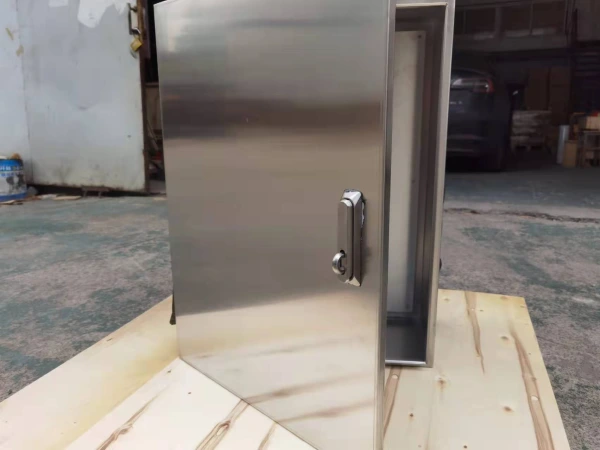
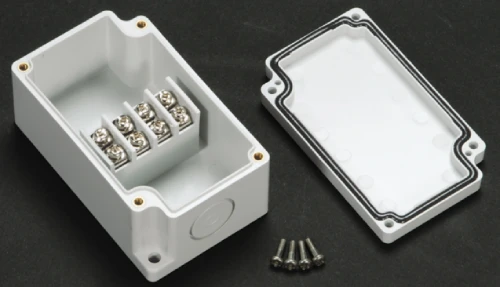


As a critical protective unit for terminal blocks and internal electrical connections in electrical systems, the reliability of a terminal box’s IP (IEC 60529) and NEMA (NEMA 250) protection ratings directly impacts the safe operation of equipment and its total lifecycle cost.
Industry data shows that approximately 28% of electrical enclosure failures can be traced back to defects during the fabrication stage, with weld porosity and microscopic gaps being the most common failure paths. Moisture ingress caused by such defects not only leads to failure in protection rating tests but also results in insulation degradation, short-circuit failures, and costly shutdowns, increasing project lifecycle costs by 10–15%.
In actual engineering procurement, IP rating failures in custom terminal boxes often stem not from inadequate design specifications, but from weld quality that fails to meet the structural integrity required by standards.
From a sheet metal fabrication perspective, the repeatability of welding processes and defect control are the core bottlenecks determining whether an electrical terminal box can pass the rigorous IP/NEMA tests.
The Importance of IP and NEMA Protection Ratings for Terminal Boxes
The protection rating certification system for terminal boxes consists primarily of two sets of standards: IEC 60529 (IP code) and ANSI/NEMA 250 (NEMA type). These two systems are not simply equivalent; NEMA types often meet or exceed the requirements of specific IP codes. Understanding this difference is of substantial importance for engineering selection and procurement decisions regarding electrical terminal boxes.
IP Rating System (IEC 60529)
IEC 60529 was developed by Technical Committee 70 (TC 70) of the International Electrotechnical Commission (IEC) and classifies the degree of protection provided by electrical equipment enclosures using IP codes.
An IP code consists of two digits: the first digit (0–6) indicates the degree of protection against solid foreign objects (such as dust) and against access to hazardous parts, with Level 6 representing dust-tight protection; the second digit (0–9K) indicates the level of protection against liquid ingress, with Class 9K providing protection against high-temperature, high-pressure water jets from various angles.
This standard applies to electrical equipment with a rated voltage not exceeding 72.5 kV and clearly defines the test methods corresponding to each protection class. For custom terminal boxes, the IP rating is an internationally recognized indicator of protection capability and serves as the most fundamental technical screening criterion in global engineering procurement.
NEMA Rating System (NEMA 250)
ANSI/NEMA 250 is the core standard for electrical enclosures in the North American market, covering enclosures for electrical equipment with a rated voltage not exceeding 1,000 V. This standard defines more than 20 enclosure types: Types 1, 2, 5, 12, 12K, and 13 are suitable for indoor locations; Types 3, 3X, 3R, 3RX, 3S, 3SX, 4, 4X, 6, and 6P are suitable for indoor or outdoor use; Types 7 and 9 are intended for hazardous (classified) locations.
Unlike IEC 60529, NEMA 250 not only covers dust and water resistance but also incorporates additional environmental conditions such as corrosion resistance, gasket aging, external icing, and oil resistance. NEMA 250 stipulates that all outdoor enclosures must pass a 600-hour salt spray test. NEMA ratings meet or exceed the requirements of their corresponding IP ratings—a distinction that has a substantial impact on engineering selection for terminal boxes in the North American market.
Root Cause Analysis of Terminal Box Protection Rating Failure
The root causes of protection rating failure in electrical terminal boxes can be attributed to structural weaknesses in the sealing chain—weld defects being the primary failure path. Additionally, systemic factors such as material aging, temperature cycling, and installation damage further exacerbate the long-term degradation of protection capabilities. The existence of these root causes indicates that relying solely on random inspections of finished products cannot effectively ensure compliance with IP/NEMA ratings throughout the terminal box’s service life.
Weld Porosity and Microscopic Voids—The Most Common Failure Pathways for Terminal Boxes
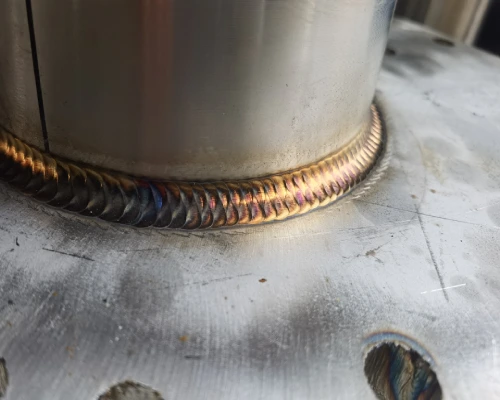
Weld porosity is the primary defect type leading to failure of the protection rating in custom terminal boxes. Porosity arises from the entrapment of gases such as nitrogen, oxygen, and hydrogen during the solidification of the molten pool—insufficient shielding gas coverage, as well as moisture and contaminants on the surface of the base metal or filler metal, can all serve as sources of these gases.
Pores form microscopic cavities within the weld; when these cavities penetrate through the weld, they create physical pathways for moisture and dust to enter the electrical terminal box. Although individual pores are small, multiple aligned pores are sufficient to cause the terminal box to fail during IP/NEMA pressure or immersion tests.
Process Limitations of Manual Welding
The inherent variables of manual TIG/MIG welding are the primary constraints on the consistency of terminal box welds.
Differences in welder technique, rhythm fluctuations caused by fatigue, and human error in adjusting shielding gas flow—these variables are particularly pronounced on long welds or custom terminal boxes with complex geometries. During manual operation, improper electrode angle, fluctuating travel speed, and uneven heat input can all lead to localized lack of fusion or clusters of porosity.
Since the protection rating of an electrical terminal box depends on the structural integrity of the entire weld, any localized process deviation can compromise the sealing chain, causing the finished product to fail leak tests.
Systemic Weaknesses in Terminal Box Sealing Design
The protective integrity of a custom terminal box is not determined by the weld alone—sealing rings and structural rigidity together form the sealing chain. Over the long term, sealing ring materials are subjected to compression set, UV exposure, and chemical erosion, leading to loss of elasticity and a decline in sealing pressure.
Thermal expansion and contraction caused by temperature cycling (e.g., from -40°C to 85°C) can induce microscopic deformation in the enclosure, resulting in uneven pressure distribution at the sealing interface. Furthermore, installation damage to the sealing interface at the cable entry point is also a common cause of degradation in the terminal box’s protection rating.
These systemic factors indicate that the long-term protective capability of electrical terminal boxes must be managed simultaneously by controlling both weld quality and seal design.
Only 4 steps
online custom metal fabrication parts
Contact our experts team and experience the efficiency and economic benefits of digital metal fabrication services.
Upload Design Files
STL , STEP (.stp), IGES (.igs), (.ZIP), or PDF.
Also be a sample or an idea
Quote & Design Analysis
Instant factory quotes and DfM reports, the most reasonable solution.
Manufacturing Begins
Digital processes can initiate order tasks within 24 hours.
On-Time Delivery
Keeping delivery promises, approved by 3000+ Global Company buyers.
Automated Welding Processes—An Engineering Approach to Resolving Terminal Box Weld Air-Tightness Issues
Automated welding processes provide a quantifiable engineering solution to terminal box weld air-tightness issues. Compared to traditional manual welding, robotic TIG/MIG continuous seam welding eliminates the conditions that lead to porosity and lack of fusion defects at the process parameter level through constant heat input, precise welding speed, and stable shielding gas flow.
Technical Advantages of Robotic TIG/MIG Continuous Seam Welding
The robotic TIG/MIG continuous seam welding process fundamentally changes the control logic for ensuring the airtightness of welds on custom terminal boxes by eliminating the operational variables associated with manual welding.
The automated system maintains a constant welding speed, precise heat input, and a stable shielding gas flow—the coordinated control of these three parameters directly suppresses the conditions that lead to porosity and lack of fusion defects. As the robotic torch moves continuously along a preset path, the weld bead is formed uniformly, and the consistency of the weld penetration and width far exceeds what can be achieved by manual operation.
For long, straight welds on IP/NEMA terminal boxes and continuous seams at box corners, automated welding ensures 100% structural continuity along the entire weld. The AWS D1.1 Structural Welding Specification lists porosity as a key rejection criterion for visual inspection; by eliminating operational variables, the automated system reduces the defect rate in terminal box welds to a level far below that of manual welding.
From Process Parameter Control to Welding Quality Reproducibility
The core engineering value of robotic welding systems lies in their closed-loop parameter control capability and quality reproducibility. Key parameters such as welding current, arc voltage, wire feed rate, welding speed, and shielding gas flow are monitored in real time and adjusted via closed-loop control by the CNC system. The system can maintain a weld bead width deviation within ±0.5 mm throughout continuous production cycles—a level of precision unattainable with manual welding.
The welding parameters for each batch of IP/NEMA terminal boxes are fully recorded and traceable, ensuring a high degree of consistency in weld quality across different batches.
For custom terminal boxes, this repeatability means that the IP/NEMA protection rating is no longer a statistical probability based on random sampling—but rather an engineering certainty that can be verified for every finished product.
Quality Verification System—Ensuring Closed-Loop Control of Terminal Box Protection Ratings
The quality verification system is the closed-loop control mechanism that ensures the protection rating of electrical terminal boxes is translated from design intent into actual product performance.
This system is built around a multi-tiered non-destructive testing framework: visual inspection and penetrant testing (PT) identify surface open defects in welds in accordance with ISO 3452-1; airtightness testing performs quantitative leakage assessments on IP/NEMA terminal boxes using either the positive pressure decay method or helium mass spectrometry leak detection. The NEMA 250 standard requires that all outdoor enclosures pass a 600-hour salt spray test as well as corresponding water spray and immersion tests.
Visual Inspection and Penetrant Testing (PT) of the Terminal Box
Visual inspection serves as the first line of defense in verifying the weld quality of custom terminal boxes—it identifies weld formation defects through visual examination, including undercut, surface porosity, cracks, and unfilled weld craters.
Following the visual inspection, penetrant testing (PT) is performed in accordance with ISO 3452-1. This testing method is based on the principle of capillary action: a penetrant is applied to the surface of the terminal box welds, where it penetrates surface-opening defects (porosity, cracks, lack of fusion); after removing excess penetrant from the surface, a developer is applied to draw out the penetrant from the defects and form a visible indication.
PT testing is suitable for metal welds, castings, and forgings. For IP/NEMA terminal boxes, this testing method effectively identifies surface-opening defects resulting from manual or automated welding, ensuring that each weld has passed surface integrity verification before proceeding to the airtightness test.
Air Tightness Leak Testing of Terminal Boxes
Air tightness leak testing is the final step in verifying the protection rating of electrical terminal boxes. The positive pressure decay method is the most commonly used testing method—the interior of the terminal box is pressurized to a set value (typically 5–10 kPa), and after holding the pressure, the pressure drop is measured to calculate the leakage rate. This method is suitable for mass production line testing of IP65–IP66-rated terminal boxes.
For terminal boxes with high protection ratings, such as IP67 (30-minute immersion at a depth of 1 meter) and IP68 (prolonged immersion at a depth of 1.5 meters or deeper), helium mass spectrometry leak detection is a more precise quantitative method—using helium as a tracer gas and detecting leaks via a mass spectrometer, with sensitivity reaching the 10⁻¹² Pa·m³/s level.
The NEMA 250 standard requires outdoor enclosures to pass a 600-hour salt spray test. This series of quantitative tests ensures that every custom terminal box meets its rated IP/NEMA protection rating specifications before leaving the factory.
Conclusion
The failure of terminal boxes to meet IP/NEMA protection ratings does not stem from inadequate design specifications, but rather from the inability of welding process defect control to satisfy the structural integrity required by the standards.
The inherent variables of manual welding—fluctuations in speed, uneven heat input, and unstable shielding gas—pose systemic risks to the airtightness of electrical terminal box welds. However, the engineering combination of automated TIG/MIG continuous seam welding with quantitative verification methods—such as penetrant testing and helium mass spectrometry leak detection—provides a quantifiable path for process improvement.
Supro is a professional custom terminal box manufacturer. Leveraging advanced equipment, extensive manufacturing experience, and a professional engineering team, we provide perfect custom terminal box services to more than 3,000 companies worldwide and offer genuine manufacturer quotes.
We deliver a wide range of products efficiently and on time. From product design and rapid sheet metal prototype fabrication to mass production, we provide professional technical support and exceptional quality.
We offer one-stop manufacturing solutions and highly cost-competitive product supply! For technical specifications or OEM partnership inquiries, please contact our engineering team.