

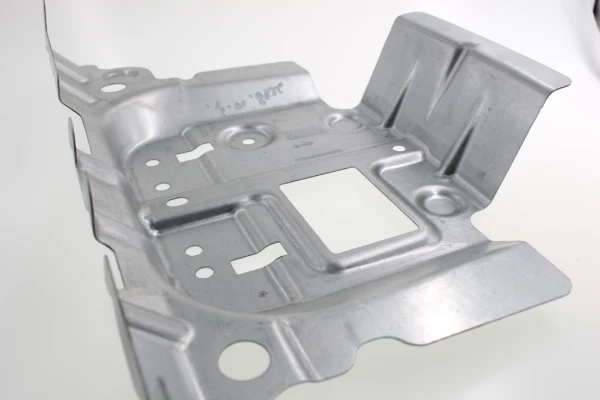

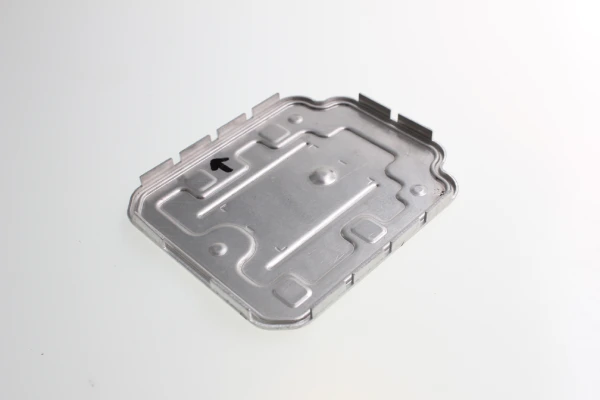
In deep draw stamping, material selection is the most critical decision determining die life, production stability, and unit cost. The deep draw stamping process subjects the blank to immense tensile and compressive stresses, pushing the limits of formability to the extreme. If material properties do not match the part geometry, it will inevitably lead to wrinkling, tearing, or even outright fracture—defects that could have been avoided through proper preliminary evaluation.
The formability of a specific material is quantified by three interdependent metrics: the normal anisotropy ratio (r-value), which measures resistance to thinning; the strain hardening index (n-value), which determines the uniformity of strain distribution; and the limit draw ratio (LDR), which serves as the practical benchmark for single-pass forming capability.
This guide explores the four major material categories used in deep draw metal stamping: low-carbon steel, stainless steel, aluminum alloys, and copper-based alloys. Each material has its own unique advantages and limitations, which determine its suitability for specific applications. Understanding these trade-offs helps engineers and procurement professionals specify materials for each custom deep draw stamping project that balance formability, strength, and corrosion resistance while also considering cost.
Key Formability Parameters for Deep Draw Stamping Materials
In the deep draw stamping process, a material’s formability is determined by three quantifiable parameters: the normal anisotropy ratio (r-value), which indicates resistance to thinning; the strain hardening index (n-value), which indicates the ability to distribute strain uniformly; and the limit draw ratio (LDR), which serves as a benchmark for actual single-pass forming capability.
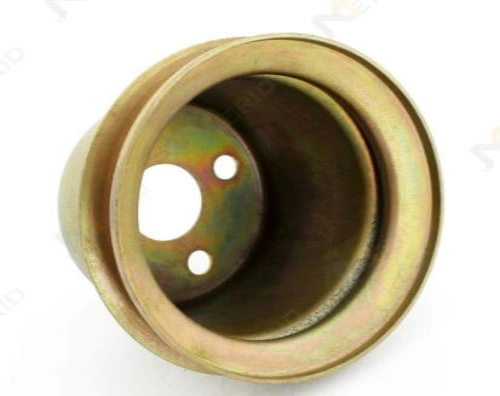
Normal Anisotropy (r-value) and Its Effect on Resistance to Thinning
The r-value, also known as the plastic strain ratio or Rankford coefficient, is defined as the ratio of true width strain to true thickness strain during uniaxial tensile testing. It quantifies a material’s ability to resist thinning under tensile stress—a higher r-value indicates superior deep drawing performance, as the material can effectively resist thickness reduction as it flows into the die cavity.
The r-value of deep drawing steel typically exceeds 1.5; Generally speaking, for a metal to undergo custom deep draw stamping relatively easily, its r-value must be at least 1.6. In contrast, the r-value of 6111-T4 aluminum alloy is approximately 0.69, while that of DDQ low-carbon steel can reach 2.01. This fundamental difference explains why aluminum requires stricter process control and specialized lubrication measures during the deep draw stamping process.
Strain Hardening Index (n-value) and Uniform Deformation
The n-value reflects the intensity of strain hardening during plastic deformation. A higher n-value indicates that the material possesses good work-hardening properties, enabling uniform distribution of strain across the formed part and thereby preventing localized necking and tearing. To ensure the reliability of deep draw stamping, the n-value should be at least 0.20.
The n-value of austenitic stainless steel is approximately 0.5, which is significantly higher than that of ordinary low-carbon steel (approximately 0.2). A higher n-value also implies higher requirements for blank holder force (BHF)—as the strain hardening index increases, the BHF must be increased accordingly. This relationship necessitates careful optimization of deep draw metal stamping process parameters during die development.
Limiting Draw Ratio (LDR) as the Practical Limit of the Deep Draw Stamping Process
The Limiting Draw Ratio (LDR) is defined as the maximum ratio of the initial blank diameter to the punch diameter at which deep drawing can be successfully performed without fracture: LDR = (D₀/Dp)max. It is the most direct practical indicator of single-operation formability.
For most low-carbon steels, the LDR value ranges from 1.8 to 2.3; for deep draw-grade aluminum, the LDR value can reach up to approximately 2.20. Experimental data indicate that across a variety of metals—including steel, aluminum, brass, and copper—the LDR systematically increases as the r value increases. Parts requiring draw ratios that exceed these limits must be manufactured using a multi-stage deep draw stamping process.
Before finalizing any deep draw stamping die design, manufacturers must verify that the LDR of the selected material meets the requirements of the part’s geometry and draw depth.
Low-Carbon Steel—Versatile Materials for deep draw Stamping
Low-carbon steel is the most commonly specified material for deep draw metal stamping. Under the ASTM A1008 standard, steel grades ranging from CS to EDDS strike a balance between cost, formability, and die life; among these, ultra-low-carbon steel grades enable the forming of complex geometries.
Grade | Typical Yield Strength (MPa) | Elongation (min %) | R-value | n-value | Typical Applications |
CS (Commercial Steel) | 140–275 | 30 | — | — | General structural components, packaging materials |
DS (Drawn Steel) | 150–240 | 36 | 1.3–1.7 | 0.17–0.22 | Simple Stamped Parts |
DDS (deep draw Steel) | 115–200 | 38 | 1.4–1.8 | 0.20–0.25 | Complex Stamped Parts |
EDDS (Extra-Deep Drawing Steel) | 105–170 | 40 | 1.7–2.1 | 0.23–0.27 | Automotive body panels, the most complex deep drawn parts |
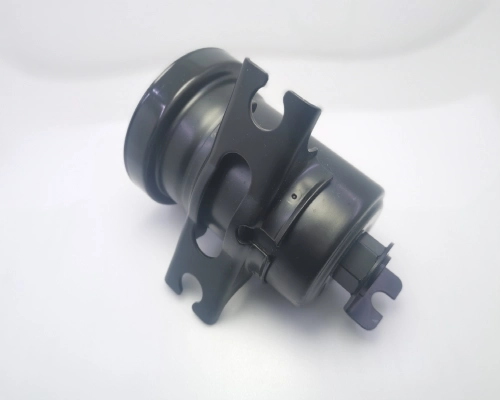
ASTM A1008 Classifications (CS, DS, DDS, EDDS)
The ASTM A1008 standard classifies cold-rolled carbon steel sheets into four grades based on formability. Commercial Steel (CS) is suitable for general forming applications with moderate formability requirements and has a carbon content not exceeding 0.15%. deep draw steel (DS) has superior mechanical properties compared to CS and should be specified for parts with stringent forming requirements. deep draw steel (DDS) offers excellent formability and a high r-value, making it suitable for complex stamped parts.
Extra-deep draw steel (EDDS) has a maximum carbon content of 0.02% and, through vacuum degassing and stabilization treatment, provides optimal formability. EDDS achieves an r value of 1.7–2.1 and an n value of 0.23–0.27—these metrics define the upper limits of formability for low-carbon steel.
For the most demanding custom deep draw stamping geometries, EDDS eliminates drawing strain and waviness due to its non-ageing, stable microstructure.
Mechanical Properties and Typical Applications
The variation in mechanical properties across the different grades of ASTM A1008 follows a clear pattern: as carbon content decreases, formability improves, while strength tends to remain stable.
CS Type B material has a yield strength of 210–340 MPa and an elongation of ≥25%. DDS has a yield strength of 115–200 MPa and excellent elongation. EDDS has a yield strength of 105–170 MPa and a minimum elongation of 40%. Low-carbon steel (with a carbon content of 0.05% to 0.25%) has an elongation ranging from 30% to 45% and an r-value greater than 1.5.
These properties make low-carbon steel a primary material for automotive body panels, home appliance housings, fuel tanks, and industrial enclosures. The excellent weldability and paintability of this deep draw stamping material further expand its range of applications in the automotive and general manufacturing sectors. For deep draw stamping processes requiring high-volume production and dimensional consistency, low-carbon steel offers the most reliable processing window at the lowest material cost.
Limitations and When to Choose Other deep draw Stamping Materials
Despite its many advantages, low-carbon steel has inherent limitations that lead to its replacement by other materials in specific applications. The primary limiting factor is its susceptibility to corrosion—uncoated low-carbon steel requires galvanizing, painting, or other protective treatments when exposed to humid or corrosive environments. With a density of 7.85 g/cm³, which is significantly higher than that of aluminum (2.7 g/cm³), it cannot be used in the aerospace and portable electronics sectors, where weight is a critical consideration.
Although low-carbon steel offers excellent formability in most custom deep draw stamping applications, its forming capability reaches its limits for parts requiring a single-pass draw ratio (LDR) exceeding the 1.8–2.3 range. For components requiring corrosion resistance without secondary coating, 304 or 316 stainless steel is a suitable choice. In situations where weight reduction is critical, 3003-O or 5052-O aluminum alloys can provide the necessary weight savings. When design priorities include electrical or thermal conductivity, copper and brass alloys offer performance unmatched by steel.
The decision to use deep draw stamping materials other than low-carbon steel should be based on quantifiable requirements—such as exposure to corrosive environments, weight targets, or electrical conductivity needs—rather than personal preference, as steel remains the most cost-effective solution for most deep draw metal stamping applications.
Are you looking for reliable & cost-effective
China metal fabrication manufacturer
More than 150,000 OEM metal fabrication products delivered to 5,000+ global buyers.
And benefit from it!
Stainless Steel—The Trade-off Between Corrosion Resistance and Formability in the deep draw Stamping Process
Austenitic stainless steels, such as 304, have a high n-value (approximately 0.44) for stretch formability but a low r-value (approximately 1.0), indicating that they have weaker resistance to thinning during the custom deep draw stamping process compared to deep draw steel.
Grade | Type | Thickness (mm) | n-value | R-value | LDR | Erichsen value (mm) |
304 | Austenitic Stainless Steel | 1.0 | 0.44 | 1.0 | 2.10 | 13.2 |
430 | Ferritic Stainless Steel | 1.0 | 0.20 | 1.2 | 2.04 | 9.0 |
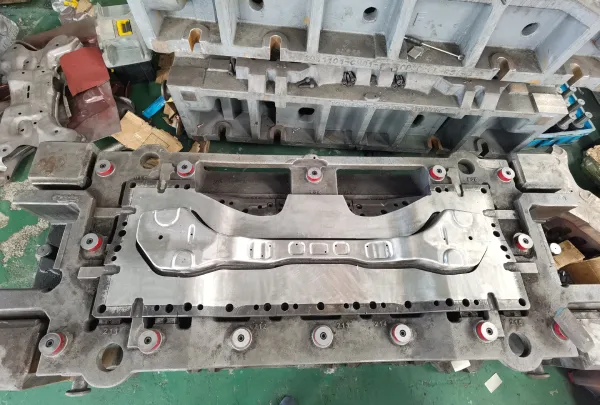
Austenitic Stainless Steels 304 and 316—Composition and Formability
Type 304 steel contains 18%–20% chromium and 8%–12% nickel, with a maximum carbon content of 0.08%. Type 316 steel has a similar composition but includes an additional 2% molybdenum, with a chromium content of 16%–18% and a nickel content of 10%–14%. The addition of molybdenum significantly improves corrosion resistance, particularly against chlorides, but slightly reduces formability.
Type 304 stainless steel is the most commonly used grade in deep draw metal stamping; at room temperature, the LDR value for a 1-millimeter-thick sheet is approximately 2.1. Its high n-value supports stretch forming and enables the production of complex geometries. However, the r-value of 304 is less than 1.0, indicating that its resistance to thinning is lower than that of deep draw steel. This characteristic requires extra caution in deep draw stamping die design and lubrication to prevent wall thinning in parts with large deep draw depths.
Work Hardening Behavior in the Deep Draw Stamping Process
The work hardening behavior of stainless steel presents both advantages and challenges. Cold working increases tensile strength by 10% to 30% during the forming process, thereby enhancing the performance of deep draw stamping parts. However, as the material flows through the die, this phenomenon leads to a gradual increase in forming force, necessitating robust dies and consistent process control.
Austenitic stainless steels (301, 304, 316) exhibit work hardening rates approximately 2 to 4 times higher than those of carbon steel, and their n-values (0.40–0.55) are significantly higher than those of carbon steel (0.15–0.25). For custom deep draw stamping, this means a significant increase in forming force requirements (up to 30–80%)—the maximum measured forming force for 304 stainless steel deep draw stamping can reach 170 kN. After cold working, the tensile strength of 304 can increase from approximately 515 MPa in the annealed condition to 750–900 MPa, but the elongation decreases from about 45% to 20–25%.
High strength comes with high processing costs; 304 stainless steel deep drawn stamped parts typically require intermediate annealing to restore ductility, while 316 has a lower martensitic transformation temperature than 304 and exhibits slightly lower hardening at the same degree of deformation; however, the addition of molybdenum significantly improves its resistance to pitting and crevice corrosion. When designing deep drawn stamping parts, select a 304 series grade with a high n-value if formability is the priority; choose 316 if corrosion resistance is the priority and the forming complexity is moderate.
Grade | Work Hardening Index (n) | Strength coefficient K (MPa) | Tensile Strength in the Annealed State (MPa) | Cold-Worked Tensile Strength (MPa) | Suitability for Deep Drawing |
304 | 0.44–0.45 | 1300 | ~515 | 700–900 | High n-value, good stretch formability |
316 | 0.40 | 1100 | ~510 | Up to 700 (cold-rolled) | Better corrosion resistance, with a slightly lower n-value |
Application Scenarios and Cost Considerations
deep drawn stamped stainless steel components are suitable for harsh environments with strict corrosion resistance requirements. Typical applications include food processing equipment, medical device housings, automotive fuel systems and exhaust components, pharmaceutical storage tanks, and precision instrument housings.
In the automotive industry, components must withstand high temperatures and corrosive environments. The medical industry relies on stainless steel for the manufacture of surgical instruments, diagnostic equipment, and implantable devices, where biocompatibility and sterility are critical. From a cost perspective, 304 stainless steel is approximately two to three times the price of carbon steel, while 316 stainless steel, due to its molybdenum content, typically costs 20% to 40% more than 304.
For most industrial deep draw metal stamping applications requiring only standard corrosion resistance, Grade 304 offers the best balance between formability and cost. Grade 316 should be reserved for applications involving contact with highly corrosive chemicals, saltwater, or extreme environmental conditions.
Aluminum Alloys—Lightweight Solutions in Custom deep draw Stamping Production
Aluminum alloys have a density of only one-third that of steel. Among them, 3003-O offers excellent formability and is suitable for complex parts, while 5052-O provides higher strength while maintaining moderate ductility.
Grade | Status | Tensile Strength (MPa) | Yield Strength (MPa) | Elongation (%) | Erichsen value (mm) | Deep Drawing Formability |
3003-O | annealed state | 110–130 | 40–50 | 25–35 | 7.5–9.5 | Excellent (General Deep Drawing) |
5052-O | annealed state | 195–245 | — | 20–30 | 6.5–8.5 | Good (high-strength components) |
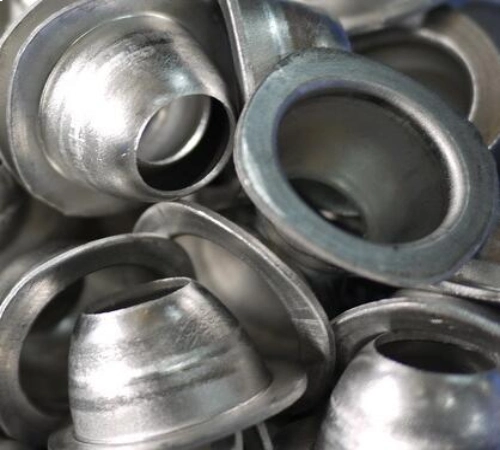
Recommended Grades—3003-O and 5052-O
3003-O is a fully annealed aluminum-manganese (Al-Mn) alloy with a tensile strength of 110–130 MPa, a yield strength of 40–50 MPa, and an elongation of 25–35%. Its moderate to high n value allows for uniform strain distribution, thereby preventing localized necking during deep draw metal stamping.
5052-O is an aluminum-magnesium (Al-Mg) alloy with a tensile strength of 170–215 MPa, a yield strength of approximately 65 MPa, and an elongation of 20–25%. Its magnesium content of 2.2–2.8% confers excellent corrosion resistance, particularly in marine environments.
For the deep draw stamping process, 3003-O is the material of choice for complex geometries requiring maximum ductility, while 5052-O is suitable for applications demanding higher structural strength.
Forming Challenges and Adjustments to the deep draw Stamping Process
Aluminum faces unique challenges during the custom deep draw stamping process that steel does not encounter. Its r-value typically ranges from 0.6 to 1.1—significantly lower than that of deep drawing steel (1.5 or higher)—indicating weaker resistance to thinning. A low elastic modulus of 70 GPa (approximately one-third that of steel) results in significantly greater springback. There is a tendency for adhesion between aluminum and tool steel, which creates challenging tribological conditions, leading to increased friction and galling.
To address these issues, applying a DLC-based PVD coating to the surface of deep draw stamping dies can reduce the tendency for galling and improve die performance. High-solid-content polymer lubricants form a stable lubricating film that effectively prevents galling and thinning. The blank holder force (BHF) must be precisely controlled—excessive force can cause tearing, while insufficient force can exacerbate wrinkling.
Compared to higher-hardness grades, AA5052-O is more prone to severe wrinkling and therefore requires stricter control of the deep draw stamping process. Warm forming at higher temperatures (up to 240°C) can improve formability in challenging deep draw stamping operations.
Applications Where Aluminum Alloys Outperform Steel
Aluminum has a density of 2.68–2.70 g/cm³—about one-third that of steel—which delivers critical weight savings in automotive, aerospace, and portable electronics applications.
3003-O is widely used in cookware (including deep drawn pots, pressure cookers, and baking pans), as well as in automotive fuel tank lids and filter housings. Its high ductility allows it to undergo complex forming processes, such as deep draw metal stamping and spin forming, without cracking.
5052-O performs exceptionally well in marine environments—exposure tests show a corrosion rate of only 0.02 mm/year in seawater. Applications include automotive fuel tanks, hull components, electrical enclosures, and battery trays for electric vehicles.
Aluminum also offers excellent thermal conductivity and is non-magnetic. For components that meet corrosion resistance requirements without the need for secondary coatings, aluminum eliminates the need for galvanizing or painting—reducing both cost and weight through the selection of a single material.
Copper and Brass Alloys for Deep Draw Stamping
Copper and brass alloys exhibit excellent formability in the deep draw stamping process. Among these, C11000 pure copper has an electrical conductivity of 100% IACS, while C26000 cartridge brass has an elongation exceeding 50% and an LDR value of 2.3.
Grade | Type | Tensile Strength (MPa) | Elongation (%) | Conductivity (% IACS) | Deep Drawing Formability | Typical Applications |
C11000 | Pure Copper (Electrolytic Tough Copper) | 220–280 (annealed state) | 45–55 | 100 | Good (soft) | Electrical busbars, connectors, heat sinks, heat exchangers |
C26000 | Brass (70/30 Cartridge Brass) | 300–370 (annealed state) | 50–65 | 28 | Excellent (Controllable Rebound) | Electrical terminals, cartridge cases, heat sink cores, decorative hardware, bathroom fixtures |

Formability Characteristics of C11000 and Common Brass Grades
C11000 is an electrolytic high-toughness copper with a copper content of at least 99.90 percent. In the annealed condition, it has a tensile strength of 220–280 MPa and an elongation of 45–55 percent. Its electrical conductivity of 100% IACS makes it the benchmark for electrical applications. However, pure copper exhibits a high rate of work hardening during deformation, and springback in the annealed condition requires precise control of die parameters.
C26000 cartridge case brass (70% copper, 30% zinc) has a tensile strength of 300–370 MPa and an elongation of 50–65% in the annealed condition. Its low draw ratio (LDR) can reach 2.3, allowing for multi-stage thinning processes without intermediate annealing and meeting the requirements of complex custom deep draw stamping geometries. Compared to pure copper, the addition of zinc not only increases strength by 30–40% but also provides superior springback control. C26000 is widely recognized as the most ductile brass among copper alloys and is regarded as the preferred cost-effective material for complex cold forming processes.
Key Applications—Electrical, Thermal Management, and Decorative Applications
deep drawn copper and brass components are primarily used in three major fields. In electrical systems, C11000 dominates applications requiring high electrical conductivity—including busbars, connectors, PCB substrates, and switchgear components. Although C26000 has a conductivity of only 28% IACS, it is still specified for approximately 70% of stamped electrical terminals due to its clean cut edges and dimensional stability.
In the field of thermal management, C11000, with a thermal conductivity of 398 W/m·K, is the material of choice for heat exchangers, heat sinks, and fins. C26000, with a thermal conductivity of 120 W/m·K, is suitable for applications where thermal performance is secondary to formability.
In decorative and architectural applications, C26000’s bright gold luster and resistance to discoloration make it suitable for hardware, bathroom fixtures, and musical instruments. This material also exhibits excellent corrosion resistance in air, fresh water, and steam environments.
In the automotive sector, its applications include shielding covers for electric vehicle busbars, terminal connectors, and sensor housings. For deep draw metal stamping projects, the choice between C11000 and C26000 should be based on primary requirements: whether to prioritize electrical conductivity (C11000) or to balance formability and strength (C26000).
Cost-Effectiveness and deep draw Stamping Die Design Considerations
From a cost perspective, C11000 is significantly more expensive than C26000 due to its higher pure copper content. For most stamped parts, C26000 offers better value for money.
Special attention is required when designing dies for custom deep draw stamping of copper and brass: the die clearance is typically 6% to 8% of the material thickness. It is recommended to use a low-viscosity lubricant (kerosene containing 10% paraffin) to prevent seizing and surface scratches.
Die radius has the greatest impact on the deep draw stamping process, followed by punch radius, die clearance, and lubrication conditions. C26000 exhibits moderate springback and better dimensional stability than C11000, thereby reducing the need for post-forming corrections.
Cold working can significantly increase the tensile strength of both materials—C26000 can achieve a tensile strength of over 600 MPa through cold rolling while still maintaining beneficial ductility. For high-volume production of deep drawn stamped parts, although C26000 has lower electrical conductivity, its superior edge quality and lower die wear make it the more economical choice. For parts requiring maximum electrical conductivity or those used in high-temperature reducing atmospheres, C11000 should be specified; however, it should be noted that this material is prone to hydrogen embrittlement (hydrogen-induced failure) at temperatures above 400°C.
Looking for a reliable custom sheet metal fabrication companies?
Talk To Supro MFG Expert Team
Contact us for competitive ex-factory prices,
and a full range of technical support services.
Selecting deep draw Stamping Materials Based on Part Requirements
The selection of deep draw stamping materials requires a systematic evaluation of formability parameters in relation to the part’s geometry; verifying the r-value, n-value, and LDR compatibility prior to die manufacturing can prevent costly die modifications and production delays.
Material Families | Representative Grades | R-value | n-value | LDR | Density (g/cm³) | Relative Cost | Typical Use Cases |
Low-carbon steel | EDDS | 1.7–2.1 | 0.23–0.27 | 1.8–2.3 | 7.85 | Baseline (1×) | Automotive structural components, electrical enclosures, industrial housings |
Stainless Steel | 304 | ~1.0 | ~0.44 | ~2.1 | 7.90 | 2–3× steel | Food processing equipment, medical enclosures, exhaust components |
Aluminum Alloy | 3003-O | 0.6–0.7 | 0.25–0.30 | ~2.2 | 2.70 | 2–3× steel | Cookware, battery casings, lightweight structural components |
Copper Alloys | C26000 | 0.8–1.2 | 0.40–0.50 | ~2.3 | 8.50 | 4–5× steel | Electrical Terminals, Heat Sinks, Decorative Hardware |
Step-by-Step Decision-Making Framework
The first step is to determine the operating environment—assessing corrosion exposure, operating temperature range, and any conductivity or weight requirements.
The second step is to evaluate mechanical requirements: quantify load-bearing requirements, acceptable wall thickness reduction limits, and surface finish specifications.
Step 3: Calculate the draw ratio based on the part depth and blank diameter; compare this to the draw ratio (LDR) values of candidate materials. If the calculated draw ratio exceeds the material’s LDR value, a multi-stage deep draw stamping process must be used.
Step 4: Perform cost modeling. Consider raw material prices, die durability (stainless steel accelerates wear), and production speed (aluminum requires slower speeds).
Step 5: Evaluate subsequent processes. Welding, surface treatment, or assembly requirements may rule out certain materials.
This structured approach ensures that every custom deep draw stamping project is built on a sound technical and commercial foundation.
Pre-Manufacturing Validation for Deep Draw Stamping Dies
Validation must be performed before tool steel is machined. Finite element analysis (FEA) should be conducted using actual material property data—rather than generic values from the literature.
Key input parameters include: actual stress-strain curves, r- and n-values, forming limit diagrams (FLDs) for specific steel grades, and corresponding friction coefficients under planned lubrication conditions. For custom deep draw stamping, the maximum allowable blank holder force (BHF) must also be determined, and the maximum punch force calculated. Simulation results should confirm that the process window between wrinkling and tearing is sufficiently wide to meet production requirements—for high-volume production of deep drawn stamping parts, a safety margin of at least 15% is recommended.
For new material-grade combinations, physical validation through test specimen verification is strongly recommended. For multi-stage deep draw stamping processes with an elongation ratio exceeding 2.3, it is necessary to verify whether the material supports intermediate annealing or requires post-forming stress-relief heat treatment. The validation phase is by no means a mere formality—it serves as the final checkpoint before committing to die capital expenditures.
Conclusion
The key to successful material selection in deep draw stamping ultimately lies in matching quantified formability metrics with the part’s geometry and service conditions. For most applications, low-carbon steel remains the most cost-effective choice. Stainless steel provides corrosion resistance when required. Aluminum offers critical weight reduction for automotive and aerospace components. Copper alloys are used to meet specific electrical and thermal requirements.
Each deep draw stamping material offers unique advantages and trade-offs in terms of formability, cost, and die requirements. The optimal decision can be reached by systematically evaluating the r-value, n-value, and LDR-value and comparing them against design specifications.
For any custom deep draw stamping project, investing time in validation before die fabrication consistently results in higher production yields, longer die life, and predictable unit costs.
Supro MFG is a China-based precision deep draw stamping manufacturer certified to ISO 9001:2015 and IATF 16949:2016. With in-house die manufacturing capabilities, CAE simulation expertise, and a commitment to process control with a CPK > 1.33, we provide custom deep draw stamping services and precision stamped parts to global customers in the electronics, automotive, and telecommunications industries. For technical specifications or inquiries regarding OEM partnerships, please contact our engineering team.