


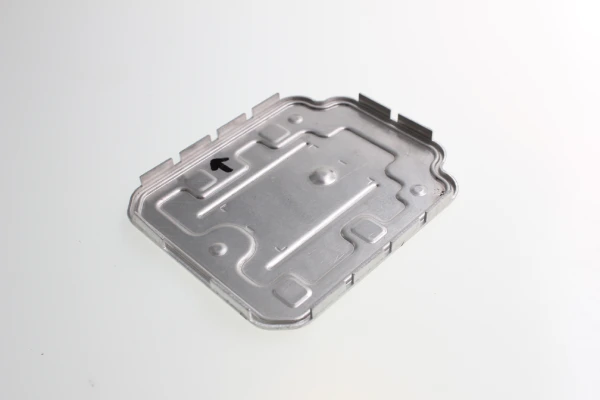
Surface galling remains one of the most challenging tribological issues in the deep draw stamping process, particularly when processing advanced high-strength steel (AHSS), stainless steel, and aluminum alloys.
This adhesive wear phenomenon—characterized by the transfer of workpiece material to the punch and die surfaces—directly affects the quality of deep drawn stamped parts, accelerates die wear, and causes significant downtime during production. Under the high contact pressures and long sliding distances inherent in deep draw metal stamping, improper selection of lubricants, die materials, and surface treatments can rapidly lead to soaring scrap rates and die costs.
To effectively mitigate galling, a systematic tribological approach is required: high-viscosity lubricants containing extreme-pressure (EP) additives can maintain the integrity of the boundary oil film under heavy loads; PVD coatings—with surface hardness exceeding 3,000 HV—provide wear-resistant die contact surfaces; while optimized surface roughness for deep draw stamping dies (Ra values below 0.4 µm) minimizes the initiation points of adhesive wear.
This paper explores the mechanisms of surface seizing in custom deep draw stamping, evaluates lubrication and coating strategies, and outlines systematic preventive measures based on production experience and tribological research.
Understanding the Phenomenon of Seizing in Deep Draw Stamping
Seizing in deep draw metal stamping is a form of adhesive wear caused by extreme contact pressure and sliding friction. Its occurrence and progression depend on the metal material of the workpiece, the surface condition of the die, the chemical composition of the lubricant, and the interfacial temperature.
Definition and Mechanism of Adhesive Wear
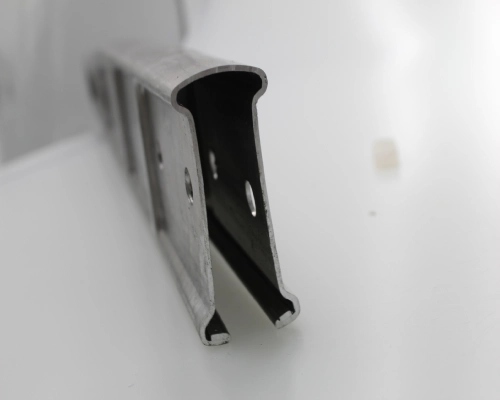
Seizing in the deep draw stamping process is classified as a severe form of adhesive wear, in which workpiece material is transferred to the die surface under high contact pressure and sliding friction.
During the forming stroke, localized welding occurs at the junctions of microscopic roughness features between the sheet metal and the die; subsequently, due to fracture, the transferred material adheres to the die, forming lumps or a continuous transfer layer. This transferred layer alters the geometry of the deep draw stamping die, increases friction, and accelerates the adhesion of subsequent material.
In many adhesive wear processes, the morphology of the transferred layer—particularly the formation of sharp, hard lumps—abrades the feed surface and gradually degrades the quality of deep draw stamped parts and the integrity of the die. Research indicates that thermoelectric currents generated by temperature gradients during the forming process are one of the factors contributing to adhesive wear. Understanding the evolution of this mechanism is critical for selecting effective lubricants, die materials, and coatings—measures that can interrupt the adhesive transfer cycle in the deep draw metal stamping process.
Key deep draw Stamping Process Parameters Affecting the Severity of Adhesion
The severity of adhesion during the custom deep draw stamping process depends on a set of interdependent tribological parameters.
The contact pressure at the die-workpiece interface is critical—finite element simulations of advanced high-strength steel (AHSS) forming predict a sidewall pressure of approximately 200 MPa (29 ksi), while peak pressures at sharp die corners can reach 400 MPa (58 ksi). Under these conditions, the lubricating film typically fails, triggering sticking.
The surface roughness of deep draw stamping dies has a direct impact; studies show that reducing die surface roughness can extend production run times by a factor of six. DLC-coated tool steel with an initial roughness of 71 nm has a significantly higher seizing threshold than bare D2 blades with an initial roughness of 358 nm.
The properties of the workpiece material also play a significant role—aluminum alloys are more prone to galling than low-carbon steel, while galvanized advanced high-strength steel (AHSS) introduces additional complexity due to interactions with the zinc coating.
Draw depth, slide length, die hardness (optimal range: 58–62 HRC), and lubricant viscosity further influence the susceptibility to galling. To effectively prevent galling, all these deep draw stamping process parameters must be systematically controlled.
Lubrication Strategies to Prevent Seizing in Deep Draw Stamping
In the deep draw metal stamping process, the key to effectively preventing seizing lies in developing a well-designed lubrication scheme—striking a balance between viscosity, extreme-pressure additives, and stable oil film deposition to withstand contact pressures exceeding 400 MPa and temperature increases that degrade the performance of conventional lubricants.
Selection of Lubricants and Viscosity Requirements
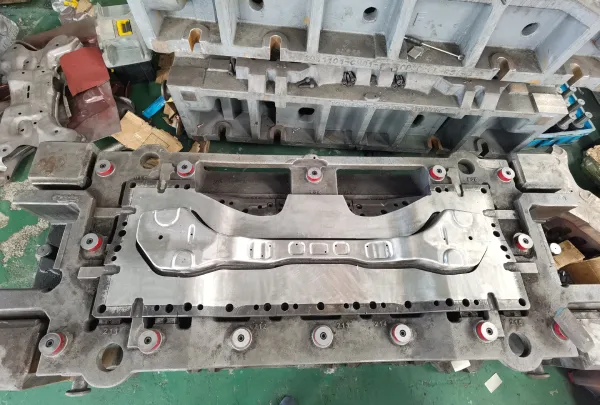
When selecting lubricants for custom deep draw stamping, priority must be given to viscosity grades and the chemical composition of extreme pressure (EP) additives. High-viscosity formulations—typically with a viscosity range of 100 to 1,400 cSt at 40°C—are critical for maintaining a stable boundary oil film when contact pressures at critical die radii may exceed 400 MPa (58 ksi). Extreme-pressure (EP) additives—including sulfur- or chlorine-containing compounds—react chemically with metal surfaces under high loads to form a sacrificial layer, thereby preventing welding between the die and the workpiece.
In response to environmental regulations, chlorine-free alternatives have gradually gained favor; these products provide comparable anti-seizing performance through advanced ester-based formulations.
For advanced high-strength steels (AHSS) and stainless steel alloys, synthetic high-viscosity lubricants containing multiphase additive packages have demonstrated exceptional performance in reducing metal adhesion and extending the service life of deep draw stamping dies. Procurement professionals should evaluate lubricants based on kinematic viscosity, the type of extreme-pressure additives, and compatibility with subsequent cleaning processes to ensure forming performance and production efficiency in deep draw metal stamping.
Application Methods and Oil Film Stability
In the deep draw stamping process, the uniform deposition of the lubricating film is just as important as the chemical composition of the lubricant itself. Application methods—including roller coating, spray systems, dip coating, and wipe coating—each offer distinct advantages depending on the blank’s geometry and production volume.
Roller coating allows for precise film thickness control, while spraying is suitable for complex part geometries and progressive die operations. The film thickness of oil-based lubricants typically ranges from 200 to 500 microinches (approximately 5 to 13 micrometers); even a deviation of just 50 milligrams per square meter across the width of the blank can affect anti-seizing performance. Commercial formulations include tackifiers and viscosity modifiers to ensure the lubricant remains in place during the forming stroke and is not squeezed out under high pressure.
For high-volume production of deep drawn stamped parts, automated coating systems equipped with real-time coating weight monitoring—where the coating weight for low-viscosity forming oils typically ranges from 0.8 to 1.5 grams per square meter—help maintain coating integrity during extended stamping runs. The choice of coating method must comprehensively consider the lubricant’s rheological properties, part geometry, and stamping cycle time to achieve the coating uniformity required for reliable anti-seizing protection during the deep draw stamping process.
Are you looking for reliable & cost-effective
China metal fabrication manufacturer
More than 150,000 OEM metal fabrication products delivered to 5,000+ global buyers.
And benefit from it!
Deep Draw Stamping Die Coatings and Surface Engineering
In custom deep draw stamping processes, die coatings serve as a critical barrier layer that effectively reduces interfacial adhesion and wear. PVD and PACVD technologies—which can achieve hardness levels exceeding 3,000 HV—fundamentally alter the tribological response of forming dies by modifying surface energy and the coefficient of friction.
PVD and PACVD Coating Technologies
Physical vapor deposition (PVD) and plasma-assisted chemical vapor deposition (PACVD) are the two primary coating technologies used in deep draw stamping dies. The PVD process—typically conducted at temperatures between 400°C and 500°C—deposits hard, dense films using cathodic arc or magnetron sputtering methods. The resulting coatings conform precisely to the die’s geometry without affecting dimensional tolerances. In contrast, PACVD relies on chemical reactions and decomposition of gas mixture components under plasma-assisted glow discharge conditions.
Common PVD coating series include titanium-based nitrides and carbides (TiN, TiCN, TiAlN) as well as chromium nitride (CrN); these coatings have all been proven to effectively prevent galling and reduce die maintenance costs. In the field of aluminum alloy forming, diamond-like carbon (DLC) coatings demonstrate exceptional resistance to galling—research shows that in aluminum deep drawing stamping processes, DLC-coated dies can operate for up to 6,200 cycles without the need for lubricants.
Performance Validation and Economic Benefits
Production data fully demonstrates the economic viability of die coatings in deep draw stamping. One stamping manufacturer reported that coated forming blades achieved a service life of nearly 200,000 stamping cycles—approximately 43% longer than that of traditional CVD TiC coatings applied to the same tool steel.
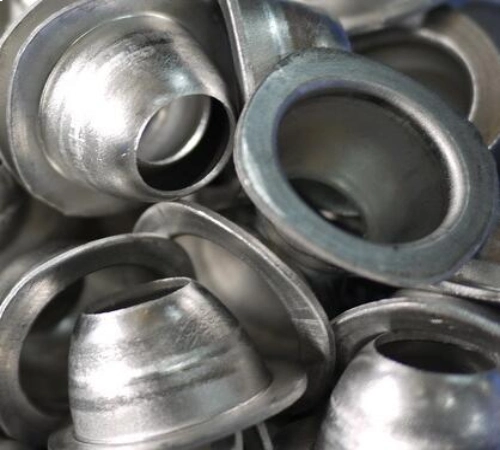
In one documented case, coated dies enabled a stamping plant to increase production from 15,000 cycles to several million cycles before maintenance was required during the deep drawing of stainless steel cups. PVD coatings can achieve surface hardness exceeding 3,000 HV, enabling deep draw stamping dies to maintain sharpness and resist microcracks under high loads. The economic benefits extend beyond extended die life—coatings also reduce equipment downtime caused by maintenance and die replacement, lower lubricant consumption, and decrease scrap rates resulting from seizing defects.
For high-volume production of deep drawn stamped parts, the initial investment in coating is typically recouped through reduced die replacement frequency and improved process stability. Surface-treated dies retain their shape longer than untreated ones, thereby lowering manufacturing costs through higher deep draw metal stamping frequencies and extended service life.
Systematic Preventive Measures to Avoid Surface Seizing in deep draw Stamping
In addition to lubrication and coatings, preventing seizing in custom deep draw stamping requires comprehensive control over die design, surface finish, material pairing, and process parameters—treating the friction system as a whole rather than as isolated variables.
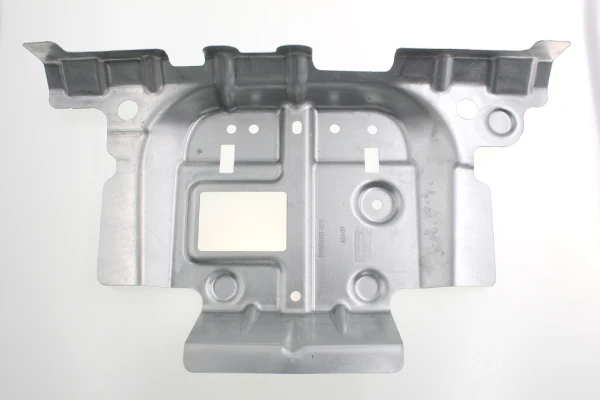
Design of deep draw Stamping Dies and Optimization of Surface Roughness
In the deep draw stamping process, die design parameters directly determine the tribological conditions at the interface between the punch and the die. Die entry and punch nose radii should be maintained at a level no less than four times the material thickness to distribute strain and reduce contact pressure concentrations that lead to adhesive wear.
The clearance between the punch and the die must be systematically calculated—for deep draw metal stamping processes, the clearance is typically set at 1.1 to 1.3 times the nominal material thickness to accommodate the in-plane compression thickening that occurs as the metal sheet flows into the die cavity. At the corners of the deep drawing zone—where material thickening is most pronounced—additional clearance must be machined into the vertical walls, as failure to account for this thickness increase is the primary root cause of galling.
The surface finish of deep draw stamping dies is equally critical; polishing the die surface to an Ra value below 0.4 micrometers minimizes the initiation points of adhesive wear. Studies have shown that the lower the die hardness and the higher the surface roughness, the more severe the galling wear becomes. This underscores the necessity of maintaining die steel hardness within the range of 58 to 62 HRC to resist abrasive and adhesive wear.
Material Selection and Control of Deep Draw Stamping Process Parameters
The selection of workpiece materials and the optimization of process parameters constitute the second pillar of systematic anti-galling measures in custom deep draw stamping. Under identical lubrication and die conditions, the surface roughness and chemical composition of the sheet metal directly affect the severity of galling. For example, galvanized sheet metal is more prone to galling than annealed galvanized sheet metal, and the characteristics of the galvanized coating—hardness and surface roughness—are key parameters in galling prediction models.
Process parameters, including blank holder force (BHF), draw speed, and draw ratio, must be systematically controlled to maintain interface pressure below the critical threshold. BHF is typically 25% to 50% of the punch force, while the draw ratio per operation should be controlled below 2.0; deeper draws require a multi-stage deep draw stamping process.
Advanced high-strength steel (AHSS) and stainless steel present unique tribological challenges due to their high strength and work-hardening characteristics—finite element simulation has proven highly effective in predicting pressure distributions and optimizing deep draw metal stamping process parameters prior to die cutting.
Integrated Tribological System Approach
In the custom deep draw stamping process, the most effective anti-seizing measures require an integrated tribological system approach that optimizes the combination of workpiece material, die material, die coating, and lubricant. This approach does not address seizing issues through isolated interventions but rather treats the contact interface between the die and the workpiece as a dynamic system in which each component influences the others.
Laboratory tribological tests, such as the strip deep draw test (SDT) and the torsional compression test (TCT), allow for the quantitative evaluation of lubricant performance and galling behavior under controlled conditions. These tests enable deep draw metal stamping manufacturers to develop guidelines for selecting the optimal combination of die materials, coatings, and lubricants for specific applications.
Conclusion
Surface galling in deep draw stamping is a multifaceted tribological challenge that requires systematic interventions in areas such as lubrication, die coatings, and process parameters.
High-viscosity lubricants containing extreme-pressure additives, when used to maintain a stable oil film thickness, can form the necessary boundary layer that separates the die surface from the workpiece surface. Physical vapor deposition (PVD) and plasma-assisted chemical vapor deposition (PACVD) coatings—particularly specialized formulations such as TiCrN and DLC—can extend the service life of deep draw stamping dies and reduce seizing due to their excellent friction characteristics and wear resistance.
Die design, surface roughness optimization, and material selection collectively form this preventive framework. For precision deep draw metal stamping manufacturers, integrating these strategies into a coherent tribological system is critical to maintaining production efficiency, dimensional compliance, and part quality during the demanding deep draw stamping process.
Supro MFG is a China-based custom metal fabrication manufacturer certified to ISO 9001:2015 and IATF 16949:2016. With in-house tooling capabilities, CAE simulation expertise, and a commitment to process control with a CPK > 1.33, we provide custom deep draw stamping services and precision stamped parts to global customers in the electronics, automotive, and telecommunications industries.
For technical specifications or inquiries regarding OEM partnerships, please contact our engineering team.