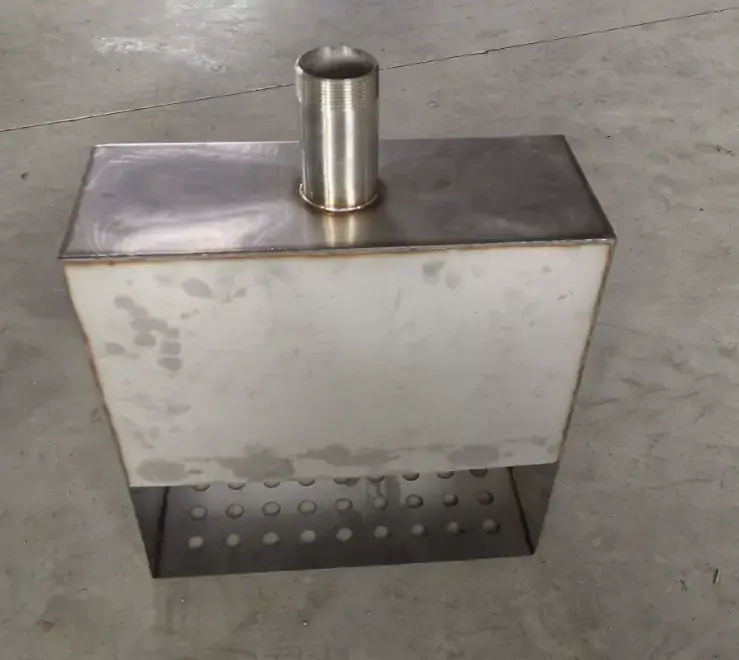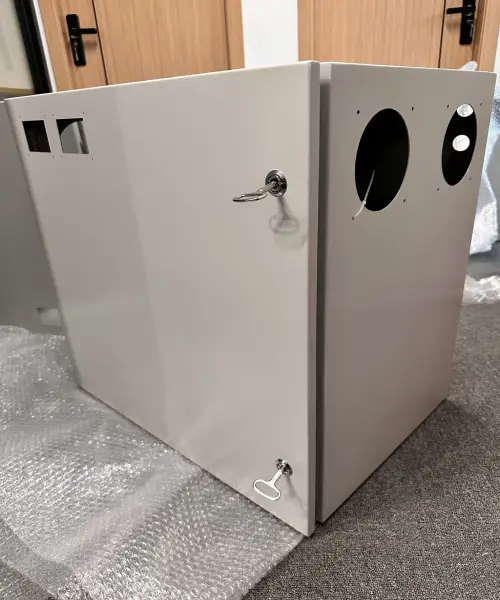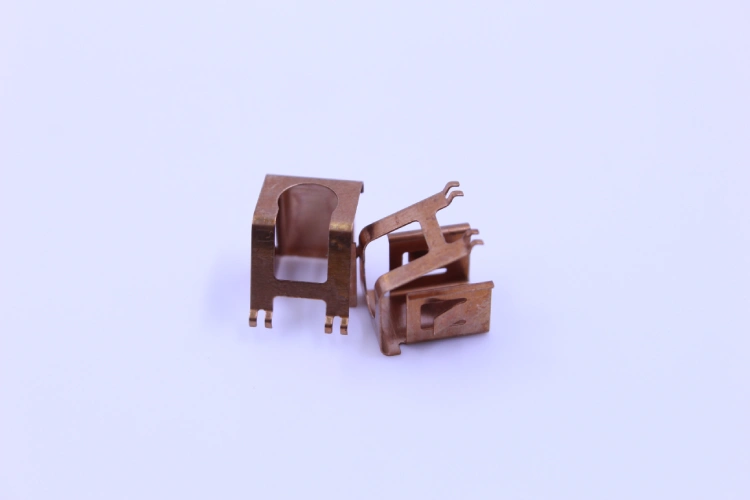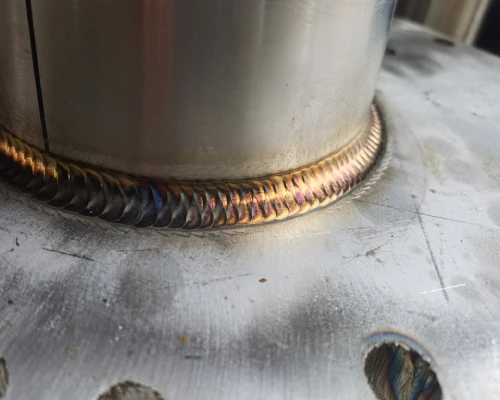

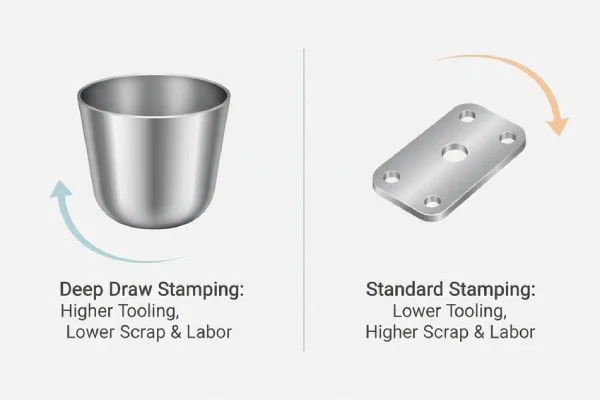
Deep draw stamping is one of the advanced metal forming technologies in modern manufacturing. This process transforms flat metal blanks into seamless hollow parts, with a forming depth exceeding the part’s diameter—a characteristic that distinguishes it from traditional stamping processes.
Unlike standard stamping processes, which involve only cutting, punching, or shallow bending with minimal material displacement, deep draw stamping technology presses the blank into the die cavity by controlling radial and circumferential material flow. This results in a single hollow component with a continuous structure and no seams or joints, thereby eliminating the structural weaknesses inherent in welded assemblies.
As a cold forming process performed at room temperature, deep draw metal stamping preserves the metal’s grain structure while inducing work hardening, resulting in a 10% to 30% increase in tensile strength, with the specific improvement depending on material selection and draw depth.
On mechanical presses, production rates typically range from 15 to 40 parts per minute, supporting large-scale manufacturing projects and ensuring dimensional consistency and repeatability. The maximum draw ratio (calculated as the blank diameter divided by the punch diameter) typically ranges from 1.8 to 2.3 in a single drawing operation, while multi-stage deep draw stamping processes can extend this capability to 3.0 or higher.
This article explores the applications of deep draw stamping technology in five key industries—automotive, aerospace, medical, electronics, and home appliances—and explains how this versatile forming technology meets the specific engineering requirements of each industry.
Applications of Deep Draw Stamping in the Automotive Industry: Structural Integrity and Weight Reduction
The deep draw stamping process enables automotive weight reduction without sacrificing structural rigidity. It produces seamless, cold-work-hardened components with precision approaching near-net-shape forming, a material utilization rate exceeding 85%, and consistent dimensional repeatability during high-volume production.
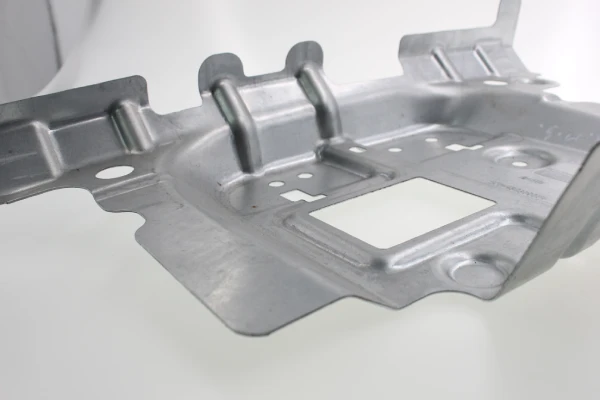
Engine and Powertrain Components
deep draw metal stamping is a fundamental process in powertrain manufacturing, where components such as oil pans, transmission covers, and sensor housings require both structural integrity and leak-proof performance.
A 2025 study demonstrated how a two-stage indirect hot-forming process—involving cold forming followed by hot forming and rapid quenching—was used to manufacture automotive engine oil pans from 22MnB5 ultra-high-strength steel. The resulting components exhibited a fully martensitic microstructure with a hardness of 550 HV and a maximum wall thinning ratio of less than 18%, while maintaining crack-free and wrinkle-free geometries.
Finite element simulations conducted using AutoForm R8 guided die design and deep draw stamping process optimization, validating the feasibility of manufacturing high-strength, deep drawn powertrain components at mass-production scale. For procurement professionals, these results directly translate to fewer warranty claims and extended component service life.
Body Panels and Structural Frames
Custom deep draw stamping also plays a crucial role in the manufacture of automotive body panels (including door panels, fenders, hoods, and trunk lids).
Materials such as DC06 cold-rolled steel, characterized by low yield strength (210–260 MPa) and high elongation (36–42%), provide the formability required for complex automotive geometries. The deep draw stamping process produces seamless structural components without welds or joints, thereby simultaneously enhancing structural rigidity and crash safety performance. Transmission drums and other drivetrain components further demonstrate the process’s capability to produce complex shapes with extremely high precision and consistency.
Material Utilization and Cost Advantages
From a procurement perspective, the material utilization of deep draw stamping offers quantifiable cost advantages. Optimized blank layout for deep drawing processes has achieved a material utilization rate of 93.1%, reducing scrap per formed part by 0.046 kilograms compared to traditional methods. A process optimization study by Ford Otosan reduced production scrap and press line downtime by more than 90% through improvements in blank positioning and die design. Advanced progressive die processes combined with numerical simulation can reduce the scrap rate to below 2.3%.
As a cold forming process, deep draw metal stamping eliminates the energy costs associated with hot forming, while its near-net-shape capability minimizes subsequent machining operations. For high-volume automotive projects, the combined advantages of high material utilization, reduced secondary processing, and the elimination of welded assemblies make deep draw stamping technology the most cost-effective manufacturing solution for hollow structural components.
Applications of Deep Draw Stamping in the Aerospace Industry: Lightweight, High-Strength, and Seamless Structures
The deep draw stamping process can produce seamless aerospace structural components with a strength-to-weight ratio exceeding 200 kN·m/kg. By leveraging the grain refinement and controlled wall-thickness reduction achieved through cold forming, this process not only meets the structural integrity requirements of the Federal Aviation Administration (FAA) but also eliminates the fatigue risks associated with welding.

Fuel Systems and Housings
Custom deep draw stamping is the preferred process for manufacturing aerospace fuel system housings, fuel tanks, and hydraulic tanks because it enables the production of seamless, leak-proof components from a single metal blank. The elimination of weld seams removes potential failure points—which, under the extreme pressure differentials experienced at cruising altitudes, could lead to fuel leaks or stress fractures.
High-strength, corrosion-resistant materials such as 304 and 316 stainless steel grades are typically specified for fuel system components, while nickel-based alloys like Inconel 625—which, due to their high work-hardening rate, require intermediate annealing between 760°C and 1,040°C—are used in high-temperature fuel systems. All components are manufactured under an AS9100 Rev. D-certified quality system, with complete material traceability maintained throughout the entire process, from steel mill certification to final inspection.
Fuselage Structural Components
Aircraft fuselage panels, wing skins, and structural frames are increasingly manufactured using deep draw stamping technology. As a cold-forming process, it enables the complex curved geometries required for modern fuselage designs while preserving the metal’s grain structure. For custom deep draw stamping of large components such as aircraft fuselage panels, special attention must be paid to dimensional accuracy, reliable material behavior models, and validated failure criteria.
Advanced simulation tools, including finite element analysis, enable deep draw stamping manufacturers to predict material flow, wall thinning, and springback behavior before finalizing die designs. The resulting monolithic components eliminate the weight and structural complexity associated with multi-piece assemblies while maintaining the strict tolerances required for aerodynamic performance and system integration.
Material Selection for Deep Draw Stamping in Aerospace Applications
Material selection for aerospace deep draw metal stamping requires a careful balance of strength, weight, temperature resistance, and full traceability.
Aluminum alloys—particularly grades 1100, 3003, and 5052, which have an elongation of 20% to 35% and a density of 2.7 g/cm³—are the materials of choice for weight-critical airframe applications.
Titanium alloys (including Ti-6Al-4V) offer an exceptional strength-to-weight ratio and are specified for engine components and structural supports that require both high strength and corrosion resistance.
Recent process innovations have successfully enabled custom deep draw stamping of α-β titanium sheets at temperatures below 500°C, allowing for the cost-effective production of thin-walled titanium components for aerospace applications.
Nickel-based superalloys (such as Inconel® and Hastelloy®) are selected for high-temperature, high-stress environments, including turbine casings and exhaust system components.
Each alloy and condition must be precisely specified and documented to comply with FAA and EASA regulatory standards.
Only 4 steps
online custom metal fabrication parts
Contact our experts team and experience the efficiency and economic benefits of digital metal fabrication services.
Upload Design Files
STL , STEP (.stp), IGES (.igs), (.ZIP), or PDF.
Also be a sample or an idea
Quote & Design Analysis
Instant factory quotes and DfM reports, the most reasonable solution.
Manufacturing Begins
Digital processes can initiate order tasks within 24 hours.
On-Time Delivery
Keeping delivery promises, approved by 3000+ Global Company buyers.
Applications of Deep Draw Stamping in the Medical Industry: Precision, Cleanliness, and Biocompatibility
The deep draw stamping process produces seamless, gap-free medical components with a surface roughness of ≤ Ra 0.2 µm and wall thickness uniformity within ±0.02 mm, which not only complies with the ISO 13485 standard but also eliminates the pathways for bacterial colonization inherent in welded assemblies.
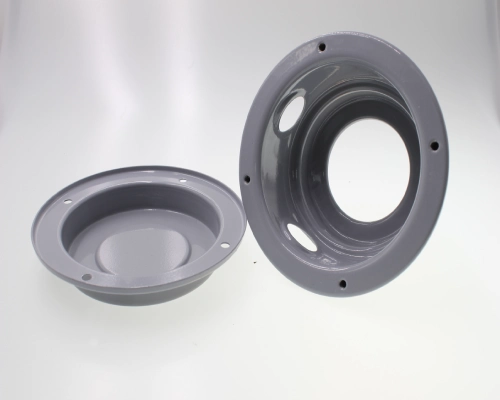
Surgical Instruments and Implantable Devices
deep draw metal stamping is the preferred process for manufacturing surgical instruments and implantable devices, as the integrity of these components directly affects patient outcomes. This cold-forming process can produce seamless housings for pacemakers, neurostimulators, cochlear implants, and drug infusion pumps.
Titanium alloys—including grades 1, 2, 4, 5, 7, 9, 11, and 23—are widely used due to their high tensile strength, corrosion resistance, and biocompatibility. The multi-stage deep draw stamping process for titanium, once considered difficult to cold-form, has now been successfully commercialized, replacing costly machined parts with efficiently formed components.
The elimination of weld seams removes potential failure points and pathways for bacterial colonization. Chlorine-free lubricants, specialized cleaning protocols, and a rigorous quality management system ensure that components comply with ISO 13485 requirements. For procurement professionals, custom deep draw stamped medical components offer shorter lead times, improved product consistency, and reduced material waste compared to alternative manufacturing methods.
Sterilization Containers and Surgical Trays
For the manufacture of sterilization containers and surgical instrument trays, deep draw stamping technology offers significant advantages over welding or plastic alternatives. One-piece deep drawn metal containers offer the key advantage of being seamless and weld-free, thereby eliminating dead corners where bacteria and other foreign particles can hide.
Aluminum and stainless steel are the primary materials, selected for their ability to withstand repeated high-pressure steam sterilization cycles without performance degradation. Unlike plastics—which become brittle in extremely cold environments, deform or melt at extreme temperatures, and may release gases during chemical sterilization (posing a risk of contaminating surgical instruments or implants)—metal containers maintain their structural integrity across a wide temperature range. Aluminum containers absorb impact energy throughout their entire structure, protecting the contents while withstanding extreme conditions.
Microforming Capabilities of Deep Draw Stamping
Micro deep draw stamping represents cutting-edge technology in the field of medical device manufacturing, capable of producing components measured in millimeters or even micrometers. In 2025, the market size for medical stamped parts was $9.24 billion, and it is projected to reach $34.48 billion by 2034, with micro-stamping technology identified as the fastest-growing segment.
The feasibility of manufacturing connector head components with diameters as small as 300 µm and heights up to 1,500 µm using SUS304 stainless steel has been successfully demonstrated. These micro-forming capabilities of deep draw stamping technology open up new possibilities for minimally invasive surgical instruments and implantable electronic devices.
Currently, commercial production capabilities can produce components with an outer diameter of φ0.4 mm and a wall thickness of 0.03 mm. Applications of the microforming capabilities of custom deep draw stamping include sealed titanium alloy housings for implantable neural stimulators, tubular components for minimally invasive surgical instruments, housings for blood glucose monitoring sensors, and micro-pumps for drug delivery systems.
Applications of deep draw stamping in the electronics industry: Miniaturization and thermal management
Deep draw stamping technology enables the miniaturization of electronic products through thin-walled forming of aluminum alloys (with wall thicknesses as low as 0.15 mm), providing a thermal conductivity of 210 W/m·K while maintaining electromagnetic shielding integrity that complies with the requirements of the IEC 61000-5-7 standard.
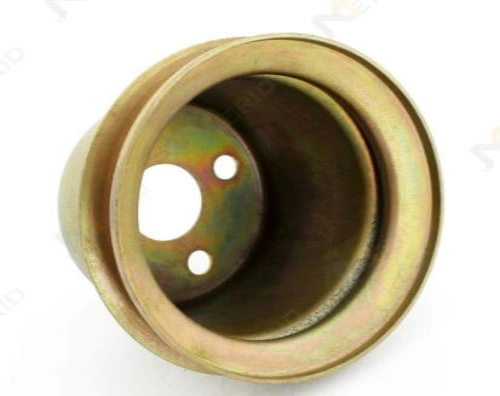
Housings and Chassis
The deep draw metal stamping process can produce seamless, one-piece housings for smartphones, laptops, tablets, and IoT devices, offering structural rigidity and surface finish quality that standard stamped parts cannot match. 5052-O and 3003-O aluminum alloys are the materials of choice, enabling a draw ratio of up to 2.0 and wall thicknesses as low as 0.15 millimeters in a single operation. This cold-forming process preserves the grain structure while eliminating the seams and joints inherent in multi-piece assemblies—seams that can both reduce electromagnetic shielding effectiveness and compromise mechanical integrity.
Carefully designed deep draw stamped housings serve as compact Faraday cages, protecting sensitive circuits from electromagnetic interference (EMI) while meeting stringent cost and production volume targets.
Thermal management is equally critical: aluminum’s thermal conductivity of approximately 210 W/m·K, combined with the ability to integrate heat dissipation features directly into the deep drawn geometry, addresses the power density challenges faced by modern electronic devices.
Secondary anodizing further enhances corrosion resistance and provides a visually uniform surface finish for consumer products.
Connectors, Contacts, and Sensor Components
Connectors, contacts, and sensor components demand extremely high precision, and the custom deep draw stamping process meets these requirements under high-volume production conditions. Copper alloys—particularly C11000, which has 100% IACS conductivity, and C17200 beryllium copper for spring applications—can be deep drawn into electrical terminals, connector housings, and shielding cans. Dimensional tolerances of ±0.02 mm can be achieved, ensuring reliable signal integrity over millions of mating cycles.
The seamless nature of deep drawn stamped components eliminates gaps that could compromise electrical performance due to contaminant ingress, while the work hardening generated during the forming process enhances contact durability. Post-forming surface treatments, including gold, silver, and nickel plating, are applied to enhance conductivity and corrosion resistance in high-frequency or high-power applications.
In sensor applications, deep drawn stamping housings protect sensitive components from mechanical stress and environmental influences while maintaining the dimensional stability required for accurate measurements. All materials and plating processes comply with the RoHS Directive as standard.
Semiconductors and Data Infrastructure
Semiconductor manufacturing relies on the deep drawn stamping process to produce lead frames, chip carriers, and heat sinks—components that form the backbone of integrated circuit packaging. Lead frames—which serve as key structural components connecting the chip’s circuitry to external pins—are manufactured using a high-speed progressive deep drawing process with copper alloys. Their thickness is trending toward 0.07–0.1 millimeters to accommodate the trend toward device miniaturization.
This process forms grooves in a reinforced plate, thereby defining a grooved frame designed to accommodate semiconductor chips and associated interconnect leads. For power semiconductors and data center infrastructure, deep drawn heat sinks with integrated pin structures can both dissipate thermal loads and reduce the risk of electrostatic discharge without requiring additional process steps.
MEMS packages, connector sleeves, and shielding components for artificial intelligence data center infrastructure are increasingly manufactured using micro-deep draw stamping technology, with forming tolerances measured in micrometers. Driven by the ongoing miniaturization of computing and communications hardware, semiconductors and precision manufacturing currently account for 15–20% of custom deep draw stamping applications.
Looking for a reliable custom sheet metal fabrication companies?
Talk To Supro MFG Expert Team
Contact us for competitive ex-factory prices,
and a full range of technical support services.
Applications of deep draw Stamping in the Home Appliance Industry: Durability and Aesthetics
The deep draw metal stamping process produces seamless home appliance components—such as washing machine drums and oven liners—with wall thickness uniformity within ±0.05 millimeters, a surface roughness of ≤Ra 0.4 micrometers, and salt spray resistance exceeding 500 hours. This ensures long-term durability and consistent appearance, all without welded seams.
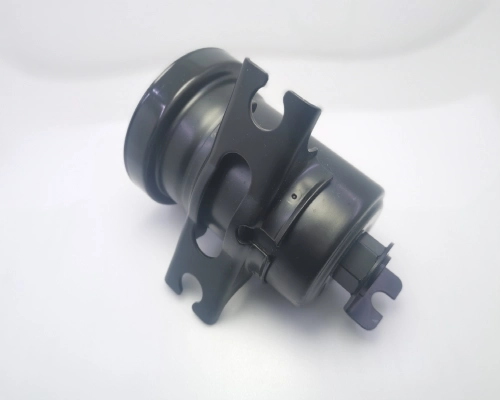
Major Home Appliance Components
Washing machine inner drums, refrigerator liners, dryer drums, and dishwasher tubs are the most widely produced deep draw stamped components in the home appliance industry. Grade 304 and 430 stainless steel are the primary materials for washing machine inner drums; the material thickness for front-loading washing machines typically ranges from 0.8 mm to 1.2 mm, while top-loading designs range from 0.5 mm to 0.8 mm. Cold forming processes produce seamless, one-piece inner drums, eliminating the weld seams commonly found in assembled parts—seams that are prone to corrosion and stress fractures over the appliance’s service life.
Refrigerator liners are formed from galvanized or pre-painted steel sheets with thicknesses ranging from 2.0 to 6.0 millimeters, requiring the use of large-bed presses and multi-stage deep draw stamping processes to achieve the deep cavities needed for food storage compartments.
Advanced die design, achieved by controlling blank holder force (BHF) and optimizing lubrication schemes, prevents wrinkling and tearing while maintaining wall thickness uniformity within ±0.05 millimeters.
For procurement professionals, eliminating the secondary welding process directly translates to shorter manufacturing cycles and lower unit costs.
Kitchen Appliances and Consumer Products
Kitchen appliances—including ovens, stoves, microwaves, cookware, and sinks—utilize the deep draw stamping process to manufacture components that must withstand both high temperatures and frequent mechanical stress. Oven liners and microwave cavity housings are both deep drawn from cold-rolled steel, galvanized steel, or aluminum-coated steel; their seamless construction forms a continuous thermal barrier that prevents heat loss and improves energy efficiency.
Stainless steel sinks are among the most demanding deep draw metal stamping applications in the consumer goods sector: their complex, asymmetrical geometries require precise control of sheet metal flow through localized adjustment of the blank holder force (BHF) to prevent thinning and wrinkling in the corners. For thin-walled SUS304 stainless steel sinks, finite element simulation using DYNAFORM enables process optimization, thereby resolving issues such as wrinkling, cracking, and springback encountered during the first-stage deep draw stamping process of unannealed material.
The final components feature smooth, hygienic surfaces that comply with food contact safety standards while meeting consumers’ aesthetic expectations—factors that directly impact brand reputation and market acceptance.
Economic Benefits of High-Volume deep draw Stamping Production
For high-volume production of home appliances, custom deep draw stamping offers significant cost advantages over other manufacturing methods. Progressive die systems integrate blanking, punching, bending, and deep drawing into a single stamping stroke, thereby eliminating multiple handling steps and secondary processing. The production efficiency of progressive deep draw dies is approximately four times that of traditional deep draw dies, significantly reducing energy consumption and labor costs per unit.
Although the tooling investment for complex progressive dies ranges from $3,000 to $20,000 or more, depending on part geometry and the number of stations, the manufacturing cost per unit can be reduced to less than $0.10 during mass production. On fully automated stamping lines equipped with 45- to 630-metric-ton presses, monthly output can exceed 1 million units.
Once the die is validated and process parameters are established, custom deep draw stamping maintains consistent dimensional repeatability over millions of stamping cycles, making it the most cost-effective manufacturing solution for home appliance components that require deep cavities, seamless structures, and cosmetic-grade surface finishes.
Conclusion
Deep draw stamping technology has established itself as an indispensable process in industries such as automotive, aerospace, medical, electronics, and home appliances. This process produces seamless and structurally robust components with minimal material waste and exceptional dimensional consistency, thereby meeting the core engineering requirements of these industries.
From ultra-high-strength steel oil pans in automotive powertrains to micron-scale connector components in medical devices, the deep draw stamping process continues to evolve alongside advancements in materials science, process simulation, and die technology.
The global custom deep draw stamping services market is projected to reach approximately $2 billion in 2024 and is expected to experience significant growth by 2035, driven primarily by rising demand from the electronics, healthcare, and automotive lightweighting initiatives. For manufacturers seeking to leverage this technology, the key to success lies in selecting the appropriate materials for specific applications, optimizing die designs for specific part geometries, and maintaining strict process control throughout the production process.
As a cold-forming process capable of producing high-strength components with excellent surface quality and tight tolerances, deep draw stamping technology will remain a core process in precision metal manufacturing for the foreseeable future.
Supro MFG is a China-based precision deep draw stamping manufacturer certified to ISO 9001:2015 and IATF 16949:2016. With in-house die manufacturing capabilities, CAE simulation expertise, and a commitment to process control with a CPK > 1.33, we provide custom deep draw stamping services and precision stamped parts to global customers in the electronics, automotive, and telecommunications sectors.
For technical specifications or inquiries regarding OEM partnerships, please contact our engineering team.