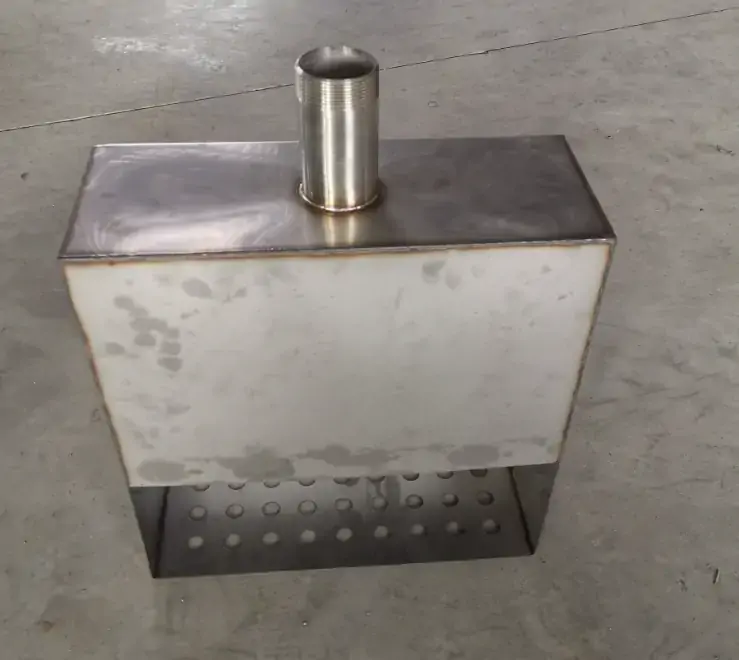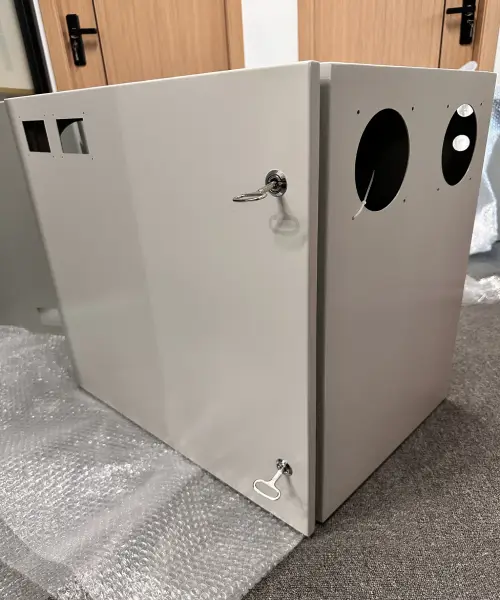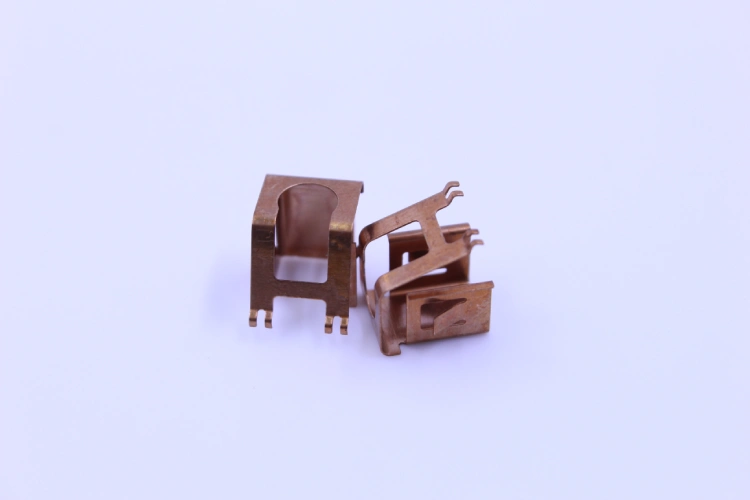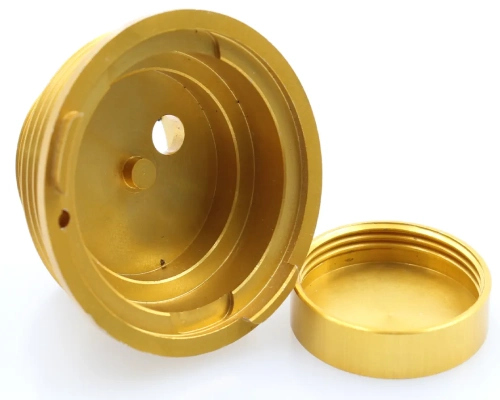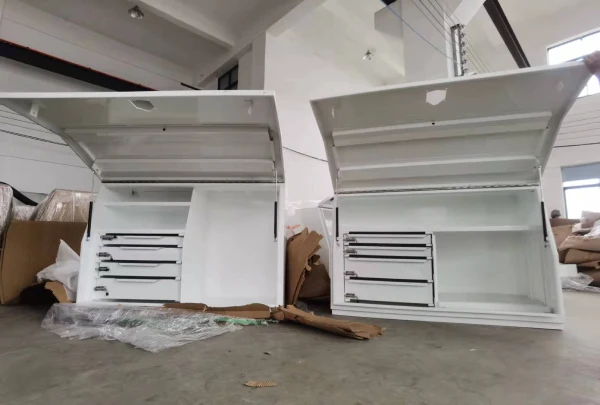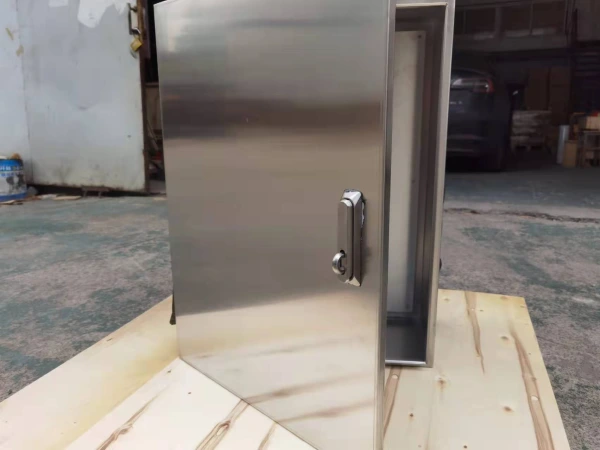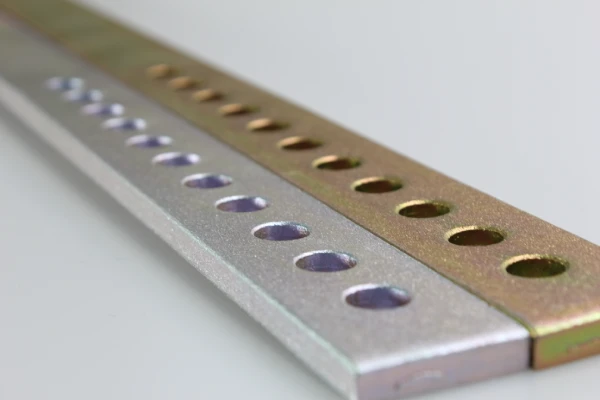
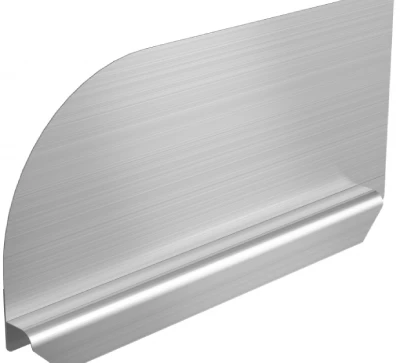




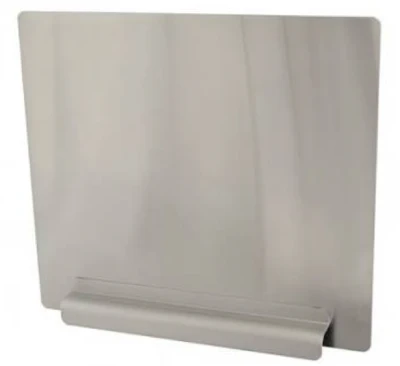
Splash guards are functional sheet metal components typically integrated into machine tool assemblies, industrial equipment housings, and fluid sealing systems. Their primary functional requirement is to maintain precise geometric alignment with mating surfaces (typically machine tool beds, frames, or base plates). When a splash guard fails to fit snugly against the intended mounting surface, the resulting gaps not only compromise the component’s aesthetic appeal but also impair its functional performance—particularly in applications involving coolant sealing, chip management, or environmental sealing.
A long-standing challenge in splash guard manufacturing is dimensional instability, which manifests as bending and warping. These defects typically become apparent during the final assembly stage: although the parts meet the dimensional requirements specified in the drawings during inspection, they cannot be aligned with the mating surfaces during actual assembly. Understanding the metallurgical and mechanical causes of these deformations is crucial for implementing effective countermeasures.
This paper explores the primary mechanisms leading to warping in custom splash guards—internal stress distribution, bending machine deflection, and heat-induced deformation from welding—and proposes process-level solutions based on production experience.
Mechanical Principles of Splash Guard Deformation
The deformation mechanism of custom splash guards primarily stems from two factors: residual stresses caused by plastic deformation during bending, and springback—the elastic recovery phenomenon that causes the bending angle to change after unloading.
Internal Stress Distribution in Sheet Metal Forming
When a splash guard is bent, the material undergoes non-uniform plastic deformation in the thickness direction—outer fibers elongate under tensile stress, while inner fibers are subjected to compressive stress. This differential strain creates a residual stress field within the formed part.
For complex custom splash guard geometries featuring multiple flanges, notches, or varying bending radii, these residual stresses exhibit an asymmetric distribution. During subsequent handling, trimming, or welding processes, localized stress relaxation occurs in the workpiece, leading to progressive warping—a distortion that is often not detected until final assembly.
The magnitude of residual stress depends on the material’s yield strength, the ratio of bending radius to thickness, and the orientation of the grain relative to the bending axis. Workpieces bent parallel to the rolling direction exhibit higher residual stress gradients, thereby increasing the risk of warpage.
Effective stress management requires predictive modeling and a controlled forming sequence to minimize stress imbalances.
Springback and Its Impact on Dimensional Inconsistencies in Splash Guards
Springback refers to the elastic recovery of sheet metal after the bending pressure is released; it directly affects the dimensional accuracy of custom splash guards.
For splash guards with long, continuous bend lines, even minor angular deviations—such as 0.5° per bend—can accumulate to form gaps of several millimeters along the length of the part when fitted against the flat machine bed.
The extent of springback depends on the material’s elastic modulus, yield strength, and work-hardening index; springback is particularly pronounced in high-strength steel and stainless steel alloys.
Furthermore, variations in material thickness and hardness within a single coil can lead to inconsistent springback along the same bend line, thereby further exacerbating geometric errors. Although over-bending is a common compensation technique, it requires precise process characterization for each production batch. Without a reliable compensation strategy, springback will remain the primary cause of poor fit in custom splash guards.
Only 4 steps
online custom metal fabrication parts
Contact our experts team and experience the efficiency and economic benefits of digital metal fabrication services.
Upload Design Files
STL , STEP (.stp), IGES (.igs), (.ZIP), or PDF.
Also be a sample or an idea
Quote & Design Analysis
Instant factory quotes and DfM reports, the most reasonable solution.
Manufacturing Begins
Digital processes can initiate order tasks within 24 hours.
On-Time Delivery
Keeping delivery promises, approved by 3000+ Global Company buyers.
Equipment-Related Causes of Splash Guard Warping
There are two main equipment-related causes of warping in custom splash guards: deflection generated by the press brake, which leads to inconsistent bending angles in long-span areas, and the response of the mechanical compensation system to counteract this deflection.
Bending Machine Deflection During Bending of Long Parts
During the bending process on a long-span press brake, the upper punch and lower table undergo elastic deformation when subjected to force. For splash guards with long bending lines (typically exceeding two meters), this deformation causes nonlinear angle deviations along their length.
The mechanical principle is straightforward: the applied pressure causes the punch to bend upward and the table to bend downward, resulting in a shallower press-in depth at the center and a deeper press-in depth at both ends. Consequently, when measured along the longitudinal axis, custom splash guards exhibit a characteristic “smiling” or “frowning” profile. This geometric error manifests as noticeable gaps at both ends when the part is fitted against the flat machine base.
According to beam deflection theory, the magnitude of deflection is proportional to the cube of the span length; therefore, longer splash guards are inherently more prone to this issue. Fluctuations in material hardness within a single coil further alter its bending resistance, leading to unpredictable changes in deflection behavior. Consequently, proactive measures must be taken to maintain angle consistency along the entire bending curve.
The Role of Mechanical Compensation Systems
Mechanical arching systems introduce a pre-calculated upward curvature onto the worktable via adjustable wedge assemblies, thereby mitigating the bending machine’s deflection. When manufacturing splash guards, these systems are critical for ensuring consistency in the reference angle across all parts of the workpiece.
However, traditional mechanical compensation relies on fixed deflection curves based on nominal tonnage and material thickness. This static approach fails to account for real-time variables—such as variations in yield strength between batches, subtle differences in material thickness specifications, or asymmetrical forces on the dies.
For custom splash guards with multiple bending axes, these variables cause the actual deflection curve to deviate from the preset mechanical curve. Operators must recalibrate the wedge positions whenever a workpiece is changed, a process that introduces setup delays and may lead to human error.
While mechanical systems provide the functional foundation, their inherent rigidity limits adaptability, particularly when processing advanced high-strength steels or handling different bend lengths within the same batch of splash guards.
Are you looking for reliable & cost-effective
China Sheet Metal Fabricators
More than 150,000 OEM metal fabrication products delivered to 5,000+ global buyers.
And benefit from it!
Thermal Deformation Caused by Splash Guard Welding
Thermal deformation in custom splash guards stems from steep temperature gradients within the heat-affected zone (HAZ) and accumulated contraction forces—both of which generate residual stresses, causing the splash guards to deform during cooling.
The Heat-Affected Zone and the Generation of Thermal Stresses
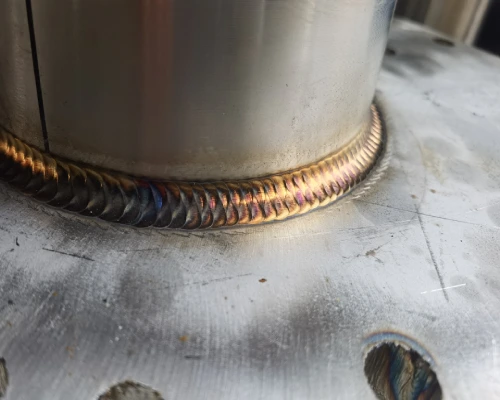
As the welding arc travels along the joint, it transfers highly concentrated heat into the splash guard base material. This localized area attempts to expand but is constrained by the surrounding cooler base material, thereby generating compressive plastic strain within the heat-affected zone (HAZ). Upon cooling, the HAZ contracts, generating longitudinal and transverse tensile residual stresses that act across the entire plate. In the cross-section of a thin-walled splash guard, these stresses often exceed the local buckling threshold, manifesting as typical wave-like warping or angular deflection.
The magnitude of the stresses depends on the peak temperature, dwell time, and the material’s thermal diffusivity. Austenitic stainless steel retains heat longer due to its low thermal conductivity, which exacerbates the deformation of the stainless steel splash guard.
The resulting stress field interacts with residual stresses left over from previous bending operations, further exacerbating the geometric errors observed during final assembly.
Effects of Welding Sequence and Heat Input Control on Splash Guards
To control thermal deformation in custom splash guard assemblies, precise control of the welding sequence and net heat input per unit length is essential.
Forming a continuous, uninterrupted weld along the long fixed flange concentrates the contraction forces, effectively pulling the splash guard away from its plane. Dividing the joint into staggered or staggered-back welding sections allows for intermediate cooling, thereby reducing peak temperatures and smoothing out the thermal gradient. At the same time, minimizing energy input (measured in joules per inch) by optimizing travel speed and reducing current intensity reduces the volume of plastically deformed material.
Welding in a strategic sequence—either outward from the center of the splash guard or alternately on both sides of the component—allows contraction forces to cancel each other out. This symmetry prevents cumulative angular deviation and maintains the flange’s flatness. Strict interpass temperature limits further prevent heat buildup, ensuring that the final custom splash guards maintain the specified geometric relationship with the mating body surface.
Looking for a reliable custom sheet metal fabrication companies?
Talk To Supro MFG Expert Team
Contact us for competitive ex-factory prices,
and a full range of technical support services.
Process Solutions for Deformation Control in Splash Guards
An effective, comprehensive process-level solution to the warpage issue in custom splash guards must integrate dynamic deflection compensation during the bending process, employ low-heat-input welding methods, and utilize rigid fixtures to ensure the accuracy and flatness of the final part.
Dynamic Hydraulic Deflection Compensation During Splash Guard Bending
Dynamic hydraulic deflection compensation overcomes the limitations of mechanical arching systems—namely, their reliance on preset deflection curves. In custom splash guards with bending lengths exceeding two meters, the bending load is concentrated at the center of the machine tool, causing the ram to arch upward and the worktable to deflect downward.
The hydraulic compensation system features multiple hydraulic cylinders mounted beneath the worktable that apply an upward force in real time during the bending stroke, thereby immediately counteracting the deflection as it occurs. The CNC controller calculates the required compensation based on the material thickness, tensile strength, bending length, and target angle specified for each program.
During the manufacturing of splash guards, material grades and thicknesses vary across different batches; this adaptive capability ensures angle consistency along the entire length of the workpiece—thereby eliminating issues caused by “smiling” or “frowning” profiles that prevent proper alignment with the machine tool bed.
Cold-Wire TIG Welding to Reduce Heat Input
Conventional TIG welding introduces concentrated thermal energy, creating steep temperature gradients in thin splash guards, which leads to deformation due to uneven thermal expansion and contraction.
Cold-wire TIG welding operates on a fundamentally different principle: the filler wire is fed into the leading edge of the weld pool at room temperature, without the need to preheat the wire using an auxiliary heat source prior to deposition.
The arc provides all the thermal energy, but the cold filler wire absorbs a portion of this energy during melting—thereby effectively lowering the molten pool temperature and reducing the temperature gradient between the weld zone and the base metal. Compared to conventional TIG welding, the cold filler wire process can reduce weld width by 50% and minimize maximum welding distortion by 23.8%.
For splash guards requiring welded joints, reduced heat input directly minimizes warpage caused by the heat-affected zone (HAZ) and improves dimensional stability during final assembly.
Optimizing Welding Sequences and Fixturing Strategies for Splash Guards
Process control for welded splash guards involves not only heat input management but also the careful planning of weld pass sequences and the mechanical constraints provided by fixtures.
For custom splash guards, this typically includes:
Performing spot welding at critical locations to ensure stable part positioning before proceeding with full welding;
Adopting a balanced welding sequence, alternating between both sides of the assembly to balance shrinkage forces;
segmental welding, where the joint design permits;
strict control of interpass temperature to prevent heat accumulation.
Equally important is the clamping strategy. Rigid and well-designed clamps constrain the workpiece during the welding process, preventing displacement caused by thermal expansion and contraction. The clamp design should allow for controlled thermal expansion while holding the component within its intended final geometry. Fixtures applied in a symmetrical pattern around the weld zone distribute the clamping forces evenly, preventing localized deformation.
The fixtures must also accommodate the specific geometry of the splash guard—including its flanges, cutouts, and mounting features—while avoiding the introduction of additional stress concentrations.
Conclusion
The deformation and warping of the splash guard are caused by a combination of multiple factors throughout the manufacturing process: residual stresses generated during the bending process, deflection of the press brake, and thermal stresses caused by welding. Each of these mechanisms leads to dimensional instability, ultimately preventing the splash guard from fitting properly to the mounting surface.
Addressing these root causes requires a systematic approach. During the bending stage, the dynamic hydraulic deflection compensation feature on CNC press brakes ensures consistent bending angles for long workpieces.
During the welding stage, cold-wire TIG welding minimizes heat input, while an optimized welding sequence and rigid fixtures effectively control thermal deformation. Combined, these process controls ensure that the produced splash guards conform to their intended geometry—and fit snugly against the mating surfaces—preventing gaps that could compromise assembly integrity.
Supro is a professional custom splash guard manufacturer. Leveraging advanced equipment, extensive manufacturing experience, and a dedicated engineering team, we provide perfect custom splash guard solutions to more than 3,000 companies worldwide, along with genuine manufacturer quotes.
For technical consultations, design solutions, or product specifications, please feel free to contact our engineering team at any time.