
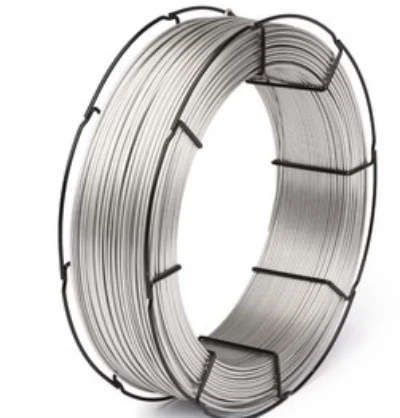


Aluminum Alloy is the material of choice for metal fabrication projects because of its light weight, corrosion resistance, and excellent heat dissipation properties. However, the performance characteristics of different models of Aluminum Alloy vary significantly, which is directly related to the use of the final product scenarios, performance and cost. So what can alloy 5052 do, and what are the characteristics of 6061 aluminium alloy? And when should you use 7075 aluminium alloy?
This article will introduce these three most popular aluminum alloys in detail, from strength, weldability, corrosion resistance to machining performance and other aspects of detailed analysis, while introducing Supro commonly used aluminum metal processing technology, to help you fully understand and choose the right aluminum alloy for your application.
what is 7075, 6061, 5052 aluminum alloy
7075 aluminum alloy
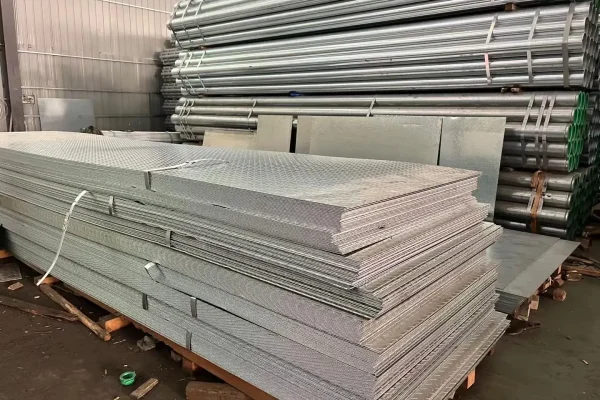
7075 aluminium alloy is a kind of cold treatment forging alloy, its zinc as the main alloying element, magnesium content of 2.1%-2.9%, tensile strength of about 570MPa, density of 2.81g/cm³, with a fine grain structure, very high strength and good mechanical properties, is mainly used in aerospace, mold processing, machinery and equipment, etc. 7075 aluminium alloy can be heat-treated to further enhance the strength, common heat treatment state. aluminium alloy can be heat treated to further enhance the strength, common heat treatment state has:
T6: the most commonly used condition, providing the highest strength.
T73: a kind of over-aging treatment, will sacrifice part of the strength (about 10-15% lower), but can significantly improve the resistance to stress corrosion cracking performance.
T76: Between T6 and T73, improves corrosion resistance while maintaining higher strength.
6061 aluminium alloy
6061 aluminium alloy its main alloying elements are magnesium and silicon, is a heat treatment can be strengthened alloy, has a good moldability, weldability, machinability, medium strength. In T6 heat treatment state, its tensile strength of about 310 MPa, yield strength of about 276 MPa. this strength level is far lower than 7075, but enough to meet the needs of the majority of structural applications, and at the same time it has a good plasticity and toughness.
aluminum alloy 5052
aluminum alloy 5052 is an Al-Mg alloy with magnesium as the main alloying element (2.2%-2.8%), and is one of the most commonly used and representative non-heat-treated aluminum alloys. It has excellent corrosion resistance, fatigue strength and formability, and is particularly suitable for sheet metal parts and shell structures that require good weldability and toughness. As a 5xxx alloy, aluminum alloy 5052 cannot be strengthened by heat treatment. Its strength can only be improved by cold work hardening, such as rolling and stretching, and the commonly used condition is H32.
online custom metal fabrication parts
Only 4 steps
Contact our experts team and experience the efficiency and economic benefits of digital metal fabrication services.
Upload Design Files
STL , STEP (.stp), IGES (.igs), (.ZIP), or PDF.
Also be a sample or an idea
Quote & Design Analysis
Instant factory quotes and DfM reports, the most reasonable solution.
Manufacturing Begins
Digital processes can initiate order tasks within 24 hours.
On-Time Delivery
Keeping delivery promises, approved by 3000+ Global Company buyers.
Comparison of Aluminum Alloy Properties
Performance Characteristics | 7075 | 6061 | 5052 |
Strength | Excellent | good | Poor |
Weldability | Poor | Good | Excellent |
Corrosion resistance | Poor | Good | Excellent |
Toughness | Poor | Good | Excellent |
Formability | Poor | Good | Excellent |
Mechanical processing | Excellent | Good | Poor |
Strength
Strength is the ability of a material to resist deformation and fracture and is one of the most critical mechanical properties for material selection in metalworking programs. In aluminium alloy, strength is gained in two main ways: cold work hardening (for non-heat treatable alloys such as the 5xxx series) and heat treatable strengthening (for the 2xxx, 6xxx, and 7xxx series). there is a huge difference in the performance of 7075, 6061 and 5052 in this respect.
7075-T6 has the absolute leading strength, with a tensile strength of about 570 MPa, much higher than the other two.
6061-T6 offers excellent all-around performance, with a tensile strength of about 310 MPa, much higher than 5052, but only about 54% of 7075.
5052 H32 has the lowest strength of the three, with a tensile strength of about 220 MPa.
Weldability
Weldability measures the ability of a material to form a strong, defect-free joint by welding. The weldability of the three alloys varies significantly and is a key factor to be considered when selecting materials.
Aluminum alloy 5052 has the best weldability of all three alloys. As a non-heat treatable alloy, it does not suffer from softening in the heat affected zone. Therefore, it is ideal for the manufacture of ships, fuel tanks, vehicle sheet metal and other structures that require good weldability.
6061 aluminium alloy has good welding properties. It can obtain high quality welded joints by TIG and MIG methods. Its core problem is the softening of the heat affected zone. The high temperature during welding will destroy the original T6 heat treatment state of the base material, resulting in a softening zone with significantly reduced strength on both sides of the weld. The strength of this zone after welding may only reach the level of the annealed condition, which is about 60% of the strength of the T6 condition of the base metal. 6061 aluminium alloy can be post-welded heat-treated to restore strength to the weldment.
7075 has very poor weldability and is generally not recommended for any welded structures. Its chemical composition causes it in the weld pool solidification is very easy to produce crystalline cracks, and welding heat-affected zone strength drops sharply, and this loss of strength can not be restored by simple post-weld heat treatment.
Corrosion resistance
Corrosion resistance refers to the ability of a material to resist attack by the environment (e.g., atmosphere, water, chemicals). The corrosion resistance of these three alloys is significantly different due to their chemical composition and microstructure, which directly affects their applicability in different environments.
aluminum alloy 5052 has excellent corrosion resistance and is the best corrosion resistant alloy of the three, especially in marine and industrial atmospheric environments, and is ideally suited for use in the manufacture of ships, fuel tanks, chemical containers, and structural components that are often exposed to wet or salty environments.
6061 aluminium alloy has good corrosion resistance and is able to meet the requirements for use in most conventional environments.
7075 aluminium alloy has average corrosion resistance and is the worst of the three. Its biggest problem is the poor resistance to stress corrosion cracking, in the high tensile stress and corrosive media together, the material is prone to brittle fracture.
Toughness
Toughness is the ability of a material to absorb energy and deform plastically before fracture. Materials with high toughness are able to cushion and disperse impact loads through deformation, thus preventing sudden brittle fracture.
5052 has excellent toughness, and as a non-heat-treatable reinforced alloy, it possesses a very stable microstructure and a high degree of plastic deformation. When subjected to impact or overload, aluminum alloy 5052 is able to absorb a large amount of energy through plastic deformation, thereby delaying the occurrence of fracture.
6061 good toughness, after T6 heat treatment, it can maintain sufficient strength, but also can be visible plastic deformation before fracture.
7075 has low toughness, in order to achieve ultra-high strength, its microstructure is filled with a large number of fine reinforced phases, which largely limits its ability to plastic deformation.
Formability and sheet metal bending options
Formability is the ability of a material to be molded into a specific shape without rupture or defects, which is very important for sheet metal processing (e.g. bending, stamping, deep drawing).
5052 has excellent formability and is the material of choice for sheet metal working parts that require deep drawing, complex stamping and bending.
6061 has good formability, and in the T6 condition, it has high strength but limited ductility, and can only perform light to medium bending.
7075 has poor formability and is the most difficult of the three to form. In the T6 condition, its extremely high strength and low ductility make it almost impossible to be cold formed. Therefore, 7075 aluminium alloy should be avoided for use in complex sheet metal parts; it is more suitable for milling shapes directly from thick plates or bars by machining.
Machinability
Machinability measures the ease with which a material can be cut and machined, and the ability to obtain good surface quality.
The machinability of 7075 aluminium alloy is very good, and its high strength makes the chips produced during cutting brittle and easy to break, and does not form long, tangled chips, which greatly facilitates chip removal and cleanup, and improves processing efficiency and safety.
6061 aluminum alloy machinability is good, it can get good surface finish, cutting process is relatively smooth.
The machinability of aluminum alloy 5052 is relatively the worst of the three, but that doesn’t mean it can’t be machined, it’s just more challenging. Due to its softer texture and very good toughness, it is easy to produce sticky chips during machining, and these chips are not easy to break, and are easy to wrap around the tool or workpiece.
Why choose Supro MFG
Real ex-factory price:
Provide the most cost-effective cost solution for manufacturing and assembling products, expanding product competitiveness.
Professional technical team:
a technical team specializing in custom shell manufacturing for more than 30 years.
Advanced Manufacturing Equipment: Industry-leading custom metal enclosure manufacturer with in-house sheet metal, die casting, precision machining workshops, and surface coating workshops.
ISO 9001-2015 Manufacturer:
ISO 9001-2015, PPAP III level, RoHS, NEMA, CE and other certified production standards.
24H*7 online English technical support: The professional English team responds quickly to users’ technical questions online at any time.
One-stop manufacturing solution:
help users from product design, prototype, batch manufacturing, surface treatment, assembly and packaging, transportation and a series of value-added services.
Authoritative testing capabilities:
With in-house mechanics and chemistry laboratories, it can quickly monitor manufacturing process quality control to ensure the delivery of high-quality products.
Intellectual Property Protection(NDA):
Accept to sign NDA documents to ensure that customers’ product information is protected.
Commitment to On-Time Delivery:
Door-to-door delivery in customizable secure packaging after complying with the delivery details agreed with the customer.

Aluminum Metal Processing Services Available at Supro

Laser Cutting
Supro offers precise and fast laser cutting services for a wide range of industries, with hundreds of materials to choose from and no minimum order quantities. Our 10.000KW and 6.000KW industrial grade laser cutting machines can accurately cut stainless steel, aluminum and many other metals.
CNC Machining
Supro has 80 3-axis, 4-axis and 5-axis CNC machines, professional precision CNC machining services and online technical support to provide you with complete CNC machining solutions for rapid prototyping and batch met al manufacturing. We specialize in solving a wide range of complex machined parts and provide one-stop parts manufacturing services, including design, precision machining, surface treatment and metal heat treatment.
Stamping
In the process of deforming, punching, cutting, deep drawing, bending, embossing of aluminium alloy, it is necessary to rely on a variety of metal stamping dies to limit the shape of the product and deform the sheet metal into a solid shape of the manufacturing process.Supro can manufacture customized metal stamping parts and precision stamping parts, and has Progressive die Stamping services, Deep drawing stamping services, Compound die stamping services, sheet metal stamping dies & processes and many more options.
Extrusion
Supro has rich manufacturing experience and a team of professional engineers in the field of aluminum alloy extrusion, as well as large-scale aluminum extrusion equipment of various specifications (the largest 12,000-ton extruder), with a cross-section of φ700mm, a length of up to 30m, and a length of 14m of constant-temperature oxidizing line, and a well-equipped, high-quality, modern testing center.
Supro can provide drawings or physical samples upon request, and can manufacture a wide range of aluminum extruded parts including 2024, 2A12 (LY12), 3003, 5052, 6005, 6060, 6061, 6063, 6082, 7003, 7005, 7075, etc., which are involved in various fields of electrical and electronic, aerospace, transportation, and so on.
Bending
With 12 different types of sheet metal bending equipment, Supro is able to provide one-stop sheet metal bending services for any industry, while offering high quality products, professional customer service and on-time delivery.
Welding
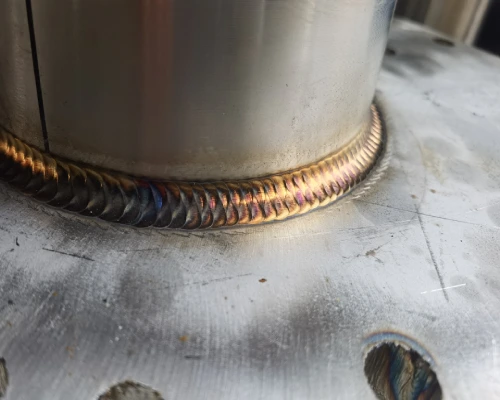
Welding combines different metal parts together and is one of the most important assembly methods, and many products require metal welding to obtain the final product.Supro has the latest welding technology and advanced welding equipment to provide a full range of customized metal fabrication services to meet the product needs of different industries. We can weld a variety of metals such as stainless steel, carbon steel, aluminum alloys, copper alloys, etc. We have accumulated a wealth of experience in welding in the fields of medical devices, electronic components, and construction engineering.
Surface treatment
Perfect surface treatment is one of the most effective and cost-efficient ways to improve the functionality, service life and aesthetics of a product, and Supro offers a wide range of surface treatments such as powder coating, anodic oxidation, brushing and polishing, sandblasting, mirror polishing, plating, laser engraving, screen printing and other surface treatments during the aluminum metal manufacturing process to satisfy your various needs.
Get instant ex-factory price quotation.
If you only have an idea or an old sample,Let us know.
with photo or video and get our quotation and manufacturing solutions.
- Product design drawings or 3D model files.
- Material standards and appearance requirements.
- Product quantity demand.
- Industry standards in the application field.
- Functional requirements
Summary
Knowing this information about aluminum alloy will help you to accurately select the metal material and processing method that is best for you. If you have any questions, please feel free to contact our professional engineering team!