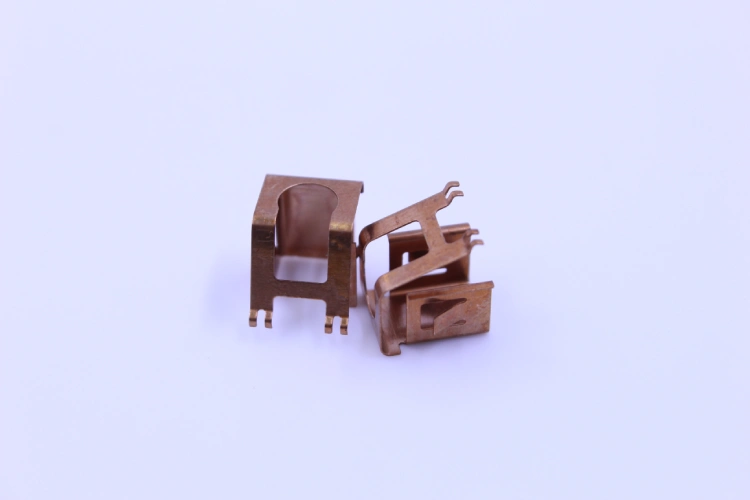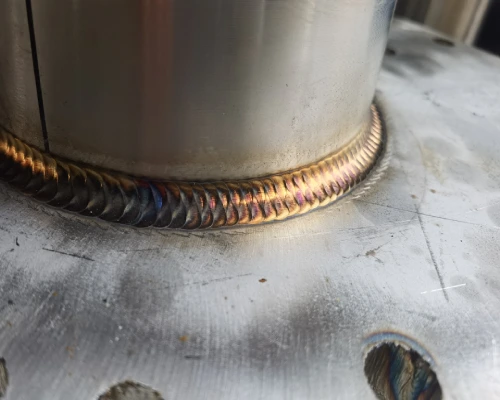


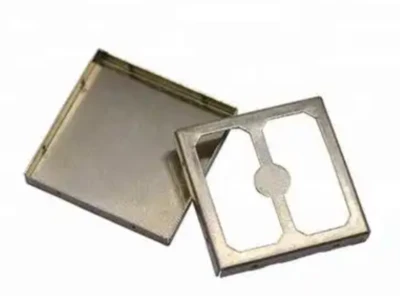
After lead-free reflow soldering, visible yellowing or oxidation marks appear on the surface of EMI/RFI shielding cans, which has become an increasingly common concern in the electronics manufacturing industry. Although such cosmetic defects do not necessarily affect electromagnetic shielding performance, they have a significant impact on product aesthetics and long-term corrosion resistance.
Lead-free soldering process profiles typically expose components to peak temperatures approaching 260°C, which accelerates oxidation reactions on exposed metal surfaces. The root causes of this phenomenon in custom EMI/RFI shielding cans involve multiple factors—thermal degradation of non-volatile stamping oil residues during the SMT reflow process, the substrate’s susceptibility to high-temperature oxidation (particularly nickel-silver alloys), improper storage conditions leading to pre-oxidation, and the surface degradation exacerbated by flux outgassing.
Understanding these mechanisms is crucial during the manufacturing of EMI/RFI shielding cans—this is not only a matter of quality control but also essential for establishing process specifications to ensure the integrity of component surfaces during the reflow soldering cycle and subsequent stages.
This article explores the technical mechanisms by which lead-free reflow processes cause surface degradation in EMI/RFI shielding cans, with a particular focus on stamping process variables, surface treatment compatibility, and material selection criteria.
Thermal Requirements for Lead-Free Reflow Soldering of EMI/RFI Shielding Cans
Compared to traditional tin-lead processes, lead-free reflow soldering places much higher demands on the thermal exposure of EMI/RFI shielding cans. SAC305 (Sn-Ag-Cu) alloy, the industry standard for lead-free assembly, has a melting point of approximately 217°C. Therefore, the peak reflow temperature must be set between 235°C and 250°C to achieve proper wetting, and during the reflow cycle, the temperature of the components themselves often reaches 260°C.
For EMI/RFI shielding cans mounted directly on PCB assemblies, this thermal cycling is unavoidable. The combination of higher peak temperatures and longer dwell times above the liquidus accelerates oxidation reactions on the metal surface. When an EMI/RFI shield can lacks adequate surface protection or contains process-generated contaminants, thermal energy acts as a catalyst, transforming potential surface defects into visible discoloration.
Root Causes of Discoloration in EMI/RFI Shielding Cans After Reflow Soldering
Discoloration of EMI/RFI shielding cans after reflow soldering stems from the interaction between stamping oil residues, substrate oxidation, and moisture and contaminants from storage, all of which are significantly exacerbated at peak temperatures of 260°C.
Stamping Oil Residues
During the stamping process, EMI/RFI shielding cans require lubricating oil to reduce die wear and ensure dimensional accuracy. However, if non-volatile or high-viscosity stamping oils are used, their hydrocarbon residues can become trapped within the microstructure of the shielding can’s surface.
When exposed to the peak temperature of 260°C during reflow soldering, these residues undergo thermal degradation—carbonization, polymerization, or reaction with the base metal—resulting in yellow to brown surface stains.
The issue is particularly severe with lubricants containing sulfur-based extreme-pressure additives, as sulfides react with the nickel or copper components in nickel-silver alloys to form dark-colored sulfide compounds.
Although IPC/JEDEC J-STD-020C does not directly specify residue limits for stamping oils, its implied requirements for component surface cleanliness indicate that any organic residues that have not completely volatilized prior to reflow soldering constitute a process defect. Therefore, selecting fully volatile, low-residue stamping oils is the primary process decision for preventing such discoloration in custom EMI/RFI shielding cans.
Base Material Composition and Oxidation Tendencies of EMI/RFI Shielding Cans
Nickel silver (a copper-nickel-zinc alloy) has become the most common base material choice for custom EMI/RFI shielding cans due to its balanced performance in terms of shielding effectiveness, formability, and weldability.
However, this material is inherently sensitive to high-temperature oxidation. At reflow soldering temperatures, atmospheric oxygen reacts with the nickel on the alloy’s surface to form a nickel oxide film only a few nanometers thick. This oxide layer produces a yellow to golden appearance through thin-film interference effects—a mechanism similar to the coloration observed during metal tempering, where the thickness of the oxide film determines the final visual color.
Lead-free reflow soldering temperatures are 34–38°C higher than those of traditional tin-lead processes, significantly accelerating this oxidation process. While tin plating offers superior oxidation resistance, it may compromise solderability; therefore, high-temperature-grade nickel silver verified through 260°C reflow profiles and specialized surface treatments have become critical specification parameters for ensuring the surface integrity of EMI/RFI shielding cans.
Pre-existing Surface Oxidation and Storage Conditions of EMI/RFI Shielding Cans
Surface degradation of EMI/RFI shielding cans often begins before they enter the reflow oven. Improper storage conditions—particularly uncontrolled temperature and humidity—can accelerate atmospheric oxidation of exposed metal surfaces. A relative humidity of 40%–60% is the recommended storage range; at excessively high humidity levels, water vapor adsorbs onto the surface of the EMI/RFI shielding cans, promoting electrochemical reactions that drive oxide formation.
This pre-existing oxide layer is usually not visible to the naked eye before reflow soldering, but at high temperatures of 260°C, the oxidation reaction is dramatically accelerated, transforming a slightly oxidized surface into one with noticeable discoloration.
Effective preventive measures include: temperature- and humidity-controlled storage; elevating cans off the floor to prevent ground moisture; incorporating desiccants into packaging; and implementing first-in, first-out (FIFO) inventory management to shorten storage cycles.
Interaction Between Solder Paste Chemistry and Volatile Gases
The chemical composition of the solder paste selected for SMT assembly can exacerbate discoloration issues in EMI/RFI shielding cans through interactions with volatile gases and residues from the solder paste.
During the reflow soldering process, volatile components in the flux evaporate and may condense on the inner and outer surfaces of the EMI/RFI shield cans. When the shield cans are placed over PCB assemblies, the escape pathways for flux volatiles are severely obstructed, preventing these volatile components from being adequately vented. Residues produced by certain flux formulations decompose when heated beneath the shield cans, resulting in visually detectable discoloration.
Although no-clean and halogen-free flux systems offer environmental advantages, their thermal behavior is inconsistent—certain formulations are more prone to producing discoloration residues in confined spaces than traditional halogen-containing systems. The combined effect of flux volatiles interacting with stamping oil residues or pre-existing oxide layers further exacerbates visual degradation.
Only 4 steps
online custom metal fabrication parts
Contact our experts team and experience the efficiency and economic benefits of digital metal fabrication services.
Upload Design Files
STL , STEP (.stp), IGES (.igs), (.ZIP), or PDF.
Also be a sample or an idea
Quote & Design Analysis
Instant factory quotes and DfM reports, the most reasonable solution.
Manufacturing Begins
Digital processes can initiate order tasks within 24 hours.
On-Time Delivery
Keeping delivery promises, approved by 3000+ Global Company buyers.
Preventive Measures and Process Controls for Discoloration of EMI/RFI Shielding Cans During SMT Reflow Soldering
To systematically prevent discoloration of EMI/RFI shielding cans during reflow soldering, a coordinated approach is required across four areas—stamping lubrication, surface treatment, storage environment, and reflow parameters—to eliminate the cumulative effects of multiple contributing factors at high temperatures.
Optimization of Stamping Processes
The key to optimizing stamping processes lies in the selection of stamping oils and process control. Conventional non-volatile stamping oils undergo thermal degradation at reflow soldering temperatures of 260°C, resulting in yellowish-brown surface stains due to carbonization or polymerization.
The solution is to use fully volatile, low-residue stamping lubricants—these products naturally evaporate within minutes after stamping, keeping the workpiece surface clean without the need for an intermediate cleaning step. High-end volatile stamping oils are formulated with desulfurized solvents and extreme-pressure additives; they are free of chlorine and reactive sulfur, preventing sulfides from reacting with nickel or copper in nickel-silver alloys to form dark-colored compounds.
Additionally, for high-precision, progressive die-stamped EMI/RFI shielding cans, the consistency of the oil application must be verified periodically, and residual contamination levels must be tested using surface contact angle or solvent extraction methods to ensure that the surfaces of every batch of custom EMI/RFI shielding cans are clean before entering the reflow oven.
Surface Treatment Specifications for Reflow Soldering
Surface treatment specifications for EMI/RFI shielding cans must explicitly ensure compatibility with a 260°C lead-free reflow soldering profile. Although nickel silver (nickel-silver alloy) offers excellent shielding performance and formability, its nickel component is prone to oxidation at high temperatures.
To address this challenge, a specialized post-treatment process validated against the 260°C reflow profile can be employed—this process converts the tin surface into a phosphate layer, effectively inhibiting the growth of an oxide layer. As a result, the cans maintain perfect solderability and retain their original color even after multiple 260°C reflow cycles.
As a professional manufacturer of EMI/RFI shielding cans, Supro provides test reports verifying surface treatment selection at a peak temperature of 260°C, including color difference measurements and solderability assessment data before and after reflow.
Coating thickness control is equally critical—a coating that is too thin cannot provide adequate high-temperature protection, while one that is too thick may affect the dimensional accuracy and assembly consistency of custom EMI/RFI shielding cans.
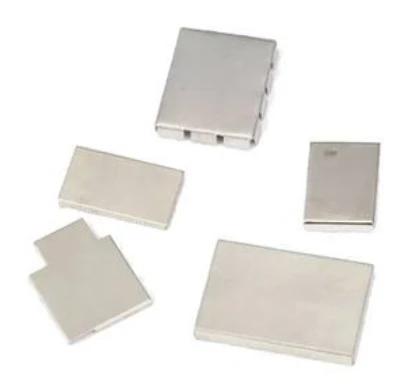
Material Storage and Handling Procedures for EMI/RFI Shielding Cans
Surface degradation of EMI/RFI shielding cans often begins before reflow soldering; controlling the storage environment is the first line of defense against discoloration. The IPC/JEDEC J-STD-033 standard provides clear, standardized guidelines for the storage of moisture-sensitive components—ideal storage conditions are a temperature of 25°C or below and a relative humidity of 60% or below. For opened components, low-humidity storage (below 10% RH or below 5% RH) can effectively suspend shelf life counting and prevent moisture-induced oxidation.
Specifically for the storage management of EMI/RFI shielding cans, it is recommended to use temperature- and humidity-controlled warehouses, store them on elevated racks off the ground to prevent contact with ground moisture, include desiccants inside the packaging, and implement first-in, first-out (FIFO) inventory management to shorten the storage cycle. For EMI/RFI shielding cans stored beyond the recommended period, surface quality spot checks should be performed to confirm the absence of pre-oxidation before they are used in SMT assembly.
Reflow Process Curve Management for EMI/RFI Shielding Cans
The settings of the reflow soldering process curve directly affect the degree of oxidation in custom EMI/RFI shielding cans. The liquidus temperature of SAC305 lead-free solder paste is 217°C; a typical reflow curve requires a peak temperature of 245°C to 260°C, and the dwell time at temperatures exceeding 260°C should not exceed 10 seconds.
For shielding cans that have already undergone stamping oil optimization and surface treatment, proper reflow profile management remains the final safeguard against discoloration. If discoloration persists, a nitrogen-enhanced reflow process may be evaluated—the nitrogen atmosphere effectively suppresses oxidation of the surface and solder paste on EMI/RFI shielding cans by reducing the oxygen concentration inside the oven.
Supro provides customers with clear reflow compatibility parameters—including maximum peak temperature, time above the liquidus, and total thermal cycle duration—so that the process window can be adjusted during assembly according to the specific specifications of the EMI/RFI shielding cans.
Looking for a reliable custom sheet metal fabrication companies?
Talk To Supro MFG Expert Team
Contact us for competitive ex-factory prices,
and a full range of technical support services.
Conclusion
Discoloration of EMI/RFI shielding cans after reflow soldering is a preventable quality issue stemming from process chemistry, material selection, and environmental control. The primary causes—residues of non-volatile stamping oil, the susceptibility of the base material to oxidation, improper storage conditions, and interactions with flux—can all be addressed through careful specification and strict process management.
As a professional manufacturer of EMI/RFI shielding cans, Supro addresses these issues from three interrelated aspects: selecting stamping lubricants that completely volatilize below soldering temperatures and decompose without leaving residues; establishing surface treatment specifications validated by lead-free thermal profiles; and implementing storage protocols that prevent pre-oxidation.
When these factors are systematically addressed, custom EMI/RFI shielding cans maintain surface integrity after reflow soldering—meeting both aesthetic quality standards and ensuring corrosion resistance.
Supro Manufacturing Co., Ltd. has over 20 years of experience in the design and manufacture of high-precision EMI/RFI shielding cans. If you require technical specifications, customized project solutions, or OEM partnership inquiries, please contact Supro immediately. Our professional engineering team is always ready to provide you with tailored application solutions.