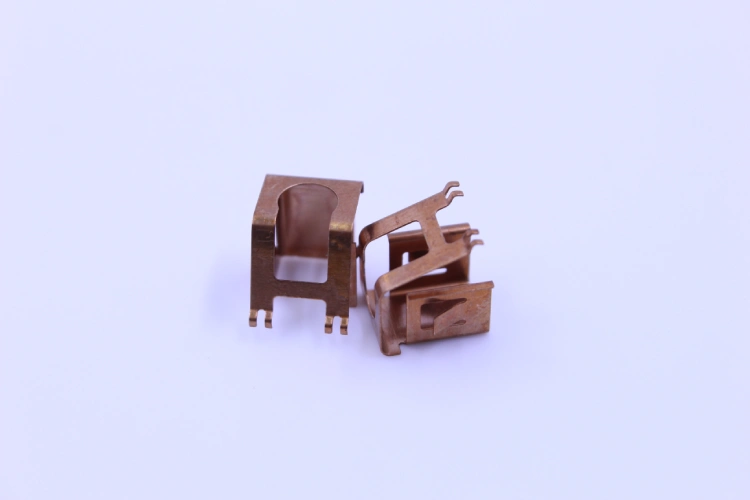



When it comes to custom precision copper components, a common question arises: Does copper rust? From a metallurgical perspective, the answer is a definitive “no.” The term “rust” specifically refers to hydrated iron oxide (Fe₂O₃·nH₂O) that forms on the surface of ferrous metals. This substance forms on the surface of ferrous metals—it is a porous, expansive, and ultimately destructive oxide layer. Since copper contains no iron, it does not rust; instead, it forms a protective and self-healing copper patina.
Understanding this distinction is crucial when evaluating life-cycle costs and material performance. This phenomenon, often mistakenly referred to as “copper rust,” is actually the formation of a stable oxide that maintains structural integrity—a stark contrast to the iron corrosion that leads to failure. The evolution of the “copper rust” color—from salmon to brown to green—signifies increased durability rather than a decline in performance. This article will provide a detailed analysis of copper’s corrosion resistance to help you fully understand the material’s properties.
Scientific Distinction: Rust vs. Copper Corrosion
From a metallurgical perspective, “rust” is a strictly defined term: it refers to compounds of hydrated iron oxide
(Fe₂O₃·nH₂O) that form exclusively on the surfaces of iron-containing metals. When copper is used in precision components, questions about “copper rust” reflect a fundamental misunderstanding of electrochemical behavior.
Copper contains no iron and therefore does not rust. Instead, it undergoes oxidation, forming a stable and firmly adherent oxide layer. The rust layer on iron-containing metals is expansive, porous, and self-accelerating—ultimately leading to structural failure—whereas the “copper rust” that concerns procurement personnel is actually a protective copper patina that prevents further corrosion.
This distinction directly impacts the calculation of product lifecycle costs: copper does not rust; rather, it undergoes a self-limiting surface transformation that protects the substrate indefinitely. For any application of copper alloys, specifying against “copper rust” is technically irrelevant, as its degradation mechanism—if any—differs fundamentally from that of iron-based corrosion.
Why Does Copper Not Rust?
From a manufacturing engineering perspective, copper occupies a prominent position in the electrochemical series, possessing a high reduction potential that enables it to resist intense oxidation. When exposed to the atmosphere, it immediately forms a tightly adherent layer of cupric oxide (Cu₂O)—a passivation film that prevents further reaction. This stands in stark contrast to ferrous metals, whose porous rust layers accelerate corrosion.
For custom precision copper components, the absence of rust ensures predictable long-term performance. This protective oxide layer is self-healing; any mechanical abrasion caused during manufacturing or installation triggers the barrier to reform. Therefore, the commonly observed “copper rust color”—a stable brown or green hue—indicates that the surface has stabilized rather than deteriorated. Metallurgically speaking, it is impossible for copper to rust.

The Formation Process of Copper Patina
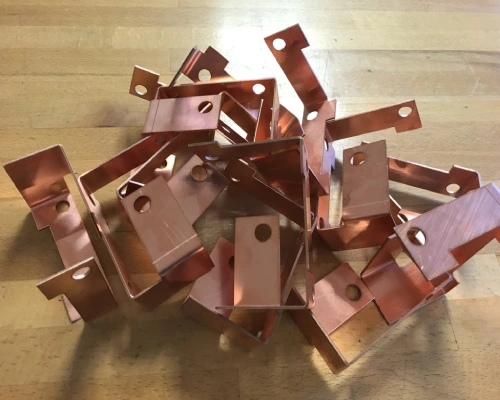
For custom precision copper components used in architectural or industrial applications, the oxidation and discoloration process follows a predictable metallurgical pathway. Newly manufactured parts exhibit a bright salmon color; upon exposure to the atmosphere, they oxidize to form copper(I) oxide (Cu₂O), creating a stable brown film—often mistaken for copper rust.
Over time—typically 5 to 15 years, depending on the levels of sulfur and chloride in the environment—the surface transforms into a copper patina composed of basic copper sulfate or copper chloride. Unlike rust in iron-based systems, this copper patina does not expand, adheres firmly, and is self-limiting. For any precision copper component, this evolution represents surface stabilization rather than degradation.
Corrosion Behavior of Copper Alloys
When specifying copper alloy components (brass, bronze, or copper-nickel alloys), purchasers must understand that copper does not rust.
Brass (copper-zinc): When exposed to corrosive aqueous environments, a failure mode known as “de-zincing” may occur, in which zinc selectively dissolves, leaving a porous copper structure. This is not rust but electrochemical depletion.
Bronze (copper-tin): Possesses excellent corrosion resistance and forms a stable copper patina even in marine environments.
Copper-nickel alloys: Resist biofouling and chloride attack without developing any copper rust color.
For any copper alloy components, since they contain no iron, copper rusting is metallurgically impossible. If corrosion occurs, it typically manifests as localized pitting or selective dissolution—which is mechanically distinct from the expansive failure characteristic of iron rust.

Environmental Factors Affecting the Service Life of Copper
When evaluating custom precision copper components, their service life depends largely on the environmental conditions in which they are used. Atmospheric environments can be divided into three categories: industrial atmospheres with high concentrations of sulfur compounds accelerate the oxidation and discoloration of copper; marine environments containing chlorides promote the formation of a stable green oxide layer; and rural environments result in the slowest rate of oxidation and discoloration.
In water supply systems, low pH values (<4) or high chloride concentrations may cause pitting corrosion, but copper-nickel alloys can mitigate this risk. Soil conditions containing sulfides or coal ash fillers may accelerate corrosion, yet copper’s durability remains far superior to that of iron-based alternatives. The “copper rust” color commonly observed in these environments is actually copper patina—a protective layer.
Why choose Supro MFG
Real ex-factory price:
Provide the most cost-effective cost solution for manufacturing and assembling products, expanding product competitiveness.
Professional technical team:
a technical team specializing in custom shell manufacturing for more than 30 years.
Advanced Manufacturing Equipment: Industry-leading custom metal enclosure manufacturer with in-house sheet metal, die casting, precision machining workshops, and surface coating workshops.
ISO 9001-2015 Manufacturer:
ISO 9001-2015, PPAP III level, RoHS, NEMA, CE and other certified production standards.
24H*7 online English technical support: The professional English team responds quickly to users’ technical questions online at any time.
One-stop manufacturing solution:
help users from product design, prototype, batch manufacturing, surface treatment, assembly and packaging, transportation and a series of value-added services.
Authoritative testing capabilities:
With in-house mechanics and chemistry laboratories, it can quickly monitor manufacturing process quality control to ensure the delivery of high-quality products.
Intellectual Property Protection(NDA):
Accept to sign NDA documents to ensure that customers’ product information is protected.
Commitment to On-Time Delivery:
Door-to-door delivery in customizable secure packaging after complying with the delivery details agreed with the customer.
Applications of Copper’s Rust Resistance
In harsh environments where ferrous metals fail, custom precision copper components demonstrate unique advantages. Across all applications, the absence of rust directly translates to lower maintenance costs and predictable lifecycle performance.
In architectural applications—such as roofing, curtain walls, and flashing—copper offers a service life exceeding a century without the need for protective coatings. Marine environments require copper alloys (such as copper-nickel alloys used in seawater systems), whose resistance to chloride corrosion completely eliminates concerns about “copper rust.” Electrical applications benefit from copper’s stable conductivity; surface oxidation does not penetrate or affect performance. In the medical field, copper contact surfaces provide natural antimicrobial properties while maintaining structural integrity.

Common Questions About Copper
When working with custom precision copper components, several practical questions often arise: Does copper rust in water? No—in neutral water, it forms a stable oxide layer; pitting corrosion occurs only in highly corrosive environments with low pH or high chloride ion concentrations.
What is the color change process of copper rust? It turns brown (copper(I) oxide) within a few months and gradually changes to green (basic copper sulfate) after 5 to 15 years— —This is a stabilization process, not degradation.
Can copper withstand saltwater? It forms an oxide layer, and materials such as copper-nickel alloys are typically used.
How does it compare to steel? Rust is expansive and destructive, while a copper patina is protective. These differences directly impact material selection and life-cycle cost projections.
Get instant ex-factory price quotation.
If you only have an idea or an old sample,Let us know.
with photo or video and get our quotation and manufacturing solutions.
- Product design drawings or 3D model files.
- Material standards and appearance requirements.
- Product quantity demand.
- Industry standards in the application field.
- Functional requirements
Conclusion
The differences between copper and iron-based materials have a significant impact on cost and performance. While iron-based metals undergo expansive, self-accelerating corrosion that jeopardizes structural integrity, copper forms a stable, protective patina. This fundamental difference translates to predictable lifecycle costs, lower maintenance requirements, and a service life that typically exceeds half a century. When evaluating materials for harsh environments, the durability of copper is unmatched by iron-based metals.
Supro is a professional copper fabrication manufacturer. Leveraging advanced equipment, extensive manufacturing experience, and a dedicated engineering team, we provide comprehensive metal fabrication services to over 3,000 companies worldwide, offering genuine manufacturer pricing. We deliver a wide range of products efficiently and on time. From product design and rapid sheet metal prototype fabrication to mass production, we provide professional technical support and exceptional quality. We offer one-stop manufacturing solutions and highly cost-competitive product supply!