



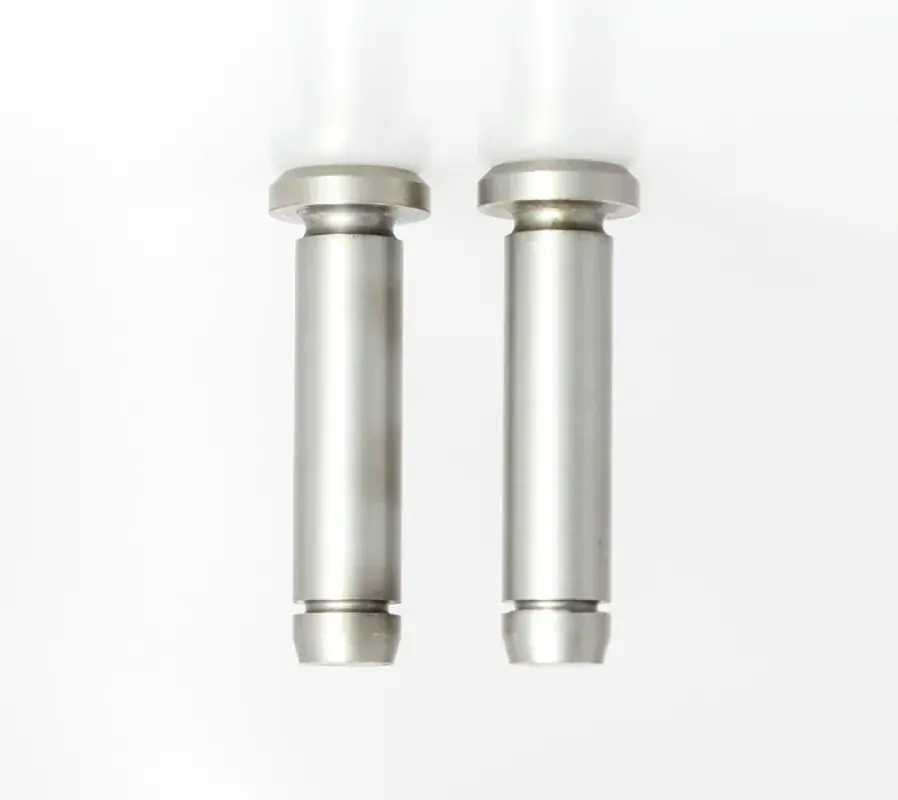

Polishing stainless steel is a common surface treatment process that not only affects aesthetics but also directly determines the performance, service life, and total lifecycle cost of stainless steel components. While traditional mechanical polishing methods are widely adopted, they often introduce defects such as embedded abrasive particles, microcracks, and uneven surface layers. These flaws not only compromise corrosion resistance but may also become sources of contamination.
Electrolytic polishing of stainless steel, as an advanced electrochemical process, achieves microscopic surface leveling through a controlled anodic dissolution process. It selectively removes protruding areas, resulting in a microscopically smooth pristine surface. This polishing technique forms a thick, uniform chromium oxide passivation layer, significantly enhancing resistance to pitting and crevice corrosion. This is particularly critical in highly corrosive chemical or saltwater environments.
Furthermore, electrolytic polishing fundamentally decontaminates surfaces by removing embedded impurities. Its exceptional cleanliness, low particle adhesion, and superior hygienic properties meet stringent FDA, cGMP, and SEMI standards. For complex geometries like tubing and piping, this process delivers outstanding uniformity, effectively treating internal surfaces, welds, and intricate structures.
This article delves into how electrolytic polishing transforms stainless steel into high-purity, high-performance materials, directly addressing core challenges in demanding fluid systems, precision instruments, and critical industrial components.
Current State and Challenges: Limitations of Traditional Stainless Steel Polishing Processes
When polishing critical stainless steel components—particularly tubing and piping—fully understanding the limitations of conventional polishing techniques is essential for mitigating risks. While mechanical processes like belt grinding and polishing can achieve initial aesthetic results, they introduce significant metallurgical defects and microtopographical imperfections that compromise component performance in demanding environmental applications.
Limitations of Mechanical Polishing for Stainless Steel
The physical contact-based processing methods of mechanical polishing for stainless steel introduce several inherent limitations. The most prominent issue lies in compromised surface integrity. During mechanical polishing, external forces induce microstress layers and lattice distortions, potentially embedding abrasive particles (e.g., iron oxides, aluminum oxide) into the substrate. These inclusions serve as initiation sites for electrochemical corrosion, significantly accelerating material degradation in environments containing corrosive media like chlorides.
Furthermore, traditional stainless steel polishing processes exhibit poor consistency and repeatability, heavily relying on operator skill. This leads to significant variations in surface quality between batches and even across different areas of the same workpiece, rendering them unsuitable for high-end applications demanding extreme uniformity and long-term corrosion resistance. Additionally, these methods face geometric limitations. For polished stainless steel pipes, complex cavities, micro-channels, or concave surfaces, tool accessibility is poor, making effective processing difficult.
Challenges in Polishing Stainless Steel Tubing
Polishing the inner surface of stainless steel tubing presents a formidable challenge. Conventional polishing tools struggle to reach deep into the pipe walls, making it difficult to achieve a uniform surface finish. This often leaves microscopic grooves and polishing blind spots, posing significant risks for high-purity fluid transfer systems (e.g., in semiconductor and pharmaceutical industries).
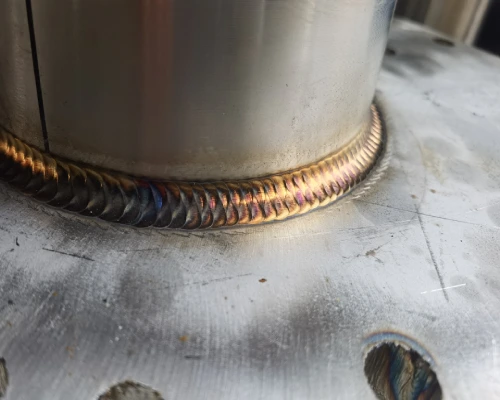
Secondly, weld seam treatment presents another critical difficulty. The microstructure and hardness of welded areas differ from the base material. Conventional stainless steel polishing processes applied to welds readily produce uneven grinding marks, disrupting surface continuity and potentially introducing carbon steel contamination that can lead to pitting corrosion.
Finally, inherent surface defects in steel tubes during manufacturing—such as deep scratches or creases formed during bending—are difficult to eliminate completely through mechanical polishing alone. These imperfections can serve as potential fatigue crack initiation points and corrosion initiation sites.
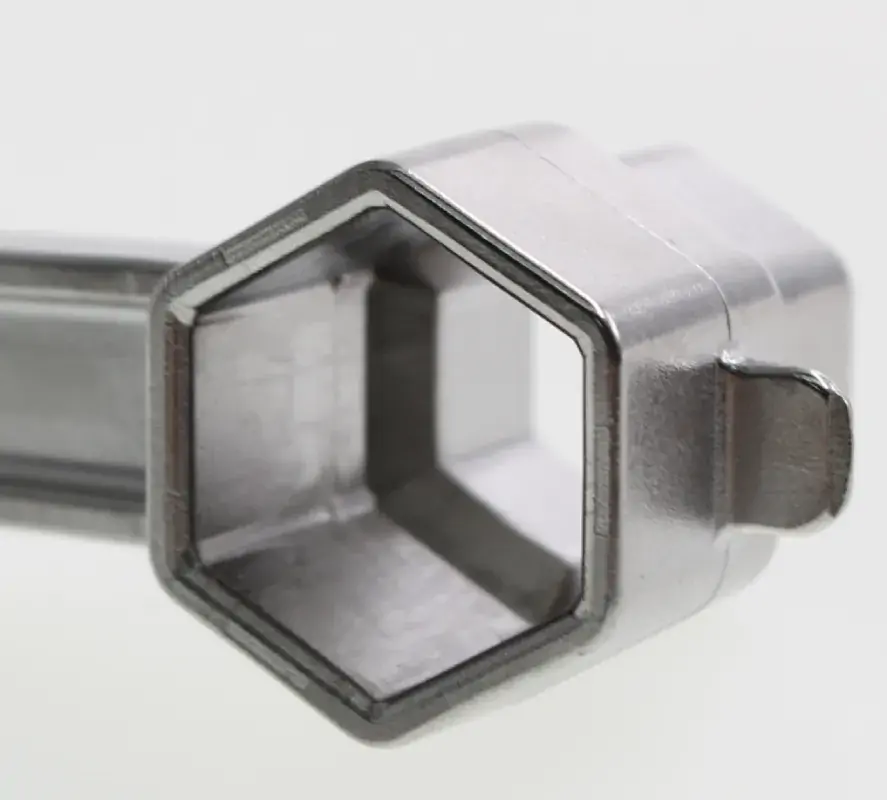
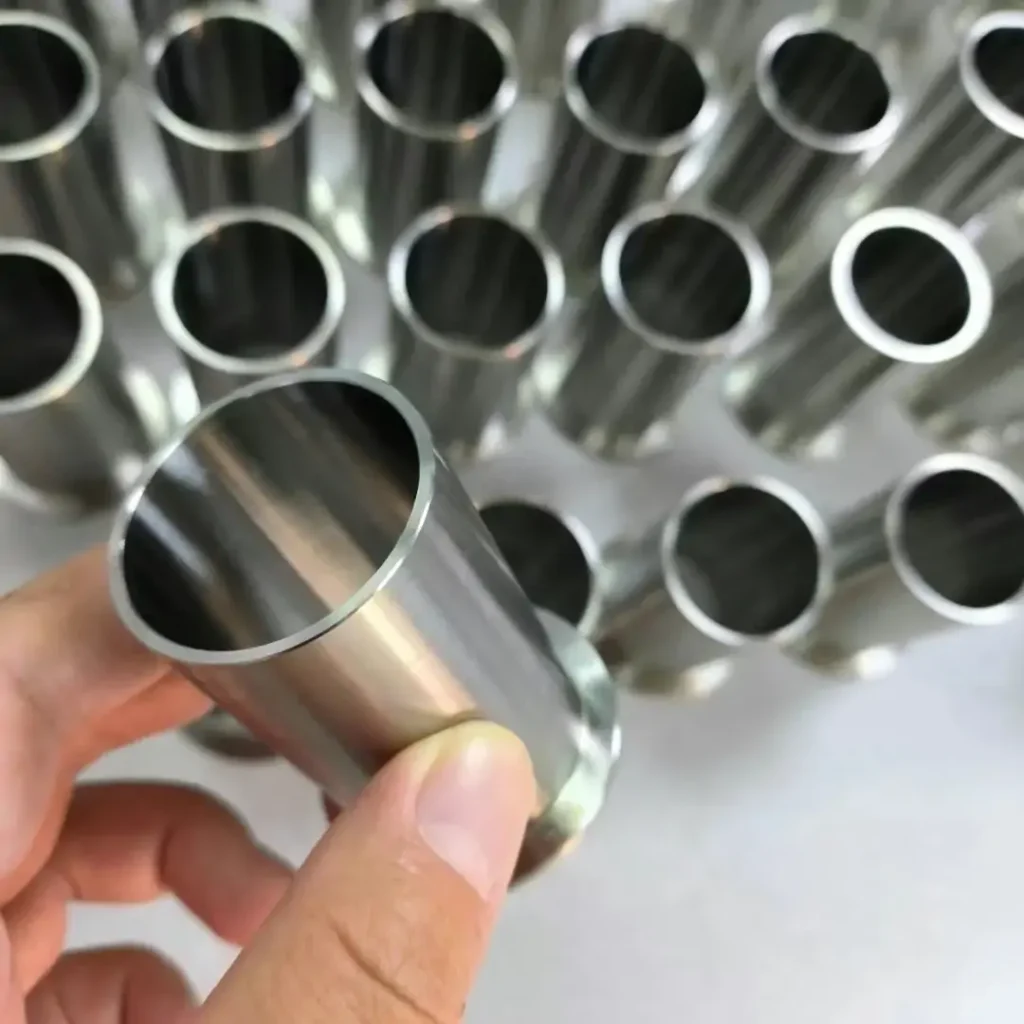
Principles and Technological Innovation: Detailed Explanation of Electrolytic Polishing of Stainless Steel
Electrolytic polishing of stainless steel fundamentally differs from any mechanical surface treatment technology. It achieves results not through physical cutting, but via controlled electrochemical dissolution.
Fundamental Definition of Electrolytic Polishing Technology
Electrolytic polishing is a non-contact finishing process that enhances stainless steel surface quality through controlled anodic dissolution. Its core principle involves immersing the stainless steel workpiece as the anode in a specially formulated electrolyte, forming a complete circuit with a cathode. Upon applying direct current, selective metal dissolution occurs on the workpiece surface—distinct from simple physical abrasion.
This process effortlessly elevates surfaces from approximately Ra 0.4 microns after mechanical polishing to below Ra 0.2 microns, even achieving mirror-like finishes. Electrolytic polishing utilizes electrochemical energy rather than mechanical force for surface leveling, thereby completely eliminating inherent mechanical processing defects such as chip embedding and micro-stress. This provides fundamental assurance for applications demanding high cleanliness and corrosion resistance.
The principles of stainless steel electropolishing and aluminum anodizing are remarkably similar. Are you familiar with these two commonly used surface treatment processes?
Micro-Mechanism of Electrolytic Polishing for Stainless Steel
The exceptional performance of electrolytic polishing for stainless steel stems from its fundamental micro-mechanism. This process is inherently a metallurgical strengthening technique rather than a simple surface finishing step.
This polishing process commences with an anodic leveling mechanism driven by current density. Due to significant surface curvature, micro-peak structures exhibit markedly higher local current densities compared to micro-valley structures. This gradient drives preferential anodic dissolution at these elevated points, effectively flattening surface topography at the submicron scale. Simultaneously, a viscous diffusion layer composed of dissolution products forms on the workpiece surface. This layer is thicker in the valley regions, effectively inhibiting metal dissolution there. The differential dissolution caused by the combined effects of current density differences and the diffusion layer ultimately results in an isotropic, ultra-smooth surface.
During the electrolytic polishing process, anodic polarization selectively dissolves iron and other reactive elements from the surface substrate. This leads to relative enrichment of chromium at the interface, where it spontaneously reacts to form a robust, ultra-thick (typically 3-5 nanometers), and uniform chromium oxide layer. This passivation layer is central to achieving exceptional uniform pitting resistance, with a failure potential often exceeding +1000 mV (vs. standard hydrogen electrode). This makes it an essential property for high-purity and corrosive environments. Electrolytic polishing ensures comprehensive coverage even on complex geometries, delivering sustained corrosion protection and cleanability that meets stringent ASTM B912 and SEMI standards.
Electrolytic Polishing of Stainless Steel Process Flow
Electrolytic polishing of stainless steel begins with meticulous pretreatment, including thorough chemical degreasing and acid pickling to ensure surfaces are free of grease and oxide scale—a prerequisite for achieving uniform polishing results.
The core process relies on precise control of multiple electrolytic polishing parameters: electrolyte temperature must be maintained within a specific range (typically 65-85°C); current density must be accurately set according to material grade and desired finish; processing time is adjusted based on the original surface condition and target outcome.
Post-treatment stage for electrolytic polishing stainless steel: Workpieces undergo multi-stage counter-current rinsing in flowing deionized water to completely terminate reactions and remove all residual electrolyte. A clean surface is finally achieved through efficient drying.
All parameters throughout the stainless steel polishing process are recorded and monitored, ensuring exceptional consistency between batches and compliance with industry standards such as ASTM B912 and ASTM A967.
Why choose Supro MFG's Custom metal enclosure Services
Provide the most cost-effective cost solution for manufacturing and assembling products, expanding product competitiveness.
a technical team specializing in custom shell manufacturing for more than 30 years.
Advanced Manufacturing Equipment: Industry-leading custom metal enclosure manufacturer with in-house sheet metal, die casting, precision machining workshops, and surface coating workshops.
ISO 9001-2015, PPAP III level, RoHS, NEMA, CE and other certified production standards.
24H*7 online English technical support: The professional English team responds quickly to users’ technical questions online at any time.
help users from product design, prototype, batch manufacturing, surface treatment, assembly and packaging, transportation and a series of value-added services.
With in-house mechanics and chemistry laboratories, it can quickly monitor manufacturing process quality control to ensure the delivery of high-quality products.
Accept to sign NDA documents to ensure that customers’ product information is protected.
Door-to-door delivery in customizable secure packaging after complying with the delivery details agreed with the customer.

Comparative Advantages: Electrolytic Polishing of Stainless Steel vs. Traditional Polishing of Stainless Steel
Performance Metrics | electrolytic polishing stainless steel | mechanical polishing stainless steel |
Surface morphology | Isotropic, non-directional grain, smooth surface | Anisotropic, exhibiting directional abrasion marks and plastic deformation layers |
Corrosion resistance | Exceptional and uniform. By forming an ultra-thick, chromium-rich passivation layer in situ, the pitting resistance equivalent (PREN) is effectively enhanced. | Inconsistent and vulnerable. The passivation film is thin and easily disrupted by embedded contaminants, forming galvanic corrosion cells. |
Geometric Adaptability | Capable of processing complex geometries, internal surfaces, micro-pores, and slender tubular components with no blind spots. | Limited. Poor tool accessibility results in uneven treatment of internal surfaces and welds, creating areas inaccessible to polishing. |
Surface cleanliness | High cleanliness. Removes surface material layers, eliminates embedded chips, and creates a low-surface-energy surface with non-adhesive properties. | Potential contamination source. Prone to embedding abrasive particles (e.g., iron, aluminum oxide), becoming a source of particle release. |
Consistency and Automation | Electrolytic polishing of stainless steel is a highly precise process controlled by quantifiable parameters (current, temperature, time), ensuring exceptional repeatability between batches and facilitating automation. | Low. Mechanical polishing of stainless steel heavily relies on operator skill, resulting in significant batch-to-batch variation and low automation levels. |
Material Influence | Stress-free processing. Does not produce heat-affected zones or micro-stresses, thereby helping to preserve the material’s fatigue properties. | The introduction of tensile stress may cause lattice distortion, forming microcrack sources and reducing fatigue life. |
Core Advantages of Electrolytic Polishing for Stainless Steel
Mechanical polishing of stainless steel provides only visual smoothness, but the embedded contaminants and micro-stresses introduced during the process severely compromise the material’s inherent corrosion resistance. Electrolytic polishing, however, selectively removes surface defect layers through anodic leveling and in-situ passivation mechanisms while simultaneously generating a thick, chemically stable chromium oxide layer. This significantly enhances the material’s resistance to pitting corrosion. Furthermore, it achieves a higher critical pitting temperature (CPT) value, easily passing neutral salt spray tests exceeding 1000 hours as specified by ASTM A967.
For polished stainless steel tubing, complex vessels, and medical devices, its electrochemical nature ensures uniform treatment wherever current can reach. It seamlessly polishes internal walls, blind holes, and intricate structures, completely eliminating the dead spots inherent in mechanical polishing. Simultaneously, the process removes approximately 20-40 microns of surface material, thoroughly purging surface defects and embedded contaminants introduced during manufacturing and prior processing.
Electrolytic polishing of stainless steel is a highly controllable process based on physicochemical principles. Its key parameters—current density, temperature, and time—can be precisely set and monitored, guaranteeing high consistency across production batches. This translates to fewer quality disputes, higher yield rates, and lower maintenance costs with extended service life throughout the product lifecycle, significantly reducing total cost of ownership.
online custom metal fabrication parts
Only 4 steps
Contact our experts team and experience the efficiency and economic benefits of digital metal fabrication services.
Upload Design Files
STL , STEP (.stp), IGES (.igs), (.ZIP), or PDF.
Also be a sample or an idea
Quote & Design Analysis
Instant factory quotes and DfM reports, the most reasonable solution.
Manufacturing Begins
Digital processes can initiate order tasks within 24 hours.
On-Time Delivery
Keeping delivery promises, approved by 3000+ Global Company buyers.
Practical Applications: Common Scenarios for Polishing Stainless Steel
Due to its unique technical advantages, electrolytic polishing of stainless steel has become the preferred solution for surface treatment in numerous high-end industrial applications. Its value lies not only in exceptional aesthetics but also in its ability to meet stringent operational requirements for corrosion resistance, cleanliness, and functional reliability.
High-Purity Fluid Conveyance Systems
In semiconductor industry applications such as ultra-pure water (UPW) and chemical distribution piping, the exceptionally smooth surface of electrolytically polished stainless steel (typically requiring Ra < 0.2 µm) effectively prevents particle adhesion and bacterial biofilm formation.
Simultaneously, the ultra-thick passivation layer minimizes metal ion leaching, ensuring fluid purity in compliance with SEMI F19 and ASTM A967 standards. This serves as a cornerstone for safeguarding chip yield rates.
Biopharmaceutical and Food Processing Equipment
For biopharmaceutical and food processing equipment, regulatory compliance is a core consideration. The seamless, dead-zone-free surfaces created by electrolytic polishing stainless steel perfectly meet the mandatory requirements of FDA 21 CFR 211 and cGMP for equipment surfaces to be “clean and disinfectable.”
Chemical and Energy Equipment
impacts operational safety and costs. Electrolytic polished stainless steel significantly enhances the stress corrosion cracking (SCC) resistance of stainless steel components—such as reactor vessel interiors and heat exchanger tubes—by eliminating surface defects and stress concentration points.
Employing electrolytic polishing stainless steel ensures uniform corrosion resistance across structural components, enabling equipment to effectively resist pitting and crevice corrosion when exposed to high-concentration chloride or acidic media, thereby extending service life.
Aerospace
In aerospace and precision instrument manufacturing, electrolytic polishing of stainless steel resolves two core challenges for critical components: First, it reduces fluid resistance and enhances fatigue life by eliminating microscopic irregularities. Second, it creates dense surfaces that meet the stringent ultra-high vacuum requirements of vacuum systems, such as space propulsion systems and particle accelerators.
No design files? Let Supro MFG do it for you.
We often come across clients who have no professional design drawings and documentation, only a creative idea, which leads to the project being at a standstill.
If you are in this situation, then contact our team of experts.
Supro MFG, as an industry-leading custom metal fabricator, has an ever-experienced team of engineers who utilize their extensive fabrication experience and technical expertise to build your idea into a real product and create design files such as STEP/STP/SLDPRT/DXF/PDF/PRT/DWG/AI.
That’s what makes SUPRO MFG so great, and 2,000 corporate, entrepreneurial, artist, and other purchasers from around the world enjoy working with us and benefiting from our one-stop manufacturing services.
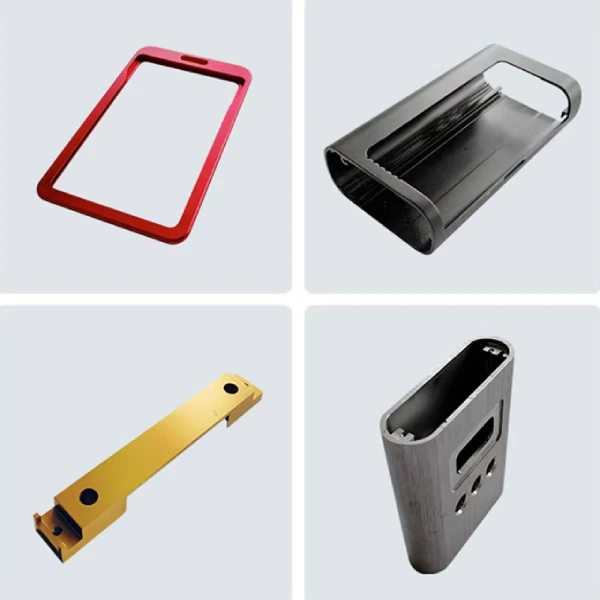
Implementation and Quality Control of Electrolytic Polishing for Stainless Steel
When pursuing exceptional surface finishes for stainless steel structural components, we must understand the precise execution and rigorous quality control of electrolytic polishing. This is crucial for ensuring stainless steel parts achieve outstanding corrosion resistance, ultimate cleanliness, and lasting aesthetics. It is not a simple immersion process but a meticulous metallurgical surface engineering endeavor.
Material Suitability for Stainless Steel
The effectiveness of electrolytic polishing stainless steel primarily depends on the metallurgical properties of the material itself. Austenitic stainless steels (such as 304, 316L) are ideal materials for electrolytic polishing due to their high chromium content (typically >16%) and stable face-centered cubic crystal structure. These materials can form a continuous and dense chromium-rich oxide passivation layer through anodic dissolution.
However, if the substrate contains significant nonmetallic inclusions (e.g., sulfides or oxides) or surface defects (e.g., deep scratches), these flaws will be magnified rather than eliminated after polishing. Therefore, material selection and quality control are critical for electrolytic polishing of stainless steel.
Prerequisites for Previous Processes
Pre-treatment is a prerequisite for the successful electrolytic polishing of stainless steel. Before entering the electrolytic tank, workpieces must undergo two critical steps: First, thorough chemical degreasing to completely remove all oils, lubricants, and fingerprints. Any organic residue will form an insulating barrier during polishing, resulting in severe mottling and unevenness.
Second, appropriate activation and mechanical pretreatment are essential. For welded components, welds must be ground to achieve a surface roughness (Ra value) as close as possible to the base metal. Improperly treated welds will exhibit noticeable discoloration after electrolytic polishing due to differing microstructures and dissolution rates. Additionally, severe plastic deformation layers formed during machining should be removed beforehand through mild acid pickling or uniform grinding.
Parameter Control in Stainless Steel Polishing Process
This is not a simple immersion process, but rather an electrochemical engineering operation requiring precise control of multiple interacting parameters. Core control variables include:
Electrolyte: The concentration, temperature, and viscosity of the phosphate-sulfate-based solution must be consistently maintained within the process window. Temperature fluctuations significantly alter the electrolyte’s viscosity and ion mass transfer rates, directly impacting the efficiency and brightness of electrolytic polishing stainless steel.
Current Density for Electrolytic Polishing of Stainless Steel:Must be precisely optimized based on stainless steel grade and target surface finish.Insufficient current density prevents effective surface leveling, while excessive current density may induce pitting corrosion.
Processing Time:The duration for electrolytic polishing of stainless steel must be precisely set according to component geometry, required removal allowance, and other specifications.
Quality Inspection System
A comprehensive quality inspection system is central to validating the value of electrolytic polished stainless steel and ensuring it meets final application requirements.
Surface Roughness (Ra, Rz): Quantitatively assessed using a contact profilometer to confirm compliance with specified micro-flatness.
Corrosion Resistance Testing: Conduct standardized neutral salt spray tests (ASTM B117) to evaluate the overall quality and uniformity of the passivation film formed during the electrolytic polishing process.
Surface Topography Analysis: Scanning electron microscopy (SEM) is employed to inspect surfaces for microscopic defects or non-uniform dissolution.
Cleanliness Verification: For semiconductor or biopharmaceutical applications, particle counting and total organic carbon (TOC) analysis are required to ensure the electrolytically polished stainless steel surface meets relevant industry standards.
Conclusion
Electrolytic polishing of stainless steel achieves intrinsic surface optimization through a controlled electrochemical process. The core value of this technique lies in simultaneously achieving microgeometric leveling and metallurgical property enhancement. It generates an ultra-smooth surface while in-situ forming a significantly thickened, chromium-rich, and highly stable passivation layer.
Supro is a specialized metal processing manufacturer. Leveraging advanced equipment, extensive manufacturing experience, and a professional engineering team, we provide perfect electrolytic polishing stainless steel services to over 3,000 companies worldwide, offering genuine manufacturer quotes.
As an industry-leading metal processing manufacturer, we efficiently deliver diverse products on schedule. From product design and rapid sheet metal prototype fabrication to mass production, we provide expert technical support and exceptional quality. We offer one-stop manufacturing solutions and highly cost-competitive product supply!