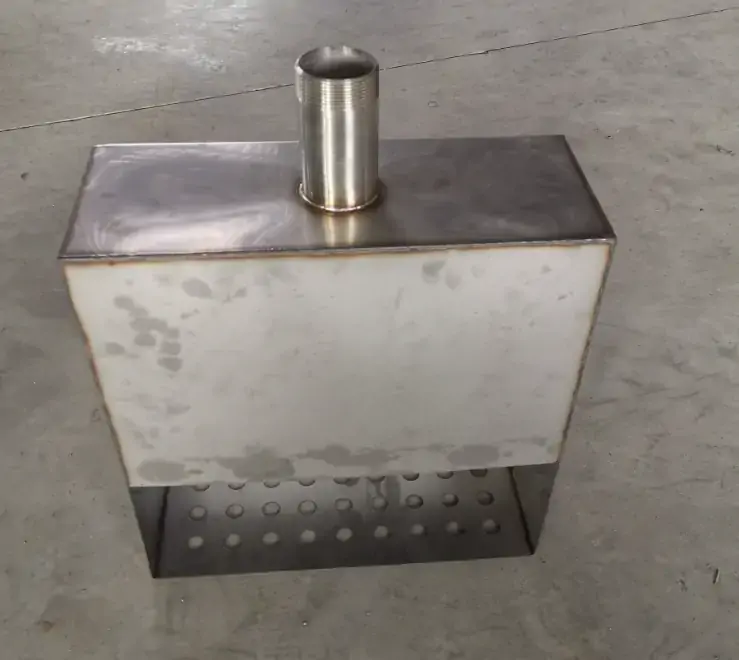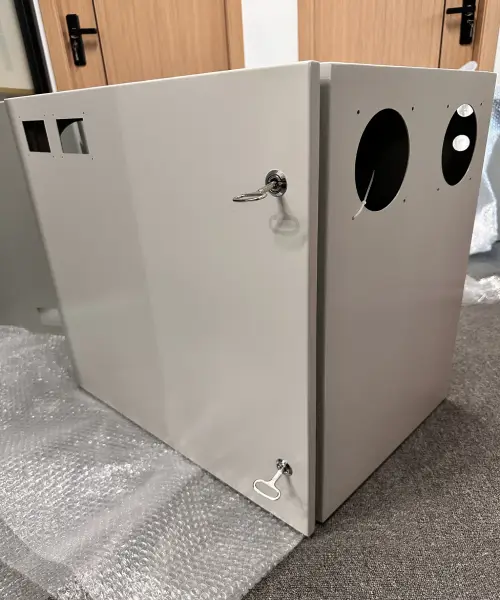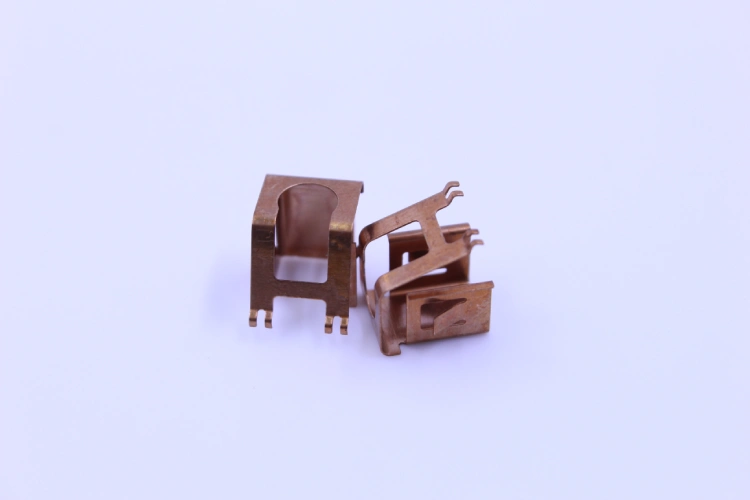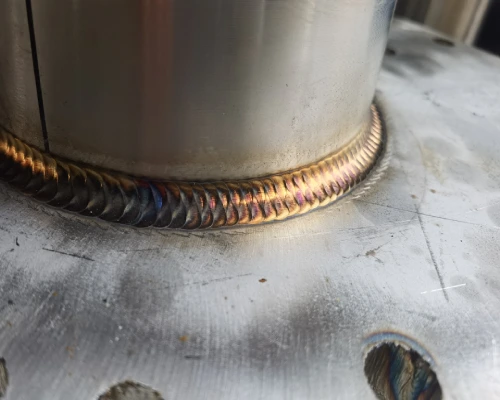

In the field of modern automotive engineering, reducing vehicle weight and improving fuel efficiency have become key drivers of design, and 5052 aluminum plays a crucial role in this regard. As a custom sheet metal manufacturer with decades of experience, we fully understand the unique value of 5052 aluminum in balancing structural weight reduction with performance. This non-heat-treated Al-Mg-based alloy is characterized by its outstanding fatigue strength and work hardening rate. For example, Aluminum 5052 in the H32 condition, when stabilized, offers an ideal combination of formability and strength, enabling it to perfectly balance corrosion resistance and crack resistance in complex aluminum sheet metal fabrication.
As a professional manufacturer of 5052 aluminum sheet metal fabrication, Supro utilizes precision laser cutting and welding processes to transform this “marine-grade” aluminum into high-rigidity, lightweight automotive structural components. Choosing our 5052 aluminum sheet metal fabrication services means leveraging proven metallurgical expertise to achieve sustainable weight reduction goals for your fleet.
This article will delve into the material’s application advantages in the automotive industry and the key technical aspects of 5052 aluminum sheet metal fabrication, helping your project strike the optimal balance between performance and cost.
Key Properties of 5052 Aluminum
Aluminum 5052 stands out in real-world fabrication because it balances strength, formability, and corrosion control without drama. From boat hulls to truck panels, aluminum 5052 keeps things light, tough, and dependable.

The Exceptional Corrosion Resistance of 5052 Aluminum Alloy
The reason 5052 aluminum is so highly trusted in the marine and automotive sectors lies fundamentally in its multi-layered protective mechanisms. The magnesium content in this alloy is one of its core advantages: not only does it enhance the matrix strength through solid solution strengthening, but it also ensures the stability of 5052 aluminum properties at the microscopic level.
When exposed to humid or saline environments (such as road salt splashes on automotive undercarriages), a dense, self-healing oxide film instantly forms on the surface of 5052 aluminum. This natural barrier, combined with the synergistic effect of the magnesium content, effectively resists intergranular corrosion and prevents spalling corrosion under stress. This is precisely why 5052 aluminum alloy maintains structural integrity even when handling chemical media such as fuel or brake fluid.
As your 5052 aluminum sheet metal fabrication manufacturer, we strictly select raw materials that comply with the ASTM B209 standard. Through precision laser cutting and welding processes, we ensure the seamless transformation of 5052 H32 aluminum into automotive components, providing durability throughout the product’s lifecycle.
Aluminum 5052 H32 Offers High Formability
For automotive sheet metal components with stringent requirements, the formability advantages of Aluminum 5052 H32 stem from its precise metallurgical condition. The H32 designation indicates that the material has undergone work hardening followed by a stabilizing treatment. This microstructure ensures more uniform dislocation movement when subjected to tensile or bending stresses, thereby preventing the formation of macroscopic Lüders lines or the risk of cracking.
In actual 5052 aluminum sheet metal fabrication processes—such as the production of complex chassis reinforcements or oil pans—this alloy delivers consistent elongation. Our experience shows that even when performing tight-radius bends on a press brake or forming complex profiles in deep-drawing dies, Aluminum 5052 H32 ensures uniform material flow and controllable springback. This predictable processing response makes Aluminum 5052 H32 our top recommendation to customers for complex stamped parts.
Aluminum 5052-H34 Offers Excellent Weldability and Fatigue Strength
Aluminum 5052-H34 ensures clean and reliable welds thanks to its superior weldability and stable alloy composition control.
Weldability: Compatible with common welding processes and maintains structural integrity after joining;
Long-term Load-bearing Capacity: Exhibits high fatigue strength under repeated loading, extending the service life of transportation chassis components.
For trailers and vehicle bodies built from aluminum 5052, fewer micro-cracks show up over time. That’s real-world peace of mind.
Aluminum 5052-H112 offers an excellent strength-to-weight ratio
Aluminum 5052-H112 is suitable for profiles or tubes that undergo hot working but require stable mechanical properties; it ensures that the material retains stable tensile strength and yield strength after extrusion.
When manufacturing electric vehicle battery tray frames or lightweight truck crossbeams, combining 5052 aluminum sheet in the H32 condition with extruded profiles in the H112 condition enables the construction of spatial structures with high rigidity and excellent energy-absorption capabilities.
As a professional 5052 aluminum sheet metal fabrication manufacturer, we specialize in transforming these semi-finished products into final assemblies through precision aluminum profile welding and CNC machining. Our 5052 aluminum sheet metal fabrication services ensure that every step—from raw material selection to stress relief—complies with the IATF 16949 automotive quality management system requirements, allowing you to pursue extreme lightweighting without compromising structural durability.
online custom metal fabrication parts
Only 4 steps
Contact our experts team and experience the efficiency and economic benefits of digital metal fabrication services.
Upload Design Files
STL , STEP (.stp), IGES (.igs), (.ZIP), or PDF.
Also be a sample or an idea
Quote & Design Analysis
Instant factory quotes and DfM reports, the most reasonable solution.
Manufacturing Begins
Digital processes can initiate order tasks within 24 hours.
On-Time Delivery
Keeping delivery promises, approved by 3000+ Global Company buyers.
3 Benefits of Aluminum 5052 in Cars
Cars today are under pressure to be lighter, safer, and tougher against rough roads. That’s where aluminum 5052 steps in. By blending low weight, solid strength, and strong corrosion resistance, this aluminum alloy keeps vehicles efficient without cutting corners on safety or lifespan.

Using lightweight 5052 aluminum sheet improves fuel economy
The U.S. Department of Energy notes that a 10% vehicle weight reduction can improve fuel economy by 6–8%. That’s not pocket change—that’s real road money.
The following outlines the specific performance of 5052 aluminum alloy in practical automotive applications:
Body Panels: Outer skins stamped from 5052 aluminum sheet, which reduce weight by several kilograms while maintaining panel stiffness.
Inner Structures: Floor panels formed from 5052 aluminum alloy, offering a balanced strength-to-weight ratio.
Performance Benefits: Reduces overall vehicle weight, lowers rolling resistance, improves fuel economy in gasoline-powered vehicles, extends battery range, and reduces thermal load.
Manufacturing Advantages: 5052 aluminum sheet offers excellent formability, enabling smooth stamping of complex curved surfaces. It features stable weldability, clean seams, and minimizes rework.
According to the International Energy Agency’s 2025 EV outlook:
Lightweight materials such as advanced aluminum alloys remain central to improving electric vehicle range and overall energy efficiency.
Aluminum 5052-O significantly improves durability
Road salt. Rain. Mud. Daily wear. Cars take a beating.
Aluminum 5052-O stands out because of its natural Corrosion Resistance. Magnesium in this aluminum alloy forms a protective oxide layer, slowing down rust-like degradation. That’s a big deal in harsh Automotive Conditions.
Key durability factors include:
Strong resistance to salt spray
Stable Material Properties in humid climates
Reduced pitting compared to ordinary carbon steel
For underbody guards and side panels, 5052-O aluminum coil keeps its surface intact even after years of winter driving. That means longer Longevity and fewer warranty headaches.
5052 aluminum sheet provides superior crash performance
Safety isn’t negotiable. Aluminum 5052-H34 brings serious Fatigue Strength, which matters in both daily vibration and sudden impact.
In the event of a collision, components made from 5052 aluminum sheet—such as battery pack crash barriers or door sill beams—absorb energy through controlled plastic deformation rather than brittle fracture. This “warning before bending” characteristic stems from its uniform microstructure, which effectively suppresses the instantaneous propagation of cracks.
As a professional 5052 aluminum sheet metal fabrication manufacturer, we maximize this material’s energy absorption efficiency through precision laser cutting and robotic welding processes, ensuring that every safety structural component provides predictable, high-toughness crash protection for occupants and the core battery pack while maintaining a lightweight design.
Are you looking for reliable & cost-effective
China Sheet Metal Fabricators
More than 150,000 OEM metal fabrication products delivered to 5,000+ global buyers.
And benefit from it!
Chassis Design: Using Aluminum 5052 Sheets
When building a chassis that has to stay light but tough, aluminum 5052 often becomes the go-to pick. Break it down—aluminum for low weight, 5052 for strength and corrosion resistance—and you get a sheet metal option that just works. From surface finish to laser-cut integration, smart handling of 5052 aluminum sheet keeps fabrication smooth and costs in check.

Selecting Mill Finish vs. Anodized Finish for Chassis Panels
Choosing between Mill Finish and Anodized Finish for Chassis Panels in aluminum 5052 is not just about looks; it affects Surface Treatment, long-term Corrosion Resistance, and overall Aesthetics.
Mill Finish:
Raw 5052 aluminum sheet surface
Lower cost
Ideal for hidden structural frames
Anodized Finish:
Enhanced oxide layer
Better wear resistance
Cleaner visual appeal for exposed panels
For indoor chassis frames using aluminum alloy 5052, mill finish keeps budgets tight. For outdoor housings or visible enclosures made from aluminum 5052 sheet, anodizing adds durability and a sharp look.
“Aluminum demand in transportation and electronics enclosures continues to rise due to its corrosion resistance and lightweight properties,” notes the International Aluminum Institute (2024 industry outlook).
Integrating Aluminum Extrusions and Tubes via Precision Laser Cutting
Combining Aluminum Extrusions and Aluminum Tubes with 5052 aluminum sheet calls for tight Joining Techniques and careful Component Integration to maintain Structural Integrity.
At Supro, we use fiber laser cutting technology to precisely machine positioning slots on 5052 H32 aluminum sheets that perfectly match the profile wall thickness (typically with a tolerance of 0.1–0.3 mm).
To address the high reflectivity of aluminum, we have optimized the laser pulse parameters through programming to control the heat-affected zone and prevent microcracks. This precise “slot-and-tab” assembly strategy ensures zero interference during structural alignment prior to welding, enabling the final MIG or spot weld joints to form a continuous, robust load-bearing path.
Ensuring 5052 Aluminum Sheet Processing Complies with ASTM B209 and ISO 9001 Standards
The processing of 5052 aluminum sheet must comply with the ASTM B209 standard, adhere to ISO 9001 specifications, and meet strict quality standards.
Material Verification: Confirm the specifications of 5052 aluminum, review factory test reports, and verify chemical composition.
Process Control: Monitor the 5052 aluminum sheet metal fabrication process, record batch traceability, and verify dimensional tolerances.
Regulatory Compliance: Verify compliance with regulations (RoHS/REACH), maintain documentation records, and conduct internal quality audits.
Typical ASTM B209 Reference Values for Aluminum 5052 (H32)
Property | Typical Value | Test Standard |
Tensile Strength | 210–260 MPa | ASTM B209 |
Yield Strength | ≥130 MPa | ASTM B209 |
Elongation (50 mm) | ≥12% | ASTM E8 |
Thickness Tolerance (3 mm sheet) | ±0.15 mm | ASTM B209 |
Get instant ex-factory price quotation.
If you only have an idea or an old sample,Let us know.
with photo or video and get our quotation and manufacturing solutions.
- Product design drawings or 3D model files.
- Material standards and appearance requirements.
- Product quantity demand.
- Industry standards in the application field.
- Functional requirements
FAQs about Aluminum 5052
Why is aluminum 5052 trusted for marine components and fuel tanks?
There is good reason why 5052 aluminum alloy is referred to as a “marine-grade aluminum alloy.” Its excellent corrosion resistance protects aluminum sheets from saltwater erosion, even in ship components and storage tanks subjected to long-term use.
Key Factors:
5052 aluminum alloy offers excellent corrosion resistance in coastal and chemical environments;
Strong weldability for fuel tanks and pressure vessels;
A structure that requires no heat treatment and maintains stability after welding.
Common conditions such as 5052 H32 and 5052-H34 strike a balance between strength and formability, making the fabrication of components in harsh marine environments safer and more controllable.
Which temper of aluminum 5052 fits automotive panels or electronic chassis?
The choice typically depends on the forming depth and strength requirements:
Aluminum 5052-O is suitable for deep drawing and complex stamping, offering optimal formability.
Aluminum 5052 H32 offers a balance of strength and bending performance, making it suitable for automotive body panels.
Aluminum 5052-H34 has slightly higher strength and is suitable for applications requiring high dent resistance.
Whether in coil or sheet form, this alloy presents a low risk of cracking during stamping, bending, and shearing operations. Its fatigue strength also meets the requirements for structural reinforcement components subjected to repeated loading.
How do surface finishes change the performance of aluminum 5052 products?
Surface choice shapes both durability and appearance for aluminum extrusion, aluminum tube, or general sheet metal work.
Mill finish: practical for concealed frames and internal structures.
Anodized finish: increased surface hardness and added corrosion resistance for exposed chassis panels.
Brushed or polished finish: cleaner look for electronic chassis.
Painted finish: added barrier for outdoor storage tanks.
The right surface treatment not only protects the 5052 aluminum alloy but also meets the desired aesthetic expectations.
Contact Us
The essence of lightweight automotive manufacturing lies in transforming the engineering advantages of 5052 aluminum properties into reliable, mass-produced components. From the high formability of 5052 H32 aluminum to its exceptional fatigue strength, this alloy offers the optimal balance of performance and weight for modern chassis and body structures.
As a professional 5052 aluminum sheet metal fabrication manufacturer, Supro MFG brings over two decades of precision machining expertise to every step of the process. We strictly adhere to ASTM B209 and IATF 16949 standards to ensure precision and control at every stage, from laser cutting to welding and assembly. When you choose to partner with us, you gain not only code-compliant 5052 aluminum sheet metal fabrication services, but also the technical assurance needed to safely implement lightweight designs.