Acrylic (polyacrylic) is highly favoured for its exceptional optical properties and machinability. However, its inherent internal stresses and thermal sensitivity render the acrylic CNC machining process highly susceptible to micro-cracks, chipping, and even complete fracturing.
Acrylic CNC machining cracking is not an incidental failure but a predictable outcome arising from the interplay of materials science, machining dynamics, and tool physics. Its root causes can be systematically attributed to three primary stresses: residual stresses frozen during sheet production, localised thermal stresses induced by cutting friction, and mechanical stresses generated by tool-workpiece interaction. When the acrylic CNC machining process fails to precisely regulate the superposition of these three forces, stress concentrations can exceed the material’s fracture toughness threshold, leading to progression from microcracks to full-scale fracture.
Building upon this mechanism, this paper details a production-validated set of ten critical technical principles spanning the entire workflow from material selection to post-processing. These principles deliver high-quality acrylic CNC machining solutions, fundamentally ensuring processing consistency and structural integrity of components.
Acrylic CNC Machining: The Ideal Choice for Precision Processing
When evaluating acrylic CNC machining solutions, we must objectively consider the dual nature of acrylic material. Successful acrylic CNC machining is not merely the removal of material from a blank, but rather the precise control of processes that maximises the material's performance potential while circumventing its physical limitations. For decision-makers, understanding this is key to balancing performance requirements with total cost of ownership.
Acrylic's Dual Nature: Exceptional Optical Properties and Potential Machining Risks
For structural components requiring superior optical performance combined with complex geometries, acrylic CNC machining offers an outstanding solution. Acrylic (PMMA), with its 92% light transmission, outstanding weather resistance, and weight advantages, is the material of choice for optical lenses, light guides, and high-end display components. However, this also presents unique machining challenges for acrylic CNC machining.
Acrylic’s relatively low glass transition temperature (approximately 105°C) and sensitivity to localised heat accumulation mean that any improper cutting heat during machining can induce microplastic deformation within the material. Such thermal damage is often invisible in its initial stages but significantly compromises the long-term structural integrity and resistance to stress cracking of machined parts.
Consequently, successful acrylic CNC machining necessitates harnessing the material’s optical potential while circumventing its physical limitations through rigorous process control. Understanding this duality forms the foundation for achieving high-quality, repeatable production.
The Hidden Costs of Acrylic CNC Machining Cracking
The direct material scrap resulting from acrylic CNC machining cracking represents only a fraction of the increased costs. The true hidden cost lies in production process disruption: it wastes machine tool hours on rework, disrupts production schedules, and necessitates time-consuming root cause analysis. More critically, acrylic CNC machining components that pass initial inspection yet harbour microscopic stress cracks may fail during assembly, transportation, or customer use. This triggers costly after-sales claims, brand reputation damage, and risks of supply chain disruption.
Each instance of stress cracking arising from inadequate acrylic CNC machining process control represents not merely the loss of a sheet of acrylic, but an erosion of the entire production system’s reliability and profitability. Consequently, implementing a systematic acrylic CNC machining process protocol to prevent cracking constitutes a critical strategic decision for safeguarding supply chain resilience and maintaining overall project cost control.
Why Choose Supro MFG’s Custom Manufacturing Services
Real ex-factory price:
Provide the most cost-effective cost solution for manufacturing and assembling products, expanding product competitiveness.
Professional technical team:
a technical team specializing in custom shell manufacturing for more than 30 years.
Advanced Manufacturing Equipment: Industry-leading custom metal enclosure manufacturer with in-house sheet metal, die casting, precision machining workshops, and surface coating workshops.
ISO 9001-2015 Manufacturer:
ISO 9001-2015, PPAP III level, RoHS, NEMA, CE and other certified production standards.
24H*7 online English technical support: The professional English team responds quickly to users’ technical questions online at any time.
One-stop manufacturing solution:
help users from product design, prototype, batch manufacturing, surface treatment, assembly and packaging, transportation and a series of value-added services.
Authoritative testing capabilities:
With in-house mechanics and chemistry laboratories, it can quickly monitor manufacturing process quality control to ensure the delivery of high-quality products.
Intellectual Property Protection(NDA):
Accept to sign NDA documents to ensure that customers’ product information is protected.
Commitment to On-Time Delivery:
Door-to-door delivery in customizable secure packaging after complying with the delivery details agreed with the customer.
Analysis of Cracking Mechanisms in Acrylic CNC Machining
To systematically address cracking issues in acrylic CNC machining, one must first comprehend the underlying fundamental physical mechanisms. Cracking arises not from a single factor, but from the complex interaction and cumulative effect of internal stresses within the material, thermal stresses generated during processing, and mechanical stresses, ultimately exceeding the material's strength limit. Understanding this mechanism is crucial for evaluating the depth of process expertise and risk control capabilities among acrylic CNC machining manufacturers.
Residual Stresses Generated During Acrylic CNC Machining
Residual stresses represent an inherent flaw in acrylic CNC machining. Originating from the sheet manufacturing process—whether casting or extrusion—these stresses arise when resin cools and solidifies from a molten state. The uneven contraction and orientation of polymer chains within the material are frozen in place, creating inherent residual stresses. During acrylic CNC machining, when the tool removes material, the original mechanical equilibrium is forcibly disrupted.
This causes internal stresses to redistribute and concentrate sharply around the machining path, particularly in regions of geometric discontinuity such as thin walls and sharp corners. These redistributed stress levels can become sufficiently high to directly induce microcracks. More critically, it substantially diminishes the local fracture toughness of the material, rendering acrylic CNC machined components highly vulnerable to subsequent cracking under even minor thermal or mechanical stresses. Consequently, assessing and understanding the internal stress state of the sheet prior to acrylic CNC machining constitutes the primary step in preventing cracking.
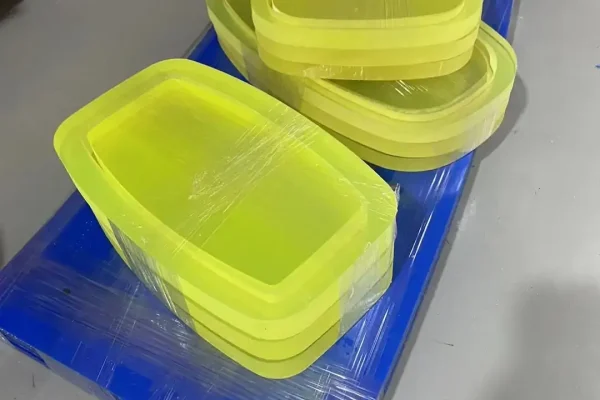
Thermal Stresses Generated During Acrylic CNC Machining
Acrylic exhibits extreme temperature sensitivity coupled with poor thermal conductivity, typically only one-thousandth that of metals. This characteristic poses significant challenges during machining: heat generated by tool friction during cutting cannot dissipate rapidly from the cutting zone, readily causing localised overheating. When the surface temperature exceeds 60°C, acrylic begins to soften and exhibits melting tendencies. Should temperatures surpass its glass transition temperature (approximately 105°C), the material undergoes drastic properties changes. Such intense localised heating causes the material to expand, while the surrounding cold matrix constrains this expansion, generating substantial thermal tensile stresses.
Upon cooling, the restricted contraction of the heated zone generates residual tensile stresses. This ultimately leads to micro-cracks (silver streaks) and plastic deformation on the surface of the acrylic CNC machining component. More critically, the high temperatures generated during acrylic CNC machining accelerate polymer chain disentanglement, directly weakening intermolecular bonds. This renders the material more susceptible to brittle fracture under mechanical stress.
Mechanical stresses generated during acrylic CNC machining
Mechanical stresses constitute the direct, coercive physical forces exerted by the cutting tool upon the material. Their magnitude and nature are directly influenced by the tool geometry, sharpness, cutting parameters (such as feed rate and depth of cut), and the machine tool’s dynamic stability. Dull tools transition from cutting to extrusion and tearing, generating excessive and non-uniform cutting forces.
Concurrently, inappropriate tool geometry angles directly influence stress distribution and crack initiation patterns. Furthermore, harmful mechanical stresses include uneven clamping forces from fixtures, impact forces from abrupt turns in tool paths, or high-load plunging during acrylic CNC machining. These forces locally superimpose upon pre-existing internal stresses and thermal stresses within the acrylic CNC machined component. When the combined force at any point exceeds the strength limit of the acrylic, it triggers instantaneous crack propagation, manifesting as visible chipping or through-cracking.
online custom metal fabrication parts
Only 4 steps
Contact our experts team and experience the efficiency and economic benefits of digital metal fabrication services.
Upload Design Files
STL , STEP (.stp), IGES (.igs), (.ZIP), or PDF.
Also be a sample or an idea
Quote & Design Analysis
Instant factory quotes and DfM reports, the most reasonable solution.
Manufacturing Begins
Digital processes can initiate order tasks within 24 hours.
On-Time Delivery
Keeping delivery promises, approved by 3000+ Global Company buyers.
Ten Methods to Avoid Acrylic CNC Machining Cracking: From Material Preparation to Final Processing
Preventing acrylic CNC machining cracking relies not on a single technique, but on an interconnected systematic approach. These ten methods form a complete process chain from prediction to control and verification, enabling effective stress management from material sourcing to final components to prevent cracking.
Selection and Pre-treatment of Acrylic CNC Machining Materials
For critical acrylic CNC machining components, medical-grade or optical-grade cast acrylic sheets are preferred. Compared to extruded sheets, cast sheets possess higher molecular weight and more uniform internal molecular structure, resulting in significantly lower inherent stress levels.
Prior to acrylic CNC machining, stress assessment is mandatory: inspect sheets under backlight using polarising filters. Areas displaying coloured striations indicate high-stress zones, which should be avoided during programming or positioned in non-critical areas. For sheets with known high-stress risks or complex components, pre-heating treatment may be considered. This involves uniform heating in an oven at 70-80°C followed by gradual cooling to homogenise internal stresses.
Tool Geometry and Coating Selection for Acrylic CNC Machining
Sharp, dedicated single-flute helical end mills are an excellent choice for acrylic CNC machining. Their large chip flutes and unique geometry enable shearing action, minimising extrusion and heat build-up.
Regarding coatings, not all are suitable for acrylic CNC machining tools. Uncoated or diamond-like carbon (DLC) coatings are preferred. While conventional hard coatings (e.g., TiN, AlTiN) offer wear resistance, their increased friction coefficient can cause tearing effects on acrylic.
Tool Condition for Acrylic CNC Machining
A sharp tool is a fundamental requirement for acrylic CNC machining. A tool that is even slightly dulled will transition from cutting to crushing and tearing, which is the primary cause of micro-cracks and localised overheating.
Establishing a rigorous tool life management system is essential, with rake face wear not exceeding 0.2 millimetres. For finishing tools, standards should be even more stringent. We recommend dedicating specialised tools for critical acrylic CNC machining operations, recording their processing mileage, and conducting regular edge inspections.
Precise Optimisation of Cutting Parameters for Acrylic CNC Machining
Parameters are pivotal to the acrylic CNC machining process and must be precisely harmonised. The core principle is ‘high spindle speed, rapid feed rate, moderate cutting depth’ to achieve low-temperature machining. Specifically:
Maintain the spindle speed within the optimal range of 12,000–18,000 RPM. Excessively high speeds (e.g., exceeding 20,000 RPM) cause friction heat to rise sharply.
Ensure adequate feed rates (recommended 800–1,200 mm/min) to enable rapid tool passage over the material surface, preventing localised friction-induced heating.
Cutting depth should not exceed half the tool diameter.
Cooling and Lubrication Strategies During Acrylic CNC Machining
Effective cooling is paramount for managing thermal stresses. For the vast majority of acrylic CNC machining operations, continuous, dry compressed air cooling is the optimal solution. It effectively dissipates heat while efficiently removing chips, preventing re-friction of the machined surface. It is essential to ensure the air source is dry, as moisture may induce silver streaking in certain acrylic types. Uneven cooling or residual liquids may cause chemical stress cracking in acrylic CNC machining or result in whitening of transparent components’ surfaces.
Toolpath Planning for Acrylic CNC Machining
Intelligent toolpaths for acrylic CNC machining should guide stress release rather than accumulation. Fundamental principles include:
Avoid direct turns at internal sharp corners. Employ circular transitions or pre-drill pilot holes at sharp corners to distribute stress.
For contour cutting, employ an inside-out or layered machining strategy. For instance, processing internal cavities first before cutting the outer profile helps maintain the overall rigidity of the acrylic CNC machined part, minimising distortion.
In thin-walled areas, utilise smaller stepovers and shallow cutting depths for multi-pass finishing.
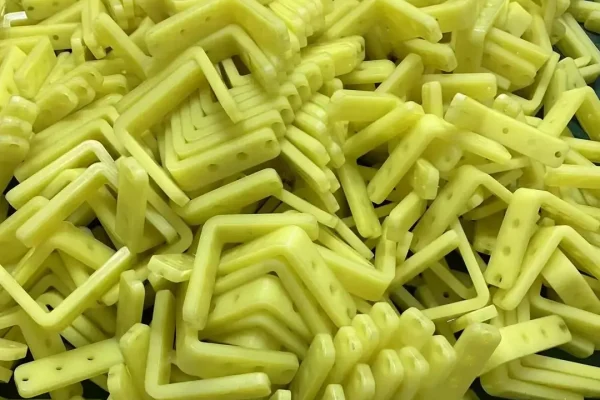
Fixture and Tooling Design for Acrylic CNC Machining
Fixtures in acrylic CNC machining must provide secure support without introducing new deformation stresses. Vacuum suction cups offer the optimal solution, delivering large-area, uniformly distributed suction force to prevent localised crushing and deformation caused by mechanical clamps. For irregularly shaped parts unsuitable for vacuum, designing specialised tooling with contour-following support surfaces is essential. Ensure no overhang beneath acrylic CNC machined components and employ flexible pads (e.g., nylon or polyurethane) at all clamping points. A fundamental principle: after clamping, gently press the acrylic CNC machined part with your hand; it should feel stable with no wobble or warping.
Specialised Machining Strategies for Thin-Walled and Fine-Featured Acrylic CNC Machined Parts
Thin walls (e.g., less than 2mm) and delicate ribs are high-risk areas for cracking in acrylic CNC machining. The core strategy is to maximise rigidity and minimise cutting forces.
Employ smaller-diameter acrylic CNC machining tools, significantly increase spindle speed, and utilise lighter cuts with shallower depths (e.g., 0.1-0.2mm) and higher feed rates.
Machine along the length of thin walls rather than perpendicular to them, leveraging their greater longitudinal rigidity.
Where acrylic CNC machining parts feature symmetrical thin walls, alternate machining sides to prevent excessive heat and stress accumulation on one side.
During acrylic CNC machining, process thin-walled features last, ensuring sufficient support material remains adjacent for subsequent machining.
Temperature Control of Environment and Sheets During Acrylic CNC Machining
Acrylic is sensitive to temperature variations and should ideally be machined in a constant temperature and humidity workshop environment (e.g., 20–25°C). If material is processed directly from a cold storage facility, surface condensation may occur and the material itself may be in a cold-brittle state. It is recommended that sheets equilibrate within the machining environment for 24 hours prior to acrylic CNC machining.
Similarly, during continuous acrylic CNC machining operations, heat generated by the machine spindle and worktable may induce minute thermal expansion. For ultra-high precision components, monitoring and compensating for this thermal drift is essential.
Post-Processing and Inspection of Acrylic CNC Machining
Completion of acrylic CNC machining does not signify the end of stress management. For components undergoing substantial material removal or featuring complex geometries, annealing is a critical step to release residual machining stresses. Place the acrylic CNC machined part in an oven set below its thermal deformation temperature (typically 70–80°C), gradually raise the temperature, hold for several hours, then cool with the furnace to room temperature.
During inspection, alongside dimensional measurements, a polarising light microscope or careful examination under specific lighting angles should be employed to detect minute silver streaks or stress whitening along the edges and surfaces of the acrylic CNC machined parts. These microscopic defects serve as precursors to potential cracking during future use and must be identified prior to dispatch.
Get instant ex-factory price quotation.
If you only have an idea or an old sample,Let us know.
with photo or video and get our quotation and manufacturing solutions.
- Product design drawings or 3D model files.
- Material standards and appearance requirements.
- Product quantity demand.
- Industry standards in the application field.
- Functional requirements
Comprehensive Application Cases of Acrylic CNC Machining
The value of systematically mastering theoretical knowledge and acrylic CNC machining techniques is ultimately demonstrated through resolving complex real-world engineering challenges.
A project involving the fabrication of a large transparent acrylic swimming pool. Such engineering endeavours, including the machining of massive sheets measuring 16.5 metres in length and 100 millimetres in thickness, push the stability of the acrylic CNC machining process to its limits.
Success hinged not merely on large-scale equipment, but on a systematic acrylic CNC machining strategy: commencing with the selection of high-molecular-weight, low-internal-stress cast acrylic sheets; during machining, employing a phased roughing and finishing approach alongside high-power, dry compressed air cooling to manage heat generated by substantial material removal; simultaneously, the entire acrylic CNC machining process relies on a highly rigid, stable vacuum suction system to support the sheet, preventing any minute displacement or vibration from causing catastrophic stress cracks.
This contrasts sharply with the machining of high-precision optical components or complex thin-walled structures. For instance, thin-walled frames used in precision instruments or high-end displays exhibit extreme sensitivity to thermal deformation and mechanical stress. The core challenge here lies in achieving maximum dimensional stability and surface finish within minimal rigidity margins.
The solution involves micro-level precision control: employing single-edged, specially designed diamond-coated tools with optimised helix angles for mirror-finish cutting to minimise cutting forces; employing high-speed, rapid-feed, shallow-depth-of-cut parameter combinations that prevent cutting heat from propagating into the workpiece; and implementing intelligent toolpath planning—such as consistently cutting from the support side towards the open side of thin-walled structures—to maximise residual material rigidity.
These two cases collectively demonstrate that exceptional acrylic CNC machining capability fundamentally involves translating scientific material understanding, precise engineering control, and extensive practical experience into predictable, reproducible manufacturing outcomes.
When evaluating an acrylic CNC machining manufacturer, one should look beyond their equipment inventory. Instead, assess whether they possess the capability to apply systematic process knowledge to specific challenges. This directly impacts a project’s total cost of ownership, delivery reliability, and the market competitiveness of the final product.
Conclusion
In summary, preventing cracking in acrylic CNC machining fundamentally requires not the pursuit of any single machining parameter, but rather the establishment and implementation of a systematic set of process rules. From material science understanding to precise control of machining dynamics, through to comprehensive stress management strategies throughout the entire process, each element is indispensable.
Should you require acrylic CNC machining services, please contact us immediately!
Supro is a Chinese acrylic CNC machining manufacturer equipped with 80 three-axis, four-axis, and five-axis CNC machines. We offer over 120 types of metal and plastic materials, with all production processes completed in-house. We provide professional acrylic CNC machining services and online technical support. Whether you require rapid prototyping or batch production of metal and plastic parts, we deliver comprehensive manufacturing solutions!