


440 stainless steel possesses exceptional wear resistance and corrosion resistance, rooted in its specific metallurgical composition centered on high carbon content. When this chemical composition is activated through precisely controlled heat treatment, the material’s microstructure transforms, ultimately forming a hardened martensitic matrix uniformly embedded with hard, wear-resistant chromium carbides. It is precisely this synergy between the tough matrix and the dispersed hard secondary phases that endows 440 stainless steel with its ultimate wear resistance.
However, understanding this inherent property is only the first step. The true engineering challenge lies in transforming 440 stainless steel into a finished product with stable and reliable performance. From billet selection to forming, welding, and especially the final quenching and tempering process, each step requires meticulous design. This ensures dimensional accuracy while maximizing the retention and optimization of wear resistance.
This article provides a comprehensive analysis of 440 stainless steel, covering its metallurgical fundamentals to practical applications in precision structural components, enabling you to quickly grasp and effectively utilize this stainless steel material.
Material Essence: Metallurgical Fundamentals of 440 Stainless Steel
To understand the properties of 440 stainless steel, one must begin with its metallurgical essence. The alloy's characteristics are not coincidental but direct outcomes of its precise chemical composition and subsequent microstructural evolution.
Composition of 440 Stainless Steel
From a metallurgical perspective, the properties of 440 stainless steel are determined by its precise chemical composition. It belongs to the high-carbon, high-chromium martensitic steel series, with carbon content being the core factor. Across grades 440A, 440B, and 440C, carbon content increases incrementally from approximately 0.60% to 1.10%. Carbon is the decisive element for forming hard carbides and achieving high hardness.
On the other hand, the chromium content in 440 stainless steel remains stable at 16-18%. A portion of this chromium dissolves into the ferritic matrix, providing fundamental corrosion resistance, while the remainder preferentially combines with carbon to form chromium-rich carbides.
This balance between carbon and chromium is critical. Carbon content directly determines the maximum hardness and wear resistance achievable in 440 stainless steel, while chromium content ensures the material retains its fundamental stainless properties even when prioritizing wear resistance. Other elements like manganese (Mn) and silicon (Si) primarily support the smelting and processing stages. Therefore, selecting the appropriate 440 stainless steel grade is the first step in engineering selection.
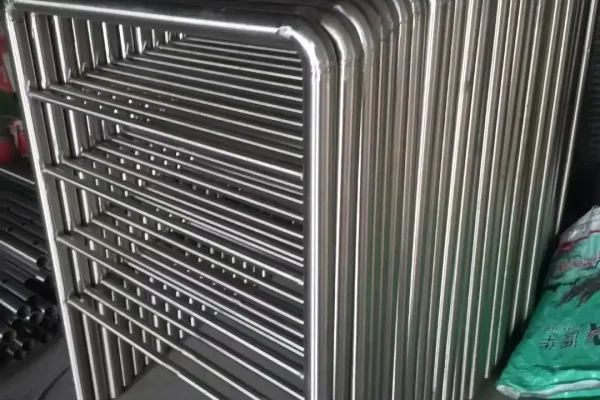
Microstructure of 440 Stainless Steel: Synergistic Effect of Martensite and Carbides
The performance potential of 440 stainless steel’s composition must be realized through heat treatment to achieve the desired microstructure. When rapidly quenched from the austenitizing temperature, 440 stainless steel undergoes a martensitic transformation, forming a highly dislocation-dense, supersaturated body-centered tetragonal crystal structure—the martensitic matrix. This provides the material with exceptionally high base hardness and strength.
However, the true exceptional wear resistance of 440 stainless steel stems from the “secondary hardening” occurring during subsequent tempering. At specific tempering temperatures, a large number of nano-sized, uniformly dispersed chromium carbide particles precipitate from the supersaturated martensite. These carbides possess significantly higher hardness than the martensitic matrix. Ultimately, 440 stainless steel exhibits an ideal “composite” structure: the tough martensitic matrix resists impact and plastic deformation, while countless hard carbide particles act as an anti-wear skeleton, effectively hindering the microscopic cutting and plowing of abrasives. This synergistic interaction between martensite and carbides makes 440 stainless steel exceptionally adept at resisting abrasive wear and adhesive wear, which is why it is irreplaceable in bearings, cutting tools, and wear-resistant bushings.
Performance Realization: The Impact of Heat Treatment Processes on the Wear Resistance of 440 Stainless Steel
The exceptional wear resistance of 440 stainless steel is not inherent after smelting but is achieved by activating its metallurgical properties through a precise heat treatment process. This process is a rigorously controlled sequence primarily comprising austenitization, quenching, and tempering.
Austenitization
Austenitization forms the cornerstone of the heat treatment process. During this stage, 440 stainless steel is heated above its critical temperature (typically 980°C to 1050°C) and held for sufficient duration to fully dissolve chromium carbides within the material. The objective is to achieve a homogeneous high-temperature austenitic phase where carbon and chromium elements are completely dissolved into the crystal lattice.
Quenching
Quenching is the decisive step for achieving the high hardness properties of 440 stainless steel. Austenitized components are rapidly cooled, typically using oil quenching to achieve a cooling rate between air and water cooling. The primary purpose is to suppress diffusion-type phase transformations, instantly converting the high-temperature austenite into high-hardness, brittle martensite. However, the material in this state exhibits high internal stresses and brittleness, making it unsuitable for direct application.
Tempering
Tempering is the critical process for adjusting and permanently setting the properties of 440 stainless steel. We reheat the quenched components to a specific temperature range (typically 150°C to 370°C) and hold them there. During this process, two key phenomena occur:
First, unstable martensite partially decomposes, effectively eliminating internal stresses and improving toughness.
Second, at specific tempering temperatures, supersaturated martensite precipitates a large quantity of extremely fine, uniformly distributed chromium carbides. This process, termed “secondary hardening,” causes the hardness of 440 stainless steel to peak again after an initial decline. By precisely controlling tempering parameters, we can impart the necessary toughness and dimensional stability to the material while maintaining its high hardness properties.
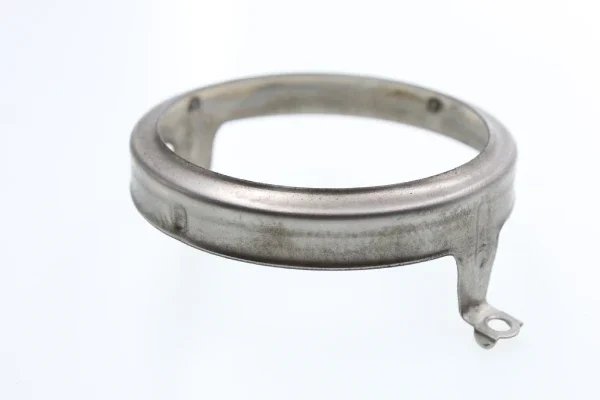
Quantitative Relationship Between 440 Stainless Steel Hardness and Wear Resistance
Hardness (measured in HRC) serves as the primary quantitative indicator for evaluating 440 stainless steel’s wear resistance. With proper heat treatment, 440C stainless steel achieves a hardness of HRC 58-60. This high hardness directly translates into exceptional resistance against both abrasive wear and adhesive wear.
Mechanistically, the hard tempered martensitic matrix resists micro-plowing and plastic deformation, while the uniformly dispersed hard carbide phases effectively resist abrasive particles, preventing them from penetrating deeply into the 440 stainless steel.
However, wear resistance is not solely determined by hardness alone. It results from the synergistic interaction between the martensitic matrix and the carbide-reinforced phases. This microstructural synergy enables 440 stainless steel to exhibit significantly longer service life than austenitic stainless steels under continuous friction conditions, such as in bearings and cutting tools.
Only 4 steps
online custom metal fabrication parts
Contact our experts team and experience the efficiency and economic benefits of digital metal fabrication services.
Upload Design Files
STL , STEP (.stp), IGES (.igs), (.ZIP), or PDF.
Also be a sample or an idea
Quote & Design Analysis
Instant factory quotes and DfM reports, the most reasonable solution.
Manufacturing Begins
Digital processes can initiate order tasks within 24 hours.
On-Time Delivery
Keeping delivery promises, approved by 3000+ Global Company buyers.
Precision Manufacturing of 440 Stainless Steel Structural Components
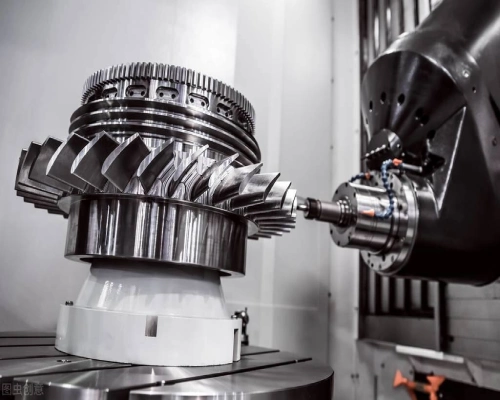
Transforming 440 stainless steel from raw stock into high-precision structural components requires specialized design and strict control at every stage of the manufacturing process. Our primary focus is material machinability. In the annealed condition, 440 stainless steel exhibits excellent machinability and formability, permitting precision machining operations such as turning, milling, and drilling.
Billet Selection
Billet selection forms the foundation for ensuring the quality of 440 stainless steel structural components. Our primary consideration is its condition, which must be specified as “annealed.” In the annealed state, 440 stainless steel exhibits relatively low hardness (typically below HRC 95 Bhn). Its microstructure consists of soft, spheroidal carbides distributed within a ferritic matrix, providing the necessary plasticity and toughness for subsequent machining.
Excessively high hardness or microstructural inhomogeneity in 440 stainless steel will lead to abnormal tool wear, dimensional inaccuracies during subsequent machining, and may even induce microcracks on the workpiece surface. These conditions create latent risks for ultimate product failure.
Forming and Welding
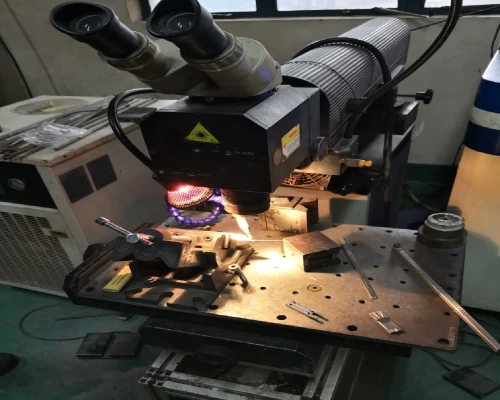
Forming and welding are critical deformation processes in precision manufacturing. For complex structural components made of 440 stainless steel, we employ CNC machine tools for precision turning and milling. Due to the significant work-hardening tendency of 440 stainless steel, we utilize sharp coated carbide cutting tools with controlled feed rates and ample coolant to minimize the depth of the work-hardened layer and ensure dimensional stability.
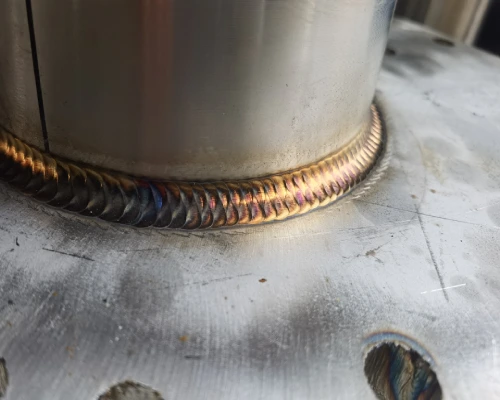
Regarding welding, it must be explicitly noted that the weldability of 440 stainless steel is constrained by its high-carbon martensitic structure. The heat-affected zone exhibits high hardening and cracking sensitivity. When welding is unavoidable, it is treated as a specialized process requiring low-carbon martensitic or austenitic filler metals, extremely low interpass temperature control, and immediate stress-relief annealing post-weld to restore toughness in the joint area.
Intermediate Heat Treatment of 440 Stainless Steel After Cold Working
Following cold forming processes such as cold drawing, deep drawing, or severe bending, 440 stainless steel accumulates high dislocation density and significant residual stresses internally. At this stage, the material has undergone work hardening, becoming brittle and difficult to further plastic form or machine. To restore the workability of 440 stainless steel and prepare it for final quenching treatment, an “intermediate heat treatment”—specifically recrystallization annealing—must be performed.
This process involves heating the 440 stainless steel to an appropriate temperature below the critical point (approximately 750-800°C), holding it at that temperature, and then cooling it slowly. The purpose is to recrystallize the cold-deformed grains, forming new, strain-free softened grains while spheroidizing the carbides. This process effectively eliminates internal stresses, reducing the hardness of 440 stainless steel to a machinable range. This ensures subsequent finishing operations proceed smoothly and prevents cracking or deformation of the workpiece due to residual stresses before final heat treatment.
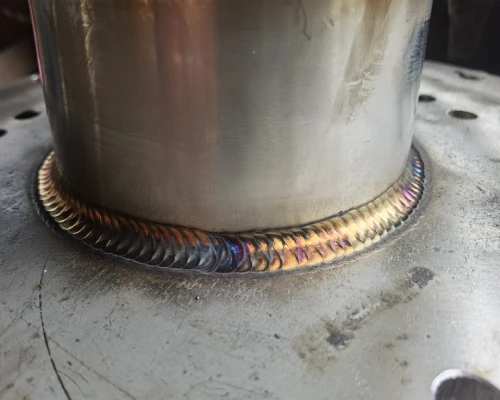
Final Heat Treatment and Finishing of 440 Stainless Steel Components
All precision-manufactured structural components must undergo final “quenching and tempering” heat treatment after machining. This is the core process for activating the ultimate wear resistance of 440 stainless steel. Workpieces undergo precise austenitization, oil quenching, and low-temperature tempering in a controlled atmosphere furnace to achieve the target hardness (e.g., HRC 58-60 for 440C).
However, this heat treatment process inevitably introduces minor dimensional changes and distortion. Consequently, final finishing of 440 stainless steel structural components is essential. We employ precision grinding, honing, or polishing processes. These operations not only achieve the specified dimensional and geometric tolerances for 440 stainless steel structural components but also remove the surface decarburization layer and scale formed during heat treatment. This ensures the exposure of a consistent, dense, and highly hardened wear-resistant surface. This series of rigorous process controls is fundamental to ensuring that each 440 stainless steel structural component delivers its promised performance and service life in critical applications such as bearings and hydraulic actuators.
Why choose Supro MFG's Custom metal Fabrication Services
Provide the most cost-effective cost solution for manufacturing and assembling products, expanding product competitiveness.
a technical team specializing in custom shell manufacturing for more than 30 years.
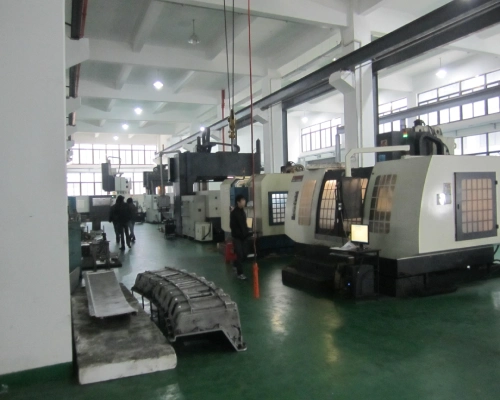
Advanced Manufacturing Equipment: Industry-leading custom metal enclosure manufacturer with in-house sheet metal, die casting, precision machining workshops, and surface coating workshops.
ISO 9001-2015, PPAP III level, RoHS, NEMA, CE and other certified production standards.
24H*7 online English technical support: The professional English team responds quickly to users’ technical questions online at any time.
help users from product design, prototype, batch manufacturing, surface treatment, assembly and packaging, transportation and a series of value-added services.
With in-house mechanics and chemistry laboratories, it can quickly monitor manufacturing process quality control to ensure the delivery of high-quality products.
Accept to sign NDA documents to ensure that customers’ product information is protected.
Door-to-door delivery in customizable secure packaging after complying with the delivery details agreed with the customer.
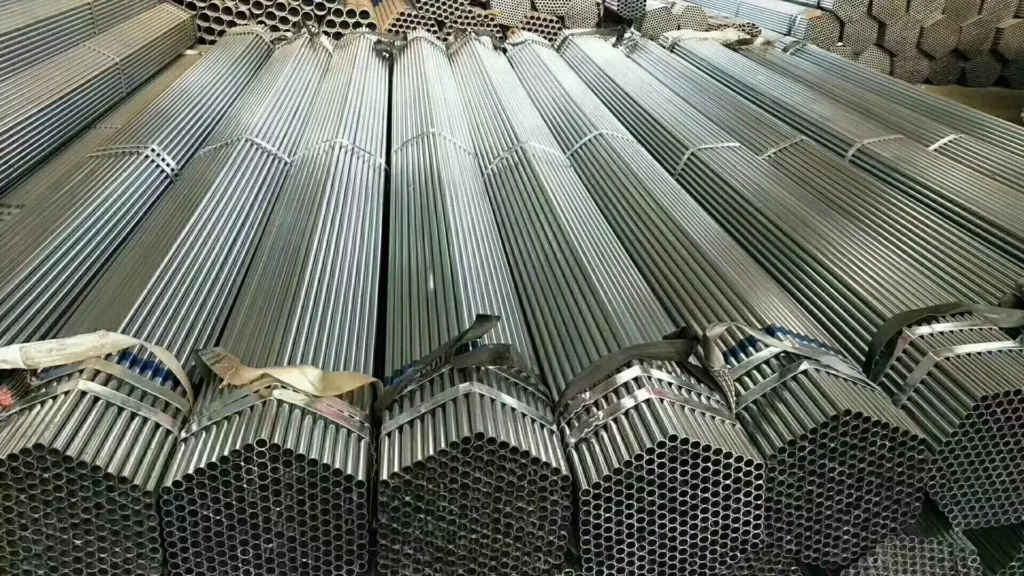
Limitations of 440 Stainless Steel
While 440 stainless steel demonstrates exceptional wear resistance, we must also understand its inherent limitations to ensure material selection precisely matches the environmental and mechanical demands of the final application.
Wear Resistance vs. Corrosion Resistance
From a materials science perspective, its high performance stems from the targeted optimization of 440 stainless steel’s composition and microstructure for specific operating conditions. Its outstanding wear resistance directly originates from the formation of hard chromium carbides (primarily M7C3 type) and a tempered martensitic matrix due to its high carbon content. However, this advantage comes at the cost of reduced corrosion resistance.
During the heat treatment of 440 stainless steel, a significant amount of chromium is fixed within these carbides, leading to a marked reduction in chromium content within the surrounding matrix. This compromises the material’s ability to form and maintain an intact, dense passivation film (primarily Cr₂O₃) on its surface. Consequently, in applications involving chloride-containing or acidic environments, 440 stainless steel exhibits significantly higher susceptibility to pitting corrosion and stress corrosion cracking compared to low-carbon austenitic stainless steels.
Toughness and Machinability
Another key limitation of 440 stainless steel lies in the trade-off between toughness and machinability. The extremely high hardness (HRC 58-60) achieved through quenching and low-temperature tempering inevitably results in reduced toughness and ductility. This combination of high hardness and low toughness makes 440 stainless steel highly susceptible to the notch effect, posing a risk of brittle fracture in applications involving high impact loads, severe vibration, or requirements for high energy absorption.
Furthermore, machinability becomes highly challenging in the hardened state following final heat treatment. Conventional turning, milling, and drilling processes not only cause rapid tool wear and failure but also readily introduce micro-cracks and other surface damage. These defects can serve as fatigue failure initiation points.
Typically, only processes like grinding, honing, or electrical discharge machining (EDM) are suitable for dimensional finishing of 440 stainless steel structural components in this state, increasing manufacturing complexity and cost. Even when initial machining is performed in the annealed condition, strict control of process parameters is essential to manage the inherent work-hardening tendency of 440 stainless steel.
In summary, a comprehensive understanding of the limitations of 440 stainless steel properties is crucial for its applications in bearings, cutting tools, and wear-resistant components.
Are you looking for reliable & cost-effective
China Sheet Metal Fabricators
More than 150,000 OEM metal fabrication products delivered to 5,000+ global buyers.
And benefit from it!
Typical Applications of 440 Stainless Steel
The application of 440 stainless steel in engineering fields directly reflects its performance characteristics. In precision bearings, particularly 440C stainless steel, the HRC 58-60 hardness achieved through heat treatment and uniformly distributed hard carbides effectively resist rolling contact fatigue and fretting wear. This property makes it the standard choice for high-speed spindles, aerospace actuators, and precision instrument bearings.
In the cutting and tooling industry, 440 stainless steel offers an ideal balance of hardness and corrosion resistance. From surgical blades in medical devices to cutting tools in food processing, its high-carbon martensitic structure maintains a long-lasting sharp edge. Sufficient chromium content ensures instruments withstand repeated chemical sterilization or contact with aqueous media without rapid corrosion.
In industrial hydraulic and transmission systems, 440 stainless steel is machined into critical wear-resistant components such as swash plates in plunger pumps, valve spools, and wear-resistant bushings. These components rely on the hardness and low coefficient of friction of 440 stainless steel to maintain strict dimensional tolerances and system efficiency under high-pressure, high-frequency reciprocating motion conditions.
Conclusion
In summary, 440 stainless steel offers an outstanding solution for applications where wear-dominated failure mechanisms prevail, thanks to its exceptional performance in wear resistance and hardness.
Supro is a specialized stainless steel processing manufacturer. Leveraging advanced equipment, extensive manufacturing experience, and a professional engineering team, we provide perfect stainless steel processing services to over 3,000 companies worldwide, along with genuine manufacturer quotes.
As an industry-leading stainless steel processing manufacturer, we efficiently deliver diverse products on schedule. From product design and rapid sheet metal prototype fabrication to mass production, we provide expert technical support and exceptional quality. We offer one-stop manufacturing solutions and highly cost-competitive product supply!