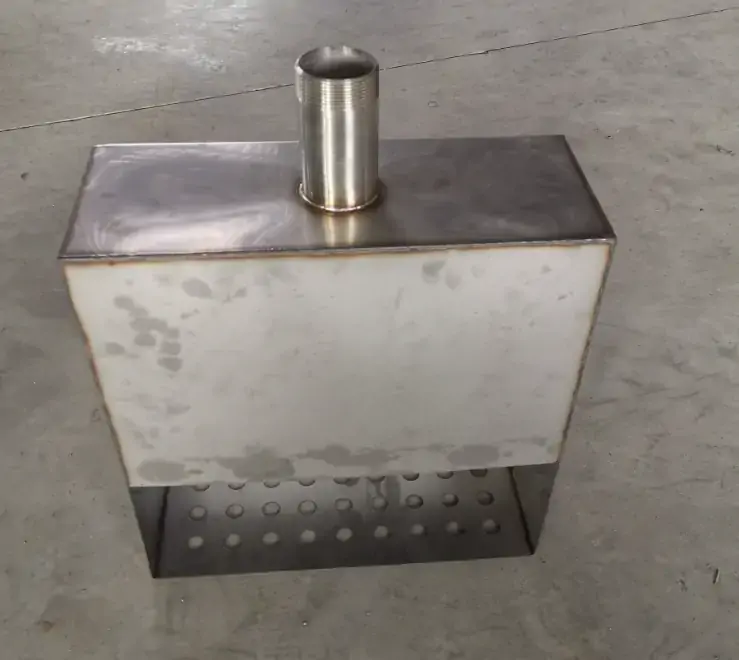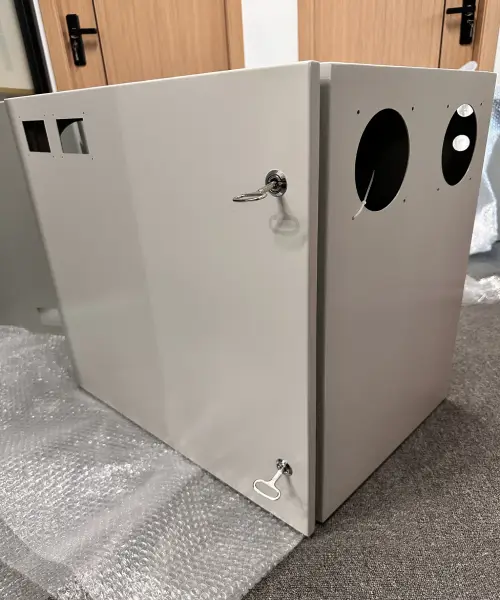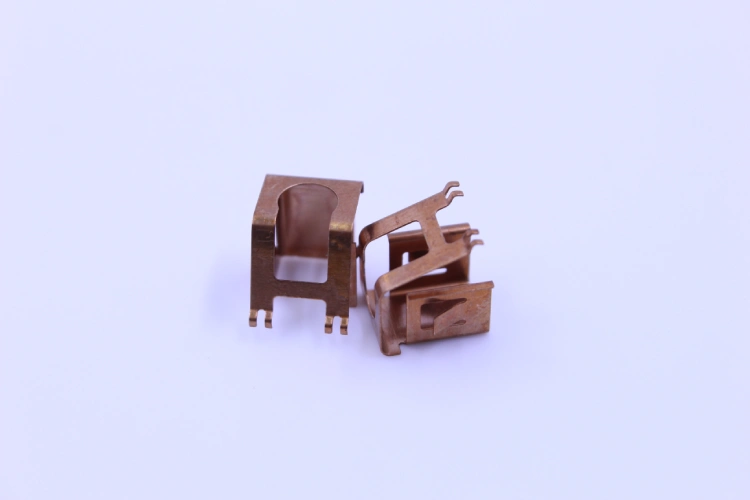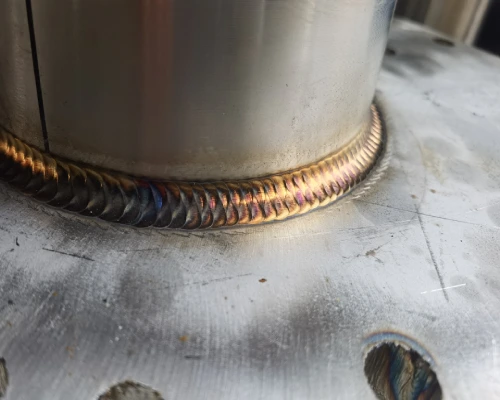



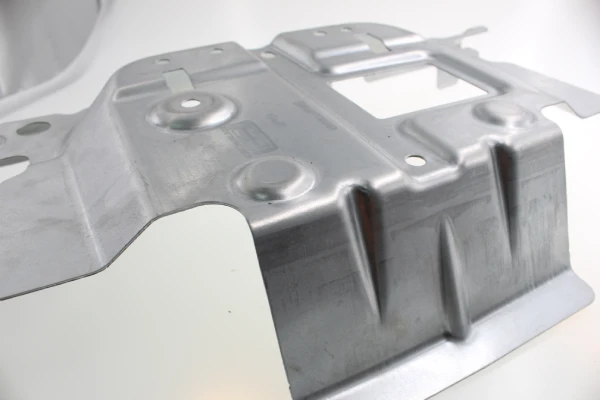
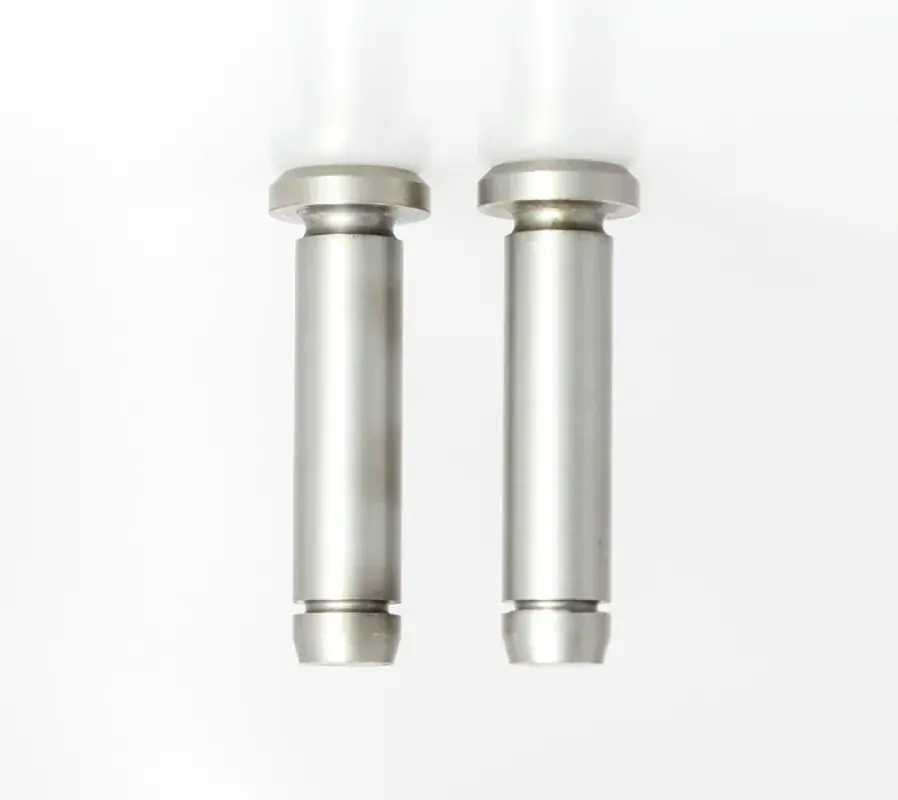

The offcuts from custom cut metals represent not waste, but unrealised profit. The core issue with traditional custom-cut metal processes lies in their inherent inefficiency. Each wide-cut flame or plasma cutting operation requires dedicated die-cutting presses, constituting a form of ‘subtractive manufacturing’ that simultaneously trims excess material and erodes corporate profit margins.
The solution lies in integrating high-precision custom metal laser cutting with advanced digital workflow management, with dynamic nesting software serving as the key technological lever. This AI-driven technology consolidates diverse part geometries from multiple orders, arranging them precisely on a single sheet to drastically reduce residual scrap. Coupled with the sub-millimetre precision and near-zero kerf width of modern custom metal laser cutting, material utilisation consistently exceeds 90%, achieving genuinely low-waste production outcomes.
For custom metal cutting manufacturers, a 20% productivity increase is a calculated projection. This eliminates non-value-added time: zero hard tool setup, instant CAD-to-cut programming, and automated machine parameter selection. Moreover, the laser cutting head can transition from one custom metal part to the next within seconds. This solution delivers immediate returns for custom cut metals while providing long-term strategic flexibility for the supply chain.
Dilemmas and Insights – The Hidden Costs of Traditional Custom Cut Metals
The true cost of custom cut metals rarely appears on purchase orders, instead remaining concealed within production processes. For decision-makers, the foremost hidden cost is material utilisation efficiency. Secondly, each custom cut metal task changeover incurs substantial non-value-added time, such as manual die changes, trial cutting adjustments, and recalibration. Finally, design rigidity necessitates new dies for every design iteration.
Materials: The Overlooked Waste of Custom-Cut Metals
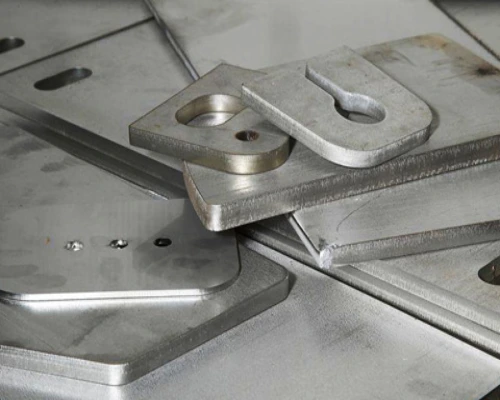
In traditional flame cutting or stamping processes, hidden material wastage is systemic. Firstly, the custom-cut metal process itself incurs significant losses. Secondly, lacking intelligent nesting systems, conventional static nesting leaves substantial irregular offcuts (skeleton scrap) on sheet metal, often resulting in overall material utilisation rates below 70%. These discarded materials not only consume your procurement budget but also incur ongoing storage, management, and disposal costs. Consequently, material utilisation rate (Yield Rate) is a critical metric when evaluating custom cut metals solutions, as it directly determines your baseline material costs.
Efficiency: Time Losses in Custom Cut Metal Production Workflows
The hidden efficiency costs of custom cut metals manifest in non-value-added time across the entire production chain. Traditional custom cut metal production is riddled with interruptions: manual programming is required to convert CAD drawings into machine-readable code; each cutting task change necessitates time-consuming die changes, installations, and calibrations; for complex or small-batch orders, these frequent changeovers (Changeover) reduce overall equipment efficiency.
Time losses in custom-cut metal processing directly translate to extended lead times and higher unit labour costs. For custom metal cutting manufacturers, this translates to sluggish supply chain responsiveness and diminished capacity to fulfil urgent orders.
Flexibility: Design Iteration and Rapid Response Constraints in Custom-Cut Metals
Traditional custom-cut metals methods, particularly stamping processes heavily reliant on physical dies, exhibit severely limited flexibility. Any design modification necessitates tooling remanufacture or alteration, accompanied by a fresh debugging cycle. This rigidity severely constrains R&D teams’ capacity for rapid prototyping or product iteration.
The inherent inflexibility of traditional custom-cut metal methods effectively imposes substantial change costs and protracted time expenditures upon each new design, thereby stifling innovation and impeding swift market responsiveness.
Why Choose Supro MFG’s Custom Metal Fabrication Services
Real ex-factory price:
Provide the most cost-effective cost solution for manufacturing and assembling products, expanding product competitiveness.
Professional technical team:
a technical team specializing in custom shell manufacturing for more than 30 years.
Advanced Manufacturing Equipment: Industry-leading custom metal enclosure manufacturer with in-house sheet metal, die casting, precision machining workshops, and surface coating workshops.
ISO 9001-2015 Manufacturer:
ISO 9001-2015, PPAP III level, RoHS, NEMA, CE and other certified production standards.
24H*7 online English technical support: The professional English team responds quickly to users’ technical questions online at any time.
One-stop manufacturing solution:
help users from product design, prototype, batch manufacturing, surface treatment, assembly and packaging, transportation and a series of value-added services.
Authoritative testing capabilities:
With in-house mechanics and chemistry laboratories, it can quickly monitor manufacturing process quality control to ensure the delivery of high-quality products.
Intellectual Property Protection(NDA):
Accept to sign NDA documents to ensure that customers’ product information is protected.
Commitment to On-Time Delivery:
Door-to-door delivery in customizable secure packaging after complying with the delivery details agreed with the customer.
Achieving Low Waste and High Efficiency in Custom Metal Laser Cutting
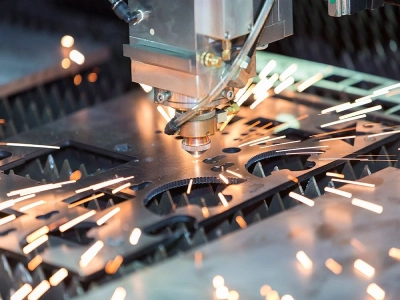
As a specialist custom metal cutting manufacturer, Supro's key to low waste and high efficiency lies in two core technologies: precision optical systems and intelligent software. The crux of reducing scrap in custom metal laser cutting is dynamic nesting technology – not merely arranging parts, but an algorithm that treats the entire metal sheet as a continuously optimised jigsaw puzzle. Meanwhile, over 20% efficiency gains stem from eliminating non-value-added time.
The Technological Foundation of Custom Metal Laser Cutting: The Integration of Laser and Digitalisation
Achieving high efficiency and low scrap in custom metal laser cutting hinges on the deep integration of high-precision physical processing with intelligent digital decision-making. The foundational technology is the ultra-short pulse (USP) laser, whose pulse duration measures mere trillionths of a second. This characteristic enables custom metal laser cutting to vaporise materials at extremely high peak power, producing exceptionally narrow kerfs (typically under 0.1 millimetres) and micrometre-scale heat-affected zones. This minimises material loss and thermal distortion at the physical source.
Secondly, digital intelligent nesting software is pivotal to achieving low-waste objectives in custom metal laser cutting. Beyond automatically optimising part layout on sheet metal, advanced features like common-edge cutting merge shared boundaries of multiple parts into a single cutting path. This increases part density on sheets by 8-10% and reduces single-batch processing cycles by 20%.
Enhancing Custom Cut Metals Efficiency
The key to improving custom cut metal efficiency lies in systematically reducing ineffective cutting time. This is primarily achieved by eliminating reliance on moulds. Custom metal laser cutting can be directly driven from CAD drawings, reducing mould preparation and replacement time—which can take hours or even days—to zero. Secondly, intelligent automated parameter libraries are crucial for custom metal laser cutting. Traditional libraries rely on manual debugging and updates, lacking real-time responsiveness. Modern systems automatically retrieve and optimise process parameters (such as power, speed, and gas pressure) based on material and thickness, continuously accumulating data through machine learning.
The enhanced processing speed of custom metal laser cutting stems from both hardware advancements and process optimisation. On one hand, the leap in laser power directly increases linear cutting speeds. On the other, process optimisation focuses on minimising idle travel. For instance, by refining cutting paths and employing techniques like flying piercing, the laser head’s empty travel between contours and the piercing time at each cutting start point are significantly reduced, thereby maximising the machine’s net cutting time.
Design Enablement: Custom Metal Laser Cutting Achieves Diverse Geometric Shapes
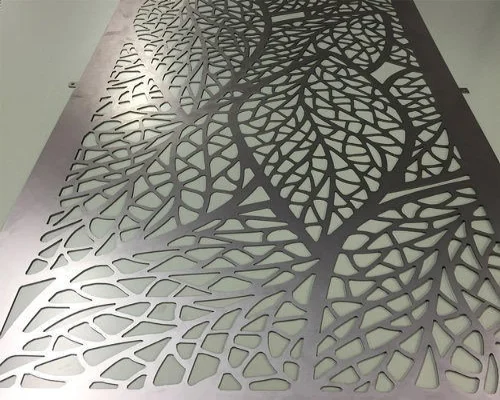
Custom metal laser cutting offers exceptional geometric freedom for design. Its non-contact, highly flexible processing characteristics enable precise realisation of complex two-dimensional contours, including acute angles, micro-perforations, and dense openwork patterns. This technology directly supports lightweight product design and functional integration.
Moreover, the automated parameter library instantly applies validated material thickness settings. In practice, this systemic transformation not only accelerates the cutting process but also compresses the entire order-to-delivery cycle, delivering the agility and cost control you require.
online custom metal fabrication parts
Only 4 steps
Contact our experts team and experience the efficiency and economic benefits of digital metal fabrication services.
Upload Design Files
STL , STEP (.stp), IGES (.igs), (.ZIP), or PDF.
Also be a sample or an idea
Quote & Design Analysis
Instant factory quotes and DfM reports, the most reasonable solution.
Manufacturing Begins
Digital processes can initiate order tasks within 24 hours.
On-Time Delivery
Keeping delivery promises, approved by 3000+ Global Company buyers.
Custom Metal Laser Cutting Practice
From technical theory to stable workshop output, successful custom metal laser cutting practice relies upon a rigorous systematic approach. Our experience indicates that its core lies in establishing a closed-loop digital cutting unit.
Preliminary Preparation for Custom Metal Laser Cutting: Standardisation of Data and Design
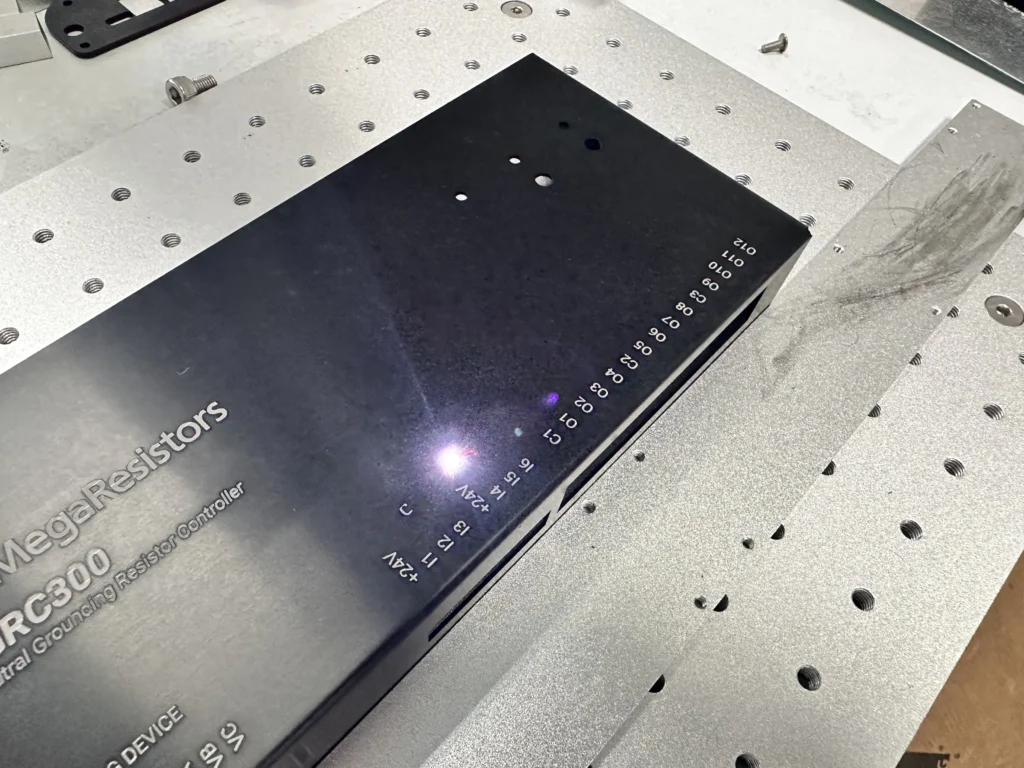
Rigorous pre-production planning is paramount in custom metal laser cutting. Its value is first realised through establishing a proprietary ‘digital material library’ and design specifications. This necessitates standardising input file formats (e.g., DXF, STEP) and clearly defining acceptable tolerances, minimum aperture sizes, and internal corner radii for custom metal laser cutting. This directly eliminates rework and material wastage caused by design flaws, laying a reliable foundation for subsequent automated nesting and processing. It serves as the first line of defence in ensuring consistent quality for custom-cut metals.
DFM (Design for Manufacturing) collaboration bridges engineering concepts with production feasibility. Supro engages with your design team at an early stage to jointly review drawings. For instance, converting certain sharp internal corners to rounded edges with minimal radii—without compromising structural integrity—can entirely prevent burn-through defects during custom metal laser cutting while enhancing material utilisation in dynamic nesting. This collaboration ensures design intent is efficiently and economically translated into manufacturable custom cut metal parts, optimising costs and lead times from the outset.
Mid-stage Operations in Custom Metal Laser Cutting: Establishing Digital Cutting Units
Establishing digital cutting units is central to achieving efficient custom metal laser cutting. Equipment selection should not blindly pursue maximum power but be based on core material profiles (e.g., thickness ranges for stainless steel, aluminium, or carbon steel) and production capacity requirements. Key metrics are long-term operational stability and beam quality, which directly impact cutting precision and bevel quality.
True efficiency gains stem from process reengineering in custom metal laser cutting. The objective is to integrate order receipt, drawing verification, intelligent nesting, automated programming, cutting execution, and subsequent sorting into a seamless digital workflow. By implementing automated loading/unloading systems and centralised control software, manual intervention and part-in-process time are minimised. This elevates Overall Equipment Effectiveness (OEE) by over 30%, ensuring predictable and scalable production of custom-cut metals.
Post-Implementation Optimisation: Data-Driven Continuous Improvement
The value of custom metal laser cutting is amplified through data-driven optimisation. Lifecycle monitoring extends beyond tracking equipment uptime. Via IoT sensors and machine tool data ports, we collect and analyse real-time key metrics such as: actual cutting time versus idle time, auxiliary gas consumption, laser performance degradation trends, and net cutting time per order. These data points form a critical component in measuring the true efficiency of custom cut metals production.
Data informs our feedback loops. For instance, optimal process parameters (power, speed, frequency, gas pressure) accumulated over production cycles for specific material-thickness combinations are fed into a central parameter repository, enabling continuous refinement of custom metal laser cutting. Concurrently, common challenges encountered during cutting—such as deformation of certain fine features—are collated to optimise future part design specifications or fixture solutions.
Get instant ex-factory price quotation.
If you only have an idea or an old sample,Let us know.
with photo or video and get our quotation and manufacturing solutions.
- Product design drawings or 3D model files.
- Material standards and appearance requirements.
- Product quantity demand.
- Industry standards in the application field.
- Functional requirements
Conclusion
Custom metal laser cutting efficiently produces intricate and precise components, standing as one of the most sought-after core technologies within sheet metal fabrication. Should you require custom metal laser cutting services, please contact us immediately.
For two decades, Supro has specialised in custom metal laser cutting, delivering precise and rapid custom metal laser cutting services across diverse industries. With a wide range of materials available and no minimum order quantity restrictions, we cater to all your requirements! Our industrial-grade laser cutting machines, rated at 10,000kW and 6,000kW, precisely cut stainless steel, aluminium, copper alloys, titanium alloys, carbon steel plates, wood panels, and engineering plastic sheets.
Furthermore, our team of professional engineers will analyse and design solutions for your requirements, provide expert material selection advice, and oversee final production and assembly!
Contact us today to commence an efficient collaboration!