

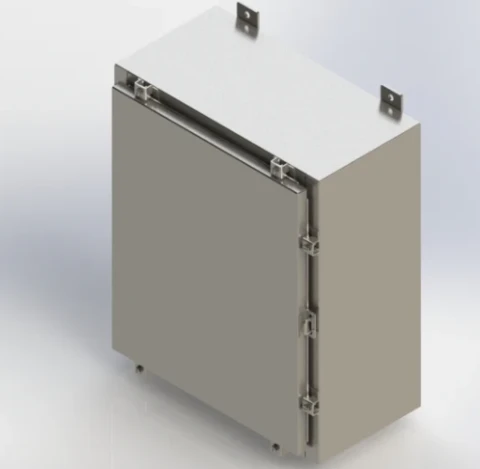
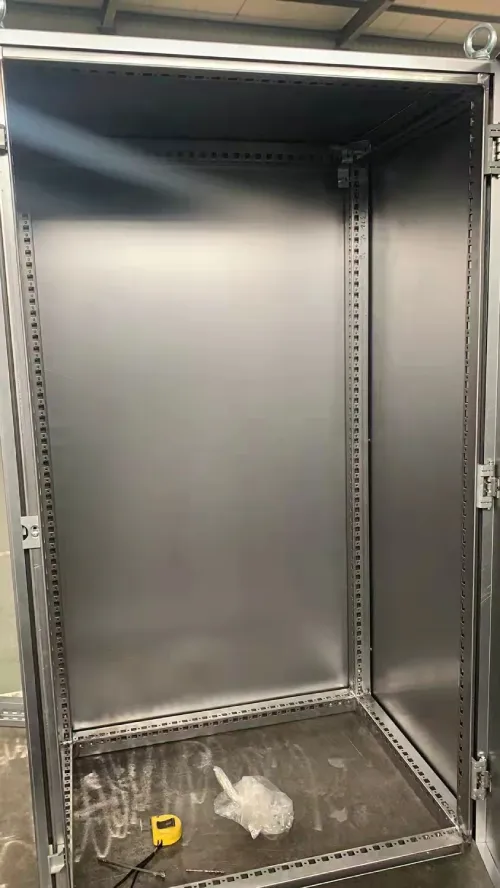
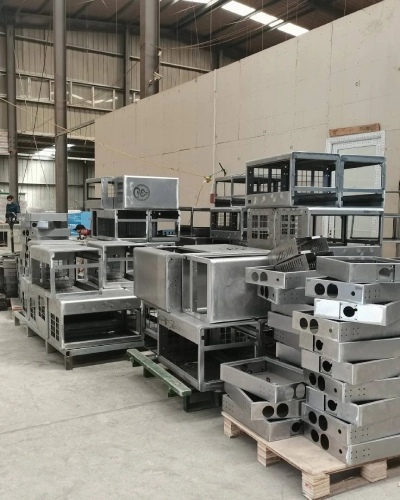


In modern manufacturing, aluminum has become the material of choice in aerospace, industrial manufacturing, medical industry, automotive and many other fields by virtue of its light weight, good machinability and excellent heat dissipation performance. In custom fabricated aluminum, anodizing is a very important key link in the process. It can not only significantly improve the surface hardness and corrosion resistance of aluminum, but also provide products with rich colors and unique appearance.
In the following, the article will introduce the detailed information of anodizing in custom fabricated aluminum process, mainly including the core definition, advantages, limitations, common types of anodizing, and list the related industry applications.
what is custom fabricated aluminum--anodizing
The anodic oxidation process in custom fabricated aluminum is a surface treatment of aluminum parts with the aim of optimizing the surface properties and appearance of the aluminum. At its core is an electrochemical process:
- Pretreatment: The custom fabricated aluminum parts are thoroughly cleaned and degreased to remove oils and impurities.
- Anodizing: The aluminum part is immersed as an anode (positive electrode) in an acidic electrolyte (e.g., sulfuric acid) and energized with direct current. Under the action of the electric current, a dense, uniform protective layer of aluminum oxide (Al2O3) is naturally generated on the aluminum surface. This oxide film is not an additional coating, but grows from within the aluminum substrate, and is therefore extremely strongly bonded to the substrate and will not peel off like spray paint.
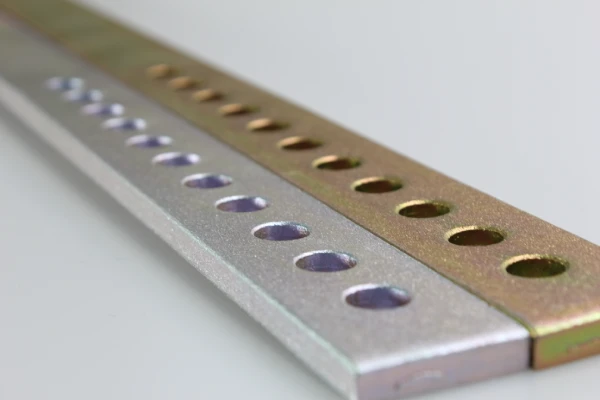
- Dyeing: The newly generated anodized film has a porous structure and is able to adsorb dyes. Using this property, the oxidized parts can be dipped into various colors of dyes to obtain a rich variety of colors.
- Pore Sealing: Finally, the micropores of the oxidized film are sealed by heat or chemical means, locking in the dye effect and corrosion resistance permanently.
custom fabricated aluminum - benefits of anodizing
anodized aluminum parts can bring many benefits, such as aesthetics, enhanced parts performance.
- Durability: The aluminum oxide layer generated by custom anodizing treatment is very hard, which greatly improves the scratch and abrasion resistance of the surface of aluminum parts.
- Corrosion resistance: anodize coat completely isolates the aluminum substrate from the external environment (e.g. water vapor, salt, chemicals), effectively preventing oxidation and corrosion of the aluminum. This allows aluminum components to maintain stable performance over time even in harsh environments, effectively extending service life.
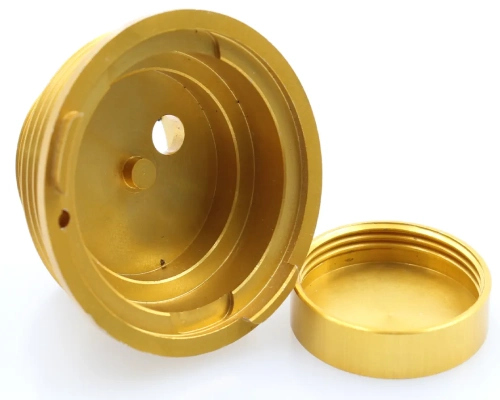
- Appearance: Unlike spray paints that flake off easily, the color dyes of anodize coat are adsorbed in the pores of the oxide film and locked in by the sealing operation, so the color is long lasting and won’t fade or peel off easily. Moreover, it can provide a variety of color choices, and can present different textures such as high-gloss, matte, and so on.
- Adhesion: The anodized film has a microporous structure, which provides an ideal adhesion base for subsequent painting, printing or gluing.
- Environmentally friendly: The processing does not involve harmful heavy metals or organic solvents, and does not release harmful chemicals or volatile compounds. anodize coat is non-toxic, hard, compact, not easy to breed bacteria, easy to clean and disinfect, and meets RoHS and other environmental standards.
- EASY TO MAINTAIN: anodize coat has a smooth surface, not easy to get dust and dirt, easy to maintain and clean.

custom fabricated aluminum - limitations of anodizing
The anodizing process in custom fabricated aluminum has many advantages, but it also has some limitations:
Color: Even for the same batch of parts, if there is a difference in the way of hanging, position in the electrolyzer or oxidation time, it may lead to color difference. And the composition, grain structure and heat treatment status of the aluminum alloy can also affect the final color and appearance, resulting in the same dye showing different color effects on different grades of aluminum.
Size Limitations: Parts must be able to be fully immersed in the anodizing bath and associated chemical baths. Very large parts (e.g., large architectural structural components) will be limited by the size of the chemical bath.
Environmental Concerns: While the anodizing process in custom fabricated aluminum is more environmentally friendly than other surface treatment processes, there are environmental concerns. The process involves the use of strong acids, alkalis, and metallic dyes, generating waste acids, wastewater, and sludge that require specialized treatment.
Conductivity: anodize coat is not electrically conductive and can affect the conductivity of a part’s surface.
Repair Limitations: Unlike painted parts, anodized parts that are scratched or damaged cannot be restored by partial repair. The only repair method is to retire the anodize coat from the entire surface and re-anodize.
online custom metal fabrication parts
Only 4 steps
Contact our experts team and experience the efficiency and economic benefits of digital metal fabrication services.
Upload Design Files
STL , STEP (.stp), IGES (.igs), (.ZIP), or PDF.
Also be a sample or an idea
Quote & Design Analysis
Instant factory quotes and DfM reports, the most reasonable solution.
Manufacturing Begins
Digital processes can initiate order tasks within 24 hours.
On-Time Delivery
Keeping delivery promises, approved by 3000+ Global Company buyers.
custom fabricated aluminum--anodizing type
Type | Chromic acid anodized oxygen (Type I anodizing) | Sulfuric acid anodizing(type ii anodize) | hard coat anodized (Type III anodized) |
Electrolyte | Chromic acid solution at 3%-10% concentration | Sulfuric acid solution at 10%-20% concentration | Sulfuric or mixed acids |
Oxide Film Thickness | 1-3μm | 5μm-20μm | 50 μm or more |
Advantage | Suitable for complex parts, excellent durability and corrosion resistance, able to withstand stress and bending. | The oxide film is highly transparent, easy to dye, and has many color choices. Good abrasion resistance, corrosion resistance and adhesion | Extremely high abrasion and corrosion resistance. |
Disadvantage | Less environmentally friendly with hexavalent chromium. Fewer colors to choose from | Poor treatment effect on aluminum alloys with high copper and silicon content | Rough surfaces and fewer color options are often not the best choice for components with tight tolerances |
In custom fabricated aluminum, there are various anodizing methods to choose from, different anti-methods can produce different effects to meet different needs, the following are the 3 most common anodizing methods:
Chromic acid anodizing: its also known as type I anodizing, using a chromic acid solution with a concentration of 3%-10% as the electrolyte, the anodize coat generated is thinner, with a film thickness of usually only 1-3 μm. it is mainly used in aerospace and for the treatment of complex assembled parts.
Sulfuric acid anodizing: This is the most common and widely used type in custom fabricated aluminum, also known as type ii anodize, which uses 10%-20% sulfuric acid solution as the electrolyte to generate a colorless and transparent oxide film that is easy to dye and retains the metallic texture of the aluminum perfectly. The thickness of the anodized coat generated by this method ranges from 5μm to 20μm, with good abrasion resistance, corrosion resistance and adhesion.
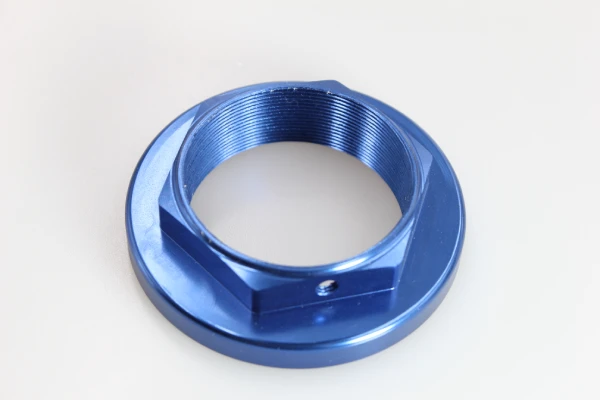
Hard coat anodized: Also known as Type III anodizing, this method is usually carried out using sulfuric acid or a mixture of acids (e.g. sulfuric acid-oxalic acid) at low temperatures (0-5°C). The resulting oxide film thickness can be 50 μm or more, with a hardness of HV 500 or more. It is difficult to dye and usually appears dark gray, dark brown or black, and the surface becomes rougher than before. It is mainly used for industrial parts that require very high wear resistance and hardness.
Industry Application
Consumer electronics field: smartphone center frame and shell, laptop computers, tablet PCs, smart watches, Bluetooth headphones, mobile power, etc.
Aerospace: aircraft fuselage structural parts, internal frames, radar components, satellite parts, drone frames, etc.
Construction: architectural curtain walls, door and window profiles, aluminum curtain walls, roofing, shading systems, interior decoration, etc.
Automotive manufacturing: air intake grills, window trims, door handles, roof racks, engine components, pistons, heat exchangers, brake system components, battery pack housings, motor housings, etc.
Medical devices: surgical instruments, medical equipment housings, endoscope parts, medical trolleys, etc.
Industrial equipment: hydraulic and pneumatic components, robotic arms of robots, precision instrument frames, etc.
Get instant ex-factory price quotation.
If you only have an idea or an old sample,Let us know.
with photo or video and get our quotation and manufacturing solutions.
- Product design drawings or 3D model files.
- Material standards and appearance requirements.
- Product quantity demand.
- Industry standards in the application field.
- Functional requirements
Summary
In custom fabricated aluminum, anodizing is more durable and corrosion-resistant, the coating lasts longer and is more scratch-resistant than other surface treatments such as plating, powder coating and painting. Although anodizing has some limitations, it is well suited for electronics, industrial equipment, medical devices, aerospace and other applications.
Supro’s extensive manufacturing experience and technical expertise in custom fabricated aluminum allows us to quickly implement a variety of precision manufacturing processes, and we offer a one-stop shop for custom fabricated aluminum services, with a wide range of anodized, powder coated, plated, screen printed, sandblasted, and painted options. We provide one-stop custom fabricated aluminum services with a wide range of surface treatment options such as anodizing, powder coating, plating, screen printing, sand blasting, paint spraying, etc. to efficiently deliver the parts you need. We are ISO9001 and TS16949 certified. Whether you need precision engineered aluminum alloy parts, aluminum enclosures, standard aluminum profiles, or custom aluminum prototypes, we can provide you with professional technical guidance and comprehensive manufacturing solutions!