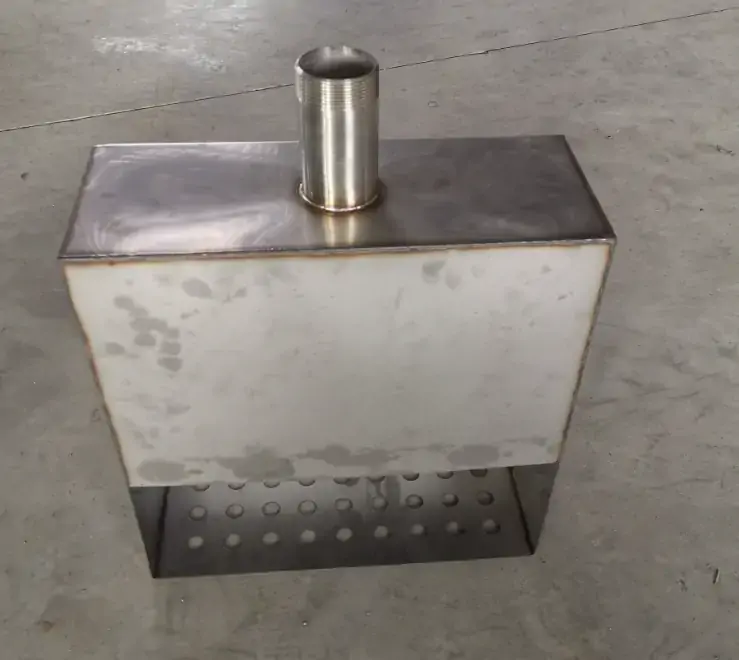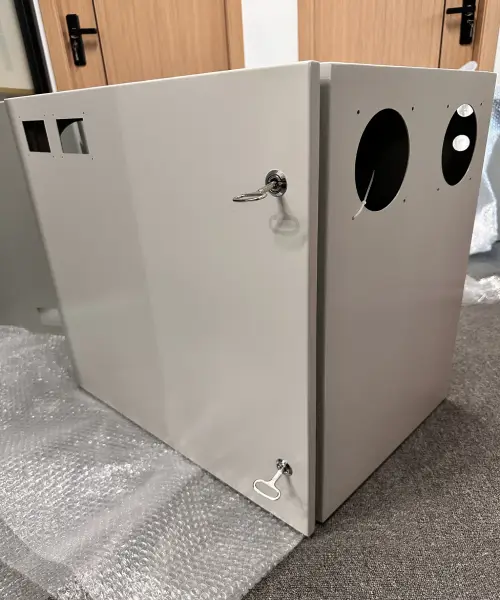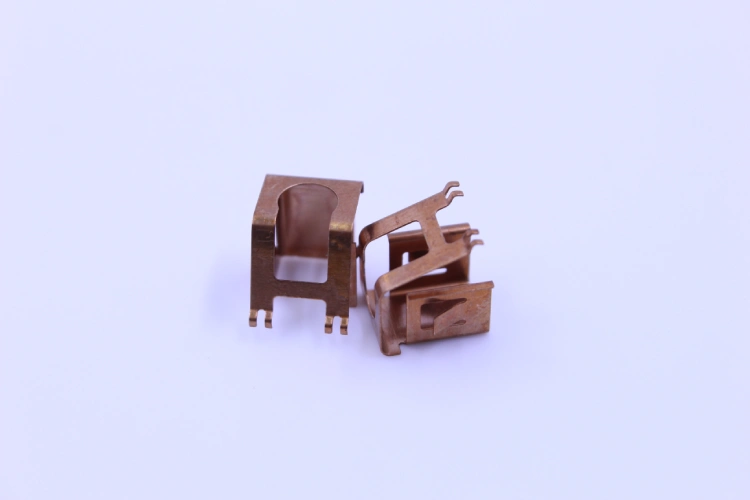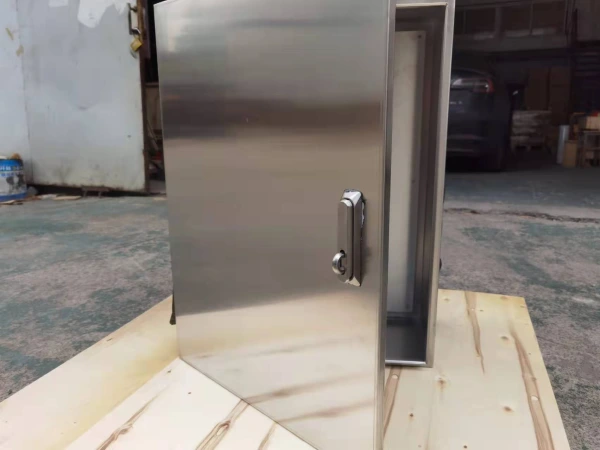

Within precision manufacturing, laboratory stainless steel cabinet fabrication constitutes not merely a storage unit, but a foundational engineering system underpinning scientific research activities. Its performance parameters directly determine the reproducibility of experimental data, occupational safety for personnel, and environmental compliance. Confronted with complex chemical exposures, dynamic load cycles, and stringent cleanliness requirements, any quality compromise in laboratory stainless steel cabinet fabrication will precipitate systemic risks.
Achieving reliable performance and longevity through specialised stainless steel cabinet fabrication technology requires adherence to five non-negotiable quality dimensions: from metallurgical specifications compliant with ASTM standards to precision forming and welding processes ensuring structural integrity; from surface treatments enhancing corrosion resistance thresholds to failure mode analysis design tailored to application scenarios; and finally, ensuring verifiable performance through a comprehensive end-to-end quality traceability system.
Each dimension must be supported by quantifiable data: such as the chromium-iron ratio of the passivation film after laboratory stainless steel cabinet passivation treatment, the penetration depth parameters for argon arc welding, and the duration of salt spray testing according to ASTM B117 standards. These technical metrics collectively ensure that every delivered cabinet meets your stringent requirements for lifecycle cost and consistent quality.
Material Selection Criteria – The Cornerstone of Stainless Steel Cabinet Fabrication
In custom laboratory stainless steel cabinet fabrication, we recognise that the performance ceiling and long-term reliability of the finished product fundamentally depend upon the inherent properties of its raw materials. Material selection for laboratory stainless steel cabinet fabrication is not merely a matter of checking specifications against standards, but rather a strategic decision grounded in metallurgical understanding. Consequently, we adhere to using primary stainless steel plates conforming to ASTM standards. This forms the foundation for ensuring the structural integrity, corrosion resistance, and lifecycle cost-effectiveness of the final product in custom laboratory stainless steel cabinet fabrication.
Alloy Composition and Microstructure
Material selection for laboratory stainless steel cabinet fabrication commences with its metallurgical formulation. The core distinction between the AISI 304L and 316L austenitic stainless steels we specify lies in their key alloying strategies. The introduction of 2-3% molybdenum in 316L significantly enhances the material’s resistance to pitting corrosion in chlorine-containing media by strengthening and stabilising the chromium oxide passivation layer on the steel surface. This is crucial for modern microbiological laboratories or facilities in coastal regions.
Concurrently, low carbon content serves as our defence against sensitisation within the heat-affected zone (HAZ) of stainless steel cabinet fabrication welds. By minimising chromium carbide precipitation at grain boundaries, it effectively prevents sensitisation, thereby eliminating the potential threat of intergranular corrosion. This ensures the long-term integrity of welded stainless steel cabinet fabrication structures exposed to chemical environments.
Surface Structure and Corrosion Resistance Mechanism
The corrosion resistance of stainless steel is not an inherent property but stems from an imperceptibly thin, nanometre-scale chromium oxide passivation layer on its surface. The stability and self-repairing capacity of this layer are pivotal to the corrosion resistance of stainless steel cabinets. We recognise that all subsequent surface treatment processes for custom laboratory stainless steel cabinet fabrication fundamentally aim to optimise, strengthen, and protect this critical passivation layer.
Whether through mechanical polishing or chemical passivation, the aim is to create a purer, chromium-richer surface layer. Following appropriate surface passivation treatment, custom laboratory stainless steel cabinet fabrication exhibits exceptional corrosion resistance in neutral salt spray testing (ASTM B117). Consequently, the initial surface condition of laboratory stainless steel cabinet fabrication materials and their subsequent processing directly determine the cabinet’s service life within real laboratory environments.
Plate Specifications and Mechanical Properties for Stainless Steel Cabinet Fabrication
In stainless steel cabinet fabrication, plate thickness specifications and mechanical properties must be considered in tandem. We select cold-rolled plates in accordance with ASTM A480 standards, as they offer superior dimensional tolerances, surface finish, and yield strength compared to hot-rolled plates.
Thicker plates, combined with the work-hardening effect from the cold-rolling process, ensure the cabinet effectively suppresses resonance and prevents permanent deformation when supporting heavy oscillators or centrifuges. Each batch of stainless steel cabinet fabrication material is accompanied by a traceable Material Test Certificate (MTC), serving as objective evidence for assessing compliance with mechanical properties and quality consistency. This constitutes the fundamental assurance of long-term stability for stainless steel cabinets.
No design files? Let Supro MFG do it for you.
We often come across clients who have no professional design drawings and documentation, only a creative idea, which leads to the project being at a standstill.
If you are in this situation, then contact our team of experts.
Supro MFG, as an industry-leading custom metal fabricator, has an ever-experienced team of engineers who utilize their extensive fabrication experience and technical expertise to build your idea into a real product and create design files such as STEP/STP/SLDPRT/DXF/PDF/PRT/DWG/AI.
That’s what makes SUPRO MFG so great, and 2,000 corporate, entrepreneurial, artist, and other purchasers from around the world enjoy working with us and benefiting from our one-stop manufacturing services.
Process Standards for Stainless Steel Cabinet Fabrication
Within stainless steel cabinet fabrication, process standards form the core mechanism ensuring theoretical designs are translated into physical entities. Our practice adheres to the principle that every weld, every bend, and every surface treatment must comply with verifiable engineering specifications. This concerns not merely aesthetics, but fundamentally guarantees structural integrity, long-term durability, and operational safety.
Digital Design and Precision Cutting
The laboratory stainless steel cabinet fabrication process commences with comprehensive three-dimensional digital design. Modelling and simulation via CAD/CAM systems ensure each component’s dimensions, fit, and functionality undergo pre-optimisation.
The cutting stage employs high-power fibre laser cutting systems, prioritising perpendicular, burr-free cut surfaces and exceptional contour precision (typically controlled within ±0.1mm). This lays the foundation for subsequent high-quality bending and seamless welding, eliminating assembly stresses and potential quality defects caused by dimensional deviations at source.
The application of digital technology enables us to validate and optimise laboratory stainless steel cabinet fabrication methods in a virtual environment. This ensures high fidelity in the transition from design data to physical product and significantly shortens delivery cycles.
Forming and Joining Techniques for Stainless Steel Cabinet Fabrication
Forming and joining techniques constitute the core processes ensuring structural integrity, dimensional stability, and long-term service life of stainless steel cabinets. These fabrication methods directly determine the product’s fatigue resistance and corrosion resistance rating within demanding laboratory environments.
Bending Processes in Stainless Steel Cabinet Fabrication
High-precision bending constitutes a critical step in establishing cabinet structural rigidity. Utilising high-tonnage CNC bending centres, we employ meticulously calculated bending sequences and springback compensation tailored to material properties. This ensures each structural component achieves dimensional tolerances measured in millimetres. Such consistency forms the foundation for cabinet alignment and uniform seams.
We strictly adhere to specifications, ensuring the bending radius of laboratory stainless steel cabinet fabrication exceeds the plate thickness while controlling bending angle deviation to less than 1°. This prevents micro-cracks caused by excessive processing stresses, safeguarding the material’s inherent corrosion resistance at corners.
Welding Process for Stainless Steel Cabinet Fabrication
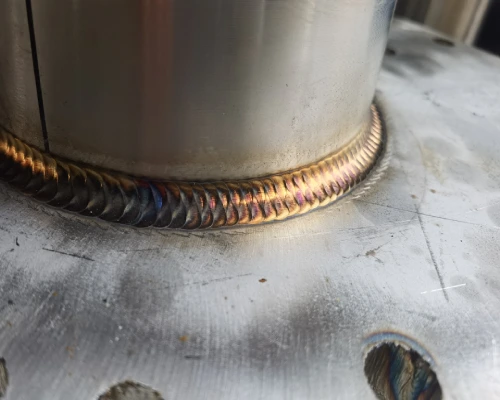
For all critical load-bearing structures and internal corners, we employ the gas-shielded tungsten inert gas welding (GTAW/TIG) process. Its low heat input characteristics minimise the heat-affected zone, preventing material sensitisation and thereby safeguarding stainless steel’s most vital corrosion-resistant properties.
In practice, we demand that laboratory stainless steel cabinet fabrication welding techniques achieve not merely connections, but fully penetrated welds with smooth, continuous bead profiles. This signifies the molecular-level restoration of material continuity within laboratory stainless steel cabinet fabrication, eliminating crevices and dead corners where contaminants might accumulate or initiate structural failure. All exposed welds undergo meticulous grinding and polishing.
Through these rigorously controlled process standards, we ensure every laboratory stainless steel cabinet delivered meets your exacting requirements for consistent quality, structural reliability, and long-term durability.
Are you looking for reliable & cost-effective
China Sheet Metal Fabricators
More than 150,000 OEM metal fabrication products delivered to 5,000+ global buyers.
And benefit from it!
Surface Treatment Standards for Stainless Steel Cabinet Fabrication
In laboratory stainless steel cabinet fabrication, surface treatment extends far beyond achieving a uniform appearance. Its core engineering value lies in establishing and enhancing the material’s inherent corrosion resistance, ensuring it maintains its protective integrity through decades of chemical exposure and frequent disinfection.
Mechanical Processing
Mechanical processing forms the physical foundation for all subsequent surface treatment operations in laboratory stainless steel cabinet fabrication. We employ CNC grinding systems, precisely controlling abrasive grit size and process parameters to achieve uniformly oriented brushed finishes or higher-grade surface textures. This process simultaneously removes mill scale, micro-defects, and embedded contaminants, providing an ideal substrate with uniform composition and consistent reactivity for subsequent chemical treatments in laboratory stainless steel cabinet fabrication.
We strictly adhere to ASTM A480 standards during laboratory stainless steel cabinet fabrication, ensuring surface roughness (Ra) is controlled within specified limits (typically 0.4–0.8 μm). Precisely executed mechanical processing not only achieves visual uniformity but also thoroughly eliminates potential sources that could compromise passivation film continuity—a critical condition for achieving optimal corrosion resistance.
Passivation
Passivation constitutes the core chemical enhancement process within the surface treatment system. This laboratory stainless steel cabinet fabrication process involves immersion in strictly controlled acidic solutions (typically based on nitric or citric acid systems). It actively and selectively dissolves free iron particles adhering to the surface while promoting selective enrichment of chromium within the surface alloy. This generates a thicker, denser, and chemically more stable chromium oxide passivation film.
Our experience indicates that proper passivation treatment can enhance the corrosion resistance of laboratory stainless steel cabinets by several orders of magnitude. For laboratory environments requiring resistance to chlorinated disinfectants or acidic reagents, passivation treatment compliant with ASTM A967 standards is fundamental to ensuring long-term protection against pitting and corrosion.
Electropolishing
Electropolishing represents the pinnacle of surface treatment for stainless steel cabinet fabrication, serving as the designated choice for biosafety, pharmaceutical aseptic, and ultra-high cleanliness applications.
This electrochemical process employs anodic dissolution principles to achieve precise micro-level surface levelling on laboratory stainless steel cabinets. It effectively eliminates microscopic peaks and valleys, significantly reducing surface roughness (Ra) to below 0.2μm and yielding a mirror-like finish. This stainless steel cabinet fabrication method substantially reduces surface area available for contaminant and microbial adhesion, conferring exceptional cleanability and antimicrobial properties. Furthermore, the surface-enriched chromium oxide layer provides outstanding resistance to pitting corrosion.
Our electropolishing treatment fully complies with stringent international standards such as ASME BPE (Bioprocessing Equipment), ensuring both regulatory compliance and reliable performance for your laboratory stainless steel cabinet procurement.
Professional Design and Validation Standards for Laboratory Stainless Steel Cabinet Manufacturing
Within the field of laboratory stainless steel cabinet manufacturing, professional design fundamentally constitutes predictive engineering calculations grounded in application scenarios. Our established validation standard system aims to ensure each cabinet consistently withstands the unique chemical, physical, and biological challenges inherent to laboratory environments throughout its entire lifecycle. The core of this system lies in integrating dynamic load analysis, material chemical resistance mapping, and safety considerations into a unified design process.
Dynamic and Static Load Design for Laboratory Stainless Steel Cabinet Manufacturing
When conducting load design for laboratory stainless steel cabinet manufacturing, we adhere to the latest requirements concerning worktop deflection and structural strength as stipulated in GB/T 24820-2024 ‘General Technical Conditions for Laboratory Furniture’. For cabinets supporting precision instruments (such as high-speed centrifuges or liquid chromatography systems), the frame and base plate must pass a static load test of ≥150kg to ensure no irreversible plastic deformation occurs under prolonged loading.
Concurrently, we implement dynamic fatigue testing to simulate continuous impacts from routine operations—door/drawer opening, instrument operation—validating micro-vibration resistance and long-term structural rigidity. Practice demonstrates that forward-looking finite element analysis (FEA) precisely locates stress concentration zones, enabling structural reinforcement during manufacturing through added stiffeners or optimised connection points.
Chemical Resistance Mapping
This laboratory stainless steel cabinet manufacturing methodology employs electrochemical testing principles outlined in standards such as ASTM G61. By measuring material pitting potentials, it quantitatively assesses the performance boundaries of 304L and 316L stainless steel cabinets within specific chemical media. For instance, such testing precisely defines the applicable concentration and temperature windows for 316L material in chlorine-based disinfectants or various acidic/alkaline solvents. This provides a scientific basis for material selection in cabinet sections serving different functional zones (e.g., acid/alkali storage areas, general reagent zones).
This ensures that laboratory stainless steel cabinet materials effectively resist localised corrosion forms such as pitting and crevice corrosion in applications involving specific chemical exposure.
For purchasers, this signifies that we deliver not merely products, but scientifically validated risk management solutions directly impacting the service life of laboratory stainless steel cabinets and the operational safety of laboratories.
Ergonomic and Safety Design
Regarding ergonomic and safety design, we strictly adhere to the guidelines outlined in EN 14056 concerning the fabrication, design, and installation of laboratory stainless steel cabinets.
Firstly, we optimise legroom, knee clearance, and foot clearance in accordance with the standard, ensuring operators can maintain comfortable postures during prolonged work to minimise fatigue. Secondly, during laboratory stainless steel cabinet fabrication, all exposed edges undergo rounded edge treatment with a radius of ≥1.5mm. This detail effectively prevents accidental cuts during rapid movement or operation. Furthermore, for cabinets requiring connection to ventilation systems, we conduct rigorous airtightness testing to ensure zero leakage of contaminants, safeguarding overall laboratory air quality.
Quality Assurance Standards for Stainless Steel Cabinet Fabrication – Comprehensive Control from Raw Materials to Finished Products
Within our laboratory stainless steel cabinet fabrication system, quality assurance transcends isolated inspections; it constitutes an engineered management process spanning the entire product lifecycle. Our comprehensive control system for laboratory stainless steel cabinet fabrication employs data-driven traceability mechanisms to guarantee that every delivered cabinet meets specified performance and service life requirements, from metallurgical origins to final product.
Incoming Quality Control (IQC)
IQC serves as the primary defence in laboratory stainless steel cabinet fabrication quality assurance, focusing on verifying that material properties align with design specifications.
We rigorously monitor thickness tolerances and surface quality for each batch of 304/316 stainless steel sheets against international standards such as ASTM A240 and EN 10088-2, ensuring consistent substrate quality for laboratory stainless steel cabinet fabrication. All raw materials must be accompanied by complete Material Test Certificates (MTC), enabling full traceability from the steel mill to our warehouse. Any non-conforming incoming materials are clearly marked and segregated to prevent their unintended use.
In-Process Quality Control (IPQC)
During laboratory stainless steel cabinet fabrication, quality inspection points are established after each critical process stage. A monitoring model combining self-inspection, mutual inspection and specialised inspection is implemented. This encompasses systematic assessments ranging from dimensional accuracy in laser cutting (profile accuracy ±0.1mm), angle deviation in bending (≤1°) and roundness control, to welding quality evaluation.
The scope of IPQC extends beyond the product itself to encompass personnel (operator skill and process execution), equipment, and verification that process techniques and environmental conditions meet requirements. Additionally, during the surface treatment stage of laboratory stainless steel cabinet fabrication, sampling verifies surface roughness (Ra) and passivation film quality, ensuring systematic enhancement of corrosion resistance.
Final Quality Control (FQC) and Performance Testing
Final Quality Control (FQC) serves as the ultimate validation of all laboratory stainless steel cabinet fabrication processes, ensuring products meet shipping specifications. We execute a comprehensive testing protocol centred on:
– Dimensional and geometric tolerance inspection to guarantee precision at all assembly interfaces;
Surface quality assessment, inspecting scratches, dents, and colour variations under standard lighting to guarantee visual and functional consistency;
Load testing to validate structural strength and durability;
Corrosion resistance sampling to evaluate long-term corrosion resistance.
This end-to-end quality control system ensures every laboratory stainless steel cabinet delivered to you is supported by verifiable performance data. This not only meets specification requirements but also guarantees the long-term stability of your laboratory equipment.
online custom metal fabrication parts
Only 4 steps
Contact our experts team and experience the efficiency and economic benefits of digital metal fabrication services.
Upload Design Files
STL , STEP (.stp), IGES (.igs), (.ZIP), or PDF.
Also be a sample or an idea
Quote & Design Analysis
Instant factory quotes and DfM reports, the most reasonable solution.
Manufacturing Begins
Digital processes can initiate order tasks within 24 hours.
On-Time Delivery
Keeping delivery promises, approved by 3000+ Global Company buyers.
Get An Instant Quote Now!
Should you require custom laboratory stainless steel cabinets, please contact us immediately! The Supro team stands ready to assist. Established in 2004, we are a manufacturer specialising in custom laboratory stainless steel cabinets. With extensive manufacturing expertise, a robust technical team, and comprehensive production resources, we have provided one-stop custom laboratory stainless steel cabinet solutions to over 3,000 enterprises worldwide.
At Supro, our dedicated quality control team, seasoned QC personnel, and scientific quality assurance processes ensure products undergo rigorous inspection to meet specified technical standards. We maintain full traceability of defective items, encompassing: raw material inspection, mould verification, equipment checks, process sampling, packaging review, and final product assessment. Our QA (Quality Assurance) procedures guarantee products comply with essential tolerances and quality benchmarks. We guarantee timely delivery across all product stages – from design and rapid prototype fabrication to mass production – delivering expert technical support, exceptional quality, and highly cost-competitive solutions.