



In the field of enclosure manufacturing, the gap between laboratory IP certification and the reliability of IP enclosures in the field has long been a pressing engineering challenge. IEC 60529 testing measures short-term resistance to dust and moisture under static, mild conditions—yet real-world installation environments introduce issues such as thermal cycling, vibration, gasket creep, and galvanic coupling.
A brand-new IP-rated enclosure that passes IP66 testing in the laboratory may see its protection rating drop to the equivalent of IP54 within months of deployment due to compression set, vacuum suction effects, interface leakage, or galvanic corrosion. Demonstrating that custom IP-rated enclosures can withstand cumulative environmental stresses requires more than just a one-time certification on paper. Understanding these four field-proven failure mechanisms is critical for specifying enclosures that will provide the rated protection level throughout their expected service life.
This analysis will examine these failure mechanisms of IP enclosures one by one from the perspectives of manufacturing processes and materials science.
What Are IP Enclosures?
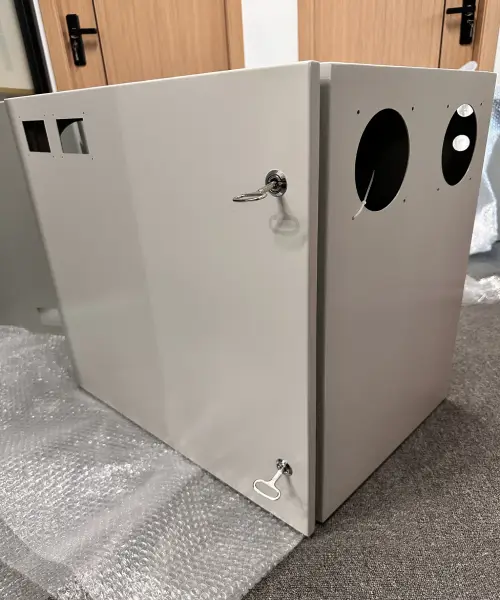
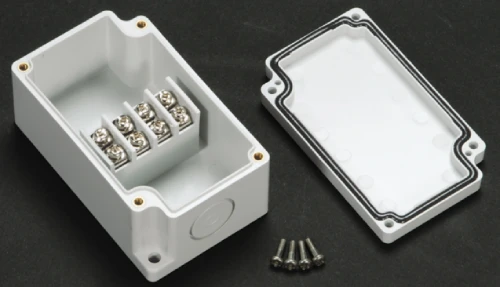
An IP-rated enclosure is a protective enclosure that complies with the IEC 60529 standard, an international standard used to classify protection against the ingress of solid objects and moisture.
A two-digit IP code (e.g., an IP67-rated enclosure) defines specific performance thresholds: the first digit represents the level of protection against solids, where “6” indicates complete protection against dust; the second digit represents the level of protection against liquids, with higher numbers indicating greater resistance to water jets or immersion.
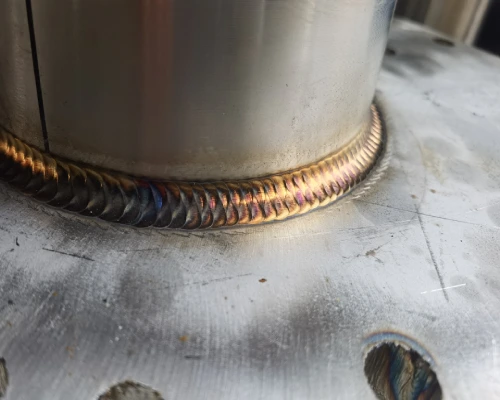
From a sheet metal fabrication perspective, simply selecting off-the-shelf components is insufficient to achieve the rated protection level. Manufacturing tolerances related to welding distortion and weld flatness directly affect the compression effectiveness of gaskets—a local deviation of just 0.3 millimeters around the door frame can result in sealing force falling below the threshold required by the certification standard.
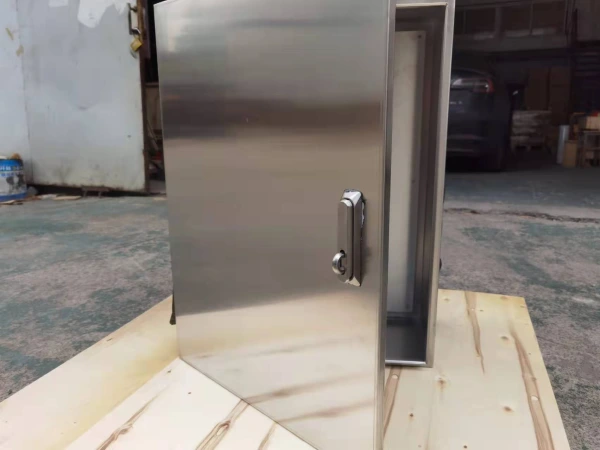
Material selection is equally critical: powder-coated aluminum IP-rated enclosures are suitable for moderate outdoor environments, while 304L or 316L stainless steel or galvanized steel with flat sealing surfaces can extend service life in corrosive environments. For procurement professionals, custom IP-rated enclosures are not merely boxes, but engineered systems whose on-site reliability depends on manufacturing precision, material compatibility, and seal design—factors that cannot be verified by IEC 60529 certification alone.
It is worth noting that NEMA ratings (widely adopted in North America) incorporate additional environmental stress factors not covered by IP ratings, such as corrosion and freezing, which further highlight the discrepancy between laboratory certification and actual field performance.
Four Key Deterioration Mechanisms Leading to Field Failure of IP-Rated Enclosures
When purchasing IP enclosures, most people assume that a high IP rating guarantees permanent protection. However, real-world operating environments often expose critical vulnerabilities that standard laboratory testing cannot detect. The vast majority of field failures are not caused by damage to the enclosure shell itself, but rather by the cumulative effect of minor issues at various joints.
Over time, environmental factors such as sudden temperature changes, uneven pressure on gaskets, and seal failure at cable entry points allow moisture and dust to breach the protective barrier. By combining field failure statistics with industry test results, Supro has analyzed several types of defects that most commonly compromise the protective performance of IP-rated enclosures after installation and commissioning.
Permanent Compression Set and Aging of Sealing Gaskets
Permanent compression set—that is, the permanent deformation remaining in a gasket after unloading—directly determines how long an IP-rated enclosure can maintain its rated sealing performance. Under sustained compressive loads, viscoelastic materials such as EPDM or silicone gradually lose their ability to rebound.
ASTM D395 (Method B) quantifies this behavior: a high-quality gasket should exhibit less than 15% compression set after 22 hours at 100°C. In field applications, thermal cycling and chemical exposure accelerate aging. Once compression set exceeds 20–25%, the gasket will be unable to maintain the minimum surface pressure required for dust or water resistance.
From a manufacturing perspective, controlling groove depth and surface roughness (Ra ≤ 1.6 µm) in custom IP-rated enclosures is critical—excessive compression or rough mating surfaces will accelerate the progression of compression set.
So how can this issue be addressed?
Supro’s custom IP-rated enclosures prioritize gaskets that comply with the ASTM D395 standard and have a compression set of ≤15%. Groove depth is controlled to achieve a compression rate of 20–30%, mating surface roughness is maintained at ≤Ra 1.6 µm, and materials meeting the operating temperature range requirements are selected. For critical IP enclosure applications, silicone rubber or FVMQ materials are recommended.
“Vacuum Suction Effect” (Caused by Sudden Temperature Changes)
Laboratory immersion tests rarely simulate the dynamic temperature fluctuations experienced during actual equipment operation. When an IP enclosure—which is active and generating internal heat—is exposed to sudden cooling from a downpour, the air inside the enclosure contracts, creating localized negative pressure. This directly draws moisture into the enclosure through the least airtight gaps.
How to solve this?
Installing a pressure-balancing vent valve (breathing valve) is the most cost-effective upgrade solution for outdoor IP enclosures. By using a hydrophobic breathable membrane (such as a Gore vent valve), air and water vapor can pass through, balancing the pressure difference between the interior and exterior of the enclosure.
This eliminates the negative pressure water-sucking phenomenon caused by temperature differences while simultaneously preventing liquid water and dust from entering. Additionally, a built-in anti-condensation PTC heating module can be installed. In operating environments with extreme day-night temperature fluctuations, a low-power PTC constant-temperature heater ensures the temperature inside the outdoor IP enclosure remains consistently above the dew point, preventing condensation at its source.
Vulnerable Interfaces and Cable Entry Points in IP Enclosures
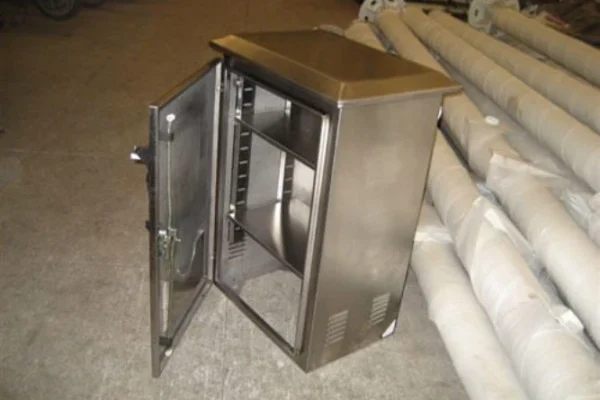
Seams and cable entry points are the weakest links in any IP-rated enclosure. Even if the main enclosure passes IP66 laboratory testing, poorly sealed cable glands or uneven flanges can reduce the actual protection rating to IP54 or lower.
From a manufacturing perspective, there are two primary issues: uneven clamping force—insufficient screws or clips can cause corner deformation—and thread leaks at NPT or metric threaded connections.
How to resolve this?
To ensure the security of cable entries and interfaces, component protection ratings must be matched: ensure that the protection rating of every cable connector, conduit fitting, and human-machine interface (HMI) connection is exactly the same as (or higher than) that of the enclosure itself. Using a single IP54-rated connector on an IP67-rated enclosure will reduce the protection rating of the entire system to IP54.
Second, install drip rings: Standard installation guidelines must be followed, requiring external cables to dip below the entry point before entering the crimp connector. This forces moisture to drip off the bottom of the ring structure rather than seeping directly into the seal.
Galvanic Corrosion (Bimetallic Corrosion) in IP Enclosures
In coastal areas or heavily polluted industrial zones, galvanic corrosion can occur if hinges, locks, and external fasteners are made of different metals and are not properly isolated. This corrosion gradually weakens the structural integrity of the IP-rated enclosure, ultimately leading to misalignment of the enclosure door and seal failure.
So how does Supro address this issue?
First, we standardize the use of matching metal materials. In marine and highly corrosive industrial environments, we strictly prohibit the use of carbon steel hardware with stainless steel IP enclosures; instead, the enclosure shell, external hinges, locks, and screws are all made of 316L stainless steel. Second, we offer non-metallic enclosure alternatives. In scenarios with extremely high risks of chemical and galvanic corrosion, metal enclosures are avoided: polycarbonate (PC) or fiberglass-reinforced polyester (FRP) enclosures are selected, which naturally do not cause galvanic corrosion while maintaining reliable structural strength.
Only 4 steps
online custom metal fabrication parts
Contact our experts team and experience the efficiency and economic benefits of digital metal fabrication services.
Upload Design Files
STL , STEP (.stp), IGES (.igs), (.ZIP), or PDF.
Also be a sample or an idea
Quote & Design Analysis
Instant factory quotes and DfM reports, the most reasonable solution.
Manufacturing Begins
Digital processes can initiate order tasks within 24 hours.
On-Time Delivery
Keeping delivery promises, approved by 3000+ Global Company buyers.
Why Laboratory IP Testing Cannot Predict Cumulative Deterioration of IP Enclosures in the Field
Laboratory IP testing conducted in accordance with the IEC 60529 standard involves applying a single, transient stress source—such as a static water column or brief immersion—to a brand-new, fully assembled IP enclosure sample. However, field use introduces cumulative and synergistic degradation effects that no single test can replicate.
An enclosure rated IP67 in the laboratory may see its effective protection performance degrade within a few months due to factors such as the accumulation of compression set (per ASTM D395), vacuum suction caused by thermal cycling, fastener loosening due to vibration, and electrochemical corrosion at dissimilar metal interfaces.
The standard does not require testing for UV exposure, thermal shock, or periodic pressure differential. Purchasing professionals must recognize that IP protection rating certificates verify only initial integrity—not aging resistance, assembly tolerances, or actual environmental sequences. Verifying field reliability requires comprehensive testing specific to the application.
Engineering Recommendations for IP Enclosures from a Sheet Metal Fabrication Perspective
From a sheet metal fabrication perspective, improving the field reliability of any IP-rated enclosure begins with adhering to three standard operating procedures. First, machine mating surfaces to Ra ≤ 1.6 µm and control groove depth to achieve a gasket compression rate of 20–30%—according to ASTM D395, exceeding 40% accelerates permanent deformation.
Second, integrate pressure-balancing vents (e.g., hydrophobic membranes) to eliminate the effects of vacuum suction on sealed IP enclosure designs.
Third, specify the use of isolation fasteners—such as nylon washers or insulating sleeves—to prevent electrochemical corrosion between aluminum IP-rated enclosures and stainless steel screws.
For cable entry points, torque limits must be specified (3–5 N·m for M20) and serrated locking washers must be used.
Are you looking for reliable & cost-effective
China Sheet Metal Fabricators
More than 150,000 OEM metal fabrication products delivered to 5,000+ global buyers.
And benefit from it!
Conclusion
Laboratory IP certification provides only a benchmark, not a guarantee. The root causes of any on-site failure of an IP enclosure can always be traced back to compression set, vacuum suction effects, interface leakage, and electrochemical corrosion—mechanisms that are not covered by the IEC 60529 standard.
Supro is a professional manufacturer of IP enclosures. With extensive manufacturing experience, a strong technical team, and comprehensive manufacturing resources, we have provided one-stop enclosure manufacturing solutions to over 3,000 companies worldwide.
At Supro, we have a dedicated quality control team, experienced QC personnel, and scientific quality control processes to ensure that products undergo rigorous inspection, meet specified technical standards, and allow for full traceability of defective products.
This includes: raw material inspection, mold inspection, equipment inspection, process sampling, packaging inspection, and final inspection. We conduct QA (Quality Assurance) to ensure products meet necessary tolerances and quality standards. We guarantee on-time delivery of all products. From product design and rapid prototype fabrication to mass production, we provide professional technical support and exceptional quality, along with highly cost-competitive product offerings.
For technical specifications or inquiries regarding OEM partnerships, please contact our engineering team.