




Within the realms of food processing and mechanical manufacturing, material selection directly impacts equipment longevity, reliability, hygienic safety, and overall cost of ownership.
AISI 420 stainless steel emerges as an ideal choice within this sector due to its unique performance balance as a martensitic stainless steel: it achieves high hardness and wear resistance through heat treatment, coupled with moderate corrosion resistance provided by its approximately 13% chromium content.
AISI 420 stainless steel simultaneously meets the dual demands of food processing environments for corrosion resistance and the need for wear resistance and durability in mechanical components.
The deeper value of AISI 420 stainless steel lies in its exceptional design flexibility and total lifecycle cost. By precisely controlling austenitisation temperatures, quenching, and tempering processes, its hardness can be adjusted to exceed HRC 50, making it suitable for manufacturing sharp, durable cutting tools or high-strength pump shafts. Furthermore, the surface of AISI 420 stainless steel can be polished to an extremely low roughness, effectively reducing microbial adhesion. It also passes relevant food contact material regulations, meeting stringent food-grade safety standards.
In a highly competitive market, AISI 420 stainless steel offers an excellent solution for buyers seeking reliability and cost-effectiveness, thanks to its mature processing techniques and moderate cost.
Analysis of the AISI 420 Stainless Steel Standard
Understanding the AISI 420 stainless steel standard is fundamental to ensuring material quality and suitability. Established by ASTM International in the United States, this standard unequivocally defines its classification as a martensitic stainless steel. Its core lies in stringent control over chemical composition ranges, particularly for carbon (minimum 0.15%) and chromium (12-14%). This composition combination is fundamental to realising the high-performance potential of AISI 420 stainless steel.
The AISI 420 standard primarily specifies the material’s foundational chemical composition, whilst its ultimate mechanical properties are highly dependent on subsequent heat treatment processes. Such treatment can achieve hardness levels exceeding HRC 50. This implies that materials conforming to the AISI 420 chemical composition standard from different suppliers may exhibit varying performance characteristics due to differences in heat treatment processes.
Furthermore, understanding the correspondence between the AISI 420 standard and regional equivalents is crucial. For instance, it broadly corresponds to the 420J2 (3Cr13) grade in Chinese standards. However, subtle variations in specific composition ranges may exist between these corresponding grades. Such differences could critically impact the weldability of AISI 420 stainless steel or its corrosion resistance under specific environmental conditions. Therefore, it is vital to review the supplier’s material certification (Mill Certificate) to verify full compliance with the AISI 420 standard.
online custom metal fabrication parts
Only 4 steps
Contact our experts team and experience the efficiency and economic benefits of digital metal fabrication services.
Upload Design Files
STL , STEP (.stp), IGES (.igs), (.ZIP), or PDF.
Also be a sample or an idea
Quote & Design Analysis
Instant factory quotes and DfM reports, the most reasonable solution.
Manufacturing Begins
Digital processes can initiate order tasks within 24 hours.
On-Time Delivery
Keeping delivery promises, approved by 3000+ Global Company buyers.
Core Materials Science: The Microstructural Mechanisms Underpinning AISI 420 Stainless Steel Properties
Understanding the microstructural mechanisms of materials is fundamental to evaluating a supplier’s technical capability and the consistency of material quality. The properties of AISI 420 stainless steel are not inherent characteristics but arise from precise chemical composition design and controlled solid-state phase transformations.
AISI 420 Stainless Steel Chemical Composition
The composition of AISI 420 stainless steel embodies a meticulous balance between cost and performance. This material contains 0.15%-0.40% carbon and 12%-14% chromium, a ratio that directly determines its fundamental properties. Carbon content is the primary determinant of AISI 420 stainless steel’s hardness and strength, while chromium provides corrosion resistance by forming a protective passivation layer on the surface.
It should be noted that different grades of 420 stainless steel exist within this composition range. For instance, 420J2 (3Cr13) features a higher carbon content (0.30%-0.40%), rendering it suitable for cutting tool applications demanding greater hardness.
This compositional balance introduces engineering trade-offs: during AISI 420 stainless steel heat treatment, carbon reacts with chromium to form chromium carbides. Whilst this enhances hardness, it consumes effective chromium content within the matrix, potentially locally compromising corrosion resistance.
Therefore, when reviewing material certificates provided by suppliers, attention should be paid not only to the total chromium content but also to the precise carbon range, as this directly influences the ultimate performance potential of AISI 420 stainless steel.
AISI 420 stainless steel heat treatment: Key to manufacturing high-performance components
The material’s ultimate properties depend on the AISI 420 stainless steel heat treatment process, which comprises austenitisation to achieve full solid solution of carbon and chromium; rapid quenching to transform the high-temperature austenite into hard martensite; and finally tempering.
Austenitisation
Austenitisation constitutes the critical initial stage in the heat treatment process for AISI 420 stainless steel. During this phase, the material is heated to a temperature range of approximately 980–1050°C and held for a sufficient duration. The primary objective of this process is to transform the microstructure into austenite and ensure complete solid solution of alloying elements such as carbon and chromium within the crystal lattice.
The supplier’s control over austenitisation parameters directly impacts the consistency of structural component performance in AISI 420 stainless steel. Inappropriate temperature or duration may result in incomplete carbide dissolution or coarse grain size, adversely affecting the final product’s properties and quality.
Quenching
Quenching is the process of rapidly transforming austenite into martensite through rapid cooling (typically using oil quenching).
This phase transformation converts face-centred cubic austenite into body-centred tetragonal martensite through a shear mechanism, imparting high hardness and strength to AISI 420 stainless steel.
The quenching process leaves the steel in a state of high internal stress and brittleness, making subsequent tempering treatment essential.
Tempering Process
Tempering is the process of heating quenched AISI 420 stainless steel at moderate to low temperatures (150–750°C) to enhance toughness and dimensional stability while retaining hardness.
This process promotes martensite decomposition, carbide precipitation, and the elimination of internal stresses. It should be noted that the selection of tempering temperature significantly impacts the corrosion resistance of AISI 420 stainless steel. Tempering at 250°C yields excellent corrosion resistance and high hardness, whereas tempering at 480°C results in the poorest corrosion resistance. This is particularly critical for components operating in corrosive environments.
Why choose Supro MFG's Custom metal enclosure Services
Provide the most cost-effective cost solution for manufacturing and assembling products, expanding product competitiveness.
a technical team specializing in custom shell manufacturing for more than 30 years.
Advanced Manufacturing Equipment: Industry-leading custom metal enclosure manufacturer with in-house sheet metal, die casting, precision machining workshops, and surface coating workshops.
ISO 9001-2015, PPAP III level, RoHS, NEMA, CE and other certified production standards.
24H*7 online English technical support: The professional English team responds quickly to users’ technical questions online at any time.
help users from product design, prototype, batch manufacturing, surface treatment, assembly and packaging, transportation and a series of value-added services.
With in-house mechanics and chemistry laboratories, it can quickly monitor manufacturing process quality control to ensure the delivery of high-quality products.
Accept to sign NDA documents to ensure that customers’ product information is protected.
Door-to-door delivery in customizable secure packaging after complying with the delivery details agreed with the customer.

Applications of AISI 420 Stainless Steel in Mechanical Engineering: Focusing on Hardness and Wear Resistance
Within the mechanical engineering sector, the value of AISI 420 stainless steel lies in its controllable high hardness and wear resistance through heat treatment, providing reliability for its use in critical components.
Advantages of AISI 420 Stainless Steel Properties
AISI 420 stainless steel, a martensitic grade, achieves hardness exceeding HRC 50 through quenching and tempering, enabling operation in high-wear environments. Furthermore, its combination of hardness, wear resistance, and moderate corrosion resistance renders it an ideal choice for diverse mechanical components.
High Strength and Hardness
AISI 420 stainless steel’s mechanical properties are controllable through heat treatment. As a martensitic stainless steel, its typical composition (carbon 0.16%-0.25%, chromium 12%-14%) provides the foundation for high strength and hardness.
Through standardised austenitisation, quenching, and tempering processes, its hardness can be significantly elevated to over HRC 50, with tensile strength ≥635 MPa and conditional yield strength ≥440 MPa. This high hardness enables AISI 420 stainless steel to withstand high-load and abrasive operating conditions.
Exceptional Wear Resistance
The wear resistance of AISI 420 stainless steel stems from its high-hardness martensitic matrix and the formation of carbides such as Cr₃C₂.
Through advanced processes like friction stir processing (FSP), the surface hardness of AISI 420 stainless steel can be further enhanced, demonstrating superior wear performance compared to conventional heat treatment and D2 tool steel.
Furthermore, techniques like nitrogen ion implantation can increase surface nanohardness by approximately 2.3 times, while the formation of chromium nitride further enhances its wear resistance.
Moderate Corrosion Resistance
The corrosion resistance of AISI 420 stainless steel stems from its approximately 13% chromium content, enabling the formation of a passivation film on its surface to resist corrosion from atmospheric exposure, water vapour, water, and oxidising acids. This renders it more effective than carbon steel in mechanical manufacturing applications.
However, note that AISI 420 stainless steel possesses relatively low chromium content, and some chromium combines with carbon to form carbides. Consequently, its corrosion resistance is limited, particularly in chloride environments (such as seawater).
Typical Components and Precision Manufacturing Practices for AISI 420 Stainless Steel
Leveraging this performance profile, AISI 420 stainless steel finds extensive application in mechanical components requiring high hardness, wear resistance, and moderate corrosion resistance.
Typical applications include:
Cutting tools: such as cutting blades.
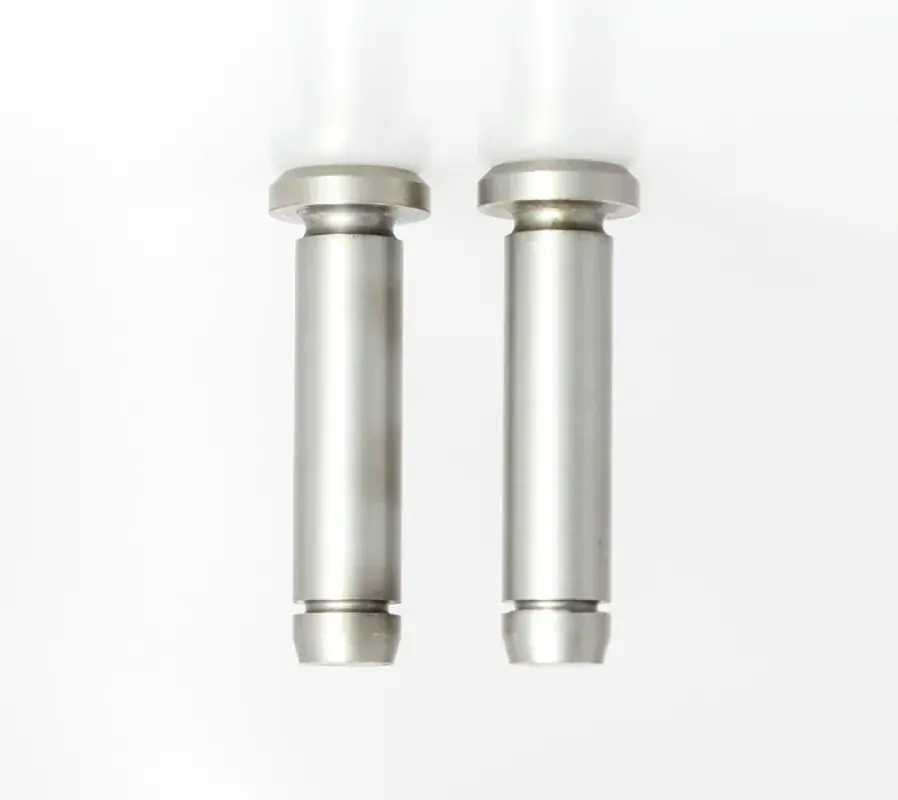
Bearings, pump components, gears, and drive shafts.
Plastic moulding dies.
Springs, conveyor equipment, and parts for goods handling machinery.
Key Manufacturing Process Considerations for AISI 420 Stainless Steel
In its annealed condition (hardness ≤ 223 HBW), it exhibits relatively good machinability. However, once elevated to a high-hardness state through heat treatment, machining becomes challenging, necessitating the use of wear-resistant carbide tools and optimised cutting parameters.
AISI 420 stainless steel is generally considered difficult to weld, exhibiting susceptibility to cold cracking during the process. Should welding be essential, stringent process measures must be implemented, such as preheating prior to welding and comprehensive post-weld heat treatment (e.g., tempering) to restore toughness and corrosion resistance within the heat-affected zone.
Applications of AISI 420 Stainless Steel in Food Processing Equipment: Hygiene, Safety and Durability
Within the food processing equipment sector, the value of AISI 420 stainless steel lies in its unique equilibrium between hygiene, safety, durability and cost-effectiveness. A precise understanding of its performance boundaries and regulatory compliance is fundamental to successful decision-making.
Regulatory Compliance
The application of AISI 420 stainless steel in food processing prioritises regulatory adherence. According to the Chinese standard GB4806.9-2016 ‘Metallic Materials and Products for Food Contact’, 420 stainless steel that passes corresponding food safety testing meets food-grade standards. This signifies the material’s suitability for food contact applications under specified conditions.
Whilst 420 stainless steel may pass specific food safety tests, its application in food processing necessitates compliance with more systematic technical specifications. These include material selection, processing, and inspection requirements outlined in standards such as T/CFPMA 0003-2019 Technical Specifications for Stainless Steel Application in the Food Industry.
Precise Alignment of AISI 420 Stainless Steel Properties with Food Processing Equipment
The successful application of AISI 420 stainless steel in the food industry stems from its precise alignment with sector requirements. Through heat treatment, this material achieves high hardness exceeding HRC 50, rendering it highly suitable for cutting and grinding equipment in food processing. It maintains sharp edges while resisting wear.
Regarding corrosion resistance, AISI 420 stainless steel exhibits resilience against atmospheric exposure, water vapour, and certain oxidising acids, enabling adaptation to diverse food processing environments.
The surface quality of AISI 420 stainless steel is pivotal for the hygienic safety of food equipment. It can be polished to a high surface finish, making microbial adhesion difficult and facilitating thorough cleaning and disinfection, thus meeting the hygienic design requirements of the food industry.
Furthermore, the high strength and wear resistance exhibited by AISI 420 stainless steel following heat treatment ensure dimensional stability and durability during prolonged use, minimising the risk of food contamination from wear particles.
Typical Applications in the Food Industry
Within food processing equipment, AISI 420 stainless steel is extensively employed in cutting and grinding apparatus owing to its properties, such as meat-cutting blades, vegetable dicers, and baking knives.
AISI 420 stainless steel is also frequently employed in the manufacture of pumps, valves, and conveyor system components. In these applications, its corrosion resistance and wear resistance withstand the erosion caused by food particles and cleaning agents.
In moulding applications, particularly for plastic food container moulds, AISI 420 stainless steel provides the necessary corrosion resistance and surface quality while ensuring mould durability.
Within US federal specifications, AISI 420 stainless steel is designated for certain food-related implements, such as can openers on lifeboats, further validating its suitability for specific food contact applications.
No design files? Let Supro MFG do it for you.
We often come across clients who have no professional design drawings and documentation, only a creative idea, which leads to the project being at a standstill.
If you are in this situation, then contact our team of experts.
Supro MFG, as an industry-leading custom metal fabricator, has an ever-experienced team of engineers who utilize their extensive fabrication experience and technical expertise to build your idea into a real product and create design files such as STEP/STP/SLDPRT/DXF/PDF/PRT/DWG/AI.
That’s what makes SUPRO MFG so great, and 2,000 corporate, entrepreneurial, artist, and other purchasers from around the world enjoy working with us and benefiting from our one-stop manufacturing services.
Conclusion
From a professional materials engineering perspective, the value of AISI 420 stainless steel in mechanical manufacturing and food processing industries lies in its exceptional performance balance and predictable engineering behaviour. Through precise heat treatment control, AISI 420 stainless steel achieves a hardness range of HRC 50-55 while maintaining moderate corrosion resistance, demonstrating significant advantages in applications such as cutting tools, pump valves, and food processing components.
Supro is a specialist metalworking manufacturer. Leveraging advanced equipment, extensive manufacturing expertise, and a professional engineering team, we deliver flawless stainless steel processing services to over 3,000 global companies, providing genuine manufacturer quotations.
As an industry-leading metalworking manufacturer, we deliver diverse products efficiently and on schedule. From product design and rapid sheet metal prototype fabrication to mass production, we provide expert technical support and exceptional quality. Furthermore, we offer comprehensive manufacturing solutions and highly cost-competitive product supply!