
The prevailing market preference for low-cost stainless steel sheets is precipitating profound challenges within the industry. Whilst price competitiveness remains the primary driver of procurement decisions, this pursuit frequently overlooks a fundamental principle: the initial cost of stainless steel sheets does not reliably predict total project expenditure.
Substandard stainless steel sheets frequently exhibit non-compliant chemical compositions and inadequate metallurgical processing, embedding significant technical risks within the supply chain. These hazards can precipitate premature material degradation, unplanned downtime, and compliance failures, ultimately translating into substantial hidden costs.
This paper provides procurement specialists and engineers with a rigorous scientific framework for quantifying the hidden costs of low-cost stainless steel sheets. It focuses on failure mechanisms stemming from material science deviations—ranging from issues causing depletion of chromium/nickel/molybdenum elements that destabilise the passivation layer, to microstructural inconsistencies arising from improper thermomechanical treatment.
Understanding these factors is crucial for procuring critical stainless steel components, enabling us to move beyond price-based procurement models towards value-driven, risk-mitigating stainless steel sheet sourcing strategies.
Typical Defects in Low-Cost Stainless Steel Sheets
From a technical standpoint, the term ‘low-cost stainless steel sheets’ is often a misnomer for products that fundamentally contravene the principles of stainless steel materials science. Cost reductions are not achieved through enhanced production efficiency, but rather through systematic deviations from international material standards, frequently concealing latent defects.
Chemical Composition of Low-Cost Stainless Steel Sheets
From a metallurgical perspective, the corrosion resistance of stainless steel sheets relies entirely upon a chromium-rich passivation layer on their surface. Low-cost sheets typically reduce costs by systematically lowering the content of key alloying elements such as chromium, nickel, and molybdenum. For instance, a low-cost stainless steel sheet labelled as ‘Grade 304’ may contain only 16-17% chromium, falling short of the minimum 18% required by ASTM A240 standards. This seemingly minor discrepancy significantly diminishes the passivation film’s self-repairing capacity.
Similarly, insufficient nickel content weakens the ability to stabilise the austenitic phase, making stainless steel sheets more prone to transforming into magnetic martensite during processing. This increases the tendency for cracking and reduces toughness.
Moreover, the production of low-cost stainless steel sheets often relies on recycled scrap steel from unverified sources, coupled with inadequate refining processes (such as AOD argon-oxygen decarburisation). This results in excessively high residual impurity levels of elements like sulphur and phosphorus. Elevated sulphur content generates substantial ductile manganese sulphide inclusions. During rolling, these inclusions elongate along the rolling direction, forming microscopic ‘weakness chains’ . These not only serve as preferred initiation sites for corrosion but also liquefy within the heat-affected zone during welding, inducing hot cracks that severely compromise structural integrity.
Elevated phosphorus content segregates to grain boundaries, heightening susceptibility to intergranular corrosion. Consequently, stainless steel sheets may exhibit embrittlement following improper thermal cycling, even under seemingly benign conditions.
Metallurgical Processes and Microstructure of Low-Cost Stainless Steel Sheets
Premium stainless steel sheets originate from pure, standard-compliant continuous cast slabs. Lower-cost products frequently utilise non-standard billets, which may harbour internal defects such as central shrinkage porosity or inclusion clusters.
Crucially, final performance hinges upon precise heat treatment of the stainless steel sheet. Particularly the solution annealing process, which requires execution within a specific temperature range (e.g., 1040–1150°C for 304 grade), followed by rapid quenching to dissolve carbides into the austenitic matrix and achieve a uniform structure. Low-cost stainless steel sheets commonly suffer from inadequate annealing temperatures or insufficient holding times, preventing complete carbide dissolution; while insufficient quenching rates fail to suppress carbide precipitation at grain boundaries during cooling, creating vulnerabilities for intergranular corrosion and diminished mechanical properties.
Improper metallurgical processes directly cause uncontrolled microstructural degradation in stainless steel sheets, resulting in reduced yield strength and poorer formability. Carbides (such as chromium carbides) precipitate continuously in a network pattern at grain boundaries, inducing sensitisation. This impoverishes chromium at grain boundaries, creating pathways for accelerated corrosion propagation. Furthermore, excessive δ-ferrite or even harmful intermetallic phases like σ-phase may be present. These severely compromise the material’s toughness and corrosion resistance, rendering stainless steel sheets prone to unpredictable failure during subsequent processing or service.
Dimensional Tolerances and Surface Quality of Low-Cost Stainless Steel Sheets
Precise dimensional tolerances and good flatness form the foundation of modern automated manufacturing. Low-cost stainless steel sheets often exhibit significant thickness fluctuations and flatness issues (such as waviness, bending, or sickle bending) due to poor rolling mill precision and crude process control. Such inconsistencies lead to tool damage, jamming, and extremely high scrap rates on automated punching or roll forming lines. Poor flatness prevents stainless steel sheets from lying flush against the worktable during plasma or laser cutting, resulting in reduced cutting accuracy and thermal distortion. This substantially increases subsequent straightening time and costs.
Surface finish is not merely an aesthetic consideration but the primary defence against corrosion. Surface defects in low-cost stainless steel sheets are often concealed. For instance, No.2B or No.4 finishes may harbour embedded scale, excessively deep grinding marks, or areas inadequately pickled and passivated. These defects locally disrupt the continuity of the stainless steel sheet’s passivation film, forming ‘large cathode-small anode’ galvanic corrosion cells that dramatically accelerate pitting corrosion.
Failure of Substandard Stainless Steel Sheets in the Application Chain
Procuring low-cost stainless steel sheets may appear to save initial costs, but it triggers a cascade of engineering failures throughout the application chain. Low-cost stainless steel sheets, due to inherent material defects, harbour significant risks in mechanical properties, corrosion resistance, and workability. These deficiencies directly cause premature product failure, production interruptions, and other potential hazards.
Mechanical Property Risks: Sudden Fracture of Stainless Steel Sheets
The most perilous failure mode of substandard stainless steel sheets lies in their unpredictable mechanical behaviour. These materials frequently fail to meet minimum yield strength and tensile strength requirements stipulated by standards such as ASTM A240. In structural and load-bearing applications, a critical yet often overlooked concern is the risk of brittle fracture during plastic forming.
For purchasers, this represents a severe threat to equipment integrity and personnel safety in structural and load-bearing applications. Furthermore, cold-rolled stainless steel sheets exhibit heightened crack sensitivity during subsequent cold forming processes along specific orientations (e.g., at 72° to the transverse direction). This microstructural anisotropy implies that even if stainless steel sheets perform adequately in conventional testing, sudden fracture may occur under specific processing stresses.
Corrosion Risk of Substandard Stainless Steel Sheets
Corrosion failures in low-cost stainless steel sheets are often systemic, particularly in outdoor installations and humid environments. Taking common low-cost chromium-manganese stainless steel sheets as an example, to reduce costs, their chromium (Cr) content may barely exceed 10.5%, with extremely low nickel content.
This chemical imbalance results in poor austenite stability. More critically, such non-standard materials exhibit extremely low resistance to stress corrosion cracking (SCC) in chloride-ion-containing environments.
Processing and Manufacturing Risks of Substandard Stainless Steel Sheets
Substandard stainless steel sheets reveal significant issues during processing. During welding, excessively high levels of impurity elements such as sulphur and phosphorus make the heat-affected zone of the weld highly susceptible to hot cracking. Furthermore, deformation of austenitic stainless steel induces martensitic transformation. Higher martensite content generates greater residual stresses from processing, significantly increasing the risk of cracking during subsequent welding or service.
Forming challenges are equally severe. The sheet exhibits low elongation, high elastic modulus, and minimal thickness anisotropy index, indicating a short plastic deformation phase. Substandard stainless steel sheets exacerbate these issues due to chemical composition and microstructural inhomogeneities. During high-deformation processes like deep drawing, the material progresses rapidly from yield to fracture, resulting in high cracking probability and forming failure. The consequent tooling damage, production line downtime, and extremely high scrap rates incur losses far exceeding any savings achieved through raw material cost reduction.
Compliance and Safety Risks of Low-Cost Stainless Steel Sheets
Within the food and medical sectors, employing low-cost stainless steel sheets with substandard corrosion resistance for food contact containers or medical devices may result in excessive heavy metal migration. This directly contravenes regulations such as FDA standards and EU Regulation 10/2011. Such violations could trigger product recalls, legal proceedings, and inflict severe damage to brand reputation.
For pressure vessels and specialised equipment, failure to provide material certificates compliant with ASME specifications for stainless steel sheets will prevent the entire apparatus from passing regulatory inspections and third-party certification.
This results in substantial project delays and financial losses. For instance, in vacuum furnace thermal shielding components, the use of non-stabilised or low-carbon grade 304 stainless steel sheets may result in severe intergranular corrosion after prolonged service. This could cause component failure during chemical cleaning or operation, presenting significant safety hazards.
No design files? Let Supro MFG do it for you.
We often come across clients who have no professional design drawings and documentation, only a creative idea, which leads to the project being at a standstill.
If you are in this situation, then contact our team of experts.
Supro MFG, as an industry-leading custom metal fabricator, has an ever-experienced team of engineers who utilize their extensive fabrication experience and technical expertise to build your idea into a real product and create design files such as STEP/STP/SLDPRT/DXF/PDF/PRT/DWG/AI.
That’s what makes SUPRO MFG so great, and 2,000 corporate, entrepreneurial, artist, and other purchasers from around the world enjoy working with us and benefiting from our one-stop manufacturing services.
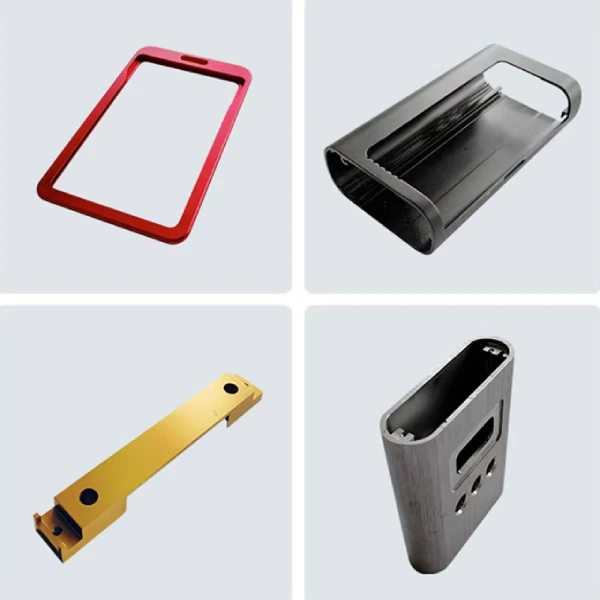
Cost Reconstruction – The True Cost Model of Low-Cost Stainless Steel Sheets
We recognise that price is a critical consideration in procurement decisions. However, based on industry data and professional experience, the initial purchase cost of low-cost stainless steel sheets is highly misleading, with the underlying true costs often far exceeding expectations. A professional cost assessment must employ a full life-cycle cost model for analysis.
Initial Procurement Costs of Low-Cost Stainless Steel Sheets
Cost reductions for low-cost stainless steel sheets are typically achieved by diminishing key alloying elements. For instance, chromium content may be as low as 16-17% rather than the minimum 18% required by ASTM A240 standards, while nickel content may also be deliberately reduced. Such reductions in chemical composition directly compromise the integrity and self-repairing capacity of the stainless steel sheet’s passivation film.
Furthermore, stainless steel sheet metal suppliers may sell based on theoretical weight calculations rather than actual weight. Sheets nominally specified as 0.1983 inches thick may actually fluctuate between 0.1713 and 0.1872 inches. Such thickness variations can substantially increase the effective cost per pound.
From a value chain perspective, these initial discounts are often achieved at the expense of consistency and traceability in stainless steel sheets, creating latent risks for subsequent processing.
The full lifecycle cost of low-cost stainless steel sheets
When a low-cost stainless steel sheet enters the production process, its true cost begins to accumulate.
Stainless Steel Sheet Cost Categories | Impact |
Processing and Manufacturing Costs | Low-cost stainless steel sheets with uneven thickness and poor flatness increase commissioning time, leading to stamping cracks and welding fissures, thereby reducing yield rates and damaging tooling. |
Quality and After-Sales Costs | Premature corrosion or failure of stainless steel sheet has resulted in customer complaints, product recalls, warranty claims, and on-site repair costs. |
Downtime and Delay Costs | High scrap rates during stainless steel sheet processing, equipment downtime due to material failure, and project schedule delays. |
Safety and Liability Costs | The use of non-compliant stainless steel sheets introduces significant safety and liability risks. |
Brand and Reputation Costs | Premature rusting, defects, or performance failures in products can severely damage brand reputation and customer trust. |
Processing and Manufacturing Costs
Low-cost stainless steel sheets incur significant additional costs during processing. Thickness variations and poor flatness disrupt automated production lines, leading to stamping cracks, tooling damage, and extremely high scrap rates. More critically, excessive impurity elements such as sulphur and phosphorus cause hot cracks in the heat-affected zone during stainless steel sheet welding.
During forming operations, cracking and abnormal springback caused by insufficient elongation and uneven hardness in low-cost stainless steel sheets substantially increase setup times and secondary processing requirements. These hidden costs often only become apparent once volume production commences.
Quality and After-Sales Costs
Substandard stainless steel sheets exhibit inadequate corrosion resistance, leading to premature failure—particularly pronounced in chloride-containing environments. Taking wastewater treatment plants as an example, non-compliant austenitic stainless steel sheets may suffer localised corrosion failure when chloride ion concentrations exceed 200ppm (EN 1.4307) or 1000ppm (EN 1.4404).
Such premature failures trigger customer complaints, warranty claims, and on-site replacement requirements, directly escalating after-sales costs.
Downtime Delay Costs and Safety Liability Costs
Production interruptions represent one of the most costly hidden expenses associated with low-cost stainless steel sheets. Equipment stoppages and mould replacements necessitated by material inconsistencies result in substantial production losses.
The use of non-compliant stainless steel sheets introduces significant safety and liability risks. In extreme cases, sudden fractures caused by substandard mechanical properties may trigger safety incidents, leading to personal injury and substantial compensation liabilities.
Brand Reputation and Goodwill Costs
When end products perform poorly due to stainless steel sheet failure, the damage to brand reputation is profound and enduring. Opting for low-cost stainless steel sheets compromises brand image through premature corrosion and performance issues. In the social media era, negative user experiences spread rapidly, impacting future sales and market share.
online custom metal fabrication parts
Only 4 steps
Contact our experts team and experience the efficiency and economic benefits of digital metal fabrication services.
Upload Design Files
STL , STEP (.stp), IGES (.igs), (.ZIP), or PDF.
Also be a sample or an idea
Quote & Design Analysis
Instant factory quotes and DfM reports, the most reasonable solution.
Manufacturing Begins
Digital processes can initiate order tasks within 24 hours.
On-Time Delivery
Keeping delivery promises, approved by 3000+ Global Company buyers.
Professional Procurement Guide for Stainless Steel Sheets
Formulating a scientific procurement strategy for stainless steel sheets is pivotal to ensuring project success and controlling overall costs. This entails more than mere price comparison; it requires establishing a comprehensive evaluation system grounded in technical specifications, supplier qualifications, and risk management.
Source Control for Stainless Steel Sheets
Procurement must strictly adhere to internationally recognised standards (e.g., ASTM A240, ASME SB series), which explicitly define chemical composition, mechanical properties, and dimensional tolerances for stainless steel sheets. For specialised applications such as pressure vessels, compliance with more stringent industry-specific standards is mandatory.
A common misconception is focusing solely on stainless steel sheet pricing and base grades while overlooking critical details like thickness tolerances and delivery conditions (e.g., whether solution-annealed or pickled). Clarifying these technical requirements during the consultation phase constitutes the first line of defence against subsequent application risks.
Documentation Review for Stainless Steel Sheets: Material Certificates
A compliant material certificate for stainless steel sheets must clearly specify the coil’s furnace number, chemical composition, and mechanical property data. We must cross-reference the certificate’s information—particularly the content of key alloying elements like chromium, nickel, and molybdenum—against the order’s specified standards. Any discrepancies should be regarded as potential risk points.
On-site Simplified Identification
While material certificate review is paramount, rapid on-site inspection methods provide immediate assessment, particularly during initial goods arrival acceptance.
Using stainless steel test solution (nickel qualitative test) constitutes a low-cost approach. Applying a drop to a ground stainless steel sheet surface and observing the colour reaction allows rapid differentiation between common grades such as 304 (typically deep red), 201 (possibly pale red or colourless), and 430 (no change).
A standard magnet can assist in distinguishing austenitic stainless steel (usually non-magnetic or weakly magnetic) from ferritic/martensitic stainless steel (strongly magnetic). Note that cold working may induce slight magnetism in austenitic stainless steel sheets.
Inspect the stainless steel sheet surface for defects such as cracks, inclusions, or folds. Simultaneously, conduct thickness spot checks using tools like calipers to ensure compliance with tolerance requirements, thereby preventing subsequent processing issues caused by uneven thickness.
Get An Instant Quote Now!
Supro is a specialist stainless steel processing manufacturer. Leveraging advanced equipment, extensive manufacturing expertise and a professional engineering team, we provide flawless stainless steel sheet processing services to over 3,000 companies worldwide, alongside genuine manufacturer quotations.
At Supro, our dedicated quality control team, seasoned QC personnel, and scientific quality assurance processes ensure products undergo rigorous inspection to meet specified technical standards. We maintain full traceability of defective items, encompassing: raw material inspection, mould verification, equipment checks, process sampling, packaging review, and final product assessment.
Our QA (Quality Assurance) procedures guarantee products comply with essential tolerances and quality benchmarks. We guarantee timely delivery for all product types. From design and rapid prototype fabrication to mass production, we provide expert technical support and exceptional quality alongside highly cost-competitive supply.
Contact us immediately to commence an efficient collaboration!