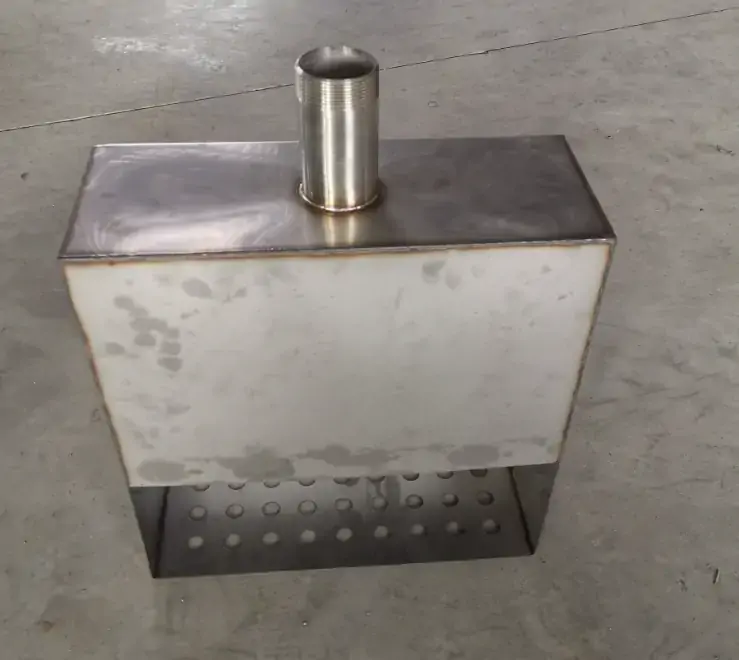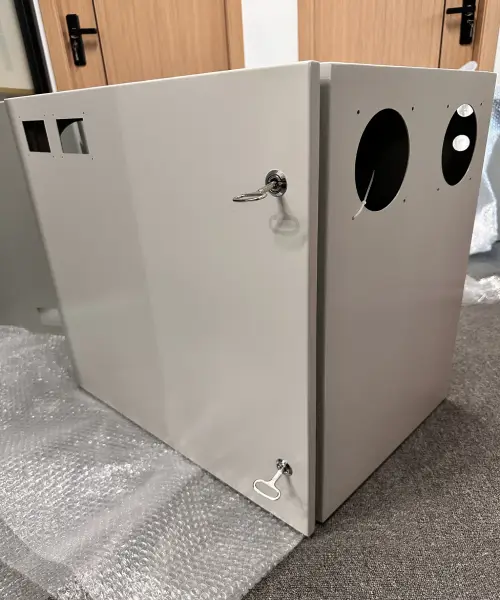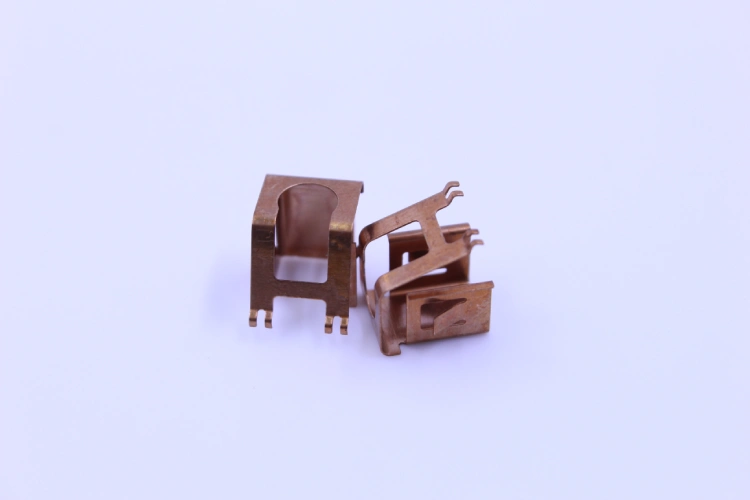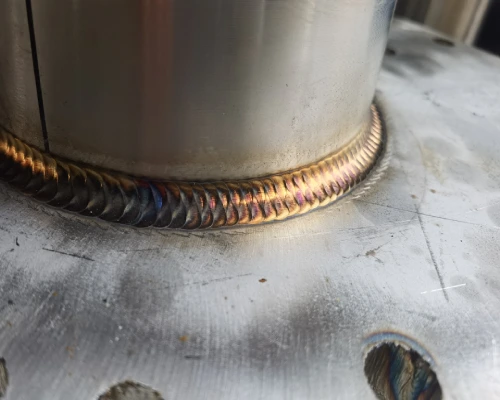

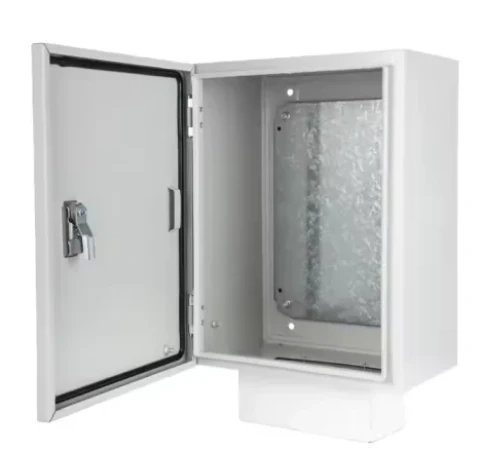
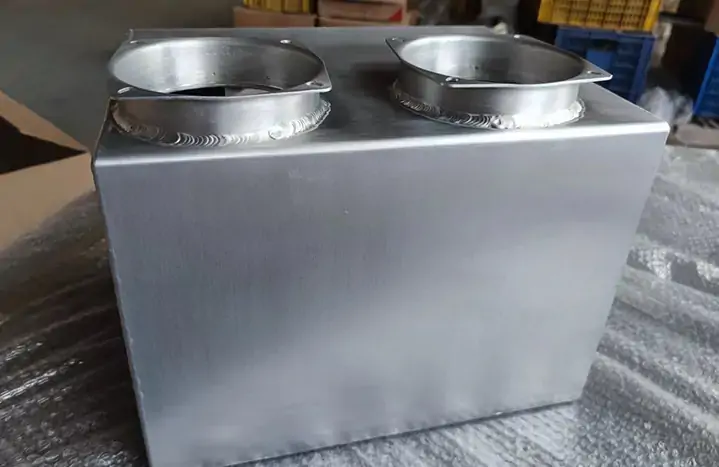


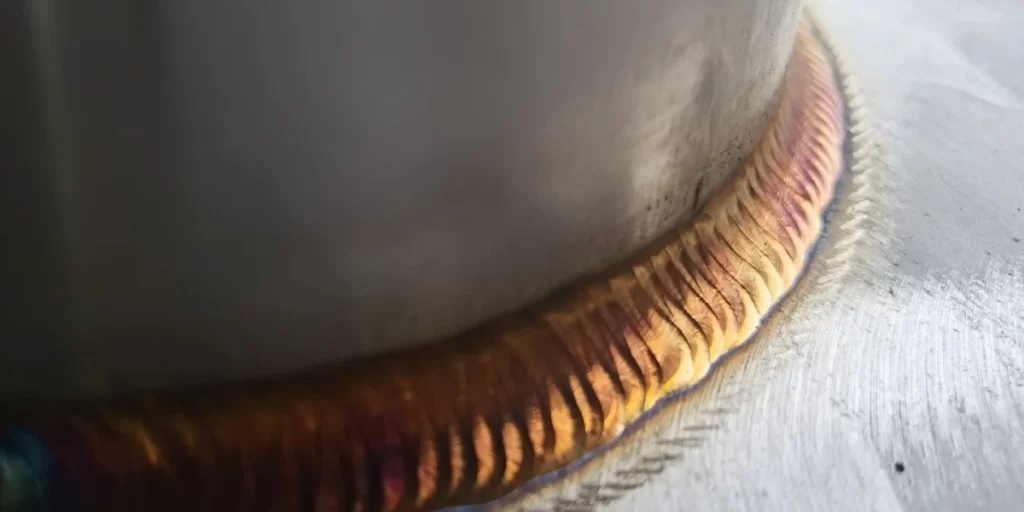
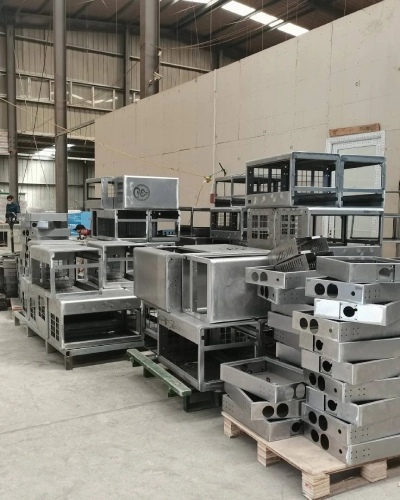
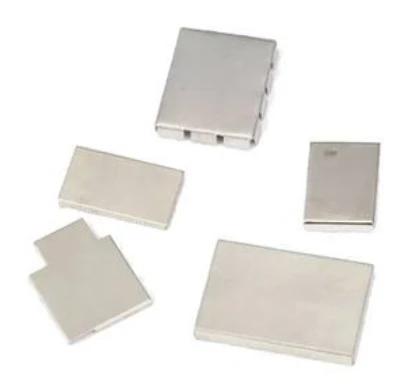
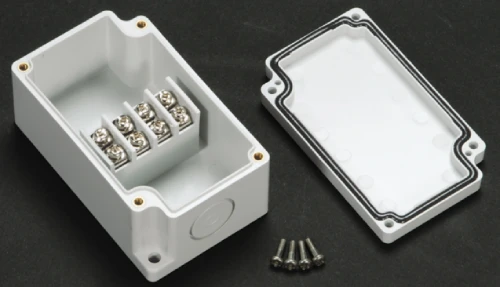


In today’s manufacturing landscape driven by lightweighting and cost efficiency, aluminum stamping has evolved from an optional process to a strategic core. For professional procurement personnel, understanding the precision of the aluminum stamping process directly impacts project success. The unique challenges of the aluminum stamping process lie in the behavior of aluminum alloys—particularly Series 5 and Series 6—which exhibit excellent ductility but unpredictable springback rates and extreme sensitivity to scratches. This demands that suppliers not only handle aluminum stamping blanks but also possess deep expertise in materials science and die metallurgy.
As a specialized aluminum stamping manufacturer, Supro understands that success hinges on precisely matching material properties with die design, stamping tonnage, and equipment rigidity. By optimizing die clearance and lubrication strategies within the aluminum stamping process, we consistently maintain dimensional tolerances within ±0.05mm while preventing micro-cracks. This forms the foundation of our reliable aluminum stamping services for global clients, ensuring every aluminum stamping part achieves significant weight reduction while meeting the most stringent structural strength requirements in automotive, electronics, and other industries.
Below, we detail the five core technical steps that ensure stability in the aluminum stamping process.
Why Aluminum Stamping Matters in Manufacturing
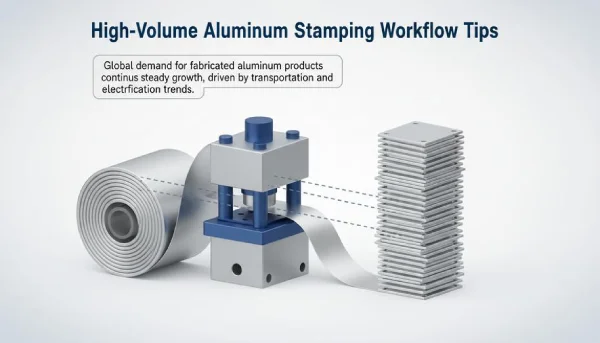
Aluminum stamping sits at the core of modern factory life. From car frames to phone shells, this mix of aluminum, stamping, and smart press design keeps production moving fast without losing accuracy. In today’s manufacturing processes, aluminum stamp parts show up everywhere, shaped by tight tolerances and clever tooling. When people talk about metal stamping or aluminum forming, they’re really talking about how smart production turns flat sheet into real-world components.
Understanding the Role of Aluminum Stamping in Modern Manufacturing
The Cornerstone of Aluminum Stamping Process
Production Method:Progressive dies progressively cut and form aluminum sheets through sequential operations.Deep drawing reshapes the alloy into cup bodies and shells.Precision aluminum stamping presses achieve stable production with high repeat cycles.
Material Properties:Aluminum alloys offer an exceptional strength-to-weight ratio.Inherent corrosion resistance ensures long-term durability of aluminum stamping parts.Superior ductility enables complex curved forming without cracking.
Impact of the Aluminum Stamping Process on Component Design
Design for Stamping:Engineers adapt to material properties by adjusting curvature radii and tolerances.Die paths must account for practical stamping constraints, not merely satisfy CAD design ideals.
Industry Applications:Automotive brackets、Aerospace panels、Consumer electronics frames
Through the precise synergy of component design and the aluminum stamping process, modern industrial applications continue to expand without disruption.
Key Benefits of Aluminum Stamping for High-Volume Production
In high-volume production, aluminum stamping just makes sense.
Consistent part consistency across thousands of cycles.
Reliable manufacturing speed on automated lines.
Built-in weight reduction for transport and end use.
Lower mass means easier handling and lower shipping costs.
Strong durability from advanced aluminum alloys.
Stable dimensions, even during rapid aluminum forming.
Aluminum stamp processes also support clean surface finishes, which cuts secondary work. And when metal stamping lines run 24/7, that steady rhythm keeps high-volume production predictable, not stressful.
How Aluminum Stamping Drives Efficiency and Cost Savings
Process Efficiency at the Press Level:
Upfront tooling costs focus on long die life.
Smart layouts improve blank nesting and cut scrap rates.
Mechanical presses balance stroke speed and energy consumption.
Automation reduces idle cycles.
Cost Reduction Across Operations:
Lower scrap rates through optimized coil widths.
Better yield from each aluminum sheet.
Integrated automation links stamping to welding and assembly.
Continuous review supports real cost reduction goals.
When aluminum stamping is tuned right, process efficiency shows up in every shipment. Less waste. Faster throughput. Steady margins. That’s how aluminum stamping quietly keeps large-scale manufacturing profitable.
online custom metal fabrication parts
Only 4 steps
Contact our experts team and experience the efficiency and economic benefits of digital metal fabrication services.
Upload Design Files
STL , STEP (.stp), IGES (.igs), (.ZIP), or PDF.
Also be a sample or an idea
Quote & Design Analysis
Instant factory quotes and DfM reports, the most reasonable solution.
Manufacturing Begins
Digital processes can initiate order tasks within 24 hours.
On-Time Delivery
Keeping delivery promises, approved by 3000+ Global Company buyers.
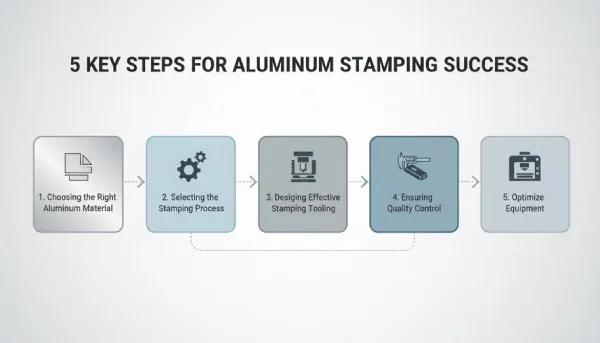
5 Key Steps for Aluminum Stamping Success
Aluminum stamping isn’t just about pressing metal; it’s about balancing aluminum grade, tooling design, and press control so every stamped aluminum part hits spec. From aluminum forming to metal stamping at scale, small decisions shape big outcomes. Here’s how smart manufacturers keep aluminum stamping tight, efficient, and profitable.
Step 1: Choosing the Right Aluminum Material for Stamping
When planning the aluminum stamping process, material selection determines all subsequent steps.Aluminum alloys must match part functions, e.g.: structural components → higher yield strength; enclosures → better ductility.
Age hardening affects bending properties:
T4 condition suits forming applications
T6 condition meets strength requirements
Sheet gauge controls press load and tool wear.
Key evaluation criteria for aluminum stamping processes include:
Mechanical properties: deep draw formability, crack resistance
Environmental requirements: required corrosion resistance
Application suitability: medical, automotive, or architectural use?
At supro mfg, material selection for aluminum stamping projects always aligns alloy chemistry with real production loads, not just catalog numbers.
Step 2: Selecting the Optimal Stamping Process: Deep Drawing vs. Progressive Stamping
Process defines cost and speed in aluminum metal stamping.
Deep drawing processes are suitable for:Highly complex parts、Hollow geometries、Controlled forming operations
Continuous stamping processes are suitable for:High-volume production、Coil material automation、Strict control of material utilization
The specific selection of an aluminum stamping process requires comprehensive consideration of:Economic factors, including initial tooling costs and scrap rates;Geometric requirements of aluminum stamping parts, such as draw depth versus flat progression;Compatibility with production volume targets and line speed.
supro mfg often blends progressive aluminum stamping with secondary forming to keep output high and waste low.
Step 3: Designing Effective Stamping Tooling: Die Sets and Punches
In the aluminum stamping process, the design of the die assembly and punch is fundamental to achieving precision in aluminum stamped parts. Addressing aluminum’s viscous and wear-prone characteristics, our dies for aluminum metal stamping utilize quenched tool steel coated with wear-resistant layers (such as TiCN), elevating surface hardness to over 70 HRC to prevent aluminum chip adhesion at its source. Crucially, precision-matched guide components ensure micron-level clearance between guide pillars and guides. This maintains a closing deviation of less than 0.01mm between upper and lower dies under 20-ton stamping loads.
This rigid guidance system not only guarantees geometric repeatability of aluminum stamping blanks but also extends mold life by over 50% by reducing lateral forces, ensuring sustained stability during high-volume production. As a professional aluminum stamping manufacturer, this represents the core technology behind Supro’s delivery of zero-defect stamped parts.
Step 4: Ensuring Quality Control with Dimensional Accuracy and Surface Finish
In the aluminum stamping process, quality is directly reflected in micron-level dimensional accuracy and flawless surface finish. We utilize coordinate measuring machines (CMMs) for full-dimension verification of aluminum stamping parts’ geometric features, while simultaneously employing process SPC sampling to monitor minute defects like cracks and wrinkles in real time. From the first article to mass production, we strictly adhere to ISO 9001 and IATF 16949 standards. By monitoring the repeatability accuracy of our presses, we ensure the stability of the aluminum stamping process. As your reliable aluminum stamping manufacturer, this end-to-end quality control is the cornerstone that guarantees every batch of stamped parts meets or exceeds the industry’s stringent standards.
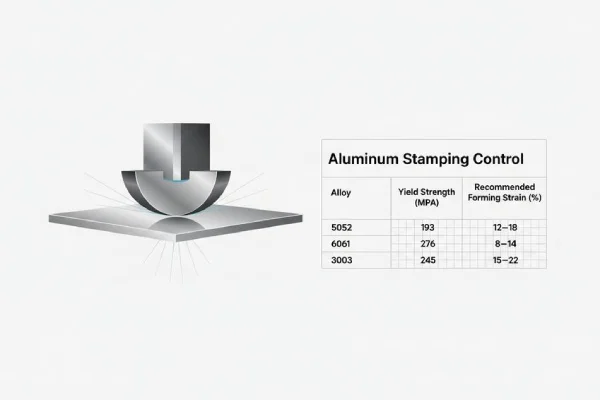
Step 5: Optimizing Equipment for Maximum Press Tonnage and Efficiency
In aluminum metal stamping, precise calibration of equipment parameters directly determines shift output and the consistency of aluminum stamping parts. Through our servo motion control system, we achieve perfect synchronization between controlled strokes per minute and material feed, ensuring dynamic load deviation in the aluminum stamping process remains below 5%.
Tailored to the characteristics of aluminum stamping blanks, we optimized the die lubrication strategy, reducing friction heat by 30% during high-speed production to prevent aluminum chip adhesion. Combined with fully automated coil feeding and an online inspection system, we minimize cycle times. As your aluminum stamping manufacturer, the deep integration of tonnage, speed, and auxiliary systems is the core capability that enables us to deliver cost-effective aluminum stamping services and ensure stable delivery for high-volume orders.
Why choose Supro MGF?
Provide the most cost-effective cost solution for manufacturing and assembling products, expanding product competitiveness.
a technical team specializing in custom shell manufacturing for more than 30 years.
Advanced Manufacturing Equipment: Industry-leading custom metal enclosure manufacturer with in-house sheet metal, die casting, precision machining workshops, and surface coating workshops.
ISO 9001-2015, PPAP III level, RoHS, NEMA, CE and other certified production standards.
24H*7 online English technical support: The professional English team responds quickly to users’ technical questions online at any time.
help users from product design, prototype, batch manufacturing, surface treatment, assembly and packaging, transportation and a series of value-added services.
With in-house mechanics and chemistry laboratories, it can quickly monitor manufacturing process quality control to ensure the delivery of high-quality products.
Accept to sign NDA documents to ensure that customers’ product information is protected.
Door-to-door delivery in customizable secure packaging after complying with the delivery details agreed with the customer.

FAQs about Aluminum Stamping
What makes aluminum stamping suitable for high-volume manufacturing?
Aluminum stamping thrives in high-volume manufacturing because it balances speed, weight, and consistency.
Lightweight aluminum alloy reduces load on each mechanical press or servo press cycle.
Progressive stamping on coil stock keeps the automated stamping line moving without pause.
Precise die set alignment maintains dimensional accuracy across thousands of parts.
In mass production of automotive parts or household appliances, this rhythm means lower scrap, stable tolerance, and dependable output that keeps the assembly line breathing.
How does alloy selection affect aluminum stamping results?
Choosing the right aluminum alloy shapes the entire manufacturing process.
Softer grades support deep drawing for consumer electronics housings.
Stronger alloys handle forming and piercing for aerospace components.
Balanced material properties reduce cracking during blanking or coinage.
A mismatch can trigger tearing, springback, or surface defects. The right match brings smoother flow through the punch and die, cleaner edges, and fewer pauses for adjustment.
Why is automated equipment critical in modern aluminum stamping?
Behind every smooth stamping machine cycle stands tight coordination:
Coil feeder keeps steel sheet or aluminum strip aligned.
Servo press controls press tonnage with precision.
Integrated inspection systems flag defect detection issues in real time.
In large-scale production, small timing errors can ripple through the supply chain. Automation protects production capacity while cutting manual handling and fatigue-driven mistakes.
How is quality control maintained during aluminum stamping?
Quality control is not a single checkpoint; it is layered protection inside the press stroke.
Dimensional accuracy is tracked through in-line inspection.
Stress analysis anticipates deformation during transfer stamping or deep drawing.
Surface finish checks catch burrs from worn tool steel or misaligned fixtures.
For medical devices or industrial machinery, even slight tolerance drift can halt shipments. Continuous monitoring keeps each stamped part within spec before it reaches assembly.
How does tooling design influence efficiency and defect prevention?
Tooling design determines how calmly or violently metal flows through the mold. A well-built die set made from hardened tool steel supports multiple actions—blanking, forming, piercing—within one progressive stamping cycle.
Tooling Element | Impact on Production | Risk if Poorly Designed |
Punch and die alignment | Stable tolerance and clean edges | Burrs, uneven wear |
Fixture stability | Consistent positioning | Dimensional shift |
Press brake tooling setup | Accurate bends | Wrinkling or cracking |
Get instant ex-factory price quotation.
If you only have an idea or an old sample,Let us know.
with photo or video and get our quotation and manufacturing solutions.
- Product design drawings or 3D model files.
- Material standards and appearance requirements.
- Product quantity demand.
- Industry standards in the application field.
- Functional requirements
Contact Us
Mastering the essence of the aluminum stamping process fundamentally involves the deep integration of materials science, precision mold design, and equipment dynamics. From selecting the alloy state of aluminum stamping blanks to achieving micron-level mold guidance and tonnage optimization, each step aims to maximize the strength and weight reduction potential of aluminum stamped parts. As your aluminum stamping manufacturer, Supro MFG ensures high repeatability and cost-effectiveness in the aluminum metal stamping process by integrating these five key steps. We deliver not just aluminum stamping services, but proven technical solutions that guarantee seamless transition from prototyping to mass production for your projects.