



After mastering the material properties of acrylic (PMMA), transforming designs into commercially viable finished products enters a new phase of engineering decision-making. Achieving high-quality acrylic CNC machining extends far beyond programming CNC machines; it requires a precise balance of material science, mechanical dynamics, and cost control.
Many projects encounter precision acrylic CNC machining challenges—such as stress cracking, subpar optical clarity, or secondary processing costs far exceeding budgets—often stemming from underestimating several critical engineering variables early on. Achieving high-quality acrylic CNC machining fundamentally involves systematically managing the complex interplay between material properties, process parameters, and design intent. This demands deep understanding—from selecting acrylic CNC machining technology (like specialized tool geometries and cooling strategies for PMMA) to implementing end-to-end quality control logic.
This article dissects five critical factors influencing the final quality and total cost of acrylic CNC machined parts. Mastering these essentials is fundamental for conducting efficient technical dialogues with acrylic CNC machining manufacturers and ensuring projects deliver expected optical performance and mechanical integrity within budget.
Introduction to Acrylic CNC Machining
Transforming a flawless acrylic CAD design file into a finished product with exhibition-grade optical quality and precision dimensions hinges on a deep understanding and mastery of acrylic CNC machining technology. Precision acrylic CNC machining is far from simple “plastic cutting”; it is a demanding subtractive manufacturing process whose core challenge lies in balancing the material’s inherent physical properties with the dynamic mechanical demands of machining.
Unlike metalworking, acrylic CNC machining technology must prioritize managing two fundamental contradictions:
First, the conflict between the material’s low thermal conductivity and the heat generated by high-speed cutting, which directly affects whether surface melting and degradation occur.
Second, the contradiction between its exceptional brittleness and the demand for clean, chip-free edges.
As a seasoned acrylic CNC machining manufacturer, Supro’s process library encompasses tailored tool geometries, optimized cutting parameter packages, material-thickness-based clamping strategies, and a comprehensive suite of online monitoring and post-processing verification solutions.
Acrylic CNC Machining Compared to Other Materials
Understanding acrylic CNC machining’s unique characteristics relative to materials like wood or polycarbonate is crucial. This insight enables more informed decisions when designing or prototyping with CNC machines—such as selecting the appropriate acrylic CNC machining technology, tooling strategies, and post-processing workflows. Supro, as a professional acrylic CNC machining manufacturer, can clearly analyze these comparisons, helping you make data-driven decisions to ensure the final acrylic CNC machining parts achieve an optimal balance in performance, appearance, and cost.
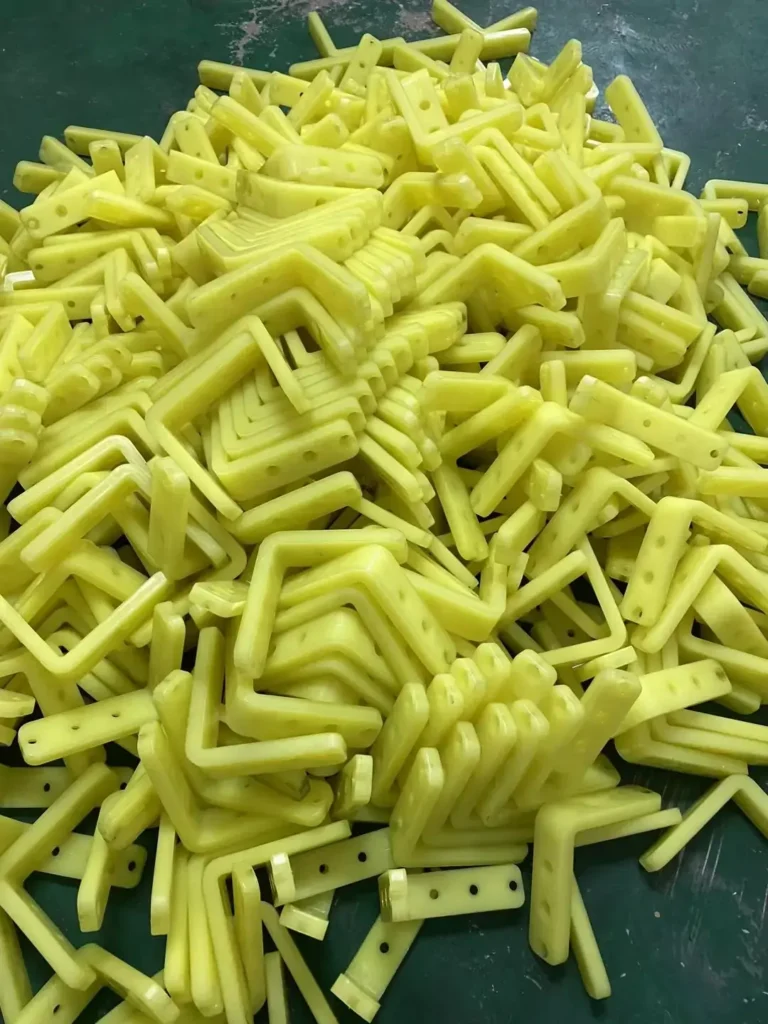

CNC Machining Acrylic vs. Wood: A Material Showdown
When it comes to acrylic CNC machining, people often ask how it compares to working with wood. Let’s break this down across several angles:
In terms of precision and surface finish, custom acrylic CNC machining delivers cleaner, sharper results with stricter tolerance control, far surpassing wood—especially in gantry CNC machining requiring repeatable accuracy.
In moisture resistance, wood expands and contracts with humidity, while acrylic CNC machining parts remain unaffected, maintaining consistent dimensional stability.
Regarding tool wear and cleanup, wood chips scatter everywhere, clogging vacuums and accelerating tool dullness.
Custom acrylic CNC machining produces debris that is easily cleared and does not adhere like sawdust.
Acrylic has a relatively high thermal expansion coefficient. If workshop temperatures fluctuate significantly, this characteristic must be considered during fixture design. Additionally, caution is required when clamping acrylic, as excessive pressure may cause cracking due to its inherent brittleness, whereas wood can withstand greater external forces.
And here’s something cool from a recent Fabrication Trends Report (2024): “Over 65% of small-batch manufacturers now prefer acrylic over hardwoods for display-grade parts due to better edge clarity and lower post-processing time.”
In summary, if you’re seeking sharp edges, smooth surfaces, and dimensional stability, precision acrylic CNC machining is the optimal choice.
CNC Machining Acrylic vs. Polycarbonate
Choosing between acrylic and polycarbonate for your next job? Here’s how they stack up for CNC machining:
In terms of transparency and polishability, acrylic CNC machined parts offer
unmatched optical clarity and can achieve exquisite polished finishes. Polycarbonate is equally transparent but tends to develop a haze over time with prolonged use.
For impact resistance, polycarbonate is nearly indestructible under pressure, while acrylic falls short; it cracks before bending.
Regarding machinability, both are easy to process but require different approaches. Precision acrylic CNC machining demands sharper tools to prevent chipping; reducing feed rates prevents melting in both materials.
Thermal stability characteristics are as follows:
Property | Acrylic | Polycarbonate |
Max Temp (°C) | ~80 | ~115 |
Melting Point (°C) | ~160 | ~155 |
Thermal Expansion | Moderate | Low |
For applications prioritizing aesthetics, opt for acrylic CNC machined parts—ideal for signage, display stands, or art installations. When strength is paramount, choose polycarbonate for riot shields or industrial enclosures. Ultimately, the choice hinges on your priorities. Need strength? Go with polycarbonate. Seeking transparency or gloss? Stick with acrylic—its exceptional surface finishing potential during custom acrylic CNC machining also delivers a smoother milling experience.
online Precision Acrylic CNC machining parts
Only 4 steps
Contact our experts team and experience the efficiency and economic benefits of digital metal fabrication services.
Upload Design Files
STL , STEP (.stp), IGES (.igs), (.ZIP), or PDF.
Also be a sample or an idea
Quote & Design Analysis
Instant factory quotes and DfM reports, the most reasonable solution.
Manufacturing Begins
Digital processes can initiate order tasks within 24 hours.
On-Time Delivery
Keeping delivery promises, approved by 3000+ Global Company buyers.
5 Key Considerations for Acrylic CNC Machining Success
Achieving high-quality acrylic CNC machining hinges on the coordinated control of five interrelated engineering variables. These factors—from material specifications and design parameters to validation processes—form a precision system directly impacting the mechanical integrity, optical performance, and final cost of acrylic CNC machined parts.
A deep understanding of these key points is the foundational basis for acrylic CNC machining manufacturers and buyers to ensure projects meet expected quality and budget from design through mass production.
Impact of Material Thickness on Acrylic CNC Machining Technology
Thicker acrylic sheets present greater rigidity and pose increased challenges throughout CNC machining:
Tool selection requires longer stroke and larger diameter cutters for thicker materials, yet this heightens tool deflection risks.
Feed rates and depth of cut necessitate reduced speeds and shallow passes to prevent chatter marks or cracking.
Regarding heat management, increased thickness means greater friction; inadequate chip removal may cause melting or even re-welding of PMMA chips onto the workpiece.
Large milling machines excel at handling thick sheets but require precise calibration to ensure dimensional accuracy in custom acrylic CNC machining.
The key to machining thick acrylic lies in balancing speed, heat, and cutting quality.
Tolerance Requirements: Meeting Precision Standards
In high-specification applications like aerospace or electronics, dimensional accuracy is paramount:
High-performance components often demand tolerances of ±0.05 mm or tighter, achievable only through stable fixtures and high-end precision milling equipment.
Post-processing inspection using a Coordinate Measuring Machine (CMM) ensures strict tolerance compliance between batches.
Vibration control is equally critical; even minute displacements can cause critical dimensional deviations in acrylic CNC machining parts.
Optimizing custom acrylic CNC machining parameters before quality assurance initiates prevents unexpected issues later.
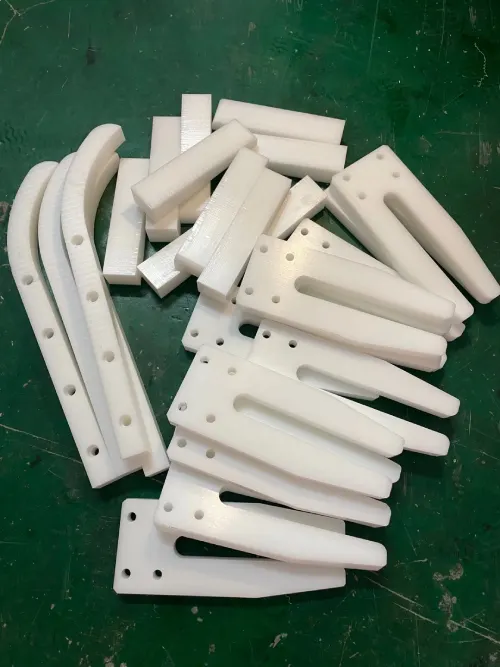
Surface Finish Needs: The Importance of Edge Finishing and Polishing
In high-specification applications like aerospace or electronics, dimensional accuracy is paramount:
High-performance components often demand tolerances of ±0.05 mm or tighter, achievable only through stable fixtures and high-end precision milling equipment.
Post-processing inspection using a Coordinate Measuring Machine (CMM) ensures strict tolerance compliance between batches.
Vibration control is equally critical; even minute displacements can cause critical dimensional deviations in acrylic CNC machining parts.
Optimizing custom acrylic CNC machining parameters before quality assurance initiates prevents unexpected issues later.
Design Specifications: Key Considerations for Acrylic CNC Machining
In precision acrylic CNC machining, an excellent design is the foundation for success. Clear specifications make a significant difference:
Set minimum inner radius based on the smallest tool diameter;
Avoid sharp-angle designs—they can cause stress cracks;
Define hole diameter tolerances, especially for press fits;
Account for PMMA’s thermal expansion properties.
Minor adjustments in CAD can save substantial machining time and prevent costly rework after production begins.
Dimensional Verification: Ensuring Precision and Quality of Acrylic CNC Machining Parts
Verifying dimensions alone is insufficient—surface finish is equally critical. Core verification methods include: Optical measurement tools enable non-contact precision inspection, particularly suited for acrylic CNC machining parts;
Surface analysis detects microscopic scratches invisible to the naked eye but critical under specific lighting;
Batch testing ensures long-term consistency beyond individual pieces;
For visual components, appearance inspection is nearly as critical as technical testing.
No design files? Let Supro MFG do it for you.
We often come across clients who have no professional design drawings and documentation, only a creative idea, which leads to the project being at a standstill.
If you are in this situation, then contact our team of experts.
Supro MFG, as an industry-leading custom metal fabricator, has an ever-experienced team of engineers who utilize their extensive fabrication experience and technical expertise to build your idea into a real product and create design files such as STEP/STP/SLDPRT/DXF/PDF/PRT/DWG/AI.
That’s what makes SUPRO MFG so great, and 2,000 corporate, entrepreneurial, artist, and other purchasers from around the world enjoy working with us and benefiting from our one-stop manufacturing services.
Cost-Effectiveness of Acrylic CNC Machining
When evaluating acrylic CNC machining projects, cost-benefit analysis must extend beyond the per-part processing cost. It concerns total cost of ownership, encompassing material utilization, cycle time efficiency, tool life, and the avoidance of rework and waste through consistent quality.
Comparing Production Costs: Acrylic vs. Other Materials
When you break down the cost of acrylic cnc machining, acrylic often punches above its weight class compared to metals or even some engineering plastics.
Material Type | Avg. Tool Wear Rate (%) | Avg. Cycle Time (min) | Cost per Unit ($) |
Cast Acrylic | 5 | 4 | 2.10 |
Extruded Acrylic | 3 | 3 | 1.75 |
Aluminum | 20 | 7 | 4.80 |
Polycarbonate | 8 | 6 | 3.60 |
Precision acrylic CNC machining reduces tool wear, decreases the frequency of end mill and milling cutter replacements, and delivers long-term cost savings.
Shorter processing cycles minimize equipment runtime, directly translating to lower labor and indirect costs.
Compared to cast acrylic, extruded acrylic offers faster machining speeds but slightly inferior optical properties. Select based on end-use requirements.
For medium-volume production, precision acrylic CNC machining excels by balancing low costs with high-speed processing capabilities.
Long-Term Savings: The Impact of Quality Control on Projects
Cutting corners early usually costs more later, especially with precision parts made via acrylic CNC machining.
Employing digital calipers or coordinate measuring machines (CMMs) for stricter initial inspections helps confirm critical tolerances of acrylic CNC machining parts, reducing rework risks at the source.
Investing more resources upfront in precise fixture setup prevents scrap due to misalignment—critical when handling thin-walled parts or complex geometries.
Validating tolerances before mass production avoids dual collapses in schedule and budget caused by downstream errors. This isn’t merely error detection; it’s embedding reliability into every acrylic CNC machining part from the very first piece.
High-Speed CNC Machines: Optimizing Costs for Large Runs
Need to scale production? High-speed machines are the key choice for custom acrylic CNC machining processes.
Through optimized settings—such as increased feed rates, higher spindle speeds, and refined toolpaths—these machines rapidly produce acrylic CNC machining parts while maintaining precision.
Even at high speeds, consistent machining of thousands of acrylic CNC machining parts is achieved by reducing vibration and enhancing thermal stability.
Strategic use of mist or air cooling systems prevents heat buildup while maintaining edge finish quality, eliminating the need for secondary operations.
Paired with durable carbide tools specifically designed for plastics, tool life is extended even during high-speed machining.
custom CNC Machining services
Professional Contract Manutacturing Services

CNC Milling services
We use advanced 3-axis, 4-axis, and 5-axis CNC machining equipment to create complex surface and multi-curved parts processing. Materials including metal & plastic can be easily processed at one time.
With the advancement of CNC machining technology, we have multi-axis CNC machining equipment to maintain the accuracy and quality stability of the parts, including: threaded holes, sealing grooves, multi-curved structures and complex molds.

CNC Turning services
CNC Turning services can help us quickly create threads, arcs and other shapes, usually using round bar metal & plastic to process internal and external complex structures, presenting circular symmetrical parts.
Generally, CNC turned parts are considered to be one of the most economical manufacturing processes, and are widely used in automobile manufacturing, medical supplies, aerospace and military industry, new energy equipment, electronic components and other fields.
For example: shafts, brackets, handles, hydraulic rods, and various custom metal & plastic parts with threaded features.
FAQs about Acrylic CNC Machining
Why do acrylic CNC machining parts excel in retail display applications?
In precision milling centers, acrylic combines lightweight properties with toughness, enabling edges to withstand finishing pressures without cracking. Even after surface polishing, it maintains vivid transparency, perfectly meeting the stringent brightness requirements for display cases or brand signage components.
What tolerances can be reached when cutting acrylic PMMA on advanced equipment?
5-Axis CNC Mills paired with CMM Inspection dance between microns—holding tight Tolerance Requirements by adjusting feed rates to match changes in Material Thickness. Optical Measurement then confirms pieces align perfectly across mass orders destined for Aerospace Sector panels or delicate Medical Devices.
How does geometric complexity affect costs with plexiglass sheet machining?
Complex Contouring calls for nimble 5-Axis moves; each curve demands focus to avoid chatter marks.
Keeping Drafting Specifications smartly simple:
Retains accuracy without excessive machine time.
Allows Large Format Routers to handle bigger parts more economically while still meeting Surface Finish Needs.
Contact Supro MFG
Supro is a professional acrylic CNC machining manufacturer. Leveraging advanced equipment, extensive manufacturing experience, and a specialized engineering team, we provide flawless acrylic CNC machining services to over 3,000 companies worldwide, offering genuine manufacturer pricing.
As an industry-leading acrylic CNC machining manufacturer, we efficiently deliver diverse products on schedule. From product design and rapid sheet metal prototype fabrication to mass production, we provide expert technical support and exceptional quality. We offer one-stop manufacturing solutions and highly cost-competitive product supply!