



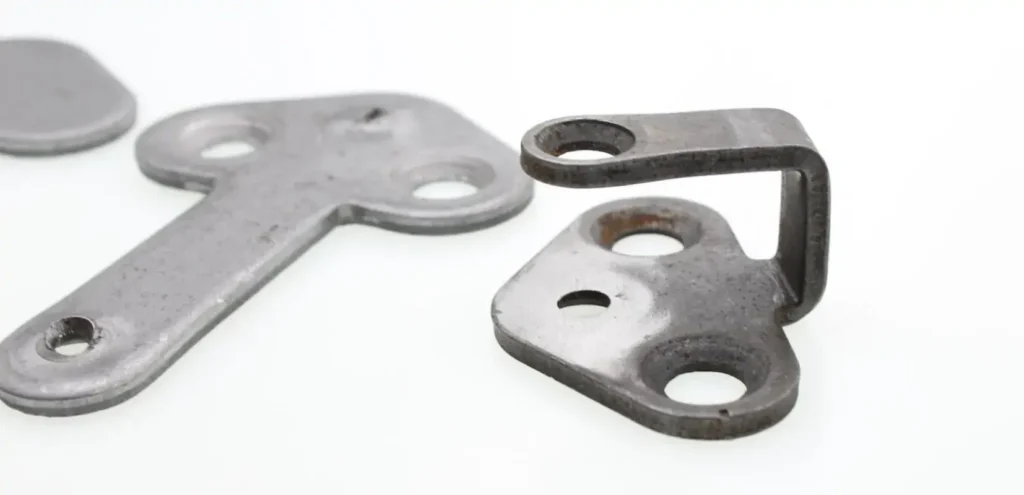
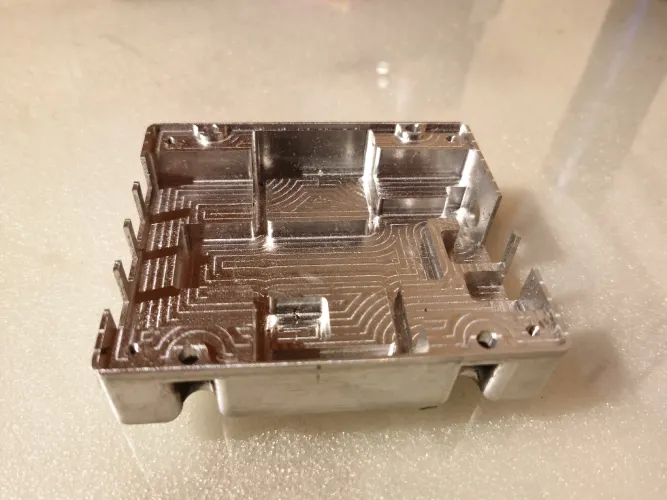
aluminum Extruded enclosure are highly favored for their lightweight properties, excellent corrosion resistance, machinability, and heat dissipation capabilities. They are widely used in industrial manufacturing sectors such as electronic equipment, automotive electronics, and communication devices.
However, significant differences exist between extruded aluminum enclosures and die-cast aluminum enclosures in terms of performance and suitability for specific applications, leaving many buyers uncertain about which to choose. This article systematically outlines the core characteristics of extruded aluminum enclosures and die-cast aluminum enclosures, analyzes their respective advantages and disadvantages, highlights key differences through multi-dimensional comparisons, and finally provides a scientific selection strategy.
About Extruded Aluminum Enclosure
extruded aluminum enclosure refers to aluminum enclosure manufactured by extrusion molding process, the core process is to put the billet of aluminum ingot heated to plastic state into the die cavity of the extruder, with the help of high-pressure thrust of the extruder, the softened aluminum alloy is forced to pass through the die cavity, forming continuous semi-finished products with the same cross-section as that of the die;
Subsequently, according to the actual demand, the semi-finished products are subjected to secondary processing such as cutting, deburring, drilling, tapping, etc., and surface treatment processes such as anodizing, spraying, sandblasting, etc. are used to enhance corrosion resistance and appearance texture, and ultimately made into enclosure products of specific sizes and structures.

Advantages of Extruded Aluminum Enclosures
- extruded aluminum enclosure has high molding precision. Its linear extrusion through customized molds, enclosure along the length direction of the cross-sectional shape, wall thickness error is extremely small, the mass production of enclosure dimensional stability is strong, to meet the high requirements of assembly precision scene, reduce the installation problems caused by dimensional deviation.
- extruded aluminum enclosure has excellent heat dissipation. The extrusion process does not destroy the crystal structure of aluminum alloy, which has excellent thermal conductivity and heat dissipation.
- extruded aluminum enclosure is cost-effective. Extruded aluminum enclosure has a simple die structure and short processing cycle, which makes it more economical than other metal enclosures.
- extruded aluminum enclosure has good surface treatment. Its surface quality is high, suitable for a variety of surface treatment, such as anodic oxidation, powder coating, sandblasting, etc., which can not only enhance the enclosure’s anti-aging and corrosion resistance, but also match the appearance needs of different industries.

Limitations of Extruded Aluminum Enclosures
- extruded aluminum enclosures must have a consistent cross-sectional shape and cannot be manufactured in a single pass with shaped projections or complex three-dimensional structures.
- extruded aluminum enclosures require secondary processing. Extruded aluminum enclosure is only a semi-finished product, to become a complete enclosure, usually need to be cut, drilled, tapped, milling and other processing procedures, not only to increase the assembly time, but also may be due to poor sealing of the joints, affecting the waterproof, dust proof performance.
- The extruded aluminum enclosure may have surface quality defects in the production process. For example, pitting, peeling, surface contamination, extruded cracks, etc..
No design files? Let Supro MFG do it for you.
We often come across clients who have no professional design drawings and documentation, only a creative idea, which leads to the project being at a standstill.
If you are in this situation, then contact our team of experts.
Supro MFG, as an industry-leading custom metal fabricator, has an ever-experienced team of engineers who utilize their extensive fabrication experience and technical expertise to build your idea into a real product and create design files such as STEP/STP/SLDPRT/DXF/PDF/PRT/DWG/AI.
That’s what makes SUPRO MFG so great, and 2,000 corporate, entrepreneurial, artist, and other purchasers from around the world enjoy working with us and benefiting from our one-stop manufacturing services.
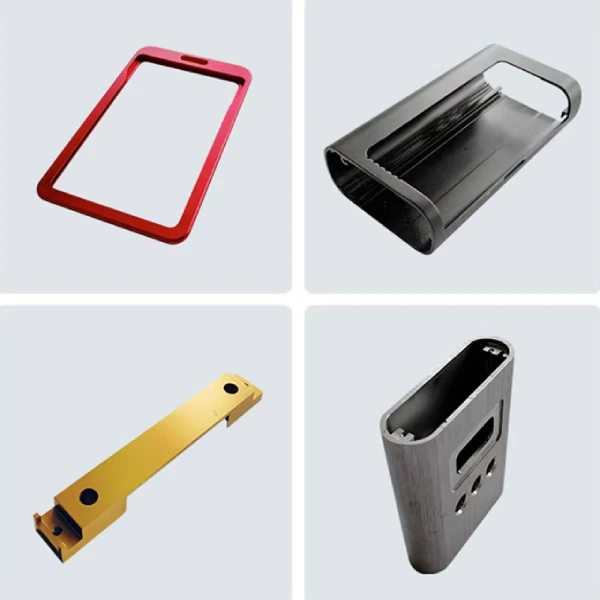
About Die casting Aluminum Enclosure
Die-casting aluminum enclosure refers to the aluminum enclosure manufactured through the die-casting molding process, the core process is to inject molten liquid aluminum alloy into a precision steel mold cavity at high speed and high pressure, and quickly cool and solidify under pressure, finally obtaining the enclosure with a specific shape or size. Enclosure.
Die casting process can be made once the complex shape, with three-dimensional changes (such as tabs, grooves, screw posts, complex internal reinforcement, etc.) complete enclosure or enclosure parts, the subsequent usually need to carry out burr grinding, surface treatment (such as painting, sandblasting) and other processes.

Advantages of Die-casting aluminum enclosures
- Die-casting aluminum enclosures offer a high degree of design freedom. The die-casting process allows the production of one-piece aluminum enclosures with complex shapes, tabs, grooves, fine textures and built-in ribbing in a single operation.
- aluminum Die-casting enclosures are highly productive. The die-casting process is highly automated, allowing for high-speed, high-volume production and a significant reduction in cost per piece as production volume increases.
- Die-casting aluminum enclosure has high structural strength and good durability. It has excellent anti-shock and anti-vibration performance, and through the reasonable design of reinforcement, it can realize high overall structural strength and rigidity while maintaining a thin wall thickness.
- Die-casting aluminum enclosure has high dimensional accuracy. It has a high degree of dimensional consistency and stability, which can realize accurate docking with the internal components and external accessories of the equipment and reduce the assembly and debugging time.
Limitations of Die-casting aluminum enclosures
- Die-casting aluminum enclosure initial mold cost is higher. Die-casting molds are made of multiple pieces of high-strength mold steel, complex structure, higher cost, suitable for mass production, share thin mold costs, small batch production is not economical.
- Die-casting aluminum enclosure is prone to porosity in the production process. In the high-speed injection process, the molten metal is easy to wrap into the air, resulting in tiny air holes inside the casting, destroying the continuity of the metal crystals, which may affect the airtightness and heat dissipation of the enclosure.
- Die-casting aluminum enclosure has size limitations. Its size is limited by the tonnage of the die-casting machine and it is difficult to manufacture large-size die-casting molds. Large enclosures may need to be die-cast in separate pieces and then joined, rather than molded in one piece.
- Die-casting aluminum enclosures have limitations in surface preparation. It may produce pores and air holes during the cooling process, and when die-casting aluminum enclosures are subjected to surface treatments such as anodizing, the holes may cause surface imperfections or uneven colors.
Rapid Prototype Turnaround
Committed to exceeding expectations for quality and rapid turnaround, and meeting high-quality sheet metal parts.
On-Demand Sheet Metal
Whether it is rapid prototyping & large-volume manufacturing, we will implement it according to customer needs and standards.
Real Fabricators Price
Integrate product design, bending, stamping, cutting, surface treatment, etc. to provide a series of manufacturing solutions.
extruded aluminum enclosure VS Die-casting aluminum enclosure
In short, extruded aluminum enclosure focuses on the production of uniform two-dimensional cross-section, which is suitable for medium or high volume production; Die-casting aluminum enclosure focuses on the production of complex three-dimensional shapes, with high tooling costs, which is suitable for high volume production.
Aluminum enclosure type
extruded aluminum enclosure
Die-casting aluminum enclosure
Process Principles
The aluminum billet heated to plastic state is pushed and extruded through the mold to form a continuous, constant cross-section profile, which is then cut and formed by secondary processing.
With a cavity, can be a one-time molding compound will be molten aluminum high speed and high pressure into the mold miscellaneous parts.
Design freedom
Low. The cross-section shape must be uniform and cannot be varied lengthwise. Suitable for long, rail-like designs.
High. Can manufacture complex three-dimensional geometry, concave and convex structure, screw columns, etc., can realize one-piece molding.
Production Costs
Mold cost is lower than Die-casting aluminum enclosure, suitable for mass production.
Mold cost is high, suitable for mass production.
Dimensional accuracy
High, especially in cross-sectional direction
High, can cast fine features
Mechanical properties
High longitudinal strength, good toughness
High overall strength. However, mechanical properties (e.g. elongation) may be slightly lower than for extruded aluminum enclosures due to porosity.
Protective properties
Excellent heat dissipation, high material density, no air holes.
Medium heat dissipation, prone to internal porosity. High hardness and impact resistance.
Surface treatment
Suitable for anodizing, high surface quality, beautiful, wear-resistant and corrosion-resistant after treatment
Suitable for painting, powder coating, and plating. Anodizing may cause surface defects due to pores in Die-casting aluminum enclosure
Application Scenarios
Power adapter enclosures, communication module enclosures, sensor enclosures, industrial controller enclosures, etc.
Automotive electronic controller enclosure, smart home motor enclosure, router multi-interface enclosure, complex lamps and lanterns enclosure and so on.
Choose Extruded Aluminum Enclosure or Die-Cast Aluminum Enclosure
Equipment structure complexity
If the equipment is “linear extension + simple cross-section” structure, such as slot power supply enclosure, U-shaped communication module enclosure, long sensor enclosure, no complex snap, multi-cavity staggered or shaped protrusion, only through cutting, drilling to meet the assembly requirements, preferred extruded aluminum Extruded aluminum enclosure is preferred.
If the equipment needs to be integrated with multiple sets of snap fasteners, built-in ribbing, multi-cavity separation, threaded holes, interface grooves and other complex three-dimensional structure, such as automotive electronic controller of the multi-terminal enclosure, smart home motors closed cavity enclosure, routers, multi-interface panel enclosure, preferred choice of Die-casting aluminum enclosure.

Equipment performance requirements

If the core demand of the product is “high efficiency heat dissipation” or need subsequent processing, preferred extruded aluminum enclosure. If the core demand of the product is “high hardness and impact resistance” or the need of “closed waterproof“, the preference is for die-casting aluminum enclosure.
Surface treatment requirements
If the enclosure needs to have high abrasion resistance, high corrosion resistance and good texture, the extruded aluminum enclosure is preferred; if only the basic appearance is needed (e.g., black, gray powder coating) or plating (e.g., galvanized, chrome-plated), the two types of aluminum enclosures can be selected.

Conclusion
To summarize, there is no absolute advantage and disadvantage between extruded aluminum enclosure and Die-casting aluminum enclosure, the specific selection of the two is mainly based on the core requirements of the equipment to decide.
Extruded aluminum enclosure with its cross-section consistency, high longitudinal strength, material Extruded aluminum enclosure with consistent cross-section, high longitudinal strength, dense material, and suitable for anodic oxidization has become the ideal choice for radiator enclosures, rails, and long chassis enclosures.
Die-casting aluminum enclosures, on the other hand, are perfectly suited for laptop enclosures, smart home equipment enclosures, etc., thanks to their freedom of design and the ability to produce complex three-dimensional structures in a single pass.
If you are looking for Aluminum enclosure suppliers, please contact us now! Get a free quote!
online custom metal fabrication parts
Only 4 steps
Contact our experts team and experience the efficiency and economic benefits of digital metal fabrication services.
Upload Design Files
STL , STEP (.stp), IGES (.igs), (.ZIP), or PDF.
Also be a sample or an idea
Quote & Design Analysis
Instant factory quotes and DfM reports, the most reasonable solution.
Manufacturing Begins
Digital processes can initiate order tasks within 24 hours.
On-Time Delivery
Keeping delivery promises, approved by 3000+ Global Company buyers.