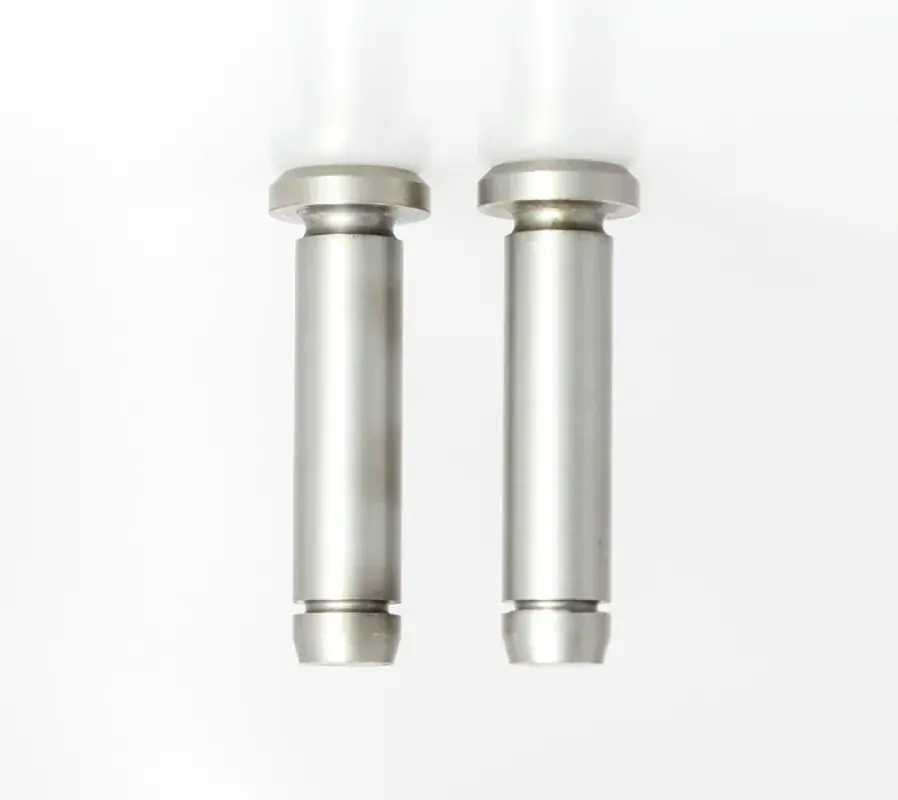

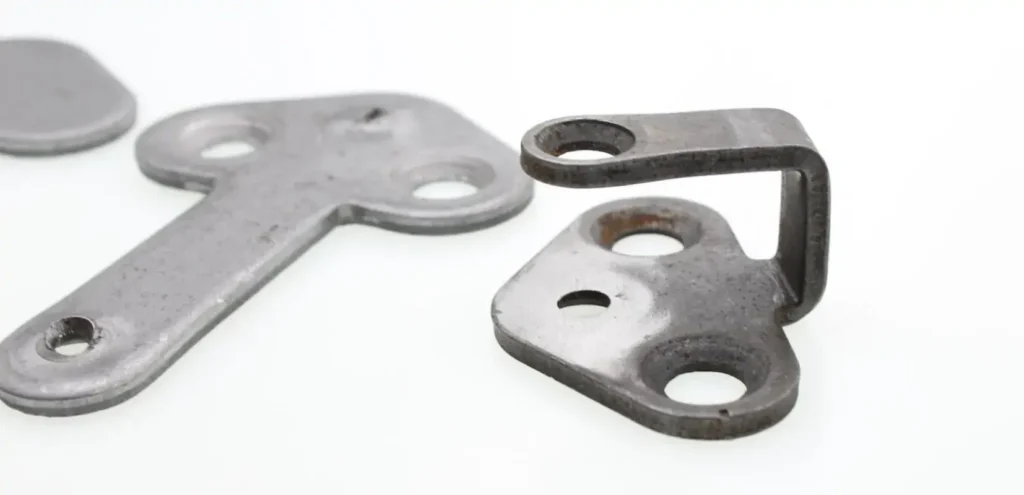
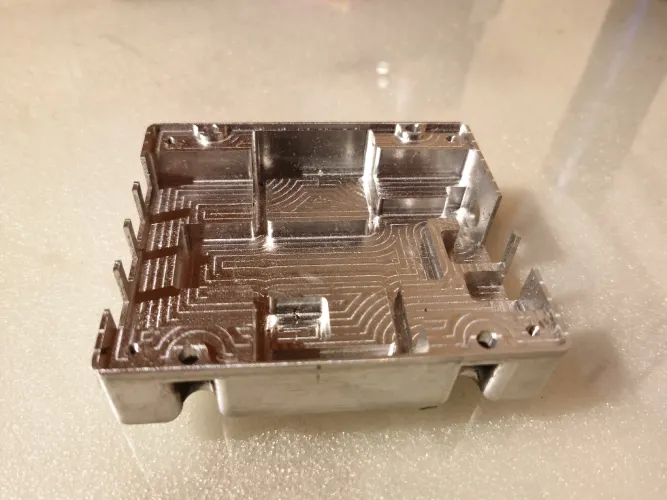
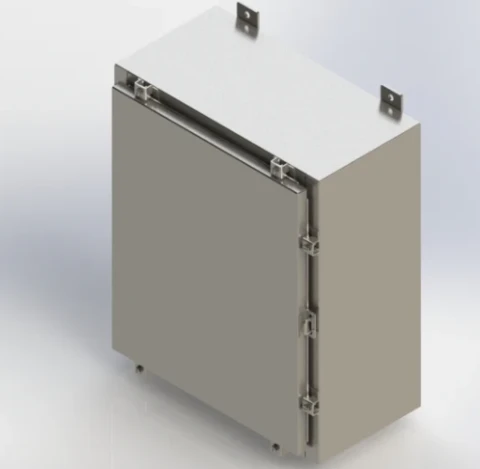


In high-end manufacturing fields such as electronic information, medical equipment, aerospace and so on, custom metal fabrication small parts are the core components to guarantee the precision and function of the equipment, and their structural precision and performance stability directly determine the performance and reliability of the end products. As the industry’s requirements for miniaturization, structural complexity and production efficiency of metal parts increase, it is very important to choose efficient and accurate small metal parts fabrication methods.
The article centers on small metal parts fabrication to carry out an in-depth study, firstly to clarify its core definition, and then to systematically introduce the principles and application scenarios of the four mainstream manufacturing technologies, namely, precision machining, metal injection molding (MIM), lithography and electroforming (LIGA / micromachining), and 3D printing, as well as to compare and analyze the main differences among the three, with the aim of providing you with the most effective and precise method to fabricate small parts when custom metal fabricating. The purpose of this book is to provide you with a clear guide to choosing a process for custom metal fabrication of small parts!
What is small metal parts fabrication?
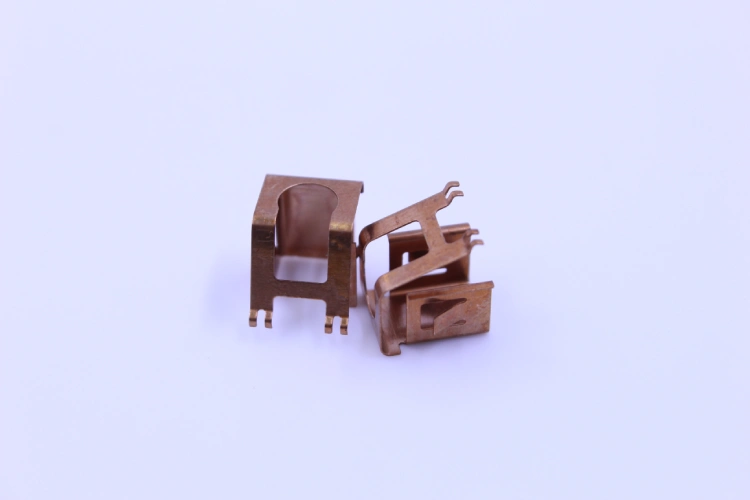
Small metal parts fabrication refers to the manufacturing process of processing metal raw materials (e.g. copper, aluminum, steel, titanium alloy, etc.) into metal parts with tiny dimensions and fine structures through a series of specialized production technologies. Its core objective is to meet the metal parts “miniaturization” at the same time, to ensure that the parts are structurally complete, functionally stable and performance standards, mainly used for the space, weight, precision has stringent requirements of the application scenarios. custom metal fabrication small parts of the main features are:
- tiny size: the overall size of the part is small, usually can be easily placed in the hand or even smaller.
- High precision: with ordinary machining, the tolerance is usually around 0.1 millimeter, while with precision machining, the tolerance can be further reduced to 0.001 millimeter, an error range that is difficult to be detected by the human eye.
- Complex structure: custom metal fabrication small parts may contain thin walls, micro-holes, fine threads, complex internal and external geometries, and so on.
- High-performance materials: Stainless steel, titanium alloy, cobalt-chromium alloy, copper alloy and other high-performance metal materials are often used to meet the equipment’s needs for strength, hardness, corrosion resistance and so on.
custom metal fabrication small parts are widely used in electronic information (such as connector terminals, chip heat sinks), medical equipment (such as micro-surgical instruments, implantable parts), aerospace (such as sensor components, precision fasteners), automotive electronics (such as micro-motor parts) and other fields, is an important cornerstone of the modern industrial fields of electronic information, medical equipment, aerospace, etc.. It is an important cornerstone of modern industrial fields such as electronic information, medical equipment, aerospace and so on.
small metal parts fabrication - precision machining
Precision machining, usually referred to as precision CNC (Computer Numerical Control) machining, which uses precision cutting tools (e.g., milling cutters, turning tools) to remove material from a metal blank and gradually process a piece of metal material into custom metal fabrication small parts that meet the requirements of the equipment.
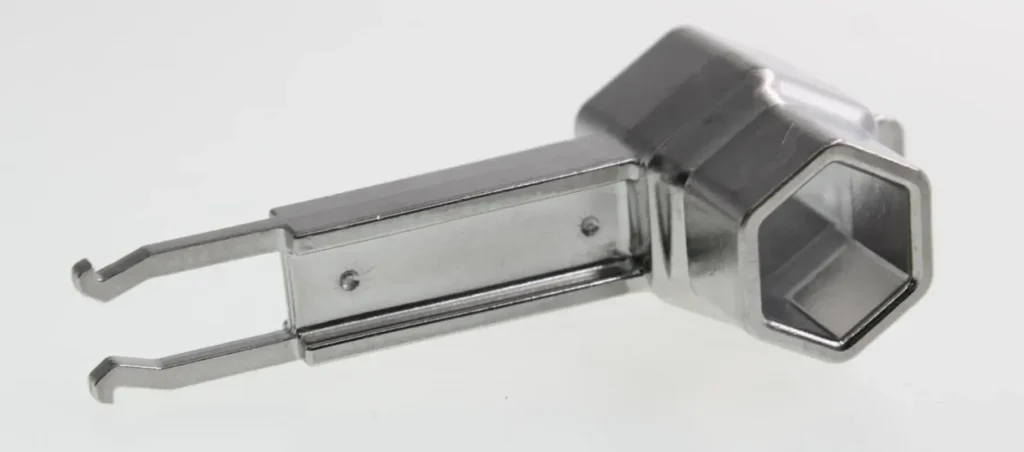
The main types of precision machining
Precision milling: the cutting tool rotates and the workpiece remains stationary. Applicable to non-rotationally symmetric custom small metal parts, such as complex contours, slots, holes and three-dimensional surfaces.
Precision turning: the workpiece rotates, the cutting tool remains stationary and moves for cutting. Suitable for cylindrical, conical or custom metal fabrication small parts with rotationally symmetrical features.
Composite machining: Combining the functions of precision turning and precision milling, it can eliminate the cumulative errors brought by multiple clamping, and improve product accuracy and productivity. It can produce complex sheet metal parts with complicated structure, including rotational symmetry and shaped features at the same time.
Advantages of precision machining
High precision and good surface quality: this is the core advantage of precision machining. With the help of computer numerical control system, it can realize micron-level tolerance stably. At the same time, through the selection of reasonable tool paths, cutting parameters and post-finishing, you can get a smooth surface, no secondary treatment of custom metal fabrication small parts, to meet the medical, food field of metal parts without burrs, easy to clean health requirements.
Wide range of material applicability: compared with processes limited by material, precision machining can handle almost all metals and their alloy materials. From commonly used aluminum alloys, stainless steel, brass, to difficult to machine high hardness materials (such as titanium alloys, tool steel, tungsten carbide, etc.), precision machining can cope perfectly. This also provides designers with a high degree of freedom in selecting materials that are suitable for the performance needs of their products.
High design flexibility: support for small batch custom metal fabrication small parts, design adjustment is convenient, if the design needs to be modified (such as aperture reduction of 0.1mm, fine-tuning of the contour), only need to modify the CAD model and the processing program, do not need to replace the mold, suitable for sheet metal prototype fabrication or small batch. It is suitable for sheet metal prototype fabrication or small batch production.
Excellent mechanical properties: small metal parts fabrication retains the dense, non-porous microstructure of the metal material. Compared with other processes (e.g. MIM or 3D printing), the mechanical properties (e.g. strength, toughness) of precision machined custom metal fabrication small parts usually have higher reliability and stability.
Disadvantages of precision machining
Although precision machining has many advantages, it is not suitable for all situations, and its limitations are mainly in the following areas:
Precision machining mass production costs are high, not suitable for large-scale mass production: due to the need for high-precision machine tools, advanced control systems and high-quality tools and other supporting equipment, the initial investment is often larger. Precision machining is a piece-by-piece cutting mode, single-piece processing requires a fixed number of man-hours, especially for complex sheet metal parts and precision sheet metal components. machining time directly determines the cost of a single piece, so the cost of a single piece is usually higher than that of the metal injection molding (MIM) process in mass production. Depreciation of equipment, tool wear, and labor monitoring costs will increase as volumes increase.
Limitations in machining complex structures: Although precision machining can handle complex sheet metal parts, there are some limitations, such as deep cavities, narrow slots, or special angles in parts that may be inaccessible or impossible to machine due to physical size and rigidity limitations of the cutting tool; when machining thin-walled structures or small features, the cutting force may cause deformation, vibration, or tool breakage, which may affect accuracy. affecting accuracy.
Low material utilization: Precision machining shapes custom metal fabrication small parts by removing material, and a large portion of the raw metal material ends up as scrap (chips). For expensive alloys (e.g., titanium alloys, cobalt-chromium alloys), low material utilization is a significant drawback.
Application Scenarios
Medical field: Surgical instrument parts, implant prototypes, endoscope precision parts, etc.
Aerospace: micro sensor housings, engine fuel nozzles, navigation system precision parts, etc.
Electronics and communications: semiconductor fixtures, radio frequency connectors, waveguide devices.
Precision instruments: optical mirror frame, measuring probe, encoder parts, etc.
Automotive industry: Precision spools for engine fuel injection systems, sensor parts, etc.
Energy field: bipolar plates in fuel cells, precision connectors, etc.
Only 4 steps
online custom metal fabrication parts
Contact our experts team and experience the efficiency and economic benefits of digital metal fabrication services.
Upload Design Files
STL , STEP (.stp), IGES (.igs), (.ZIP), or PDF.
Also be a sample or an idea
Quote & Design Analysis
Instant factory quotes and DfM reports, the most reasonable solution.
Manufacturing Begins
Digital processes can initiate order tasks within 24 hours.
On-Time Delivery
Keeping delivery promises, approved by 3000+ Global Company buyers.
small metal parts fabrication--Metal Injection Molding (MIM)
Metal Injection Molding (MIM) is a process for custom metal fabrication of small parts, complex sheet metal parts in bulk, the core of which is the integration of the "batch advantage of plastic injection molding" and the "metal performance advantage of powder metallurgy", to achieve the "complex structure of one-off molding + high-efficiency mass production", especially suitable for the structure of complex structures.
The core of the process is to combine the "batch advantage of plastic injection molding" with the "metal performance advantage of powder metallurgy" to achieve "one-time molding of complex structures + high-efficiency production of large quantities", which is especially suitable for the structure of small metal parts containing microporous, thin-walled, and heterogeneous curved surfaces, and is the mainstream choice for the mass production of precision sheet metal components.
It is one of the mainstream choices for mass production of precision sheet metal components.
Advantages of Metal Injection Molding (MIM)
One-shot molding of complex structures: Parts containing external grooves, internal cross-holes, fine threads, thin walls, complex surfaces, and fine textures can be molded in one shot. This advantage comes mainly from the mold, as long as the mold can process the cavity, filled with metal material can be processed.
Highly cost-effective for mass production: MIM has a clear cost advantage in mass production. Its production time is short, continuous production, high efficiency and process maturity and stability, high degree of automation, custom metal fabrication small parts size consistency, low scrap rate. In mass production, MIM’s unit cost is much lower than precision machining.
High material utilization rate: compared with precision machining needs to remove a large number of materials, MIM material utilization rate is very high, especially suitable for titanium alloy, tungsten alloy, precious metals (such as gold, palladium alloy) and other high-value materials.
Disadvantages of Metal Injection Molding (MIM)
Unsuitable for small batch production: MIM’s injection molds have high costs and long development cycles, and are not suitable for sheet metal prototype fabrication or small batch production.
Limitations on the scope of application of materials: it is mainly applicable to powder metallurgy materials, such as stainless steel, titanium alloys, cemented carbide, etc., but the applicability of special alloys (such as tungsten alloys, molybdenum alloys) with high hardness and high melting point is poor.
These materials have low powder fluidity, easy to lead to mold filling is not full, and the sintering temperature is extremely high (more than 1600 ℃), easy to cause parts deformation, furnace damage; In addition, pure copper, pure aluminum and other easily oxidized, chemical reaction activity of the metal in the sintering process needs to be strictly control the atmosphere (eg, vacuum + inert gas), which increases the cost of production. Therefore, the choice of MIM materials is limited and does not cover all metals.
Limited dimensional accuracy: MIM will undergo linear shrinkage during the sintering process, and after the metal powder is mixed with the binder and molded, the degreasing and sintering phases will result in a certain volume shrinkage due to the volatilization of the binder and the fusion of the powder particles, which will result in a limited dimensional accuracy compared to precision machining.
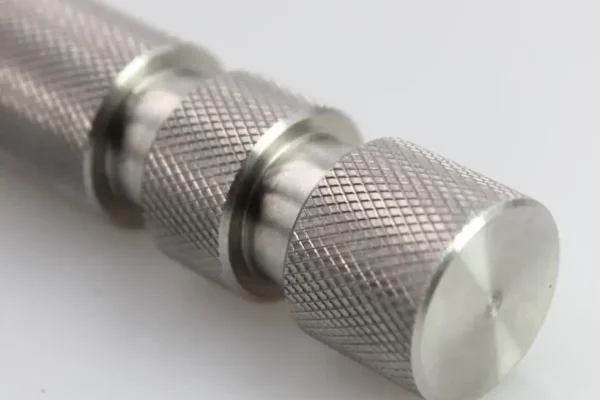
Application Scenarios
Consumer electronic products: headset metal mesh cover, smart watch case / buckle, cell phone camera metal bracket, laptop cooling fan blades, hinge parts, internal locking parts and so on.
Medical equipment field: insulin pen needle base, braces bracket, orthodontic accessories, surgical instruments, miniature collets, etc.
Automotive field: automotive sensor housing, micro-motor gears, etc.
Tools and hardware field: precision screwdrivers, micro-locking accessories, tiny gears in robots, connectors, etc.
Are you looking for reliable & cost-effective
China Sheet Metal Fabricators
More than 150,000 OEM metal fabrication products delivered to 5,000+ global buyers.
And benefit from it!
small metal parts fabrication--Lithography electroforming (LIGA/microfabrication)
The lithography electroforming process is a processing technology that utilizes photolithography and electrochemical processing technology to produce tiny structures or parts on a micron or submicron scale.The process usually includes steps such as pretreatment, photolithography, electroforming, and mold release.
Among them, photolithography is the use of light irradiation photoresist, the formation of template patterns; electroforming is the template immersed in the electrolyte, under the action of the electric field so that the electrolyte ions deposited on the surface of the template to form a micro-structure or parts. Is designed for ultra-miniature, high-precision custom metal fabrication small parts designed for micromachining process.
Advantages of lithographic electroforming
Extremely high precision: this is the most core advantage of the LIGA process. It is capable of realizing sub-micron level dimensions and dimensional tolerances. Parts with dimensions below 1 micron and tolerances controlled within ±1 micron can be easily machined. This kind of accuracy cannot be achieved by precision machining and MIM.
Excellent surface quality: through the LIGA process custom metal fabrication small parts have an excellent surface finish, avoiding cut marks from machining, and the smooth surface reduces friction, fluid resistance and wear.
Complex two-dimensional plane shape can be realized: LIGA process can produce complex graphic structure, high precision, processing accuracy of up to 0.1um
Defects of photolithography electroforming
Photolithography electroforming process is costly and has a long process cycle.
There are certain defects in the degree of freedom of design, and it is difficult to manufacture three-dimensional structures with free-form surfaces or inclined surfaces.
The technical threshold is high.
Application Scenarios
Microelectromechanical systems (MEMS): micro gears, micro-motors, micro-accelerometers, micro-gyroscope custom metal fabrication small parts.
Precision optics: fiber optic connector sleeve, laser collimator, grating.
Microfluidic chips: microchannels, micro-mixers, micro-valves for bio-detection, drug discovery chips.
Medical field: micro-surgical tools (such as minimally invasive surgical heads), drug delivery microneedles, nerve probes.
High-precision molds: Manufacture of injection molds for the production of high-volume micro-parts.
Why choose Supro MFG's Custom metal fabrication Services
Provide the most cost-effective cost solution for manufacturing and assembling products, expanding product competitiveness.
a technical team specializing in custom shell manufacturing for more than 30 years.
Advanced Manufacturing Equipment: Industry-leading custom metal enclosure manufacturer with in-house sheet metal, die casting, precision machining workshops, and surface coating workshops.
ISO 9001-2015, PPAP III level, RoHS, NEMA, CE and other certified production standards.
24H*7 online English technical support: The professional English team responds quickly to users’ technical questions online at any time.
help users from product design, prototype, batch manufacturing, surface treatment, assembly and packaging, transportation and a series of value-added services.
With in-house mechanics and chemistry laboratories, it can quickly monitor manufacturing process quality control to ensure the delivery of high-quality products.
Accept to sign NDA documents to ensure that customers’ product information is protected.
Door-to-door delivery in customizable secure packaging after complying with the delivery details agreed with the customer.
3D Printing
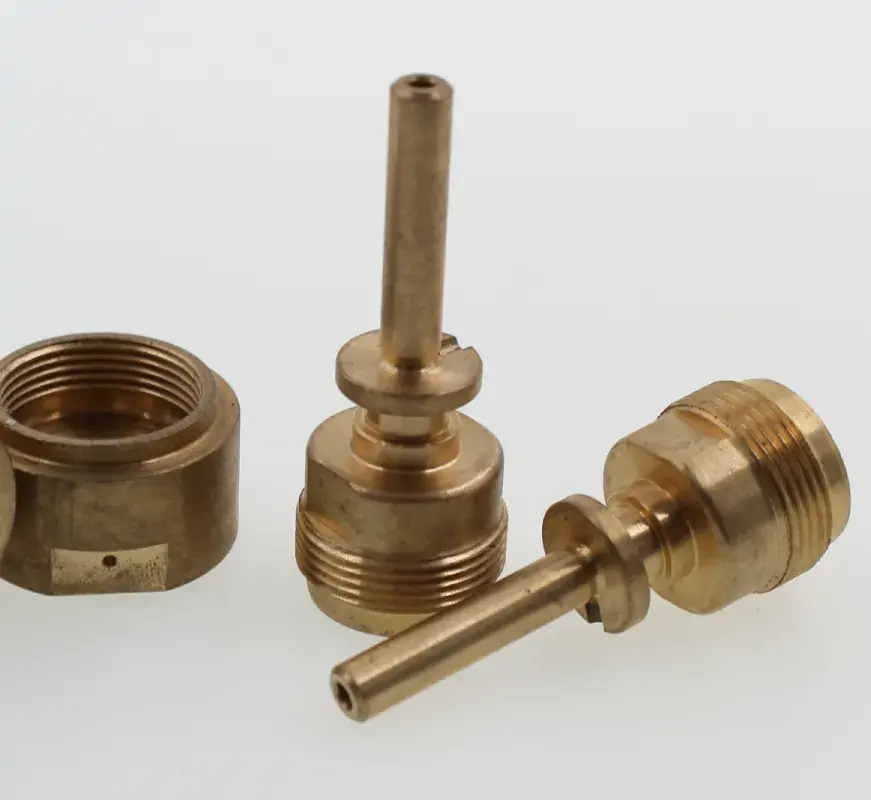
3D printing is a technology that builds three-dimensional entities by stacking materials layer by layer. In small metal parts fabrication, its core principle is "layered manufacturing, layer by layer", through the digital model file (such as CAD model) will be metal powder, metal wire and other raw materials layer by layer accurate stacking, directly manufacturing three-dimensional entity custom metal fabrication small parts.
Advantages of 3D
Extremely high degree of design freedom: This is the most core advantage of 3D printing, which can easily manufacture complex custom small metal parts that cannot be processed by traditional methods, such as: internal cavities and runners, lightweight structures, integrated molding, and so on.
Rapid prototyping and iteration: from digital model (CAD) to physical parts without any molds, greatly shortening the cycle time for product design, validation and modification.
High economy of small batch and customized production: For small batch or custom metal fabrication small parts, 3D printing eliminates the cost of mold development and realizes “on-demand customization”, which has significant cost-effectiveness. It is especially suitable for customized denture and orthopedic implants in the medical field, and customized tchotchkes and jewelry in the consumer field.
High material utilization: 3D printing only accumulates material in the area to be shaped, the material utilization rate is generally more than 90%, and most of the unused metal powder can be recycled and reused.
High degree of functional integration: allows multiple functions to be integrated into one custom metal fabrication small parts, realizing functional integration and simplifying the product structure.
Defects of 3D printing
Higher initial cost and equipment cost: industrial-grade metal 3D printing equipment is more expensive, and the cost of specialized metal powder materials is also higher.
Slower production speed, not suitable for mass production: due to the layer-by-layer stacking, its production speed is relatively slow, not suitable for high-volume small metal parts fabrication scenarios.
Complex post-processing requirements: Printed custom metal fabrication small parts usually require a series of post-processing steps before they can be used, including: removing support structures, hot isostatic pressing, machining, heat treatment, etc.
Limited surface quality and dimensional accuracy: custom metal fabrication small parts will have layer patterns (similar to stepped texture) on the surface, requiring additional post-processing (e.g., sanding, polishing, spraying), and in the case of precision sheet metal components, subsequent finishing is required.
High technical threshold: metal 3D printing is highly specialized and requires high operator skills.
Application Scenarios
Aerospace: engine fuel nozzles, lightweight brackets and hatch parts, turbine blades, etc.
Medical and dental: orthopedic implants, surgical guides, and dental crowns and bridges, etc.
Automotive: small-volume lightweight components, customized intake manifolds, radiators, etc.
Research and prototyping: Functional verification of new concepts, experimental parts with complex internal structures, etc.
Looking for a reliable custom sheet metal fabrication companies?
Talk To Supro MFG Expert Team
Contact us for competitive ex-factory prices,
and a full range of technical support services.
Comparison of four methods of small metal parts fabrication
Small metal parts fabrication method | Precision Machining | MIM | LIGA | 3D printing |
Principles | Material removal by cutting | Metal powder mixed with binder, sintered after injection molding | Micromachining, molding using photolithography and electroforming technology | Layer-by-layer manufacturing |
Advantages | High precision, wide range of materials, flexible design, preferred for sheet metal prototype fabrication. | Complex shapes, low cost for large quantities, high material utilization | Highest precision, excellent surface weight, complex planar shapes possible | Extremely high degree of design freedom, rapid prototyping, high material efficiency |
Limitations | High material waste, not suitable for mass production | High initial mold cost, relatively low precision due to sintering shrinkage | Relatively highest cost, long lead times, limited design freedom | Not suitable for high volume production, limited surface quality |
Production cycle time | Short | Long | Longest cycle time compared to the other two | Short |
Relative cost | Medium | Low (single piece cost for large quantities) | Highest | Medium |
Applicable Scenarios | Sheet metal prototype fabrication, aerospace components, medical instruments, precision fixtures | Cell phone parts, medical devices, small automotive parts | MEMS sensors, micro-optics, gratings, micro-nozzles | Aerospace, medical, automotive, etc. |
Selection Recommendations
- accuracy requirements:
If sub-micron tolerances and nanometer surface finishes are required, LIGA is recommended.
If micron-level tolerances are required, precision machining is recommended.
If the tolerance requirements in the ± 0.05mm or so, optional MIM.
- production lot:
For prototype or small to medium volume production, 3D printing or precision machining is optional.
MIM is preferred for high volume production.
- Part Geometric Complexity:
MIM or 3D printing is preferred for complex sheet metal parts with external recesses, internal cross holes, fine threads, etc.
If custom metal fabrication small parts require high aspect ratio microstructures (e.g., microneedle arrays, microfluidic channels), LIGA is the only choice.
If custom metal fabrication small parts can be reached by a tool, precision machining is an option.
- material properties:
When the material is a special alloy that is difficult to sinter or electroform (e.g., certain titanium alloys, aluminum alloys), precision machining is the only option.
Specific high-performance alloys (e.g., certain non-cuttable high-temperature alloys), 3D printing technology is the best choice.
Conclusion
These four small metal parts fabrication methods are not in competition, but rather complementary. Different custom metal fabrication small parts in a high-end product may be fabricated using each of these four processes to achieve the best combination of performance and cost.
If you are still struggling with small metal parts fabrication, please contact us now! Supro is a professional custom metal parts manufacturer, with the advantage of advanced equipments, rich manufacturing experience and professional engineering team, we have provided more than 3000 companies around the world with perfect custom metal fabrication small parts solutions for more than 3000 companies worldwide with genuine manufacturer quotes.
As an industry leading custom metal parts manufacturer, we can deliver a wide range of products efficiently and on time. From product design and rapid sheet metal prototype fabrication to mass production, we offer expert technical support and superior quality. We offer one-stop manufacturing solutions and cost competitive product supply!